
Esl Listening: 12 Activities to Build Comprehension
Listening is the foundation of language learning. Before students can speak, read, or write in English, they need to understand what they hear. Yet listening remains one of the most overlooked skills in ESL classrooms worldwide. Many teachers focus heavily on grammar drills and vocabulary lists while giving listening only surface-level attention through occasional audio exercises.
This creates a real problem. Students who lack strong listening skills struggle with everything else. They miss instructions, misunderstand conversations, and lose confidence when interacting with native speakers. Research from the Cambridge Assessment English program confirms that listening comprehension directly impacts overall language proficiency and test performance.

The good news? Teaching listening effectively does not require expensive technology or complicated lesson plans. What it does require is a shift in how we approach the skill — from passive background noise to active, structured practice that builds real comprehension. Whether you teach young learners or adult students, the strategies in this article will help you transform your listening lessons from forgettable to genuinely effective.
Why Listening Matters More Than You Think
Consider how children acquire their first language. They spend roughly two years listening before they start forming sentences. Listening is the input that drives all other language development. Stephen Krashen’s Input Hypothesis argues that language acquisition happens when learners receive comprehensible input slightly above their current level — and listening is the primary channel for that input.
In practical classroom terms, students who develop strong listening skills show measurable improvements across the board. They pick up pronunciation patterns naturally, absorb grammar structures without explicit instruction, and build vocabulary through context. These gains complement reading comprehension strategies that further accelerate overall English proficiency. A 2019 study published in the TESOL Quarterly found that students who received regular, structured listening practice outperformed control groups in speaking fluency by 23% over a single semester.

Despite these benefits, many ESL programs treat listening as a testing tool rather than a teaching opportunity. Teachers play an audio clip, ask comprehension questions, and move on. This approach tests whether students understood — but it does nothing to help them understand better next time. The distinction between testing listening and teaching listening is one of the most important shifts a teacher can make.
The Three Stages of a Listening Lesson
Effective listening instruction follows a three-stage framework that experienced teachers swear by. This structure gives students the support they need before, during, and after they listen.
Pre-Listening: Setting the Stage
Before students hear a single word of audio, they need context. Pre-listening activities activate background knowledge, introduce key vocabulary, and set a purpose for listening. Without this stage, students are essentially thrown into deep water without a life jacket.

Strong pre-listening activities include brainstorming vocabulary related to the topic, making predictions based on images or titles, discussing personal experiences connected to the theme, and reviewing any challenging words or phrases that will appear in the audio (for younger learners, this pairs well with Dolch sight word instruction). Spend five to ten minutes on this stage. It dramatically increases comprehension during the actual listening task.
For example, before playing a podcast about travel, you might show pictures of famous landmarks and ask students where they have traveled. Write key words like “itinerary,” “layover,” and “accommodation” on the board. Have students predict what the speaker might discuss. This mental preparation makes the listening experience far more accessible.
While-Listening: Active Engagement
The while-listening stage is where real learning happens — but only if students have something specific to do while they listen. Passive listening (just sitting and absorbing) rarely produces strong results. Students need tasks that keep them actively processing the audio.

Effective while-listening tasks include filling in graphic organizers, noting specific information (names, dates, numbers), sequencing events, identifying the speaker’s opinion or attitude, and marking true or false statements. The key is matching the difficulty of the task to the students’ level. Beginning students might listen for individual words, while advanced learners can track complex arguments and supporting details.
Play the audio more than once. First listening can focus on general understanding — the gist. Second listening targets specific details. A third play-through, if time allows, can address finer points like tone, emphasis, or implied meaning. Each replay should have its own distinct task so students stay engaged rather than zoning out.
Post-Listening: Making It Stick
After the audio stops, the lesson is far from over. Post-listening activities help students process what they heard, connect it to their own knowledge, and extend the language into other skill areas. This is where listening transforms into speaking, writing, and deeper thinking.

Popular post-listening tasks include discussion questions about the content, summarizing what they heard in their own words, role-playing conversations inspired by the audio, writing a response or reflection, and comparing their predictions (from pre-listening) with what actually happened. These activities cement comprehension and give students multiple opportunities to use the new language they encountered.
Twelve Practical Listening Activities for Any ESL Classroom
Beyond the three-stage framework, having a toolkit of go-to activities makes lesson planning faster and keeps students engaged through variety. Here are twelve activities that work across proficiency levels.
1. Dictation Runs — Post a short paragraph on the wall outside the classroom. Students work in pairs: one runs to read a sentence, returns, and dictates it to their partner who writes it down. This combines listening, memory, speaking, and writing in one energetic activity.
2. Information Gap Tasks — Give Student A and Student B different pieces of information. They must listen to each other and ask questions to complete their worksheets. This mirrors real-world communication where you genuinely need to listen to get information you do not have.
3. Song Gap Fill — Choose a popular English song and create a worksheet with missing words. Students listen and fill in the blanks. This works especially well with younger learners and teens who connect emotionally with music. The British Council offers excellent song-based lesson plans for teachers.
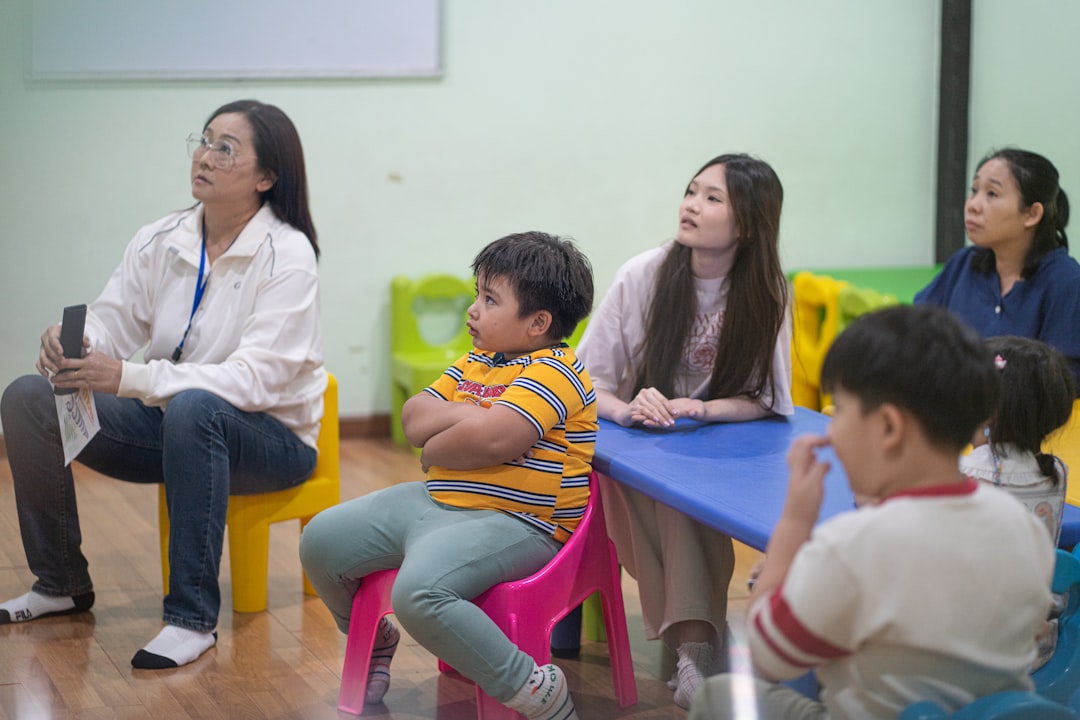
4. Jigsaw Listening — Divide a longer audio into segments. Different groups listen to different parts, then regroup to share information and reconstruct the complete story or lecture. This builds both listening and collaborative speaking skills simultaneously.
5. News Report Summaries — Play a short news clip and have students summarize the main points. Start with simplified news sources like News in Levels, which provides the same story at three different proficiency levels.
6. Listen and Draw — One student describes a picture while others draw what they hear without seeing the original. The results are often hilarious and reveal exactly which vocabulary and prepositions students struggle with. It works beautifully for practicing spatial language: “above,” “next to,” “in the corner.”
7. TED Talk Discussions — For intermediate and advanced students, short TED Talks provide authentic, engaging listening material. Play a five-minute talk, then facilitate a structured discussion. Students practice listening to natural speech patterns, academic vocabulary, and varied accents.
8. Podcast Journals — Assign students a weekly podcast episode to listen to at home. They write a short journal entry summarizing what they learned and noting three new words. This builds autonomous listening habits that extend learning beyond the classroom walls.
9. Minimal Pair Bingo — Create bingo cards with minimal pairs (ship/sheep, bat/bet, live/leave). Read words aloud and students mark the ones they hear. This sharpens phonemic awareness and helps students distinguish sounds that do not exist in their first language.
10. Story Retelling Chains — Whisper a short story to one student. They whisper it to the next, and so on around the room. The final student tells the class what they heard. Comparing the original to the final version highlights how listening errors compound — and why accuracy matters.
11. Video Prediction — Play the first 30 seconds of a video with sound but no image (turn the screen away). Students predict what is happening based on the audio alone. Then watch together and compare predictions. This trains students to extract meaning from vocal cues, background sounds, and tone.
12. Authentic Phone Calls — Record short simulated phone conversations (booking a hotel, ordering food, making an appointment). Students listen and complete a task: fill in a reservation form, write down an order, or note appointment details. Phone listening is notoriously difficult because there are no visual cues, making it perfect practice for real-world readiness.
Using Technology to Enhance Listening Practice
Modern technology offers powerful tools for listening instruction. Podcasts, YouTube channels, language learning apps, and audio-sharing platforms give teachers access to an almost unlimited library of authentic listening material.
YouTube is particularly valuable because it pairs audio with visual context, which supports comprehension. Channels like BBC Learning English, Rachel’s English, and English with Lucy provide structured listening content at various levels. The video below demonstrates practical strategies for teaching listening skills effectively:
Apps like Randall’s ESL Cyber Listening Lab, Elllo, and Listenwise offer graded listening exercises with built-in comprehension checks. These platforms work well for homework assignments and self-study, freeing up class time for interactive activities that require a teacher’s guidance.
One word of caution with technology: resist the urge to let it replace teacher-led instruction. Playing a podcast and assigning questions is not teaching listening — it is testing it. Technology should supplement your three-stage lesson framework, not replace it. The teacher’s role in pre-teaching vocabulary, guiding active listening tasks, and facilitating post-listening discussion remains irreplaceable.
Common Mistakes Teachers Make With Listening Lessons
Even experienced teachers fall into patterns that undermine their listening instruction. Recognizing these pitfalls helps you avoid them.
Playing audio only once. In real life, we can ask people to repeat themselves. In the classroom, playing audio just once creates unnecessary anxiety and turns the activity into a memory test rather than a comprehension exercise. Always plan for at least two listens with different focus tasks.
Choosing material that is too difficult. Authentic materials are valuable, but throwing a BBC documentary at elementary students does more harm than good. Match the difficulty to your students’ level, or scaffold heavily with pre-listening support when using challenging content. The TESOL International Association’s professional development resources provide guidance on selecting appropriate listening materials by level.
Neglecting bottom-up processing. Top-down strategies (using context to guess meaning) get a lot of attention, but bottom-up skills (recognizing individual sounds, word boundaries, and stress patterns) are equally important. Students who cannot distinguish “fifteen” from “fifty” will struggle no matter how much context you provide. Build phonemic awareness alongside comprehension activities.
Skipping the pre-listening stage. When time is short, pre-listening is usually the first thing cut. This is a mistake. Even three minutes of vocabulary preview and prediction dramatically improve comprehension. Think of it as warming up before exercise — skip it, and performance suffers.
Focusing only on comprehension questions. If every listening activity ends with “answer these five questions,” students quickly lose motivation. Vary your post-listening tasks. Use discussions, creative writing prompts, role-plays, and comparison activities to keep engagement high and develop multiple skills simultaneously.
Building a Listening-Rich Classroom Culture
The most effective approach to teaching listening goes beyond individual lessons. It means creating a classroom environment where listening is woven into every activity, every day.
Start each class with a short “listening moment” — a one-minute audio clip, a quick dictation, or a spoken riddle. This signals to students that listening matters and sets an attentive tone for the entire lesson. Combined with solid classroom management strategies, these routines create an environment where genuine learning thrives. Over time, these micro-activities build stamina and normalize active listening as a core classroom expectation.
Encourage students to listen to each other, not just to recordings. Pair and group activities where students must genuinely listen to their classmates develop real-world listening skills more effectively than any audio file. When Student A explains their weekend and Student B must summarize it back, both students are practicing authentic, meaningful listening.
Finally, teach students listening strategies explicitly. Show them how to listen for key words, how to use context clues when they miss something, how to recognize discourse markers (“however,” “on the other hand,” “for example”) that signal what type of information is coming next. These metacognitive strategies transfer to every listening situation they will encounter outside your classroom — from university lectures to job interviews to casual conversations with friends.
Listening may be invisible compared to the written page or the spoken word, but it is the skill that makes all other skills possible. Give it the attention it deserves, and watch your students’ overall English proficiency grow in ways that surprise both them and you.







 EN
EN  ZH
ZH  ZH_CN
ZH_CN  KO
KO  VI
VI  FR
FR  AR
AR  ES
ES  HI
HI  PT
PT  BN
BN  RU
RU  JA
JA  TR
TR  DE
DE  IT
IT  PL
PL  ID
ID  TH
TH  FA
FA  UK
UK  TL
TL  HE
HE  UR
UR  SW
SW  RO
RO  NL
NL  MS
MS  TA
TA  PS
PS  HU
HU  EL
EL  SV
SV  NB
NB  NN
NN  DA
DA  CS
CS  SR
SR  AM
AM