
ESL Lesson Plan Template: 5 Stages + Free Examples (2026)
An ESL lesson plan template is the single fastest way to cut prep time and stop walking into class hoping the energy carries you. The five-stage template below — warm-up, presentation, practice, production, review — covers any 45 to 90 minute English class for any level. The rest of this guide walks through the template, three worked examples (beginners, adults, young learners), and the planning shortcut I use to write a complete lesson in about 15 minutes.
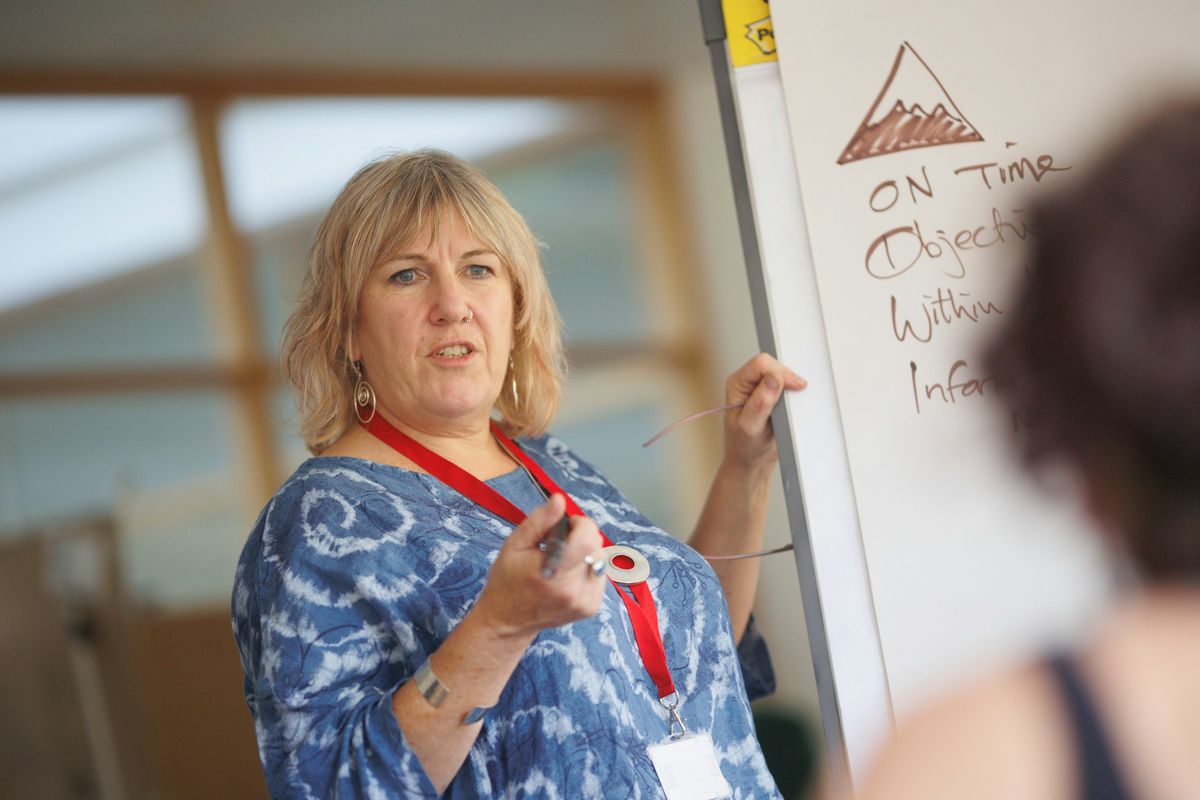
What an ESL Lesson Plan Template Actually Needs
A working ESL lesson plan template has seven fields at the top and a body broken into timed stages. The header carries the information you forget at 8 PM the night before — class level (A1 through C1, or CEFR equivalent), class size, lesson length, primary objective stated as a “can-do” statement, target language (grammar point or vocabulary set), required materials, and an assumed prior knowledge line.
The body of the plan is where most teachers either over-engineer or under-prepare. A good rule: every stage gets a time stamp, an interaction pattern (T-Ss, S-S, individual), and one sentence describing what the teacher does and what the students produce. If a stage doesn’t have all three, it’s not finished.
The 5-Stage ESL Lesson Plan Template (PPP+)

The TEFL world has been using a variant of the PPP framework — Presentation, Practice, Production — for forty years. It survives because it works. The version below adds a warm-up at the front and a review at the end so the lesson opens and closes cleanly.
Stage 1 — Warm-Up (5 minutes)
The warm-up has one job: pull the students out of whatever they were doing before class and into English. A two-minute pair conversation, a three-question survey, or a quick vocabulary recall game all work. Skip the warm-up and the first ten minutes of the lesson stage become the warm-up by default. For a deeper list of opener ideas, see our breakdown of ESL warm-up activities.
Stage 2 — Presentation (10 minutes)
This is where you introduce the target language. Show, don’t tell. If you’re teaching the present perfect, model it with a personal example (“I have been to Japan three times”) before you ever write the rule on the board. Elicit the form from the students after they’ve seen it in context, not before. The presentation stage is short on purpose — if you’re talking for fifteen minutes, the students stopped listening at minute six.
Stage 3 — Controlled Practice (15 minutes)
Now students use the new language in tightly framed exercises: gap-fill, sentence transformation, drilling, or matching. Mistakes here are diagnostic — they tell you what to re-teach. The goal isn’t fluency yet, it’s accuracy. Pair work is the workhorse format. One student attempts, the partner checks against the answer key, then they switch.
Stage 4 — Free Production (15 minutes)

Students use the target language in an open task — a roleplay, a discussion, a writing prompt, a problem-solving activity. Fluency now beats accuracy. Your job shifts from instructor to monitor: walk the room, note errors on a clipboard, and resist the urge to correct mid-task. Hold corrections for the review stage. For ready-to-use prompts at this stage, our list of ESL conversation activities covers fifteen frameworks that fit straight into this slot.
Stage 5 — Review and Feedback (5 minutes)
Put two or three of the errors you wrote down on the board with no names attached. Ask the class to fix them. End with a thirty-second exit ticket: students write one sentence using the target language and hand it to you on the way out. You now have a stack of evidence for whether the lesson worked, and next class starts with a built-in review.
ESL Lesson Plan Template for Beginners (A1–A2)

Beginners need short stages, heavy visuals, and a slow speech rate. The plan below targets present simple — daily routines for a 50-minute A1 class of eight students.
- Objective: Students can describe their daily routine using six present simple verbs.
- Warm-up (5 min): Mime game — teacher mimes “wake up,” “brush teeth,” “eat breakfast.” Students call out the verbs.
- Presentation (10 min): Teach the six target verbs with picture flashcards. Drill pronunciation chorally, then individually. Write the verbs on the board in present simple, third person (“she wakes up”).
- Controlled practice (15 min): Worksheet — match the verb to the picture, then fill the gap: “I _____ at 7am.” Students compare answers in pairs.
- Free production (15 min): Information gap activity. Student A has a picture of “Maria’s day” with three times missing; Student B has the same picture with three different times missing. They ask and answer to complete the schedule.
- Review (5 min): Each student says one sentence about their own morning. Exit ticket: write three sentences using “I.”
The single biggest mistake teachers make with beginners is talking too much. Cut your teacher talk by half. If you think you’re being too quiet, you’re probably about right.
ESL Lesson Plan Template for Adults
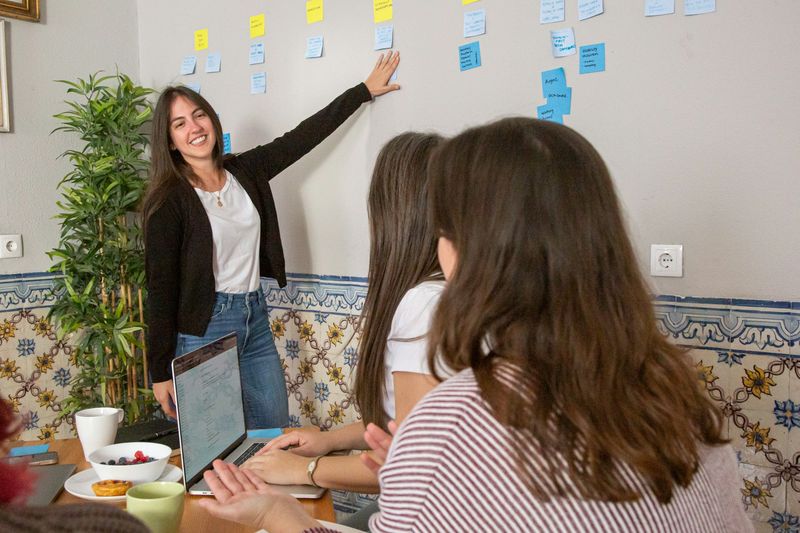
Adults bring stronger first-language literacy, more abstract reasoning, and stronger opinions. They also bring shorter attention spans for content that feels childish. The plan below targets the language of opinion and disagreement — intermediate level (B1), 90-minute class.
- Objective: Students can agree, disagree, and qualify opinions using six target phrases.
- Warm-up (10 min): Project four controversial statements (“Coffee is better than tea”). Students rate each 1–5 and compare with a partner.
- Presentation (15 min): Play a 90-second clip of a panel discussion. Students listen for any phrase used to disagree. Board the phrases as they call them out. Add the target phrases they missed.
- Controlled practice (20 min): Phrase substitution drill, then a written exercise — rewrite blunt disagreements (“You’re wrong”) using softer target phrases (“I see what you mean, but…”).
- Free production (35 min): Fishbowl debate. Four students in the middle discuss a topic (“Remote work is better than office work”); the rest of the class listens and counts target phrases. Rotate twice.
- Review (10 min): Replay the original panel clip. Students now spot every disagreement phrase, including the ones they missed at the start.
Adult lessons live or die on the topic. Pick a topic the students would have an opinion on at a dinner party, not a topic from a textbook designed in 1998. If you can’t see them caring, swap it.
ESL Lesson Plan Template for Young Learners

Children under twelve learn through their bodies first and their brains second. The lesson below targets animal vocabulary and the question “Can you…?” for a primary class (ages 7–9), 40 minutes.
- Objective: Students can name eight animals and form “Can a (animal) (verb)?” questions.
- Warm-up (5 min): Animal flashcard chant. Teacher holds up a card, class shouts the animal. Speed up.
- Presentation (8 min): Teach four verbs: swim, fly, jump, run. Teacher acts each one out. Students copy. Pair the verbs with animals on the board.
- Controlled practice (10 min): “Can a fish fly?” Yes/no chant — students stand up for yes, sit down for no. Then a paired worksheet: tick the boxes for which animals can do which actions.
- Free production (12 min): Animal guessing game. One student picks a card and the rest ask “Can it swim? Can it fly?” until they guess the animal.
- Review (5 min): Class song using the target verbs and animals. Stickers for any pair who can perform the dialogue without prompts.
The classroom management piece matters more than the language piece at this age. Build in standing-up moments every eight minutes. A class that sits still for forty minutes is a class that has stopped listening.
How to Write an ESL Lesson Plan in 15 Minutes

The 15-minute version is a planning constraint, not a corner-cut. The teachers who plan in 90 minutes are usually doing three things in series that can be done in parallel.
- Minutes 0–2. Write the can-do objective. One sentence. If it has the word “understand” or “learn about,” delete it and write a verb students can demonstrate.
- Minutes 2–5. Pick the target language. Six words or one grammar point — never both.
- Minutes 5–8. Choose the free production task first, before any other stage. The production stage is what the lesson is for. Every other stage is built backward from it.
- Minutes 8–11. Pick a controlled practice activity that uses the same target language as the production task. Often it’s the same activity scaffolded down.
- Minutes 11–13. Write the presentation stage as a single example sentence and the smallest possible board work to explain it.
- Minutes 13–15. Pull a warm-up from your standing rotation. Don’t invent one. If you don’t have a rotation, build a list of ten warm-ups this weekend and never plan one again.
Using AI for the prep work cuts this further. We covered the specific prompts in our guide on AI lesson and curriculum prompts — a single Claude or ChatGPT prompt produces a usable first draft you can edit in three minutes.
Common ESL Lesson Plan Mistakes to Avoid

The most common failure mode I see in observed lessons is the presentation stage swallowing the rest of the plan. Teacher gets nervous, fills the silence, explains every nuance of the grammar point, and the production stage gets cut to four minutes. Students leave having heard a lecture about English, not used English.
Three other patterns to watch for. First, planning for activities, not for language — a “fun” activity that doesn’t generate the target language is decoration. Second, no plan B — if the projector dies, every digital lesson plan needs an analogue version on a single sheet of paper. Third, no error log — if you don’t write down the mistakes you hear during free production, you lose the most useful data the lesson generated.
The honest truth: most ESL lessons fail at the production stage, not the presentation stage. Teachers overspend prep time on slides nobody remembers and underspend on designing a task students will actually attempt.
Free ESL Lesson Plan Template (Copy This)
Paste the block below into a Google Doc or Word file and reuse it. Every blank takes about thirty seconds to fill in.
ESL LESSON PLAN

Date: _______________
Level (CEFR): A1 / A2 / B1 / B2 / C1
Class size: _____
Lesson length: _____ minutes
Objective (can-do statement): Students can ___________________
Target language: ___________________
Materials: ___________________
Assumed prior knowledge: ___________________

------------------------------
Stage 1 — Warm-up (5 min)
Interaction: T-Ss / S-S / Individual
Teacher does: ___________________
Students do: ___________________

Stage 2 — Presentation (10 min)
Interaction: T-Ss
Teacher does: ___________________
Students do: ___________________

Stage 3 — Controlled Practice (15 min)
Interaction: S-S
Teacher does: ___________________
Students do: ___________________

Stage 4 — Free Production (15 min)
Interaction: S-S / Group
Teacher does: ___________________
Students do: ___________________

Stage 5 — Review and Feedback (5 min)
Interaction: T-Ss
Teacher does: ___________________
Students do: ___________________

------------------------------
Anticipated problems: ___________________
Plan B: ___________________
Notes after the lesson: ___________________
Lesson Plan Format vs. Lesson Plan Structure
The two phrases get used interchangeably, but they mean different things. Format is the visible layout — table, bulleted list, narrative paragraphs, or a one-page grid. Structure is the sequence of stages and the logic that connects them. The structure above (warm-up, PPP, review) works regardless of whether you write it as a table or a checklist.
Choose the format your school requires. CELTA and Cambridge schools usually want a detailed table with timing columns and interaction codes. International schools often want a curriculum-mapped one-page version. Private students need almost nothing in writing — a sticky note with the production task and the target language is enough.
Watch: A Walkthrough of the PPP Lesson Structure
This twelve-minute walkthrough from Citizens of Hope is the clearest video explanation of the PPP framework I’ve seen, with examples from real classrooms.
Where to Go From the Template
The template above is the skeleton. The reason new teachers still struggle after six months isn’t structure — it’s stage 4. Get the production task right and the rest of the plan writes itself. Build a personal library of ten reliable production tasks across your common levels and lesson types this month; you’ll cut your weekly prep time by half before the term ends. Pair that with a standing rotation of warm-ups (see our warm-up activities list and the writing prompt library), and lesson planning becomes a fifteen-minute job, not a Sunday-night ordeal.
Sources
- Cambridge English — Resources for teachers — official lesson plan structures, frameworks, and downloadable materials.
- Cambridge English — Teaching qualifications — CELTA and Delta, the global standard for ESL lesson planning expectations.
- American English (U.S. Department of State) — Teaching resources — free planning resources, English Teaching Forum, and Teacher’s Corner.
- IATEFL — International ESL teaching resources — research-backed planning frameworks and global teacher community.
- TESOL International Association — professional standards body for English language teaching.
- Citizens of Hope — Using PPP Lessons for Teaching English — video walkthrough of the PPP structure with classroom examples.
Looking for free ESL worksheets? Browse our full collection — printable resources for every level and age group. Browse Free Worksheets →
Students can access free worksheets and reading materials at 18KEnglish.com.
Shop on Amazon
ESL Teaching Resources on Amazon →
As an Amazon Associate we earn from qualifying purchases.






 EN
EN  ZH
ZH  ZH_CN
ZH_CN  KO
KO  VI
VI  FR
FR  AR
AR  ES
ES  HI
HI  PT
PT  BN
BN  RU
RU  JA
JA  TR
TR  DE
DE  IT
IT  PL
PL  ID
ID  TH
TH  FA
FA  UK
UK  TL
TL  HE
HE  UR
UR  SW
SW  RO
RO  NL
NL  MS
MS  TA
TA  PS
PS  HU
HU  EL
EL  SV
SV  NB
NB  NN
NN  DA
DA  CS
CS  SR
SR  AM
AM