

Turn Ten Warm-Ups Into Fifty: The Adaptable ESL Toolkit
Every ESL teacher has been there: it is late, tomorrow’s lesson is thin, and you are scrolling through yet another list promising fifty activities that will transform your classroom. You bookmark it, print a few, and by Friday you have forgotten which was which. The problem is not a shortage of activities. The problem is that we collect activities like trading cards instead of understanding the small number of underlying mechanics that make them work. Master those mechanics and you do not need to memorise fifty games. You can generate them.
This guide takes a different route from the usual roundup. Instead of handing you a numbered list to file away and forget, it shows you how roughly ten core activity engines flex across levels, skills, and lesson stages until they become the fifty reliable activities that actually work in the classroom. Once you think in engines, planning gets faster and your lessons stop feeling repetitive to the students who see you three times a week.

The Myth of the Endless Activity List
Search engines are flooded with lists of ESL activities, and most of them overlap heavily. “Twenty questions,” “guess the object,” and “who am I?” are, structurally, the same activity wearing different costumes. All three run on one mechanic: a student holds information the others need, and language is the only tool available to extract it. When you see the shared skeleton beneath the surface, the intimidating list of fifty collapses into something you can actually hold in your head.
This matters for a practical reason. A brand-new activity carries hidden costs. You have to explain the rules from scratch, model it, troubleshoot the confusion, and hope it lands. An activity built on an engine your students already know only needs new content dropped into a familiar frame. The setup shrinks from five minutes to thirty seconds, and the cognitive load moves off the rules and onto the target language, which is exactly where you want it.
Think in Engines, Not Activities
An engine is the reusable interaction pattern underneath a game. Change the content and the level, and one engine spins off a dozen activities. Below are four of the most productive engines to build a repertoire around. Learn these deeply before adding more, because they cover speaking, listening, reading, and writing between them, and they scale from absolute beginners to exam-prep adults.
The Information Gap
The information gap is the workhorse of communicative teaching. Student A knows something Student B does not, and they must talk to close the gap. That single idea produces spot-the-difference pictures for beginners, split timetables for arranging a meeting at intermediate level, and jigsaw readings where each partner has half of a news article at advanced level. The language demand rises with the content, but the mechanic never changes, so you never re-teach the rules.

The reason it works is that the gap creates a genuine reason to communicate. Nobody asks “what colour is your car?” in real life when they can already see it. Manufacture a real information imbalance and the question becomes purposeful, which is when practice starts to feel like communication rather than drilling.
Running Dictation
Running dictation is deceptively simple and hits four skills at once. Tape a text to the far wall. One student runs to read and memorise a chunk, races back, and dictates it to a partner who writes it down. Reading, memory, speaking, listening, and writing all fire in a single loop, and the room is on its feet. Swap the text and you have adapted it instantly: a short dialogue for elementary classes, a paragraph of target grammar for intermediate, or a dense factual passage for exam preparation where accurate transcription mirrors the demands of a listening test.
Because the engine is physical and self-correcting, it also solves an energy problem. Drop it in after a long stretch of seated work and the pace of the lesson resets without you having to invent a whole new plan.
Find Someone Who
“Find someone who” turns a grid of prompts into a whole-class mingle. Students move around asking questions until they find classmates who match each prompt, then report back. It is the natural home for question formation, and the content controls the grammar you are practising. “Find someone who can swim” targets modals; “find someone who has been abroad” targets the present perfect; “find someone who would move overseas for the right job” pushes conditionals with adults. One engine, three grammar points, zero new rules to explain.

Ranking and Prioritising
Give students a set of items and force them to order it. That is the whole engine, and it is a fluency machine because ranking requires justification, comparison, and negotiation. Beginners rank foods from favourite to least favourite. Intermediate students rank survival items after an imagined shipwreck. Advanced and business classes rank job candidates from a stack of profiles or debate which of five policies a city should fund first. The disagreement is the point: students talk more when they are not sure they agree, and the target language surfaces naturally in the argument.
Four engines already give you the raw material for dozens of activities. Add a board race for vocabulary review, a roleplay frame for functional language, and a simple back-to-the-board guessing game, and the fifty activities that populate every roundup are suddenly within reach without a single new set of rules to memorise.
Matching the Engine to the Lesson Stage
An activity that fails is often just an activity in the wrong slot. The same engine can be a warmer, a controlled practice, or a free production task depending on where you place it and how tightly you constrain it. A ranking task with a fixed word bank is controlled practice. The same ranking task with open discussion and no scaffolding is free production. Knowing which stage you are in tells you how much support to strip away.

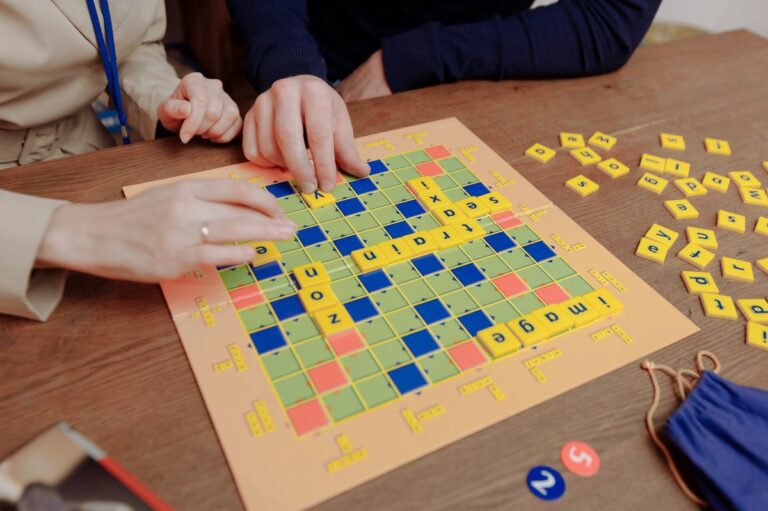
The right engine at the right lesson stage keeps every student engaged.
As a rule of thumb, warmers should use a familiar engine with easy content so students win early and the room warms up. Controlled practice keeps the engine but locks down the target structure so accuracy is high. Free production keeps the engine and removes the guardrails so students stretch. When you plan, do not ask “what activity?” Ask “which engine, and how much scaffolding does this stage need?” The answer writes the activity for you.
Adapting One Engine Across a Whole Timetable
Consider a single teaching day with three classes at different levels, all needing a speaking activity. Rather than prepping three separate games, take the information gap engine and dress it three ways. The young beginners get a spot-the-difference between two picnic scenes, practising “there is” and “there are.” The teenage intermediate group gets two incomplete cinema listings and must phone each other to fill the gaps, practising times and polite requests. The adult exam class gets a jigsaw reading where each partner summarises half of an article before combining notes for a written response.

One engine, one set of instructions you already know how to give, three lessons that feel completely distinct to the students in them. That is the efficiency payoff. Your prep time drops because you are producing content, not designing procedures, and the students never sense that the three activities are cousins. This is how experienced teachers appear to have an infinite bag of tricks while actually leaning on a compact, well-understood core.
The Classroom Management Layer
An engine only works if the mechanics of running it are clean, and this is where good activities fall flat in practice. Three habits carry almost any engine. First, model before you explain: show one round rather than describing five rules, because a demonstration lands faster than instructions in a second language. Second, set the grouping before you set the task, so students are not still choosing partners when they should be talking. Third, give an unambiguous finish line, whether that is a time limit, a target number, or a signal, so the activity ends with energy instead of drifting into silence.

Monitoring during the activity is where the real teaching happens. As students work, you are gathering errors and good examples for a feedback stage at the end. That closing loop, where you replay a few sentences you overheard and polish them with the class, is what turns a fun game into actual language gain. An activity without feedback is just entertainment; the same activity with a tight correction stage is a lesson.
Building Your Own Repertoire
Start smaller than feels comfortable. Pick two engines this week and run each one three times with different content until the setup becomes automatic and you can predict where students will stumble. Once an engine is genuinely automatic, it costs you almost nothing to deploy, and you can afford to add the next one. Within a term you will have a personal toolkit of five or six engines that quietly generate every activity you need.

Keep a simple log of what you run and how it lands with each group. Over time you will notice which engines suit your teaching personality and your particular learners, and you will start inventing your own variations without meaning to. That is the moment the fifty-activity list stops mattering, because you are no longer collecting activities. You are producing them on demand, tuned to the class in front of you. That is the difference between a teacher who owns a stack of printouts and a teacher who owns a method.
The next time a lesson feels thin, resist the urge to hunt for something new. Reach for an engine you already trust, pour fresh content into it, and decide how much scaffolding the stage needs. The activity will practically write itself, and it will work, because it is built on mechanics you and your students already understand.
ምንጮች
- British Council TeachingEnglish — activity banks and teacher development on communicative methodology.
- Cambridge University Press & Assessment — ELT methodology references and task-based learning research.
- Communicative language teaching (Wikipedia) — background on the information-gap principle and task design.
- ESL speaking activity resource books — printed activity collections for building a core repertoire.
Looking for free ESL worksheets? Browse our full collection — printable resources for every level and age group. Browse Free Worksheets →
Students can access free worksheets and reading materials at 18KEnglish.com.
Need help ranking on Google? RankOnRepeat manages your entire blog — keyword research, writing, and publishing — so your business shows up when customers search. See how it works →








 AM
AM  EN
EN  ZH
ZH  ZH_CN
ZH_CN  KO
KO  VI
VI  FR
FR  AR
AR  ES
ES  HI
HI  PT
PT  BN
BN  RU
RU  JA
JA  TR
TR  DE
DE  IT
IT  PL
PL  ID
ID  TH
TH  FA
FA  UK
UK  TL
TL  HE
HE  UR
UR  SW
SW  RO
RO  NL
NL  MS
MS  TA
TA  PS
PS  HU
HU  EL
EL  SV
SV  NB
NB  NN
NN  DA
DA  CS
CS  SR
SR