

ለESL የተለየ መመሪያ | ለተደባለቀ ችሎታ ክፍሎች ተግባራዊ ስልቶች

Walk into any ESL classroom around the world, and you will find students who operate at wildly different levels of English proficiency. One student reads chapter books fluently while the student next to her struggles with basic sight words. A third student speaks English confidently but freezes the moment he picks up a pencil to write. This is the reality teachers face every single day, and it is the reason differentiated instruction has become one of the most important skills in any language teacher’s toolkit.
Differentiated instruction is not a single teaching method. It is a mindset and a collection of strategies that allow teachers to meet learners where they are, rather than forcing every student through the same material at the same pace. For ESL teachers working with mixed-ability groups, mastering differentiation is the difference between a classroom that hums with engagement and one where half the students are bored and the other half are lost.
What Differentiated Instruction Actually Means
Carol Ann Tomlinson, one of the leading researchers on differentiation, describes it as a teacher’s proactive response to learner needs. Instead of planning a single lesson and hoping it works for everyone, the teacher designs multiple pathways through the same learning goals. According to Vanderbilt University’s IRIS Center, effective differentiation for English language learners involves adjusting content, process, product, and learning environment based on each student’s readiness level, interests, and learning profile.
The key word there is proactive. Differentiation is not about scrambling to help a struggling student after a lesson falls flat. It is about building flexibility into your lesson plans from the very beginning. When you write a lesson on past tense verbs, you already know that some students need picture support and sentence frames, while others are ready to write full paragraphs using irregular past tense forms. You plan for both groups before you set foot in the classroom.
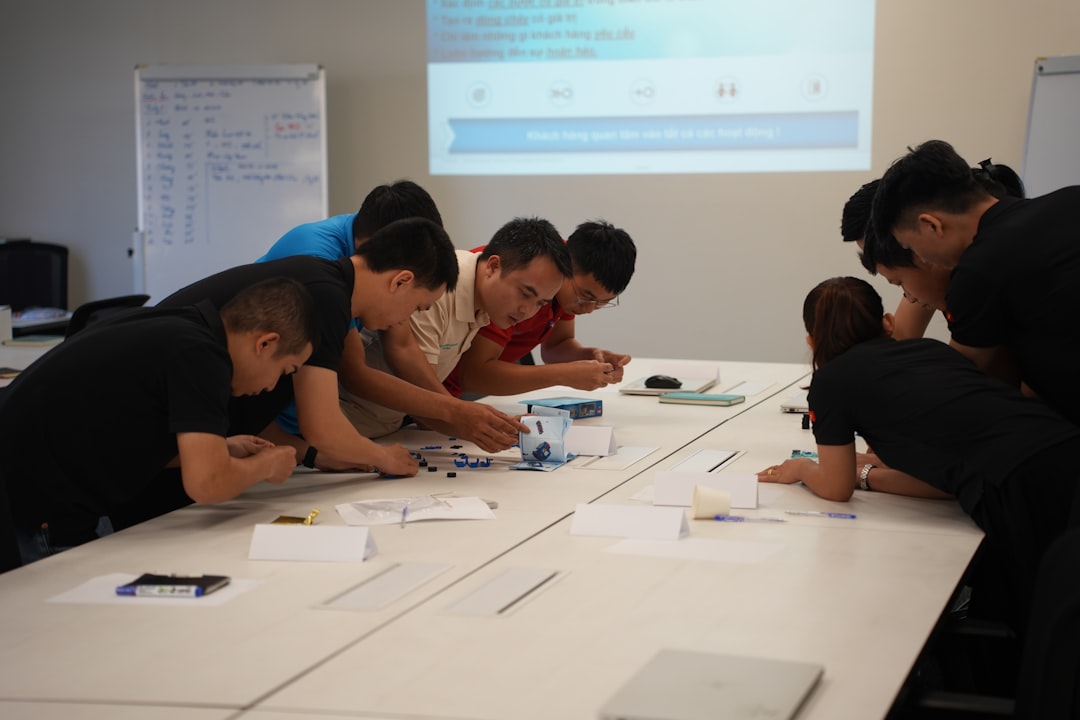
The Four Areas You Can Differentiate
Understanding what you can change makes planning much easier. There are four main areas where ESL teachers can adjust their instruction to meet different learner needs.
Content: What Students Learn
Content differentiation means giving students access to the same topic at different levels of complexity. Imagine you are teaching a unit about weather. Your beginning-level students work with a simplified text that uses basic weather vocabulary and short sentences. Your intermediate students read a grade-level passage about climate patterns. Your advanced students analyze a news article about climate change. All three groups learn about weather, but the linguistic complexity matches their current ability.
Leveled readers are one of the easiest tools for content differentiation. Publishers like Oxford, Cambridge, and National Geographic produce readers at multiple levels that cover the same themes. If your school does not have leveled readers in the budget, you can create simplified versions of texts yourself using tools like readability formula calculators to check that your adapted texts match your students’ reading levels.
Process: How Students Learn
Process differentiation means varying the activities students use to make sense of new material. Some students need hands-on activities with physical manipulatives. Others thrive with visual organizers like mind maps or Venn diagrams. Still others learn best through discussion and verbal processing. In a differentiated ESL classroom, you might offer students a choice board where they select how they want to practice new vocabulary — through a matching game, a drawing activity, a conversation with a partner, or a written exercise.

Product: How Students Show What They Know
Product differentiation means allowing students to demonstrate their learning in different ways. A student who struggles with writing might create a poster or record an audio response instead of writing an essay. A student with strong artistic skills might draw a comic strip that demonstrates comprehension of a story. The assessment still measures the same learning objective, but the format changes to match the student’s strengths. The TESOL International Association recommends offering at least two product options whenever possible to give English language learners a fair chance to show what they have actually learned, rather than testing their English writing ability alone.
Learning Environment: Where and How Students Work
The physical and emotional setup of your classroom matters more than many teachers realize. Some students need absolute quiet to concentrate on reading tasks. Others need the energy of a group to stay motivated. Flexible seating arrangements, quiet corners, collaboration stations, and even allowing students to work standing up or on the floor can make a measurable difference in engagement and output. Research from the British Council consistently shows that learning environment modifications are among the simplest and most cost-effective differentiation strategies available.
Five Practical Strategies for Mixed-Ability ESL Classes
Theory is helpful, but ESL teachers need strategies they can use on Monday morning. Here are five approaches that work in real classrooms with real mixed-ability groups.

1. Tiered Assignments
Tiered assignments are the bread and butter of differentiated instruction. You create two or three versions of the same task at different difficulty levels. All versions target the same learning objective, but they demand different levels of language complexity and cognitive effort.
For example, after reading a story about a family vacation, your Tier 1 students might answer five multiple-choice comprehension questions with picture support. Your Tier 2 students answer the same questions in short written responses. Your Tier 3 students write a journal entry from the perspective of one of the characters in the story. Everyone engages with the same text and the same comprehension goals, but the output matches each group’s current ability.
The biggest mistake teachers make with tiered assignments is making the tiers obvious. Nobody wants to be the student who always gets the “easy” worksheet. Use color-coded papers instead of labels, or let students self-select their challenge level. Many teachers find that students often choose accurately when given the freedom to pick their own tier.
2. Flexible Grouping
Flexible grouping means that the composition of student groups changes depending on the task. One day, you might group students by proficiency level so that you can provide targeted instruction to each group. The next day, you mix proficiency levels so that stronger students can model language for weaker ones. Sometimes groups form around shared interests rather than ability levels — students who love soccer work together on a sports-themed project regardless of their English level.
The word flexible is critical. If the same students always end up in the same group, you have created tracks, not flexible groups. Tracks limit growth and damage student self-esteem. Changing group compositions regularly prevents this problem and gives every student the chance to work with different peers throughout the week.

3. Learning Stations
Learning stations (also called centers or rotations) divide the classroom into areas where students complete different activities. A typical station rotation for an ESL grammar lesson might include a reading station with leveled texts, a writing station with sentence frames and free-writing options, a listening station with audio recordings at different speeds, and a conversation station where students practice speaking with a partner.
Stations work especially well because they naturally provide multiple entry points. A beginning student at the writing station uses sentence frames and word banks. An advanced student at the same station writes original paragraphs. The station itself provides the structure. You do not need to stand over each student and assign individual tasks. Build the differentiation into the station materials, and students drive their own learning within the structure you have created.
4. Scaffolded Instructions
Scaffolding means providing temporary support structures that help students accomplish tasks they could not complete independently. For ESL students, scaffolds might include vocabulary lists, graphic organizers, sentence starters, visual aids, bilingual glossaries, or modeled examples. The goal is to gradually remove these supports as students gain confidence and skill.
A practical scaffolding technique is the gradual release model: I do it, we do it, you do it together, you do it alone. You demonstrate a grammar structure on the board. Then the class completes an example together. Then pairs work on a few more examples. Finally, individuals try on their own. Students who need more support stay in the “we do it” phase longer. Students who are ready move to independent practice sooner. Everyone works at their own pace through the same progression.

5. Choice Boards and Menus
Choice boards give students a grid of activity options. They choose a certain number of activities to complete, usually forming a line (like tic-tac-toe) or selecting from categories. This approach respects student autonomy while ensuring that all choices lead toward the same learning objective.
A vocabulary choice board for an ESL class might include options like: write each word in a sentence, draw a picture for each word, find a synonym and antonym for each word, use the words in a short story, create flashcards, record yourself pronouncing each word, or teach the words to a partner. Beginning students might choose the drawing and flashcard options. Advanced students might choose the story writing and synonym tasks. Both groups practice the same vocabulary. Both groups feel ownership over their learning.
Assessing Students in a Differentiated Classroom
Assessment in a differentiated classroom looks different from traditional testing. If you allow students to demonstrate learning in different ways, you need assessment tools that measure the learning objective itself, not the format of the response. Rubrics become essential. A well-designed rubric describes what mastery of the objective looks like regardless of whether the student produced a written essay, an oral presentation, a poster, or a digital project.
Formative assessment is even more important than summative assessment in differentiated settings. You need constant information about where each student is so that you can adjust your instruction in real time. Exit tickets, quick conferences, observation checklists, and portfolio reviews all provide this kind of ongoing data without the pressure of formal tests. The Cambridge Assessment English framework offers helpful guidance on designing formative assessments that capture language development across multiple skill areas.

Common Mistakes Teachers Make With Differentiation
Even experienced teachers fall into traps when implementing differentiated instruction. Recognizing these pitfalls early saves enormous amounts of time and frustration.
Giving advanced students more work instead of different work. If your strongest student finishes early and you hand her an extra worksheet, that is not differentiation. That is punishment for being fast. Advanced students need tasks that are more complex, not more numerous. Replace quantity with depth — ask them to analyze, create, or evaluate instead of completing more of the same drill.
Creating permanent ability groups. When the same students always sit together at the “low” table, everyone knows it, including the students. Rotate groups frequently and use mixed-ability groupings alongside proficiency-based groupings to avoid tracking.
Trying to differentiate everything at once. New teachers often burn out because they try to create three versions of every single activity from day one. Start small. Pick one lesson per week to differentiate intentionally. Gradually build your library of tiered materials. Over a school year, you will accumulate a powerful collection of flexible resources without exhausting yourself in the process.
Ignoring student input. Students know what helps them learn. Ask them. Simple surveys about preferred activities, self-assessments about confidence levels, and regular goal-setting conversations provide data that no standardized test can match. When students feel heard, they invest more in their own learning — and they often surprise you with how accurately they can identify their own needs.
Making Differentiation Sustainable
The number one concern teachers raise about differentiated instruction is time. Planning multiple versions of lessons, creating tiered materials, and managing different groups simultaneously sounds overwhelming. It can be, if you approach it the wrong way.
The sustainable approach is to build a system, not to wing it every day. Create template activities that you can reuse with different content. A sentence frame worksheet works for any grammar point — you just swap the target structure. A reading comprehension template works for any text — you just change the passage and questions. Once you have a library of flexible templates, differentiation stops being extra work and starts being a matter of choosing which template fits each group.
Collaboration with other teachers multiplies your resources. If three ESL teachers each create one tiered activity per week and share them, everyone has three new differentiated resources every week. Over a semester, that is nearly fifty activities with only seventeen individual contributions. Schools that build shared differentiation libraries see dramatic improvements in both teacher satisfaction and student outcomes.
Technology can also ease the burden. Platforms like Google Classroom allow you to assign different versions of an activity to different students without printing multiple worksheets. Digital tools like Quizlet, Kahoot, and Padlet offer built-in flexibility that supports differentiation with minimal extra planning. The key is choosing a few tools that work for your context and learning them well, rather than jumping between twenty different apps.
Where to Go From Here
Differentiated instruction is not something you master overnight. It is a practice that develops over years of teaching, reflecting, and adjusting. Start with one strategy from this article — maybe tiered assignments or a simple choice board — and try it in your classroom this week. Pay attention to what happens. Notice which students light up and which ones still seem stuck. Then adjust and try again.
The most important shift is mental, not logistical. When you stop asking “How do I teach this lesson?” and start asking “How do my students need to learn this material?”, everything changes. You stop blaming students for not keeping up with your pace and start designing instruction that meets them where they are. That single shift in perspective is worth more than any collection of templates or strategies.
If you are looking for more resources, check out our guides on ESL reading comprehension strategies እና Dolch sight words for ESL teachers. Both articles include practical techniques that pair naturally with a differentiated approach to language instruction.
Your students are not the same. Your teaching should not be either. Differentiated instruction gives you the tools to honor every learner in your classroom, and that is what great teaching looks like.
References
- Tomlinson, C. A. (2017). How to Differentiate Instruction in Academically Diverse Classrooms (3rd ed.). ASCD.
- IRIS Center, Vanderbilt University. “Differentiate Instruction for ELLs.” https://iris.peabody.vanderbilt.edu/module/ell/cresource/q2/p09/
- TESOL International Association. “Standards for ESL/EFL Teachers.” https://www.tesol.org/
- British Council. “Teaching English Resources.” https://www.britishcouncil.org/teaching-english
- Cambridge Assessment English. “Teaching and Assessment Resources.” https://www.cambridge.org/elt






 AM
AM  EN
EN  ZH
ZH  ZH_CN
ZH_CN  KO
KO  VI
VI  FR
FR  AR
AR  ES
ES  HI
HI  PT
PT  BN
BN  RU
RU  JA
JA  TR
TR  DE
DE  IT
IT  PL
PL  ID
ID  TH
TH  FA
FA  UK
UK  TL
TL  HE
HE  UR
UR  SW
SW  RO
RO  NL
NL  MS
MS  TA
TA  PS
PS  HU
HU  EL
EL  SV
SV  NB
NB  NN
NN  DA
DA  CS
CS  SR
SR