
The Grammar-Translation Method: 7 ESL Techniques That Work
Four hundred years ago, a Latin teacher in a European grammar school had exactly one goal: get students reading Cicero. Nobody cared whether they could order a meal in Rome, because nobody was going to Rome. That single constraint — literacy without conversation — shaped a teaching method so durable it outlived the language it was built for and is still running in classrooms today, usually under a different name.
The grammar-translation method gets dismissed fast in most TESOL courses, often in the same breath as “outdated” and “ineffective.” That reputation is earned in part — a class built entirely on translation drills produces students who can diagram a sentence and freeze at the airport counter. But throwing the whole method away ignores the specific jobs it still does better than anything newer, and the specific techniques worth keeping even in a mostly communicative classroom.
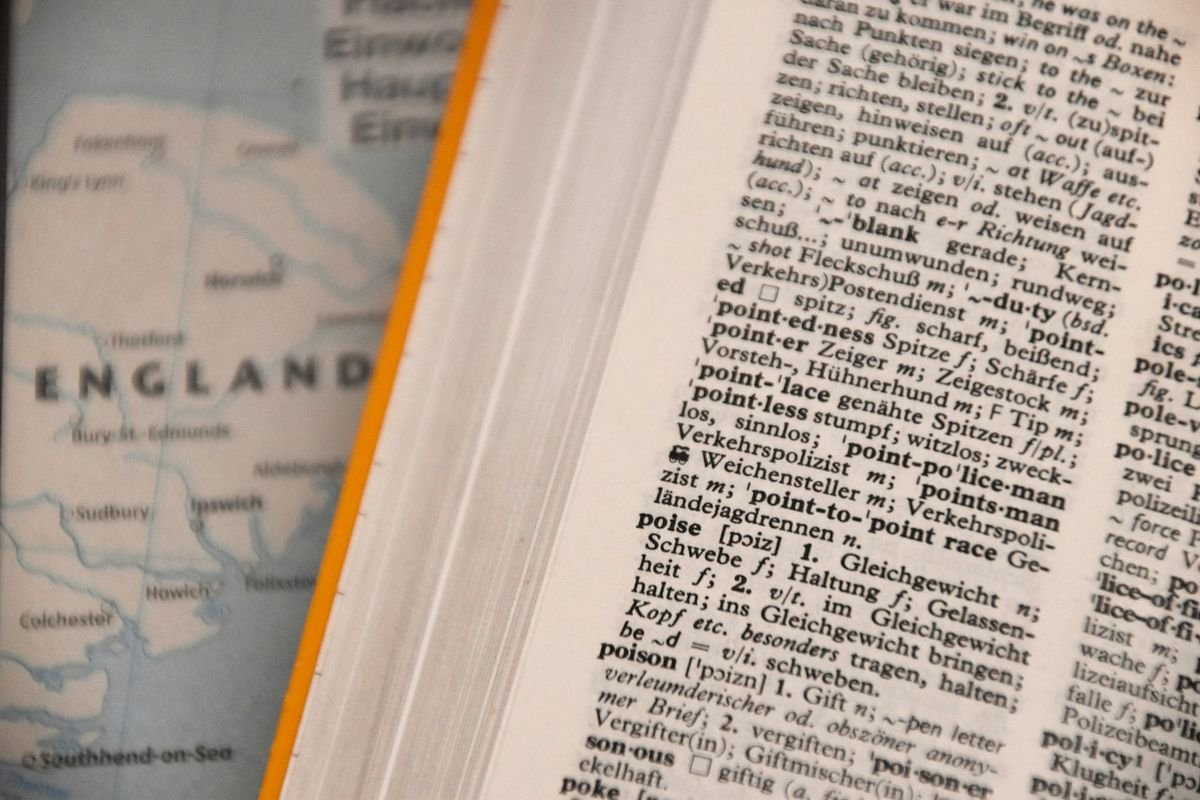
Where the Grammar-Translation Method Actually Came From
Grammar-translation didn’t start as a method for modern languages at all. It grew out of how Latin and Ancient Greek were taught from the 16th century onward, back when Latin was still the working language of law, church, and scholarship across Europe. Once Latin stopped being spoken day to day, the goal of instruction quietly shifted from communication to literacy — and the teaching procedure never caught up.
When French, German, and English entered European school curricula in the 19th century, educators reached for the only systematic teaching procedure they had on hand and applied it wholesale. Karl Plötz, writing grammar textbooks in Prussia in the mid-1800s, became one of the method’s most influential codifiers — his texts organized lessons around a grammar rule, a vocabulary list, and a translation exercise, a structure that’s barely changed in a hundred and fifty years of textbook design. The method dominated European and American foreign language classrooms from roughly the 17th through the late 19th century, right up until reformers like Wilhelm Viëtor and later the Direct Method crowd started asking an obvious question: if the goal is actually speaking the language, why does the method never practice speaking?
What a Grammar-Translation Lesson Actually Looks Like
Strip away the historical baggage and the classroom procedure is simple enough to describe in four steps. The teacher presents a grammar rule explicitly, usually in the students’ first language, often with a formal paradigm or table. Students memorize a bilingual vocabulary list tied to that rule. They complete written exercises translating sentences from the target language into their L1, then from their L1 back into the target language. Advanced students eventually translate full passages, frequently drawn from literary texts rather than anything resembling everyday speech.
Accuracy is the only currency that matters. A sentence that’s grammatically perfect but something no native speaker would ever actually say still counts as correct, because the method was never measuring naturalness — it was measuring whether the student could decode and reconstruct the grammatical system. That’s precisely the trade-off: deep explicit grammar knowledge, built on a near-total absence of listening and speaking practice.
Where It Still Earns Its Place in a Modern ESL Classroom
I’ve taught enough university-level English courses in Taiwan to say this plainly: grammar-translation never fully left, it just got rebranded as “grammar review” and folded into otherwise communicative syllabi. There are three class types where it’s still the right tool, not a lazy fallback.
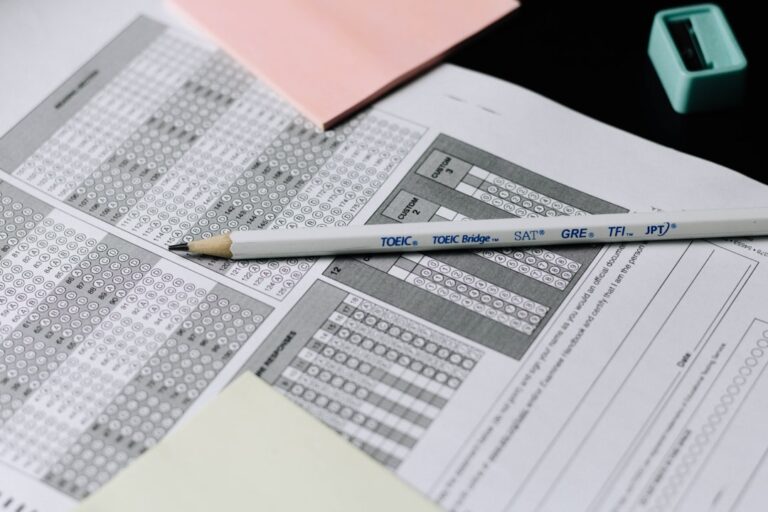
Academic and legal English classes, where students need to parse dense, grammatically complex source documents more than they need to make small talk, reward explicit grammar instruction heavily. A paralegal-track student translating a contract clause benefits far more from deductive rule explanation than from a communicative roleplay about renting an apartment. Exam-prep classes targeting the grammar and reading sections of IELTS or TOEIC see similar gains — those tests reward exactly the kind of conscious, rule-based grammar knowledge this method builds, even though they also test speaking skills the method ignores entirely.
Heritage and bilingual learners are the third group, and the one teachers underestimate most. A student who grew up speaking English at home but never learned to read or write it formally doesn’t need speaking practice — they’re already fluent. What they need is exactly the explicit grammar mapping and translation drilling this method was built to deliver, because their gap is literacy, not oral communication.
7 Grammar-Translation Techniques Worth Using Today
None of these require reviving the method wholesale. Each one is a discrete tool you can drop into an otherwise communicative class when the goal genuinely calls for it.
1. Contrastive analysis
Before drilling a grammar point, put the target-language structure next to its L1 equivalent on the board and ask students to spot the difference. Mandarin has no verb tense marking the way English does — showing “I eat” next to “I ate” next to the Mandarin sentence that covers both makes the gap visible in a way no amount of oral practice communicates as fast. This is grammar-translation’s single best surviving contribution to modern teaching.
2. Back-translation drills
Give students an English sentence, have them translate it into their L1, then — without looking back at the original — translate their L1 version back into English. Compare the result to the original. The gaps that appear are almost always the exact grammar points that need more work, and the technique surfaces them without you having to guess.

3. Parallel text reading
For advanced or literature-focused classes, hand out a short passage in English with a professional translation in the students’ L1 running alongside it. Have students read both, then explain in their own words why the translator chose specific wording where a literal word-for-word version wouldn’t have worked. This builds grammar awareness and also teaches something communicative approaches rarely touch: how two languages actually diverge in structure, not just vocabulary.
4. Themed bilingual vocabulary lists — never in isolation
The historical mistake was teaching vocabulary as a flat alphabetical list disconnected from any sentence. Fix that and the core idea still works: group new words by topic, pair every word with its L1 equivalent, and attach one full example sentence to each entry. A law-English vocabulary list built this way, reviewed weekly, still outperforms flashcard apps for students who need precise technical terminology fast.
5. Sentence reconstruction after translation
Translate a sentence into the L1, scramble the English original’s word order, and have students reconstruct the correct English sentence from memory and from grammar logic rather than rote recall. This forces active application of the grammar rule instead of passive recognition, which is where most translation exercises stop short.

6. Explicit rule presentation as flipped homework
Move the grammar explanation itself — the part of grammar-translation that eats the most class time — to a short reading assignment students do before class, written in a mix of English and their L1 if needed. That frees the actual lesson for the production and speaking work a purely translation-based method never gets to. This hybrid is the most practical way to keep the method’s strength without inheriting its weakness.
7. Literary close-translation for upper-level classes
Assign a short, carefully chosen literary excerpt and have students produce their own translation before comparing it to a published one. The exercise forces attention to register, idiom, and grammatical nuance that a comprehension quiz on the same passage would skip entirely. It’s slow, and it only works with students who already have a reasonable proficiency floor, but for that narrow group it builds a kind of grammatical precision nothing else quite matches.

Why It Fails as a Standalone Method
Run a class on grammar-translation alone and the failure mode is predictable and well documented: students can diagram sentences they can’t say out loud. Listening and speaking get zero practice time, so even strong written grammar doesn’t transfer to conversation — the two skills develop on separate tracks that never meet. Modern linguists go further than “incomplete.” Many argue the method was never built on any theory of how people actually acquire a second language; it simply inherited a 16th-century procedure for teaching a dead language and never updated the theory behind it.
There’s also a classroom-culture cost that doesn’t show up in test scores. A class built entirely around translation accuracy trains students to expect a right answer and a wrong answer for every sentence, which makes them far more hesitant to take the communicative risks that actual fluency requires. Years of grammar-translation can leave accurate, silent students — exactly the outcome a modern ESL classroom is trying to avoid.

Grammar-Translation vs. the Methods That Replaced It
የ Direct Method was the first direct rebellion, banning the L1 entirely and teaching through realia, gesture, and demonstration instead of translation. It fixed the speaking gap but created a new one: it demands fluent teachers and small classes, which is exactly the resource grammar-translation never needed. The Audio-Lingual Method went further, treating language as habit formation through pattern drills, which produced fast, accurate repetition but little genuine communicative ability — trading one narrow skill for another.
Both reactions prove the same point from opposite directions. No single method covers every classroom need, which is why most working teachers end up blending pieces of several rather than pledging loyalty to one. For a wider comparison of how these approaches stack up against task-based and communicative teaching, the ESL Teaching Methods Compared guide walks through all seven side by side.
Watch: The Grammar-Translation Method Explained
This walkthrough covers the method’s history, core principles, and classroom procedure in under ten minutes — useful as a refresher before you decide which pieces of it, if any, belong in your own syllabus.

A Practical Checklist Before You Use It
Ask three questions before building a lesson around any of the techniques above. Does this class actually need literacy more than it needs conversation — academic reading, legal English, exam grammar sections? Do my students already have oral fluency and a genuine literacy gap, the heritage-learner case? Am I using translation as one tool among several, or as the entire lesson? If the honest answer to the third question is “the entire lesson,” that’s the 19th-century version, and it will produce 19th-century results: accurate on paper, silent in the hallway.

Grammar-translation isn’t coming back as a dominant method, and it shouldn’t. But contrastive analysis, back-translation, and parallel-text reading are too useful to bury along with the parts of the method that deserved to go. Pull the techniques that match a real classroom need, skip the ones that don’t, and the oldest method in language teaching still has a few things to offer the newest classroom.
ምንጮች
- Wikipedia — Grammar-Translation Method — history, origin in Latin/Greek instruction, and Plötz’s 19th-century codification.
- University of Texas at Austin — Language Teaching Pedagogy LibGuide — classroom procedure and textbook structure.
- The TEFL Institute — What Is the Grammar Translation Method? A Teacher’s Guide — modern classroom applications.
- Cambridge University Press ELT Blog — contemporary ELT methodology commentary.






 AM
AM  EN
EN  ZH
ZH  ZH_CN
ZH_CN  KO
KO  VI
VI  FR
FR  AR
AR  ES
ES  HI
HI  PT
PT  BN
BN  RU
RU  JA
JA  TR
TR  DE
DE  IT
IT  PL
PL  ID
ID  TH
TH  FA
FA  UK
UK  TL
TL  HE
HE  UR
UR  SW
SW  RO
RO  NL
NL  MS
MS  TA
TA  PS
PS  HU
HU  EL
EL  SV
SV  NB
NB  NN
NN  DA
DA  CS
CS  SR
SR