Information Gap Activities ESL: 7 Best Tasks
David Nunan’s foundational work on communicative tasks identified the information gap as the most efficient speaking structure in language teaching — not because students practice language, but because they actually use it. When a student doesn’t know what’s behind their partner’s worksheet, they stop rehearsing and start communicating. That switch is where fluency gains happen, and it’s distinct from drills, repetition, or controlled speaking tasks that simulate communication without creating a real need for it.
The seven formats below are ordered from most structured to most open-ended. Structured formats work at lower levels; open-ended ones give advanced students room to negotiate complex meaning. All of them generate simultaneous whole-class speaking, which is far more efficient than activities where one student speaks while twenty-nine listen.

What Makes Information Gap Activities Work
The defining feature of an information gap is a genuine communicative need. One student or group knows something the other doesn’t, and the task cannot be completed without exchanging that information. This is different from display questions (“What day is it?”) where both parties already know the answer — in those cases, students recognize they’re practicing, not communicating, and performance drops accordingly.
Research by Teresa Pica on negotiation of meaning found that information gap tasks produced significantly more “modified output” — moments where learners rephrase, clarify, or restructure what they’re saying — than any other speaking task type. Modified output is closely tied to acquisition: the act of reformulating a sentence for a confused listener forces learners to notice the gap between their current grammar and the target form.
The practical implication: if you want students to improve their speaking rather than just produce more of it, information gap tasks are more effective than activities asking students to share opinions or describe pictures. Those are monologues without a communicative partner who genuinely needs the information. The gap has to be real for the speaking to be real.
1. Find Someone Who… Surveys

Give every student a grid with prompts: “Find someone who has visited three or more countries” / “Find someone who can play a musical instrument” / “Find someone who has never eaten sushi.” Students circulate, ask questions, and write names in matching boxes. The goal is to fill the grid.
This format requires productive language while feeling like a social activity. Students generate their own questions from the prompts rather than reading them aloud, which adds a grammar production layer on top of the speaking. It also generates natural follow-up: “What instrument?” “Which countries?” The conversation extends beyond the grid itself.
Find Someone Who works as a warm-up, a first-lesson activity, or a grammar consolidation task. Adapt the prompts to current grammar targets — if you’re teaching present perfect, use “Find someone who has tried Korean food / broken a bone / been to Europe.” The format scaffolds the grammar without foregrounding it, which reduces anxiety and increases naturalness.
2. Describe and Draw

Student A has a picture; Student B has blank paper. A describes while B draws, without looking at the original. When done, they compare. Then roles reverse with a different image.
Describe and Draw is one of the most naturally motivating information gap formats because the result is immediate and tangible. Students can see exactly how precisely they communicated — vague descriptions produce wrong drawings; precise descriptions produce accurate ones. The gap between intended and actual drawing is visible without any teacher feedback, which creates a self-correction loop that most speaking activities can’t replicate.
This format targets spatial language, prepositions, and descriptive vocabulary. It works at A2 and above. For advanced classes, use abstract or complex images rather than simple shapes. The image quality doesn’t matter — the activity works equally well with rough sketches. Any visual that requires specific positional language to recreate accurately will do.
3. Spot the Difference

Partners each have a version of the same picture with subtle differences. They cannot show each other their image. By describing and questioning, they identify all the differences: “In my picture there are three people at the table — how many are in yours?” “Is there a clock on the wall in your version?”
Spot the Difference is the format that most clearly demonstrates the value of the information gap structure: both parties have incomplete information simultaneously, so neither student is just a passive receiver. Both describe and question throughout. This creates more balanced speaking time than formats where one person holds all the information and the other only listens.
Free spot-the-difference worksheets are available on ESL Printables and similar sites. You can also create your own by making two copies of a simple line drawing and changing ten to twelve details in one version. Aim for enough differences to sustain five to eight minutes of paired conversation — too few and the activity ends before real communication builds up.
4. Grid Dictation

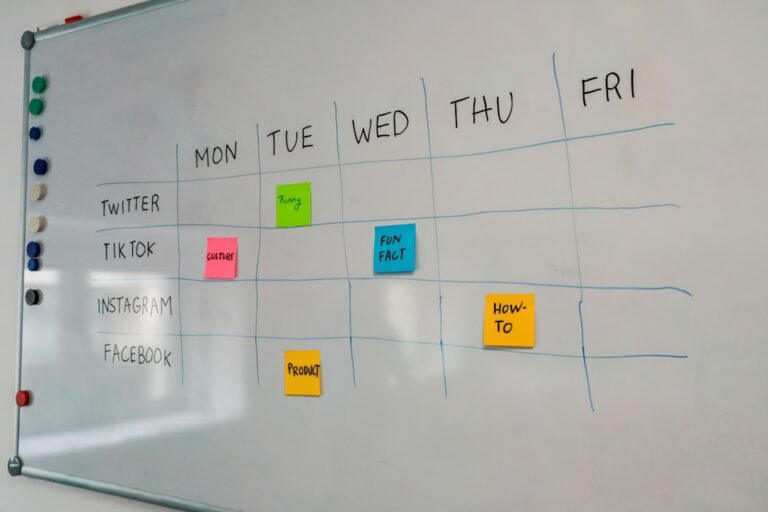
Both students have the same grid — a timetable, a class schedule, a film listing, a train schedule — but each has different cells filled in. They have to ask questions to complete their own grid without showing each other. “What time does the train leave on Thursday?” “Which platform is the Manchester service on?”
Grid dictation is particularly effective for teaching functional language: times, dates, numbers, and the specific question forms that go with each type. It’s also one of the most workplace-applicable formats — the language students practice is exactly the language they’d need to confirm a meeting time, check a flight schedule, or review a project deadline in English at work.
For lower levels, keep grids simple: names, times, three columns. For upper-intermediate and above, use complex information like booking forms, itineraries, or multi-column schedules. The format scales naturally — complexity of grid equals complexity of language demand. No additional scaffolding required.
5. Sequencing Activities

Distribute a sequence of pictures, sentences, or events among the group. Each student sees a different portion of the whole story, recipe, or process and describes their portion without showing the cards. The group decides the correct order through discussion alone.
Sequencing activities target narrative language naturally — “first,” “then,” “after that,” “finally” — without drilling them in isolation. They also require careful listening, because each student has to understand what their classmates describe before placing their own piece correctly. The combined cognitive load of speaking, listening, and reasoning produces some of the richest spontaneous language in any classroom session.
This format works in groups of three to five. Use picture sequences from stories, how-to guides, news timelines, or recipes. For advanced classes, use complex processes where the sequencing rationale requires argument, not just description. The format connects naturally to task-based activities where communicative reasoning is built into the task design — students aren’t just exchanging information, they’re building shared understanding.
6. Interview Information Exchange
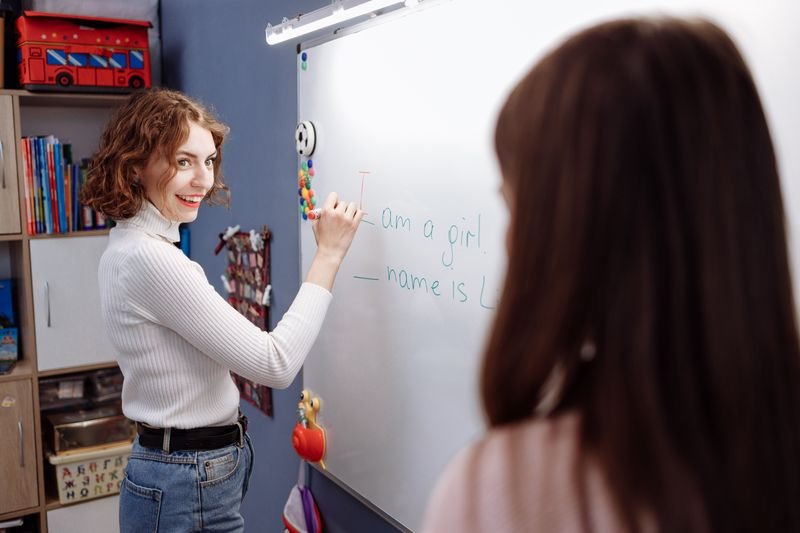
Each student receives a role card with a character profile: name, job, opinions, habits. They cannot show the card. Students mingle and introduce themselves as their character, gathering information about other characters through conversation. At the end, they report what they found — and the class tries to match reports to character cards.
The interview format adds a social dimension that purely information-focused tasks lack. Students navigate small talk alongside direct questions, which mirrors real communication far more closely than most classroom activities. The character card element reduces self-consciousness — students are playing a role, so hesitation feels less exposing than it would in a personal conversation.
For beginners, keep cards simple: name, age, three hobbies. For advanced learners, add opinions, preferences, and contradictions (the character says they love cooking but hate grocery shopping). The more nuanced the character, the richer the exchange required to uncover their profile. Pairs well with speaking confidence activities if students resist speaking in character at first.
7. Barrier Games

Partners sit across a physical divider — a folder, a textbook stood on its spine, a screen. Each has a scene, map, or arrangement of objects. Student A places items or draws a scene; Student B follows the instructions and tries to recreate it exactly. No showing, no looking.
Barrier games are the most demanding information gap format in terms of precision. Students quickly discover that approximate language fails: “put the tree near the house” produces wildly different results from partner to partner. They learn to specify: “Put the tall tree two centimetres to the right of the blue house, touching the garden fence.” That pressure for precision is exactly the kind of language stretch that drills can’t produce.
Classroom applications include map tasks, room layouts, geometric arrangements, and sentence construction. For lower levels, use simple object placement: “Put the cat on the left of the table.” For upper-intermediate and above, use complex map navigation or city layout tasks that require spatial reasoning and back-and-forth negotiation. The barrier itself can be a textbook standing upright between two desks — no special equipment needed.
Fitting Information Gaps Into a Lesson Plan
Information gap activities work best at the production stage of a lesson — after students have encountered and practiced the target language but before it becomes automatic. At that point, students have the forms available but still need communicative pressure to deploy them fluently. An information gap creates that pressure without reducing communication to repetition.
A practical rule: the gap should target the same language structure you just taught. If the lesson covered comparative adjectives, use a spot-the-difference task where students describe the comparison between their two images. If you taught present perfect questions, Find Someone Who provides the natural frame. The connection reinforces the lesson structure and gives students an immediate real application for what they learned fifteen minutes earlier.
Keep the debrief short. After an information gap, students have already received feedback through the task itself — a wrong drawing, an incomplete grid, a mismatched sequence. A two-minute wrap-up noting two or three language items the class used well is enough. For more detail on how to sequence these activities within a full class structure, see the ESL lesson plan framework.
ምንጮች
- Nunan, D. (1989). Designing Tasks for the Communicative Classroom. — Cambridge University Press; established the information gap as a core communicative task structure in language teaching.
- Pica, T. (1994). Research on Negotiation: What Does It Reveal About Second-Language Learning Conditions, Processes, and Outcomes? — Language Learning, 44(3); key study on modified output and information gap task outcomes.
- FluentU — 20 Information Gap Activities for the ESL Classroom. — Practical activity compilation with level guidance.




 AM
AM  EN
EN  ZH
ZH  ZH_CN
ZH_CN  KO
KO  VI
VI  FR
FR  AR
AR  ES
ES  HI
HI  PT
PT  BN
BN  RU
RU  JA
JA  TR
TR  DE
DE  IT
IT  PL
PL  ID
ID  TH
TH  FA
FA  UK
UK  TL
TL  HE
HE  UR
UR  SW
SW  RO
RO  NL
NL  MS
MS  TA
TA  PS
PS  HU
HU  EL
EL  SV
SV  NB
NB  NN
NN  DA
DA  CS
CS  SR
SR