

Fishbowl Discussion: 7 Best ESL Techniques
Facing History & Ourselves built the modern classroom version of fishbowl to handle exactly one problem: a full-class discussion on a hard topic where six kids talk and eighteen check out. Put twenty-four ESL students in a single circle and ask them to discuss a topic, and you get the same result you’d get in an English L1 classroom — a handful of confident voices dominate, quieter students never open their mouths, and the teacher spends more energy managing turn-taking than teaching language. Shrink the speaking circle to six or eight and give the rest of the class a job to do while they watch, and the whole dynamic changes.
What Is a Fishbowl Discussion?
In a fishbowl discussion, six to ten students sit in an inner circle and talk about an assigned topic while the rest of the class forms an outer circle around them and listens without speaking. The inner group is “in the fishbowl” — visible, listened to, and expected to carry the conversation using target language or structures the lesson is built around. After a set time, or when the discussion runs dry, the teacher swaps some or all of the inner-circle students with outer-circle students and a fresh group takes over the conversation.
The format didn’t start as a language-teaching tool. It comes from group-therapy and conflict-mediation circles from the 1960s, where an inner ring modeled a conversation for an outer ring of observers. Teachers borrowed the shape because it solves a problem therapy groups and classrooms share: how do you let people watch a skill being modeled up close without turning every single person in the room into a performer at once.
Why Fishbowl Discussions Work Better Than Whole-Class Debate
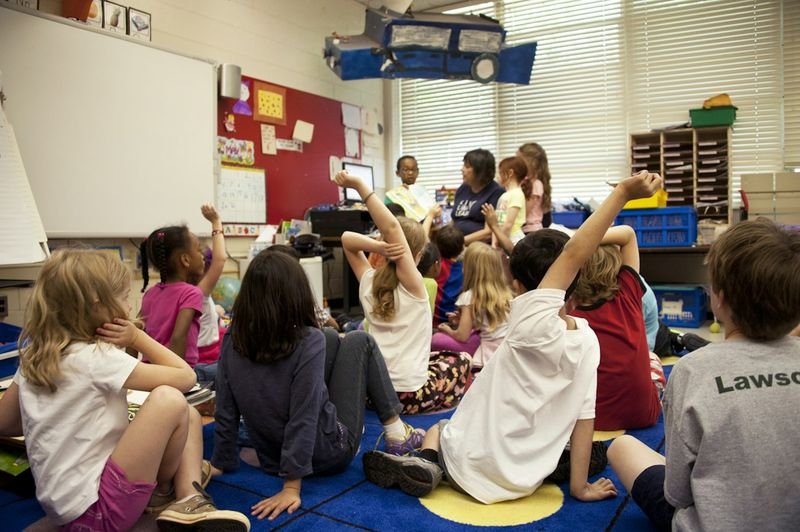
Open up a topic to a class of twenty and ask “what do you think,” and in most ESL rooms the same four students answer every time — not because the other sixteen have nothing to say, but because speaking in front of twenty peers in a second language is a much bigger ask than speaking in front of six. Shrinking the live audience from twenty to six changes the actual task difficulty, not just the seating chart. A student who freezes in a full-class debate will often talk for the entire five minutes once the circle is small enough to feel like a conversation instead of a performance.
The outer circle isn’t wasted time either, which is the part teachers usually get wrong the first time they try this. Facing History & Ourselves’ fishbowl framework builds in an explicit observer job — outer-circle students track specific things (a new piece of vocabulary someone used well, a claim that needed more evidence, a question left unanswered) and report back after the swap. That observation job is itself a listening-and-note-taking task, and it means the outer circle is still doing language work, just a different kind than the inner circle.
There’s a sequencing benefit too. Because the inner circle changes every round, a shy student who watched two rounds of classmates model the target structure gets to step into the fishbowl with three examples already fresh in their head. That’s a scaffold a straight whole-class discussion never offers — everyone hears the exact same live model before it’s their turn to try it themselves.

7 Fishbowl Discussion Techniques for ESL Teachers
The basic swap-the-circle structure is the starting point. These seven variations adapt it for different class sizes, proficiency levels, and lesson goals without losing the core mechanic that makes fishbowl work.
1. Timed Rotation Fishbowl
Set a visible timer for three to five minutes per round and swap two or three students out of the inner circle when it goes off, pulling replacements from the outer circle. Keep one or two “anchor” students in the circle across rotations to carry continuity, since a discussion that resets every single participant every round never builds momentum. This is the version to run first with a new class — the fixed clock keeps the transitions predictable while students learn the format.

2. Tap-In Fishbowl
Instead of a timer, let outer-circle students physically tap an inner-circle student on the shoulder when they want to join, and the tapped student moves to the outer ring. This hands control of pacing to the students rather than the clock, and it rewards students who are actually following the conversation closely enough to jump in at a natural point. It runs slower than timed rotation, so save it for classes that already know the fishbowl format and can self-manage the tap-in etiquette.
3. Empty-Chair Fishbowl
Leave one or two chairs empty in the inner circle at all times. Any outer-circle student can sit in an empty chair, make one point or ask one question, then return to the outer circle — no permanent seat change required. This lowers the stakes dramatically for low-confidence speakers, because “sit down, say one thing, stand back up” is a much smaller commitment than “join the discussion for five minutes.” It’s the version to run with beginner and lower-intermediate classes before trying full rotation.

4. Structured Role Fishbowl
Assign each inner-circle seat a specific job before the discussion starts — the summarizer, the question-asker, the counter-arguer, the example-giver. Print the roles on small cards and hand them out as students enter the circle. This solves the most common fishbowl failure, which is one strong talker dominating the inner circle while two others sit silent because they don’t know what their job is supposed to be. A defined role gives quieter students a concrete reason to speak, even if it’s just “ask a clarifying question.”
5. Observer Note-Catcher Fishbowl
Give every outer-circle student a simple note-catcher with three boxes: one new word or phrase they heard, one claim they agree with, one claim they’d push back on. Collect the note-catchers after the round and use two or three as talking points before the next rotation starts. This is what turns the outer circle from passive listening into active language work, and it gives you a quick formative-assessment artifact without adding a separate quiz.

6. Debate Fishbowl
Split the inner circle down the middle — three students argue one side of a topic, three argue the other, with an odd seat left for a moderator if the class size allows it. This variation pairs well with a class that’s already done structured debate work, since it borrows the argument-and-rebuttal shape but keeps the audience small enough that shy debaters aren’t performing for the whole room. Rotate debaters out after they’ve made one full argument and one rebuttal, not mid-point.
7. Silent Fishbowl
Run one full round where the outer circle can’t speak at all, not even to comment during a swap — they can only write. Then flip it: the group that just watched silently becomes the inner circle, and they open with a written question pulled from what they noticed. This variation is worth running once every few weeks specifically because it forces genuinely close listening; students can’t drift and plan their own comment because there’s no comment to plan, only notes to take.
Common Mistakes That Kill a Fishbowl Discussion
The most frequent failure is an inner circle with no assigned task beyond “discuss the topic.” Without a role, a question prompt, or a note-catcher job, three students will talk and the rest will sit there waiting for the timer, which defeats the entire point of shrinking the group. Always walk into a fishbowl round with either a structured role list or a specific prompt written on the board — never just a topic name.
The second failure is skipping the outer-circle job entirely. If the outside group has nothing to do but watch, they’ll disengage within ninety seconds regardless of how interesting the inner circle’s conversation is — that’s true of adult professional audiences, and it’s doubly true of a room of teenagers. A note-catcher, a specific listening task, or a one-question homework at the swap point keeps them working the whole time.
The third failure is running fishbowl with a topic that doesn’t actually generate disagreement or multiple angles. A yes/no factual question burns out after ninety seconds no matter how good the format is. Pick topics with genuine room for different positions — a school policy, a hypothetical scenario, a text with an ambiguous ending — the same way you’d pick a topic for a Think-Pair-Share round, just scaled up for a bigger group and a longer format.
The fourth failure is oversized inner circles. Once you put more than ten students in the fishbowl, it stops being an intimate discussion and turns back into the exact whole-class dynamic you were trying to avoid — a few voices dominate, the rest go quiet. Cap the inner circle at eight, and if your class is over thirty, run two fishbowls side by side rather than one oversized one.
Adapting Fishbowl Discussions by Level
At elementary level, use the Empty-Chair variation almost exclusively and give sentence starters on cards — “I think… because…”, “I agree with you, and also…”, “Can you explain what you mean by…?” Keep rounds short, ninety seconds to two minutes, since low-level students run out of language before they run out of interest in the topic.

At intermediate level, Timed Rotation and Structured Role fishbowls both work well — intermediate students have enough language to sustain a five-minute round but often still need the role cards to know what kind of contribution is expected of them. This is also the level where the Observer Note-Catcher variation earns its keep, since intermediate students can write short reactive notes in English without it becoming its own separate struggle.
At advanced level, Debate Fishbowl and Silent Fishbowl both push students further — advanced classes can handle the higher cognitive load of arguing a side under time pressure, or the discipline of a fully silent listening round. If your program runs regular gallery walk sessions for written response work, fishbowl is a strong spoken-language complement on alternating weeks — gallery walk builds writing and reading-response skills, fishbowl builds the live listening and turn-taking skills that a gallery walk never touches.
Run one fishbowl round this week on a topic your class already has opinions about, and give the outer circle a three-box note-catcher instead of nothing. Watch how many of your usually silent students speak once the circle drops from twenty-four people to eight — that gap is the whole argument for switching formats.
مصادر
- Fishbowl — Facing History & Ourselves — teaching strategy overview, observer roles, and classroom setup guidance.
- How I Use Fishbowl Discussions to Engage Every Student — WeAreTeachers — classroom-tested variations and student engagement notes.
- Active Learning in Traditional Classrooms — University of Wisconsin Knowledge Base — background on fishbowl as an active-learning discussion structure.








 AR
AR  EN
EN  ZH
ZH  ZH_CN
ZH_CN  KO
KO  VI
VI  FR
FR  ES
ES  HI
HI  PT
PT  BN
BN  RU
RU  JA
JA  TR
TR  DE
DE  IT
IT  PL
PL  ID
ID  TH
TH  FA
FA  UK
UK  TL
TL  HE
HE  UR
UR  SW
SW  RO
RO  NL
NL  MS
MS  TA
TA  PS
PS  HU
HU  EL
EL  SV
SV  NB
NB  NN
NN  DA
DA  CS
CS  SR
SR  AM
AM