
The Honey Bee — A Tiny Worker With a Huge Job | Advanced ESL Worksheet (Level F)
نص للقراءة
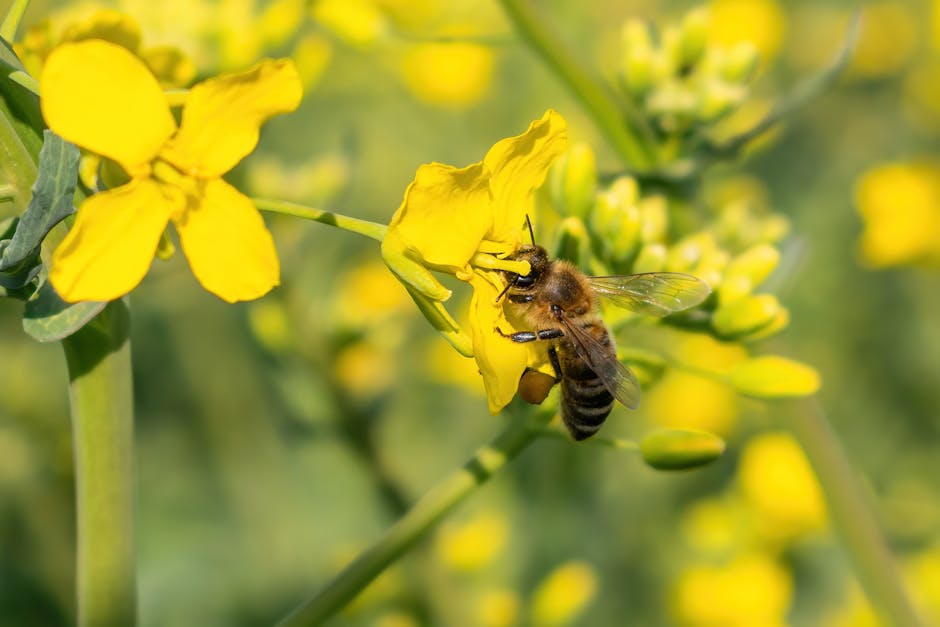
The honey bee is one of the most remarkable insects on the planet. This tiny creature plays an absolutely essential role in keeping our food supply alive. There are more than 20,000 known صِنف of bees worldwide, but only about seven are true honey bees. These small workers can be found on every continent except Antarctica.
Honey bees live together in huge family groups called a colony. A single colony can contain 20,000 to 80,000 bees, all sharing one home: the hive. Inside the hive, bees build perfect six-sided cells out of beeswax, which they produce from special glands. The wax is shaped into the honeycomb, where they store honey, pollen, and their growing young. The queen lays eggs, worker bees collect nectar and care for the young, and drones help produce new queens.
Bees create honey by visiting thousands of flowers each day. They use their long tongues to drink nectar and store it in a special “honey stomach.” Back at the hive, the nectar is passed from bee to bee until it slowly turns into thick, golden honey. A single worker bee makes only about one twelfth of a teaspoon of honey in her entire life. Yet a strong colony can produce over 25 kilograms a year — far more than the bees need to survive the winter.
The most valuable thing bees do, however, is not making honey but pollination. As they move from flower to flower searching for nectar, they carry pollen with them. This process allows plants to produce seeds and fruit. About one third of every meal we eat depends on bee pollination, including apples, almonds, strawberries, and many important food crops. Without bees, our diets would become far less nutritious.
Sadly, honey bees are now under serious threat. Habitat loss, pesticides, disease, and climate change are making it harder for bees to survive. In some regions, entire colonies have disappeared in a phenomenon called Colony Collapse Disorder. Protecting these tiny workers is one of the biggest بيئة challenges of our time. Every flower planted and every beekeeper supported helps keep this remarkable insect — and our food supply — alive.
مستوى: المستوى F
أ. مطابقة المفردات
قم بتوصيل كل كلمة بتعريفها.
1. essential ______
2. صِنف ______
3. colony ______
4. hive ______
5. wax ______
6. survive ______
7. valuable ______
8. crops ______
9. threat ______
10. بيئة ______
a. a group of similar living things that can produce young together
b. the structure where a colony of bees lives
c. to continue to live, especially in difficult conditions
d. the natural world; the surroundings in which living things exist
e. something likely to cause damage or harm
f. absolutely needed; impossible to do without
g. a large group of animals or insects that live together in one place
h. plants that farmers grow in large amounts for food
i. extremely useful or important
j. a soft substance bees produce to build the honeycomb
ب. صح أم خطأ
اكتب T (صحيح) أو F (خطأ) لكل عبارة.
- There are about seven true species of honey bee in the world.
- Honey bees are found on every continent including Antarctica.
- A single colony can contain up to 80,000 bees.
- The honeycomb is built from a substance called wax.
- A worker bee makes about one full kilogram of honey in her life.
- Around one third of every meal we eat depends on bee pollination.
- Bees do not need honey themselves — they only make it for humans.
- Colony Collapse Disorder is a phenomenon where entire colonies disappear.
- Pesticides and climate change are threats to honey bees.
ج. املأ الفراغات
Word Bank: essential, colony, valuable, crops, environment
- Honey bees play an __________ role in keeping our food supply alive.
- A bee __________ can contain between 20,000 and 80,000 bees living together.
- Pollination is the most __________ service bees provide — even more important than honey.
- About one third of our food depends on bees pollinating apples, almonds, and other __________.
- Protecting bees is one of the most important __________ challenges of our time.
د. أسئلة الفهم
- How many species of bee exist worldwide, and how many are true honey bees?
- Describe the structure of a bee colony and the different roles inside the hive.
- How do bees produce honey, and how much can a single worker make in her lifetime?
- Explain why pollination is described as more valuable than honey itself.
- What are the main threats facing honey bees today, and why does this matter for humans?
هـ. أسئلة للمناقشة
- Some scientists say that if all bees disappeared, humans would only survive a few years. Do you think this is true? Why or why not?
- What can ordinary people do in their daily lives to help protect bees?
- If you had the power to make one new law to protect honey bees, what would it be? Explain your reasoning.
مفتاح الإجابة
أ. المفردات: 1-f, 2-a, 3-g, 4-b, 5-j, 6-c, 7-i, 8-h, 9-e, 10-d
B. True or False: 1-صحيح، 2-خطأ، 3-صحيح، 4-صحيح، 5-خطأ، 6-صحيح، 7-خطأ، 8-صحيح، 9-صحيح
ج. املأ الفراغات: 1-essential, 2-colony, 3-valuable, 4-crops, 5-environment
د. الفهم:
- There are more than 20,000 known species of bees in the world, but only about seven of them are true honey bees.
- A colony can contain 20,000 to 80,000 bees living together in one hive. The queen lays eggs, worker bees collect nectar and care for the young, and drones help produce new queens.
- Bees drink nectar from flowers and store it in a special ‘honey stomach,’ then pass it from bee to bee back at the hive until it thickens into honey. A single worker bee produces only about one twelfth of a teaspoon of honey in her entire life.
- About one third of every meal we eat depends on bee pollination, including apples, almonds, strawberries, and many other crops — meaning bees support the food supply far more than they support honey production.
- The main threats are habitat loss, pesticides, disease, and climate change, which together cause phenomena like Colony Collapse Disorder. This matters for humans because so much of our food depends on bee pollination.
Source: National Geographic / FAO / tahricteaches.com
Looking for free ESL worksheets? Browse our full collection — printable resources for every level and age group. Browse Free Worksheets →


 AR
AR  EN
EN  ZH
ZH  ZH_CN
ZH_CN  KO
KO  VI
VI  FR
FR  ES
ES  HI
HI  PT
PT  BN
BN  RU
RU  JA
JA  TR
TR  DE
DE  IT
IT  PL
PL  ID
ID  TH
TH  FA
FA  UK
UK  TL
TL  HE
HE  UR
UR  SW
SW  RO
RO  NL
NL  MS
MS  TA
TA  PS
PS  HU
HU  EL
EL  SV
SV  NB
NB  NN
NN  DA
DA  CS
CS  SR
SR  AM
AM