

Literature Circles: 7 ESL Techniques That Work
A ninth-grade EFL class in Taichung ran literature circles on a shortened Diary of a Young Girl for six weeks last spring. The first two sessions were dead air punctuated by one student translating for the group. By week four, once roles were assigned and the reading level matched each student’s actual band, four out of five groups were arguing in English without teacher prompts. The technique didn’t change. The setup did.
What a Literature Circle Actually Looks Like in an ESL Room
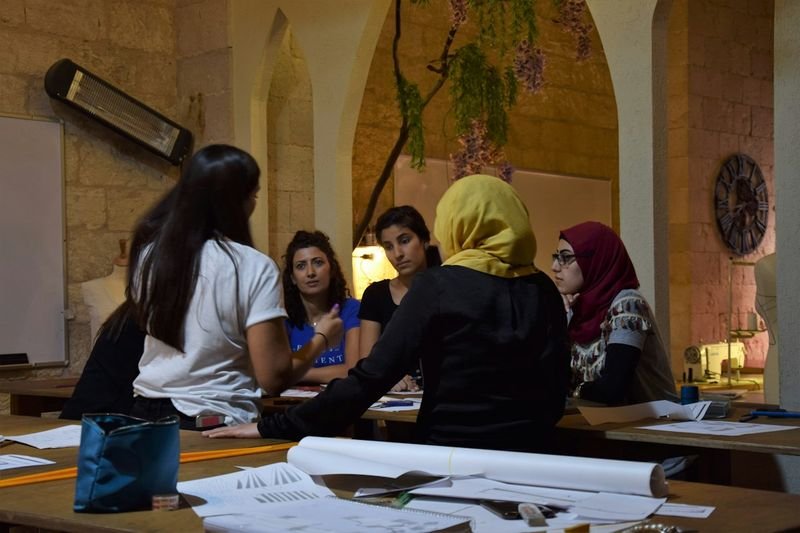
A literature circle is a small, student-led group — usually four to six readers — who read the same book or graded passage and meet on a schedule to talk about it. Each member holds a rotating job: someone tracks vocabulary, someone prepares discussion questions, someone connects the text to real life, someone summarizes. The teacher sets the structure and then steps back, which is exactly the part that makes L2 teachers nervous.
In a native-language classroom, stepping back works because students already have the conversational tools. In an ESL room, they usually don’t. A student can understand 90% of a chapter and still freeze when asked to say what they thought about it out loud. That gap — comprehension without production — is what the seven techniques below are built to close.
Literature circles were designed for native-speaking classrooms in the first place, and most guides assume that baseline. Drop the structure into an EFL or ESL room unmodified and the roles still get filled out, but the actual talking stays minimal — students write their Discussion Director questions on paper and then read them aloud in turn instead of debating. The seven adjustments below aren’t a different framework; they’re the same roles and rotation, tuned for a group that’s still building the language to argue in real time.

1. Assign Rotating Roles So Nobody Coasts
Without an assigned job, one student does 80% of the talking and the rest fill worksheet blanks. Four roles cover most of what a discussion needs: the Discussion Director writes three open questions before the meeting, the Word Wizard flags five words the group needs to define, the Connector links the chapter to something outside the book, and the Summarizer gives a two-minute recap to open the session.
Print role cards and physically hand them out — don’t just announce roles verbally. A student holding a card that says “Word Wizard” in their hand is far more likely to actually prepare the vocabulary list than one who heard the assignment once and forgot it by the next class.
Rotate every session, not every book. A student who is Summarizer once and Discussion Director once inside the same four-week unit gets practice with both receptive and productive language demands before the unit ends.

2. Match the Book to the Reader, Not the Grade Level
Grade-level texts assume a vocabulary base most ESL students haven’t built yet, and pushing a B1 reader through a text written for native tenth graders produces silence, not struggle-based growth. The fix is graded readers pitched at each student’s actual level, with four or five titles running in parallel groups on the same broad theme so the whole class can still discuss shared ideas at the end of the unit.
This means one classroom might have a CEFR A2 group reading a simplified retelling and a B2 group reading the unabridged original, both discussing the same central conflict. The conversations differ in vocabulary but not in depth — a B2 student and an A2 student can both make a real argument about whether a character made the right choice.
Running a level-matched pilot costs almost nothing beyond sourcing the books. It’s worth doing before committing a full semester to a single shared text that only serves the middle of the class.
Sourcing enough copies at different levels is the real friction point, not the theory. Series built specifically for graded reading — Oxford Bookworms, Penguin Readers, Macmillan Readers — publish the same story at four or five CEFR bands, which makes it possible to run one thematic unit across an entire mixed-level class without writing custom materials from scratch. A school library that owns even three levels of one series can rotate that title through several cohorts over a few years before students age out of it.

3. Pre-Teach the Words That Will Stop the Discussion Cold
Five minutes before a literature circle meets, put six to eight words on the board that will come up in that chapter’s key scene — not every unfamiliar word, just the ones a student needs to argue a point. A student who doesn’t know “betrayed” can’t discuss betrayal, no matter how well they understood the plot mechanics.
Skip the full definition-and-example routine here. A quick L1 gloss or a one-sentence context example is enough — the goal is removing one specific blocker, not running a vocabulary lesson inside the reading lesson.
Have the Word Wizard role own this list going forward. Once students see that pre-teaching directly unblocks their own group’s conversation, they start flagging words on their own during silent reading instead of waiting for the teacher to catch them.

4. Give Quiet Students a Script With Sentence Starters
Ask an intermediate ESL student to “share their opinion” and you’ll often get silence — not because they lack an opinion, but because they can’t retrieve the sentence frame fast enough under social pressure. Sentence starters solve that retrieval problem directly: “I disagree because…”, “That reminds me of a time when…”, “I think the author wants us to feel…” taped to the table gives students a launch point instead of a blank page.
Rotate the starters every few sessions so students don’t just parrot the same three phrases all semester. Move from basic opinion frames early on toward frames that require justification and comparison — “On one hand… but on the other hand…” — once the group is comfortable speaking at all.
This video from Literacy Today shows a secondary ELA teacher running the exact rotation-and-sentence-frame combination described here, adapted from a native-speaker classroom but directly transferable to EFL groups:
5. Rotate Group Membership Every Two or Three Books
Keeping the same four students together all semester feels efficient, but it caps how much language they hear. One student’s grammar errors become the whole group’s habit; one student’s accent becomes the only accent the group practices understanding. Reshuffling groups every two to three books forces students to re-negotiate group dynamics and re-explain their thinking to a new audience — both of which push language production harder than a familiar group ever will.
Mix proficiency levels deliberately when you reshuffle. A stronger reader paired with two mid-level readers and one emerging reader tends to produce more peer scaffolding than four students clustered at the same level, who mostly just agree with each other.

6. Close With a Whole-Class Report-Out, Not Just a Worksheet
A literature circle that ends when the bell rings loses most of its value. Spend the last five minutes of a unit having one representative from each group report a single disagreement their group had — not a summary, a disagreement. This does two things a worksheet can’t: it forces the group to identify what they actually debated, and it exposes the rest of the class to arguments they didn’t generate themselves.
This works well as a bridge into a Socratic seminar format for stronger classes — the small-group disagreements surfaced in the report-out become the opening questions for a full-class discussion the following period.

7. Grade the Process, Not Just the Comprehension Quiz
A comprehension quiz tells you whether a student read the chapter. It tells you nothing about whether they contributed to the discussion, listened to a groupmate, or defended a position under mild pushback — the actual skills literature circles are meant to build. A simple three-row rubric fixes this: preparation (did they complete their role before the meeting), participation (did they speak using target language, not just their L1), and response (did they engage with at least one other student’s point, not just their own).
Add a short self-assessment slip students fill out after each meeting — two questions is enough: “What did I say in English today?” and “What did someone else say that changed my thinking?” Students tend to underrate their own participation on the first few slips and calibrate more accurately after three or four rounds, which is itself useful data for the teacher.
Pair this with the reading-strategy checks from extensive reading practice if your students are also doing independent reading alongside the circles — the two rubrics reinforce the same habits from different angles.

None of these seven changes require new materials budgets or a curriculum overhaul — role cards, a level-matched book set, and a rubric are the entire toolkit. Start with one class and one book before rolling the structure out school-wide; the first cycle will surface which of your students need heavier scaffolding than the sentence starters alone provide, and that’s information worth having before you commit a full semester to the format.
مصادر
- Literature Circles — Colorín Colorado — overview of role structures and implementation for mixed-language classrooms.
- Literature Circles: Getting Started — ReadWriteThink — lesson plan framework for introducing role rotation.
- Literature Circles in EFL — Wikipedia — background on adapting literature circles specifically for EFL learners.









 AR
AR  EN
EN  ZH
ZH  ZH_CN
ZH_CN  KO
KO  VI
VI  FR
FR  ES
ES  HI
HI  PT
PT  BN
BN  RU
RU  JA
JA  TR
TR  DE
DE  IT
IT  PL
PL  ID
ID  TH
TH  FA
FA  UK
UK  TL
TL  HE
HE  UR
UR  SW
SW  RO
RO  NL
NL  MS
MS  TA
TA  PS
PS  HU
HU  EL
EL  SV
SV  NB
NB  NN
NN  DA
DA  CS
CS  SR
SR  AM
AM