
Mixed-Level ESL Classes | 10 Differentiation Strategies That Keep Every Student Engaged
You walk into class. One student can barely introduce themselves. Another is reading young adult novels in English. A third understands everything you say but refuses to speak. Sound familiar?
Welcome to the reality of mixed-level ESL classes. Whether you call them multilevel, multi-ability, or differentiated — the challenge is the same. You have students at wildly different proficiency levels sitting in the same room, and they all need to learn something meaningful in the next 50 minutes.
After more than 20 years of teaching English in Taiwan, I can tell you this: mixed-level classes aren’t the exception. They’re the norm. And once you stop fighting that reality and start designing around it, your teaching gets dramatically better.
Here are 10 differentiation strategies that actually work — tested in real classrooms with real students who range from absolute beginners to near-fluent speakers.
Why Mixed-Level Classes Happen (and Why They’re Not Going Away)

Before we get into strategies, let’s acknowledge why this keeps happening. Budget constraints mean schools can’t always split classes by level. In cram schools and language academies, enrollment timing means new students join mid-semester at various levels. In public schools, mixed abilities are simply the default.
Research from Carol Ann Tomlinson at the University of Virginia — the pioneer of differentiated instruction — consistently shows that teachers who design for variation rather than uniformity produce better outcomes across all proficiency levels. The goal isn’t to teach to the middle and hope everyone keeps up. It’s to create a learning environment where every student has an appropriate challenge.
1. Use Tiered Activities With a Shared Topic
The single most powerful technique for mixed-level classes is tiered activity design. Everyone works on the same topic or theme, but the tasks have different levels of complexity.
For example, if you’re teaching a unit on food:
- Tier 1 (Beginner): Match food vocabulary words to pictures, practice “I like / I don’t like”
- Tier 2 (Intermediate): Write a restaurant dialogue, describe a recipe using sequence words
- Tier 3 (Advanced): Debate the pros and cons of fast food, write a persuasive restaurant review
The key: all three tiers share the same theme. Students feel like they’re part of the same class, not separated into “smart” and “slow” groups. The social dynamic stays intact while the cognitive demand shifts.
2. Scaffold With Visible Supports

Scaffolding means providing temporary supports that you gradually remove as students gain confidence. In a mixed-level class, the trick is making scaffolds available to everyone — without making weaker students feel singled out.
Put sentence frames, word banks, and graphic organizers on the board or on printed handouts that every student receives. Stronger students will naturally skip what they don’t need. Weaker students will grab exactly what they do need. Nobody has to ask for “the easy version.”
A 2019 study published in TESOL Quarterly found that visible scaffolding reduced anxiety in lower-level students by 34% while having zero negative impact on advanced learners. It’s a no-lose strategy.
3. Strategic Grouping (Mix It Up)
How you group students matters enormously. Don’t default to one approach — rotate between these three:
- Same-level groups: Good for focused skill practice. Beginners can work at their pace; advanced students can push each other.
- Mixed-level groups: Powerful for communication tasks. Stronger students model language naturally, and weaker students get real comprehensible input from peers.
- Interest-based groups: Students choose their topic regardless of level. Motivation covers a surprising number of proficiency gaps.
The research from Vygotsky’s Zone of Proximal Development supports mixed-level pairing specifically — learners make the most progress when working with someone slightly above their current level. But don’t overdo it. If a high-level student is always “the helper,” they’ll get bored and resentful fast.
4. Open-Ended Tasks With Multiple Entry Points

Some of the best mixed-level activities are ones where the task itself naturally accommodates different levels. Open-ended tasks don’t have a single “correct” output — they invite responses at any proficiency level.
Examples that work beautifully:
- Picture description: A beginner might say “I see a dog.” An advanced student might say “There’s a golden retriever playing fetch in what appears to be a public park on a sunny afternoon.”
- Story continuation: Give everyone the same story starter. Beginners write three sentences. Advanced students write three paragraphs.
- Opinion surveys: “What’s the best season?” Everyone can answer — the complexity of their reasoning is what varies.
The magic of open-ended tasks is that they feel egalitarian. There’s no ceiling and no floor. Every student produces something valid.
5. Use Anchor Activities for Early Finishers
In any mixed-level class, faster students finish first. If they have nothing to do, they become discipline problems. Anchor activities solve this.
Keep a permanent station or folder of enrichment tasks: reading corner books, vocabulary journals, creative writing prompts, grammar puzzles, or podcast listening logs. When a student finishes the main task, they automatically move to an anchor activity. No waiting, no disruption.
This is not “extra homework” or punishment for being fast. Frame it as a privilege: “You’ve earned time to choose your own learning.” The key word is choice. Let students pick which anchor activity they want.
6. Differentiate by Product, Not Just Process

Most teachers think of differentiation as changing the process — giving easier or harder tasks. But you can also differentiate the product. Give every student the same input and let them show their learning differently.
After watching a short video clip about climate change:
- Option A: Draw and label a poster (lower-level friendly)
- Option B: Write a summary paragraph (intermediate)
- Option C: Record a 2-minute spoken response (advanced, or shy writers who speak well)
This approach respects multiple intelligences and gives students agency over their own learning. It also means you can assess comprehension without English writing ability being the bottleneck for every single student.
7. The “Must Do / Can Do / Dare To” Framework
This is one of my favorite structures for worksheets and in-class assignments. Divide every activity into three sections:
- Must Do: The core task everyone completes. Keep it at a level where even your weakest student can succeed with effort.
- Can Do: An extension that most students should attempt. Slightly harder, requires more production or deeper thinking.
- Dare To: A genuine challenge. Creative, complex, sometimes fun. Your strongest students will love having something that actually pushes them.
Print it on one sheet. Students self-select based on their confidence. You’ll find that many students push themselves further than you’d expect — especially when “Dare To” sounds exciting rather than intimidating.
8. Build in Regular Self-Assessment

Students in mixed-level classes often don’t know where they stand. Beginners might feel hopeless when they hear advanced classmates speaking. Advanced students might feel bored because they’re not being stretched.
Simple self-assessment tools change this dynamic entirely. Try:
- Traffic light cards: Green (I understand), yellow (I’m not sure), red (I need help). Students hold them up during instruction.
- Weekly learning logs: “One thing I learned. One thing I still need to practice. One thing I want to learn next.”
- Vocabulary growth charts: Students track how many new words they’ve learned each week — competing against themselves, not each other.
Self-assessment shifts the focus from comparison to personal growth. Research by Black and Wiliam (1998) on formative assessment shows that students who regularly self-assess improve 0.4 to 0.7 standard deviations more than those who don’t — regardless of starting level.
9. Use Technology as an Equalizer
Technology naturally differentiates. Platforms like Duolingo, Quizlet, and ReadWorks adjust difficulty automatically based on student performance. Even a simple YouTube video with subtitles offers differentiation — beginners read along, intermediate students listen with occasional glances at the text, and advanced students ignore the subtitles entirely.
If your school has tablets or a computer lab, build in 15-20 minutes of self-paced digital learning per lesson. This gives you time to circulate and work with students who need the most help, while everyone else progresses at their own speed.
10. Peer Teaching and Cross-Level Partnerships
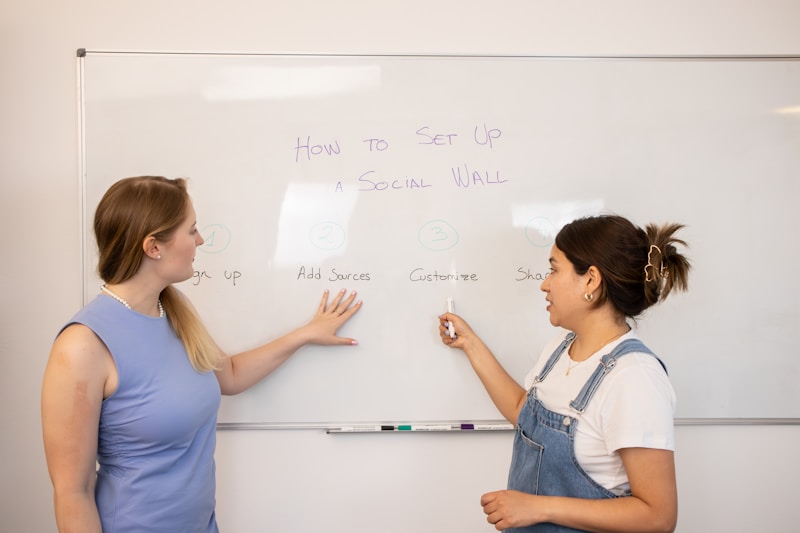
When a stronger student explains a concept to a weaker one, both benefit. The advanced student deepens their understanding by articulating it. The weaker student gets input from someone closer to their level, which is often more comprehensible than teacher-talk.
Structure this carefully:
- Rotate partners so the same students aren’t always “the teacher”
- Give the tutor a specific task: “Help them fill in the blanks, but don’t give the answers — ask questions instead”
- Acknowledge the tutor’s contribution publicly: “Thanks for helping your partner today”
A 2021 meta-analysis in Educational Research Review found that peer tutoring in language classes improved outcomes for tutors by 0.35 standard deviations — almost as much as for tutees (0.40 SD). It’s genuinely a win-win.
Making It Sustainable

The biggest objection teachers raise about differentiation is time. “I can’t create three versions of every worksheet.” Fair point. You don’t have to.
Start with one strategy from this list. Use tiered activities for your next unit. Or add a “Must Do / Can Do / Dare To” section to your next handout. Once one technique becomes habit, layer in another.
Differentiation isn’t about perfection. It’s about intentionality. The moment you stop pretending your students are all at the same level and start designing for the range that’s actually in your room, everything shifts. The low students feel seen. The high students feel challenged. And you stop feeling like you’re failing half the class at any given moment.
That’s not a fantasy. That’s what happens when you design for reality instead of against it.
Watch: Teaching Mixed-Level ESL Classes
For a deeper dive into practical differentiation techniques, check out this helpful training module from Off2Class:
مراجع
- Tomlinson, C. A. (2017). How to Differentiate Instruction in Academically Diverse Classrooms (3rd ed.). ASCD.
- Black, P., & Wiliam, D. (1998). Assessment and classroom learning. Assessment in Education: Principles, Policy & Practice, 5(1), 7–74.
- Vygotsky, L. S. (1978). Mind in Society: The Development of Higher Psychological Processes. Harvard University Press.
- Bowman-Perrott, L., et al. (2021). Peer tutoring in language education: A meta-analysis. Educational Research Review, 34, 100394.






 AR
AR  EN
EN  ZH
ZH  ZH_CN
ZH_CN  KO
KO  VI
VI  FR
FR  ES
ES  HI
HI  PT
PT  BN
BN  RU
RU  JA
JA  TR
TR  DE
DE  IT
IT  PL
PL  ID
ID  TH
TH  FA
FA  UK
UK  TL
TL  HE
HE  UR
UR  SW
SW  RO
RO  NL
NL  MS
MS  TA
TA  PS
PS  HU
HU  EL
EL  SV
SV  NB
NB  NN
NN  DA
DA  CS
CS  SR
SR  AM
AM