
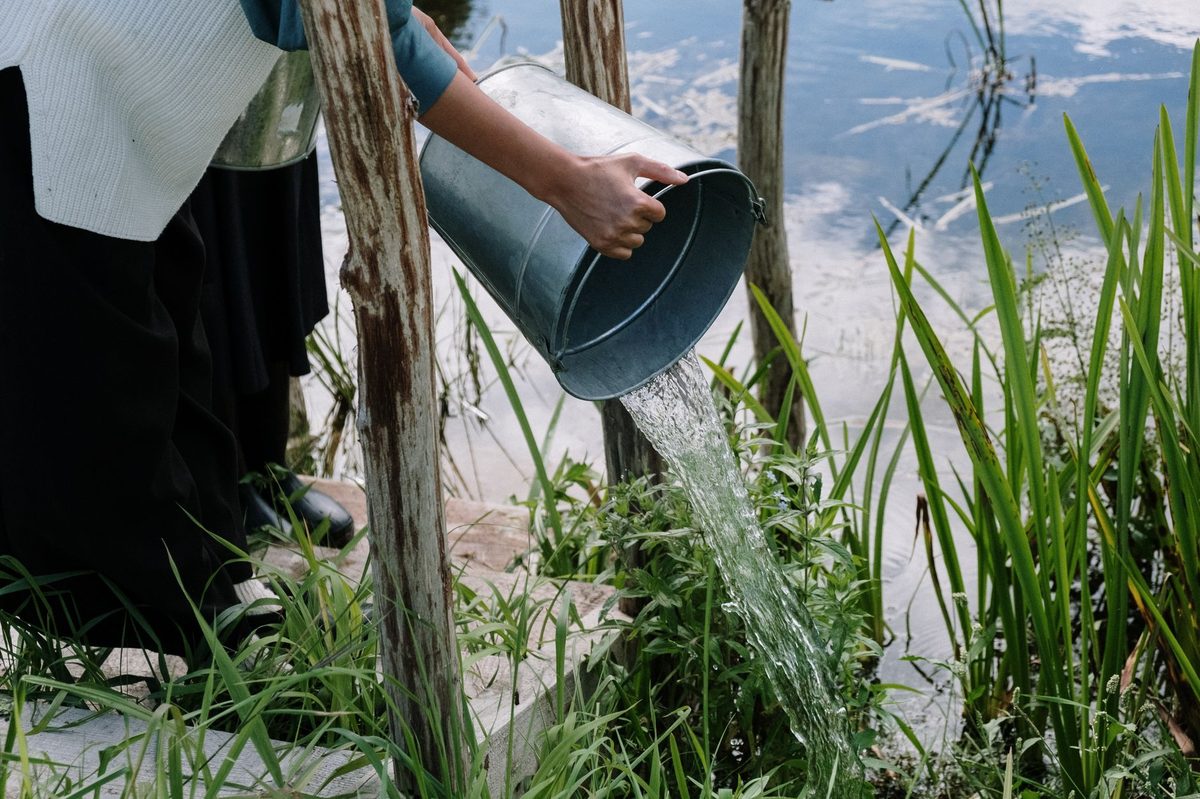
Water Conservation | Advanced ESL Reading Worksheet PDF
Free, classroom-ready, one click — includes answer key on page 3.

Reading Worksheet — Advanced (F) | tahricteaches.com
Water is the most fundamental resource on Earth, yet humanity continues to treat it as if it were limitless. Less than one percent of the planet’s water is readily accessible freshwater, and this fragile supply must sustain agriculture, industry, and a global population approaching nine billion. As climate patterns shift and aquifers shrink, the urgency of conservation has moved from environmental rhetoric to economic necessity.
Agriculture accounts for roughly seventy percent of global freshwater withdrawals, making it the single largest area where efficiency gains can be achieved. Traditional flood irrigation, while inexpensive, wastes enormous quantities through evaporation and runoff. Modern drip systems and soil-moisture sensors can reduce consumption by up to sixty percent without sacrificing yield, though the initial investment remains a barrier for smallholder farmers in developing regions.
Urban consumers also bear significant responsibility. Leaky pipes in aging municipal infrastructure can lose up to a quarter of treated water before it ever reaches a household tap. Homeowners can contribute meaningfully by installing low-flow fixtures, harvesting rainwater, and replacing thirsty lawns with native, drought-tolerant plants suited to the local climate.
Industry, too, must adapt. Manufacturing a single pair of denim jeans requires nearly ten thousand liters of water, much of which becomes contaminated and difficult to recycle. Forward-thinking companies are adopting closed-loop systems that filter and reuse process water repeatedly, dramatically lowering their environmental footprint while also cutting operational costs over the long term.
Ultimately, meaningful conservation depends on a cultural shift as much as a technological one. Governments must price water to reflect its true scarcity, schools must teach stewardship from an early age, and individuals must recognize that every small habit—a shorter shower, a fixed faucet, a fuller dishwasher—aggregates into a global impact. The choices made in this generation will determine whether the next inherits a world of abundance or one defined by thirst.
أ. المفردات
- supply ____
- reduce ____
- drought ____
- recycle ____
- aggregate ____
- aquifer ____
- irrigation ____
- scarcity ____
- stewardship ____
- infrastructure ____
- a. artificial supply of water to land for growing crops
- b. combine or add up into a larger total
- c. responsible management and care of resources entrusted to one’s care
- d. basic physical systems and structures needed for a society to function
- e. total amount of something available for use
- f. state of being in short supply
- g. underground layer of rock or soil that holds groundwater
- h. prolonged period of abnormally low rainfall causing water shortage
- i. process used materials so they can be used again
- j. make smaller in size, amount, or degree

ب. صح أم خطأ
- ____ More than half of Earth’s water is readily accessible freshwater.
- ____ Agriculture accounts for about seventy percent of global freshwater withdrawals.
- ____ Drip irrigation systems can cut water use by up to sixty percent.
- ____ Aging city pipes can lose up to a quarter of treated water before delivery.
- ____ Making one pair of jeans requires roughly one thousand liters of water.
- ____ Closed-loop industrial systems filter and reuse process water.
- ____ Flood irrigation is generally more efficient than drip irrigation.
- ____ The passage suggests pricing water to reflect its true scarcity.
- ____ The author claims technology alone will solve the water crisis.
- ____ Drought-tolerant native plants are recommended over traditional lawns.
ج. املأ الفراغات
- Farmers in arid regions rely on efficient ___ systems to deliver water directly to plant roots.
- A prolonged ___ in the region forced authorities to impose strict rationing on households.
- Decades of over-pumping have caused the underground ___ beneath the valley to drop alarmingly.
- Crumbling municipal ___ leaks millions of liters of treated water every single day.
- Teaching children about environmental ___ helps build a culture of responsibility from a young age.
د. أسئلة الفهم
- Why does the author argue that improving agricultural water use offers the greatest potential for conservation?
- What role does aging urban infrastructure play in water loss, and how can households help offset it?
- According to the passage, why is a cultural shift just as important as new technology in solving the water crisis?
هـ. أسئلة للمناقشة
- Should governments charge higher prices for water to encourage conservation, even if it makes life more expensive for low-income families? Why or why not?
- In your own community, which group—farmers, factories, or households—do you think should be required to make the biggest changes to save water, and why?
Answer Key (click to reveal)
أ. المفردات: 1-e, 2-j, 3-h, 4-i, 5-b, 6-g, 7-a, 8-f, 9-c, 10-d
ب. صح/خطأ: 1-F, 2-T, 3-T, 4-T, 5-F, 6-T, 7-F, 8-T, 9-F, 10-T
ج. املأ الفراغات: 1-irrigation, 2-drought, 3-aquifer, 4-infrastructure, 5-stewardship
د. الفهم:
- Because agriculture consumes about seventy percent of global freshwater, even small efficiency gains there produce larger savings than improvements in any other sector.
- Leaky municipal pipes can waste up to a quarter of treated water, but households can offset losses by installing low-flow fixtures, harvesting rainwater, and planting drought-tolerant landscapes.
- Because meaningful conservation requires governments to price water realistically, schools to teach stewardship, and individuals to adopt daily habits that collectively produce global impact.
© تاهريك تيتشز | tahricteaches.com
Looking for free ESL worksheets? Browse our full collection — printable resources for every level and age group. Browse Free Worksheets →






 AR
AR  EN
EN  ZH
ZH  ZH_CN
ZH_CN  KO
KO  VI
VI  FR
FR  ES
ES  HI
HI  PT
PT  BN
BN  RU
RU  JA
JA  TR
TR  DE
DE  IT
IT  PL
PL  ID
ID  TH
TH  FA
FA  UK
UK  TL
TL  HE
HE  UR
UR  SW
SW  RO
RO  NL
NL  MS
MS  TA
TA  PS
PS  HU
HU  EL
EL  SV
SV  NB
NB  NN
NN  DA
DA  CS
CS  SR
SR  AM
AM