

ESL Pronunciation Activities: 12 That Actually Work (2026)
The fastest way to fix a learner’s accent is not more conversation — it is targeted ESL pronunciation activities that isolate the specific sound, stress pattern, or rhythm they keep missing. Most adult learners plateau because they keep practicing the same errors louder. The 12 drills below are sequenced from sound-level to sentence-level, and each one has a clear classroom payoff in 8 minutes or less.
Pronunciation is the skill students rate most embarrassing and teachers spend the least time on. A 2020 survey of 304 EFL teachers in System found that only 27% taught pronunciation in a structured way; the rest relied on incidental correction during speaking tasks. That gap is your opening — even ten focused minutes per lesson moves the needle, and the activities below are built to fit inside a normal class without rewriting your scheme of work.
Why Pronunciation Belongs in Every ESL Lesson
Intelligibility, not native-likeness, is the goal. Jennifer Jenkins’ Lingua Franca Core narrowed the must-teach inventory to a small set of contrasts — long versus short vowels, consonant clusters, the /θ/–/s/ distinction in word-initial position, and nuclear stress placement. Hit those, and listeners understand 95% of what your student is trying to say.
The honest position: gamified vocabulary apps and conversation cafes do not fix pronunciation. They reinforce whatever the student already says. Pronunciation needs slowed-down, mirror-the-mouth, listen-and-compare cycles — and that only happens when the teacher plans for it.

Diagnose Before You Drill
Before picking activities, run a 60-second diagnostic. Give every student the same three sentences to read aloud — loaded with /θ/, /ð/, /r/, /l/, the schwa, and one sentence with three content words to test stress placement. Record on your phone. You will hear the same three or four errors repeating across the class within ten minutes of listening.
Sequence the rest of your term around those repeating errors. There is no point drilling /v/ if everyone’s biggest problem is dropping the final consonant cluster in asked অথবা twelfth. Start with the error that has the biggest intelligibility cost.
1. Minimal Pairs Sorting
Give pairs of students 20 cards: ten contain words with /i:/ (sheep, beat, leave) and ten with /ɪ/ (ship, bit, live). They sort the cards into two columns, then check by listening to you read the words in random order. Anyone whose pile does not match the audio re-listens with a partner.
This works because sorting forces a binary decision — students cannot fence-sit the way they can during open speaking. Pick the minimal pair set that targets your class’s biggest documented error: /ʃ/ vs /tʃ/ for Spanish speakers, /b/ vs /v/ for Korean speakers, /l/ vs /r/ for Japanese speakers, short /ɪ/ vs long /i:/ for almost everyone.

2. Choral Drilling with Backchaining
Choral drilling has a bad reputation because most teachers do it wrong. The fix is backchaining: build the target phrase from the end. For “I should have gone earlier,” you drill earlier first, then gone earlier, then should have gone earlier, then the full sentence. This protects the natural stress pattern instead of producing the robotic syllable-equal-stress chant beginners default to.
Run choral drills three times: once at normal speed for shape, once exaggerated-slow for mouth position, once at conversational speed with the target stress. Two minutes total. Do it daily with the language you just taught in any skill lesson — pronunciation work plugs into whatever else you are doing.
3. Tongue Twisters That Target One Sound
Tongue twisters are not warm-ups — they are surgical drills. Pick one that hammers a single sound and keep it for the whole week. “She sells seashells” for /ʃ/–/s/. “Red lorry, yellow lorry” for /l/–/r/. “The thirty-three thieves thought that they thrilled the throne throughout Thursday” for /θ/.
Race format: students whisper the twister three times, then say it aloud at increasing speed. Pair the loser of each round with a fresh partner. Time the whole activity at six minutes — long enough for ten repetitions, short enough that they do not lose the target sound.

4. Shadowing Practice
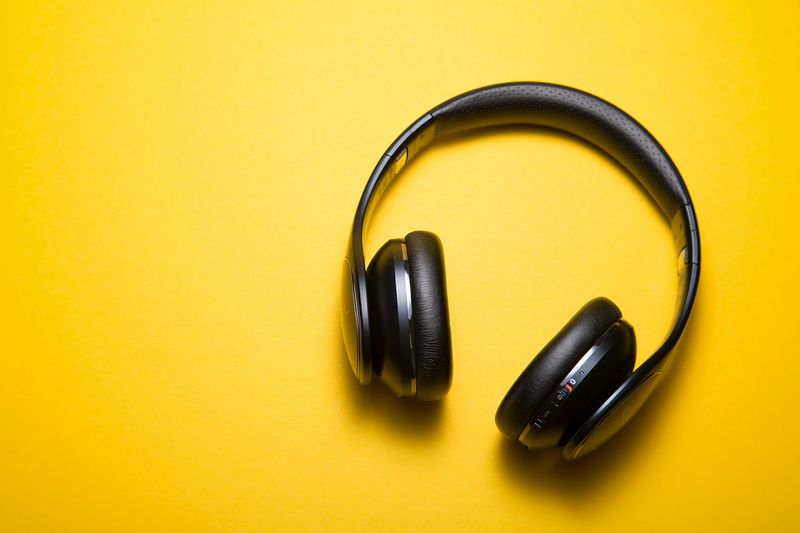
Shadowing means repeating a speaker’s words a half-second behind them, matching speed, rhythm, and intonation. It is the single most effective intermediate-plus activity for fixing prosody. Pick a 45-second clip from a podcast or news report and play it three times: first to listen, second to whisper-shadow, third to shadow at normal volume.
The clip matters. Avoid news anchors — their delivery is too formal. Use conversational podcasts at 140–160 words per minute. The TED-Ed playlist and the BBC 6 Minute English archive both work. Students should be physically tired after a real shadowing session; if they are not, they were not shadowing.
5. Record, Listen, Re-record
Hand students a 30-second script. Round one: they read and record on their phone. Round two: they listen back with the original audio. Round three: they re-record. The gap between attempt one and attempt three is what they keep.
Most students are shocked by their first recording. That shock is the point. Self-monitoring drives more improvement than any teacher correction, because the student finally hears what the listener hears. Build this into a weekly five-minute slot — a folder of WhatsApp voice notes becomes a longitudinal record of their progress.
6. Sound-Spelling Mapping on the Board
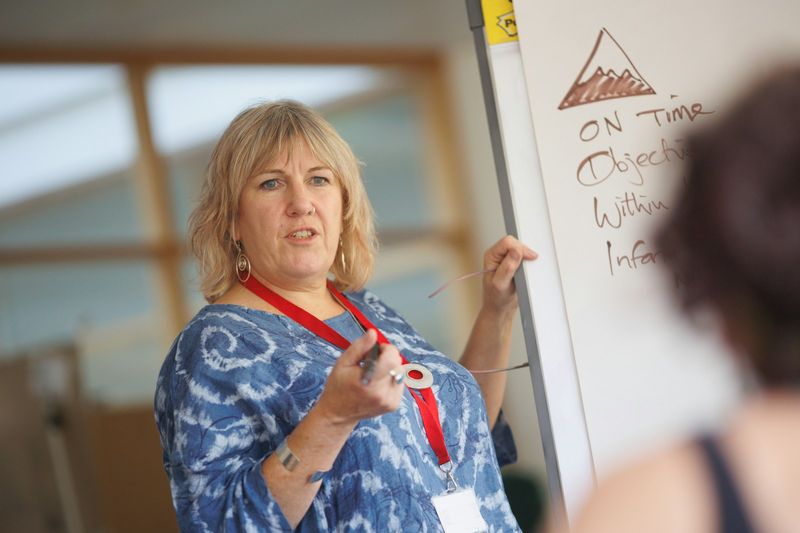
Draw a four-column chart on the board: spelling, IPA, three example words, and the L1 closest equivalent (or “none”). Fill in one row per lesson — tion = /ʃən/, ough = six different sounds, ed after /t/ and /d/ verbs = /ɪd/. Build the chart over the term and pin it to the wall.
Spelling is what triggers most pronunciation errors above A2 level. Students see determined and pronounce four syllables stressed equally; they see chocolate and produce three syllables instead of two. A visible spelling-to-sound chart attacks the cause, not the symptom.
7. Sentence Stress with Snap Tracks
Write a sentence on the board with all content words underlined: “I প্রয়োজন a new phone by Friday.” Students clap or snap on each underlined word at a steady tempo while saying the sentence. Function words (a, by) must fit into the off-beats. Run it at a metronome at 60 BPM, then 80, then 100.
English is stress-timed; most L1s are syllable-timed. Until students physically feel that mismatch in their hands, they will keep producing the syllable-by-syllable delivery that makes them sound robotic. Twenty seconds of snapping per sentence does more than a 10-minute explanation.
8. Linking and Connected Speech Drills
Connected speech is what makes native audio incomprehensible to learners. “What are you doing?” sounds like whacha doing. “Did you eat?” sounds like didja eat. Pick three high-frequency linkings per week and drill them: consonant-to-vowel (turn it on → turnit on), vowel-to-vowel with intrusive /w/ or /j/ (do it → duw-it), and assimilation (good boy → gub boy).
Write the linked form on the board with the joining arrow. Students copy and read aloud in pairs. Then they have to use one of the three linkings in a 30-second roleplay. Forcing production, not just recognition, is what makes the linking sticky.

9. The Mirror Drill for /θ/ and /ð/
Give every student a small mirror or have them use their phone’s selfie camera. Demonstrate /θ/: tongue tip between teeth, voiceless. They watch their own mouth as they say “think, thank, thirty, three.” Then /ð/ with voicing: “this, that, those, they.”
The mirror is doing the work. Students cannot see their tongue from the inside, but they can see whether it is touching the back of their teeth or sticking through. Within five minutes most students who have been substituting /s/ or /t/ for years produce a recognizable /θ/. The habit takes longer to lock in, but the breakthrough is fast.
10. Pronunciation Bingo
Hand out 4×4 bingo cards with 16 words containing the target sound contrast — say, /ɪ/ words and /i:/ words mixed. You read 16 words from your own master list in random order. Students cross out the one they think they heard. Whoever finishes first calls bingo; you then re-read their card to verify.
The verification step is where the learning happens. If a student crossed off sheep when you said জাহাজ, they have to listen again and own the mistake. The competitive frame keeps energy high; the verification keeps the activity diagnostic.
11. Read-and-Re-Tell with a Timer
Students read a 200-word text silently for two minutes, then close it and re-tell it to a partner in 90 seconds. The partner has the text and marks where pronunciation broke down. Swap roles with a fresh text.
This activity isolates pronunciation under cognitive load. It is easy to pronounce fluctuated when reading from the page; it is hard when you are also remembering the gist of the paragraph. That gap is where most students live in real conversation, so practicing the gap directly trains the skill they actually need.
12. Pair Dictation with Feedback Codes
Partner A reads ten sentences to Partner B, who writes them down. Then they switch. The catch: each pair has a one-page feedback code sheet — V for vowel error, C for consonant, S for stress placement, L for missed linking. When the listener writes down a different word than the speaker said, they identify which error category caused it.
This works at the upper end of the proficiency range because it gives students vocabulary for what went wrong. A student who can say “I missed your stress on the second syllable” has internalized the metacognitive layer that lets them keep improving outside class.
Watch: Pronunciation Activities Demo
Jackie Bolen runs through five practical pronunciation games she has used with both kids and adults. The minimal pairs walk-through at 1:48 is especially useful for new teachers.
Common Pronunciation Errors by First Language
Knowing the predictable error pattern for your students’ L1 saves weeks of guessing. Japanese speakers struggle with /l/ versus /r/ and adding vowels to consonant clusters (strike becomes su-to-rai-ku). Korean speakers swap /b/ and /v/, /f/ and /p/. Mandarin speakers tend to drop final consonants and flatten word stress.
Spanish speakers add a vowel before initial consonant clusters (school becomes e-school) and swap /b/ and /v/. Arabic speakers drop /p/ and swap it with /b/. French speakers struggle with /h/ and /θ/. Build your minimal pair sets, choral drills, and tongue twisters around these patterns instead of generic lists.
How to Correct Without Killing Confidence
Pronunciation feedback hits harder than grammar feedback because it feels personal. The fix is to depersonalize. Never correct a student mid-sentence in front of the class. Use delayed feedback: jot the error on a sticky note, address it after the activity, attribute it to “the class” not the individual.
For one-on-one work, the most useful frame is “say it again, but with…” — add the missing element rather than naming the error. “Say it again, but stretch the ee” beats “you said the short vowel instead of the long one.” The student fixes it without ever needing to hear they were wrong.
Embedding Pronunciation into Every Lesson
The mistake most teachers make is treating pronunciation as a separate Friday-afternoon module. Wedge it into everything. New vocabulary today? Drill the stress before drilling the meaning. New grammar today? Pull one sentence from the activity and run a backchain drill. Reading lesson? Use the first paragraph for a 90-second shadowing warm-up.
Five minutes per lesson, five times per week, is 25 minutes of focused pronunciation work. That is more than most learners get in a full term of unstructured speaking practice. The advantage compounds within four to six weeks — students start self-correcting before you can, which is when you know the activities are working.
Build Your Pronunciation Toolkit
Pick three activities from the list above and run them every week for the rest of the term. Diagnose your class’s top two errors, pick the activities that target those errors specifically, and stop trying to fix everything at once. The students who keep blaming their accent for their job interviews and university applications are not waiting for a better app — they are waiting for a teacher who will commit to the boring, targeted work that actually moves intelligibility. That teacher is you.
For more ideas that pair with pronunciation work, browse the best ESL conversation activities, the 15 best ESL vocabulary games for every level, and the 15 best ESL warm-up activities that slot in front of any pronunciation drill.
উৎস
- Cambridge University Press ELT — Teaching Pronunciation: Where to Start — Robin Walker’s framing of the Lingua Franca Core for classroom teachers.
- British Council TeachingEnglish — Teaching Pronunciation — practical activity bank with audio examples by phoneme.
- BBC Learning English — Pronunciation — free downloadable audio for shadowing and minimal pair practice.
- TESOL আন্তর্জাতিক সমিতি — research and CPD on pronunciation pedagogy.
- System (Elsevier journal) — recurring peer-reviewed studies on EFL pronunciation instruction frequency.
Looking for free ESL worksheets? Browse our full collection — printable resources for every level and age group. Browse Free Worksheets →
Students can access free worksheets and reading materials at 18KEnglish.com.






 BN
BN  EN
EN  ZH
ZH  ZH_CN
ZH_CN  KO
KO  VI
VI  FR
FR  AR
AR  ES
ES  HI
HI  PT
PT  RU
RU  JA
JA  TR
TR  DE
DE  IT
IT  PL
PL  ID
ID  TH
TH  FA
FA  UK
UK  TL
TL  HE
HE  UR
UR  SW
SW  RO
RO  NL
NL  MS
MS  TA
TA  PS
PS  HU
HU  EL
EL  SV
SV  NB
NB  NN
NN  DA
DA  CS
CS  SR
SR  AM
AM