
GPT, Gemini, or Claude for ESL Curriculum Writing: A Practical Comparison
The three AI systems most likely on your browser bookmarks right now are ChatGPT, Google Gemini, and Anthropic’s Claude. All three can write a lesson plan. All three can generate grammar exercises. The question that actually matters for ESL teachers is narrower and more practical: which one produces curriculum-quality output for the specific work you do—whether that’s IELTS preparation materials, differentiated reading passages, or a semester-long scope-and-sequence document. This comparison answers that question based on what each AI does well and where each one falls short for language teaching professionals.

What ESL Curriculum Writing Actually Demands
Curriculum writing sits at the intersection of language accuracy, pedagogical design, and learner-level calibration. An AI that writes fluent English can still produce grammar explanations with subtle errors, generate vocabulary that drifts between CEFR levels within a single text, or design activities that are pedagogically incoherent—jumping from presentation to production without a practice bridge, for instance.
High-stakes exam preparation adds another layer of complexity. TOEIC, IELTS, and Cambridge exam formats have specific conventions—item format, text length, question type distribution—that a curriculum writer needs to replicate accurately. The AI systems that serve ESL curriculum writers best are not necessarily the ones with the highest benchmark scores. They are the ones that hold detailed specifications under pressure and fail in ways that are easy to catch and correct.
How GPT Handles ESL Curriculum Work
ChatGPT built its dominant market position in education through timing and usability. Teachers encountered it first, built workflows around it, and those workflows have compounded over two years. The real question is whether those workflows are built on the right tool for curriculum work specifically.
Where GPT Delivers
For standard exercise formats—gap fills, multiple choice comprehension questions, sentence transformation drills, error correction tasks—GPT is fast, consistent, and generally accurate at B1 level and above. A teacher who needs twenty TOEIC Part 5 grammar items covering modal verbs can get usable output from GPT in under a minute. For high-volume exercise generation at well-documented exam formats, GPT’s speed advantage is real.
Lesson plan scaffolding is another area where GPT performs reliably. The classic PPP framework (presentation, practice, production), task-based lesson design, and topic-based unit outlines all come out of GPT in coherent, recognizable formats. The structural bones are usually correct even when the specific content needs editing.
Where GPT Falls Short
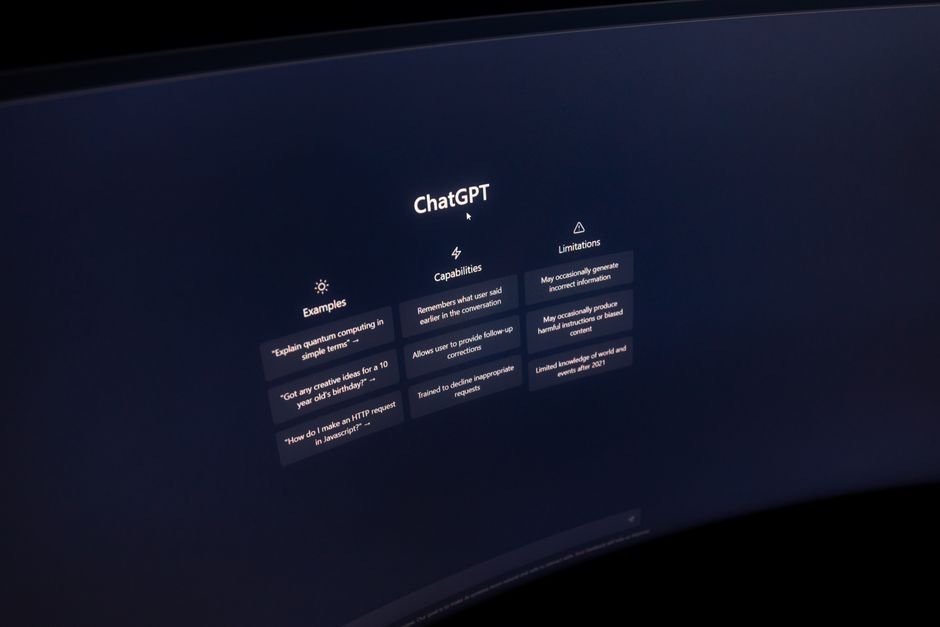
The problems surface in two consistent patterns. First, GPT has a tendency toward confident metalinguistic error—it will occasionally explain a grammar rule incorrectly, or generate an example sentence that subtly violates the rule it is illustrating. An experienced teacher will catch this; a newer teacher might not. Every GPT output intended for students requires grammar-level review.
Second, GPT curriculum outputs develop sameness quickly. After a few weeks of use, teachers notice that the warm-up format is always the same, the discussion questions have the same structure, and the creative activities repeat within a narrow range. For teachers building large course packages that need internal variety, this creative ceiling becomes a genuine constraint.
What Gemini Brings to Curriculum Design
Google’s Gemini was designed with Google Workspace integration as a core feature. For teachers whose curriculum documents live in Google Docs, Slides, and Drive, that frictionless workflow is a meaningful advantage. More than the other two AI systems, Gemini is designed to work inside the document rather than generate text for pasting elsewhere.

Gemini’s Practical Strengths
Gemini handles structured reference documents well. A vocabulary scope-and-sequence table organized by CEFR level, a unit planning grid with standards alignment, a course overview with weekly objectives—these structured formats come out of Gemini with better visual organization than comparable GPT outputs. For curriculum coordinators building shared department resources in Google Sheets or Docs, Gemini’s native integration reduces the friction that kills momentum in large documentation projects.
For IELTS academic writing preparation, Gemini’s formal register and longer coherent generation make it the strongest of the three for producing sample Task 1 and Task 2 writing at the right lexical density and discourse structure. Academic English is where Gemini’s training shows most clearly.
Gemini’s Limitations
Gemini outputs require more editing before they reach students. Where GPT gives you a tight lesson plan, Gemini often produces prose-heavy documents that need significant trimming to become classroom-ready. The AI explains and contextualizes where it should simply give you the activity. This is a minor frustration for a simple task and a significant time cost for a complex one.
Gemini also produces more cautious outputs—which is appropriate in general but translates into hedged, over-qualified instructions that feel wrong in a student-facing document. Phrases like “you might consider asking students to” are not how a teacher writes a classroom instruction. That register mismatch requires editing before any document goes to learners.
Claude’s Approach to Language Curriculum
Anthropic built Claude around a different priority: following complex instructions precisely across a long document without losing track of the specification. For ESL curriculum writers who regularly work with multi-layered constraints—level, vocabulary list, grammar target, genre, text length, question type, cultural context—this design difference has practical consequences.
Where Claude Performs Best
Claude’s strongest use case for ESL curriculum is differentiated materials. When a teacher needs parallel versions of a reading text for A2, B1, and B2 learners in the same class—same topic, adjusted vocabulary, adjusted syntax, adjusted inferencing demands—Claude holds that specification more faithfully than GPT or Gemini. It does not drift between levels or introduce B2 vocabulary into an A2 text simply because it was generating fluently.
For teacher-facing documents—methodology guides, grammar syllabus rationales, marking rubrics with detailed descriptors—Claude’s ability to reason about language rather than just reproduce common examples is a practical advantage. It can explain why an exception to a grammar rule exists, not just that it exists. That kind of metalinguistic depth is useful in teacher training contexts and advanced curriculum documentation.
Claude’s Real Limitations
The practical disadvantages are platform-level rather than qualitative. Without persistent web access in its base form, Claude cannot pull current event texts or recent statistics without a separate research step. It is also slower on long documents than GPT in most configurations, and its output format defaults often need explicit direction—Claude will not automatically produce a lesson plan template unless you specify that you want one.

Two Real Curriculum Tasks, Three AI Responses

Abstract comparisons matter less than concrete results. Two representative curriculum tasks reveal the performance differences more clearly than any benchmark score.
A TOEIC Part 7 multiple-passage lesson at the 700–800 score range requires two texts in authentic professional register (approximately 150 and 80 words respectively), four questions testing reference, inference, not-stated, and synthesis skills, and a post-reading speaking section. In this task, Claude produced the most precisely calibrated texts and question types. GPT was faster but required editing of the inference items. Gemini generated texts longer than the format requires and produced less differentiated question types across the four items.
A B2 business English speaking task—a role-play scenario with a built-in rubric assessing turn-taking, discourse marker use, and conversational repair—showed a different ranking. GPT produced the most classroom-ready format with minimal editing needed. Claude’s rubric descriptors were more sophisticated but needed cutting before use. Gemini’s scenario was the most creative and contextually rich but required the most restructuring before it could be given to students.
Making the Choice That Fits Your Context
No single AI tool wins every curriculum writing task. The practical answer is knowing which system to reach for based on the task in front of you, not which system wins an abstract head-to-head comparison.
Reach for GPT when speed matters and the task is a well-documented format: TOEIC drill items, standard PPP lesson plans, vocabulary exercises at a known level. GPT’s consistency in high-volume, format-constrained tasks makes it the most efficient curriculum workhorse of the three.
Reach for Gemini when your work lives inside Google Workspace or when the deliverable is a structured reference document that other teachers will maintain collaboratively. Gemini’s integration and organizational outputs reduce administrative friction in department-level curriculum planning.
Reach for Claude when precision is more important than speed—differentiated materials across multiple proficiency levels, complex rubrics with detailed descriptors, or any task where the specification is long and must be maintained faithfully throughout a lengthy document.

The Teacher’s Role Remains Non-Negotiable
The teachers getting the most out of AI for curriculum writing are not searching for a single best tool. They treat these AI systems the way they treat lesson plan templates: as starting points that still require professional judgment before reaching a learner. That judgment—about level appropriateness, cultural fit, pedagogical sequence, and exam accuracy—is what no AI currently automates. Choosing the right tool for each task reduces the editing burden. But the act of reviewing, adjusting, and approving AI-generated curriculum content is not a workaround. It is the job itself, and it is what makes curriculum design a professional skill rather than a prompt-engineering exercise.

উৎস
- OpenAI — ChatGPT and GPT-4 overview
- Google Gemini — AI for productivity and education
- Anthropic — Claude AI research and documentation
- British Council — Teaching English professional resources







 BN
BN  EN
EN  ZH
ZH  ZH_CN
ZH_CN  KO
KO  VI
VI  FR
FR  AR
AR  ES
ES  HI
HI  PT
PT  RU
RU  JA
JA  TR
TR  DE
DE  IT
IT  PL
PL  ID
ID  TH
TH  FA
FA  UK
UK  TL
TL  HE
HE  UR
UR  SW
SW  RO
RO  NL
NL  MS
MS  TA
TA  PS
PS  HU
HU  EL
EL  SV
SV  NB
NB  NN
NN  DA
DA  CS
CS  SR
SR  AM
AM