

The Silent Way: 7 ESL Techniques
A 1963 book by a Egyptian-born mathematician is an odd place to find one of ESL’s most durable classroom ideas, but that is exactly where the Silent Way comes from. Caleb Gattegno spent years designing math and reading programs before he turned the same thinking toward language teaching, and the result was a classroom where the teacher often says nothing at all for minutes at a time.
That sounds impractical until you have watched it work. A teacher holds up a red rod, says “red” once, then holds up a blue one and waits. Students supply the word. Wrong guesses get a raised eyebrow, not a correction. Within ten minutes a class that has never spoken a word of English is producing full sentences about rod color and length — and the teacher has barely spoken.

What Is the Silent Way Teaching Method?
The Silent Way is built on a single premise: students learn a language faster when they are forced to produce it themselves rather than repeat what the teacher says. Gattegno argued that traditional drilling trains students to imitate, not to think in the language — and that imitation stalls out the moment a student faces a sentence they have never heard before.
So the teacher’s job shifts from “explainer” to what Gattegno called a technician or engineer. The teacher sets up a problem — point at a rod, write an ambiguous word pattern on the board, gesture toward a missing verb — and then waits. Silence becomes the main teaching tool, not an awkward gap to fill. Students talk to fill it instead, and talking is the entire point.
Three tools carry most of a Silent Way lesson: Cuisenaire rods for grammar and vocabulary, a sound-color chart (also called a Fidel chart) for pronunciation, and a stripped-down set of teacher gestures that replace verbal correction. None of them require much equipment, which is part of why the method has survived in private language schools for six decades despite never going mainstream.
Why Teacher Silence Builds Stronger Learners

Most teachers are trained to fill dead air. A student hesitates, and the instinct is to jump in with the answer, the correction, the translation. The Silent Way argues that instinct is exactly what slows learners down, because it trains them to wait for rescue instead of searching their own memory.
When a teacher stays quiet after a mistake, the student has to do the work of noticing the error and fixing it. That self-correction sticks far better than a teacher’s fix, which a student can parrot back without actually processing. I have watched a single silent pause — three, maybe four seconds — produce a self-correction that a verbal prompt never would have, because the student had no choice but to listen to themselves.
This does not mean never speaking. Gattegno was specific: silence is a tool used at the right moment, not a blanket rule. A teacher still introduces new material, still models pronunciation once, still gives instructions. What disappears is the habit of repeating corrections, re-explaining grammar points, or praising every correct answer out loud.
Cuisenaire Rods: The Method’s Signature Tool

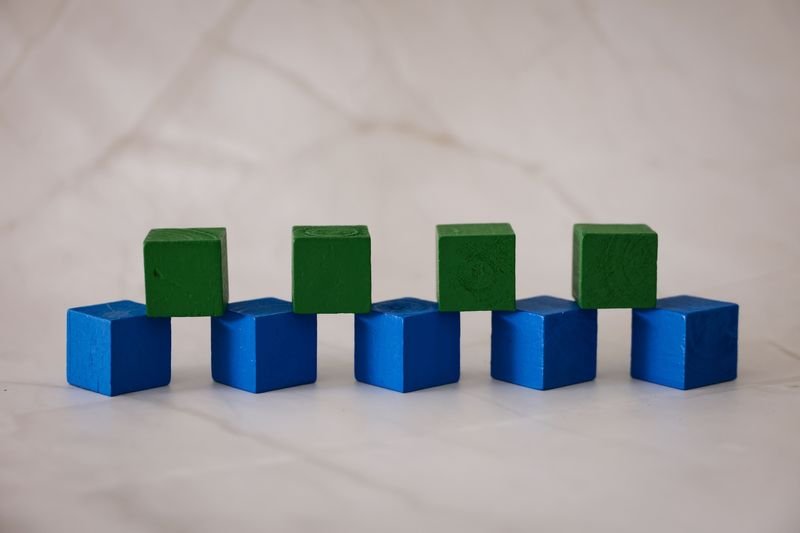
Cuisenaire rods were originally a math manipulative — ten colors, ten lengths, designed to teach number relationships without numbers. Gattegno borrowed them because they let a teacher introduce grammar visually instead of verbally. Point at a long rod next to a short one and a student can produce “the red rod is longer than the blue rod” without ever hearing a grammar rule about comparatives.
In a typical lesson, rods build toward sentence complexity in stages. Beginners name colors. Next comes counting and length (“three rods,” “a long rod”). Then prepositions arrive through physical arrangement — “put the green rod on the blue rod,” “take the red rod from the box.” By the time students are stacking rods into shapes and describing them, they are producing compound sentences with almost no direct instruction.
Teachers without actual Cuisenaire rods can substitute colored wooden blocks, bottle caps, or even colored paper strips — the exact material matters less than the principle of using a visual, manipulable object to prompt language instead of a verbal explanation.
The Sound-Color Chart and Fidel Charts for Pronunciation

English spelling is a pronunciation nightmare — “though,” “through,” and “tough” share four letters and rhyme with nothing. Gattegno’s sound-color chart sidesteps the spelling mess entirely by assigning each of the roughly 40 sounds in English a specific color block. A wall chart shows every sound as a colored rectangle, and a separate Fidel chart maps every spelling of that sound to the same color.
When a student mispronounces a word, the teacher does not say “no, try again.” The teacher points to the colored block for the correct sound. The student sees the color, recalls the sound associated with it, and self-corrects — again, without the teacher saying a word. Over weeks, students build an internal map of English sound patterns that spelling alone never teaches.
Building a full sound-color chart from scratch is a real time investment, which is probably the single biggest reason the Silent Way never scaled past niche private schools. A simplified version — color-coding just the vowel sounds that give your students the most trouble — gets most of the pronunciation benefit without the setup cost.
Using Gestures Instead of Explanations

A consistent set of hand signals replaces most verbal feedback in a Silent Way classroom. A flat palm facing the student usually means “stop, that’s wrong, try again.” A backward hand motion signals “go back to the earlier part of the sentence.” Tapping an ear means “listen to what you just said.” None of these require translation, which matters most in the first weeks of a beginner class when verbal explanation is genuinely hard to follow anyway.
Gestures also solve a problem every ESL teacher recognizes: students who understand a correction intellectually but keep making the same mistake because the feedback never physically registered. A consistent gesture, repeated the same way every time, builds a muscle-memory association that a sentence of verbal correction does not.
Start small if you want to try this without committing to the full method. Pick three gestures — stop, go back, listen again — and use them consistently for one week before expanding. Students pick up the gesture vocabulary faster than most teachers expect, usually within two or three class sessions.
Peer Correction and Self-Monitoring Techniques

Remove the teacher as the default source of correction and something predictable happens: students start correcting each other. This is not an accident — it is the direct result of the silence creating a gap that someone has to fill, and classmates fill it faster than a teacher waiting at the front of the room.
Structured peer correction works best with a clear routine. One student produces a sentence using the rods or chart. The teacher stays silent and looks at the rest of the class. If no one reacts, the teacher gestures toward a specific student to respond. Over time, students stop waiting for that gesture and start reacting on their own, which is the actual goal — a classroom where the group monitors itself.
Self-monitoring extends beyond peer correction into something closer to inner speech. Gattegno wanted students developing what he called “inner criteria” — an internal sense of whether a sentence sounds right, built from repeated exposure to the sound-color chart and rod work, rather than a memorized rule they consciously apply.
Common Mistakes When Trying the Silent Way
The most common failure is treating silence as punishment instead of a prompt. A teacher who goes quiet with crossed arms and a stern expression creates anxiety, not reflection — the silence needs to read as patient waiting, not disapproval. Students should feel like they have space to think, not like they are being tested under pressure.
Dropping the method entirely into a class used to constant teacher talk is the second mistake. Students accustomed to lecture-style instruction can read sudden silence as the teacher not knowing the answer, or as a sign the lesson has stalled. Introduce one element — rods for a single vocabulary set, or one correction gesture — before building toward a fully silent lesson structure.
A third mistake is skipping the sound-color chart setup and going straight to rods. Rods teach grammar and vocabulary well on their own, but pronunciation work genuinely needs the chart or some visual substitute — without it, teachers tend to fall back into verbal correction out of habit within the first few sessions.
Where the Silent Way Fits in a Modern ESL Classroom
Almost no modern program runs the Silent Way as a complete standalone method the way Gattegno designed it — full-chart pronunciation work and rod-only grammar instruction are a hard sell to students who expect explanations. What survives is the toolkit: rods for introducing new grammar visually, correction gestures instead of verbal interruption, and strategic silence after a mistake instead of an instant fix.
It pairs naturally with methods already covered on this site. Suggestopedia shares the same goal of reducing learner anxiety but gets there through music and a relaxed environment rather than silence. Total Physical Response overlaps directly with the gesture work — both methods use physical signals to replace verbal explanation for beginners. And where Task-Based Language Teaching gives students a real-world problem to solve with language, the Silent Way gives them a visual problem — a rod arrangement, a chart — and gets out of the way while they solve it.
The honest case for the Silent Way in 2026 is not “replace your curriculum.” It is “steal the silence.” Most ESL classrooms over-correct and over-explain. Cutting even a third of that verbal feedback and replacing it with a consistent gesture or a three-second pause produces more independent, confident speakers — without touching the rest of your lesson plan.
উৎস
- Silent Way — Wikipedia overview of Gattegno’s method and principles
- British Council TeachingEnglish — The Silent Way
- U.S. State Department American English — Silent Way, introduction by Diane Larsen-Freeman
- Donald E. Cherry — Silent Way classroom demonstration videos






 BN
BN  EN
EN  ZH
ZH  ZH_CN
ZH_CN  KO
KO  VI
VI  FR
FR  AR
AR  ES
ES  HI
HI  PT
PT  RU
RU  JA
JA  TR
TR  DE
DE  IT
IT  PL
PL  ID
ID  TH
TH  FA
FA  UK
UK  TL
TL  HE
HE  UR
UR  SW
SW  RO
RO  NL
NL  MS
MS  TA
TA  PS
PS  HU
HU  EL
EL  SV
SV  NB
NB  NN
NN  DA
DA  CS
CS  SR
SR  AM
AM