AI in Your ESL Classroom: Letting Teaching Context Decide
AI is already in your students’ phones. Before you write a rule, here is how to decide when allowing it builds language skills—and when it quietly replaces them.


AI is already in your students’ phones. Before you write a rule, here is how to decide when allowing it builds language skills—and when it quietly replaces them.

A practical guide for ESL teachers on how to train L2 learners to use ChatGPT as a grammar and speaking correction tool — with prompting strategies that build real independence.

A teacher-ready guide to helping absolute beginner English learners build daily AI practice habits — covering vocabulary, writing feedback, speaking scenarios, and error journals.

Quick Answer: The past simple describes completed actions at a specific point in the past (“She called at noon”). The past continuous describes ongoing actions that were in progress at a past moment (“She was studying when he arrived”). The two tenses most commonly appear together to show an interrupted action — the past continuous…

Your students have AI tools in their pockets — but most don’t know how to use them for real language growth. Here’s how to teach them to practice effectively every day.

AI tools promise faster ESL material creation — but predictable mistakes in vocabulary, grammar, and cultural context can undermine student learning. Here is what to check before every resource reaches your class.

When student writing feels too polished, too formal, and strangely voiceless, your instincts may be right. This guide helps ESL teachers identify AI-generated writing, use detection tools wisely, and redesign assessments to make the question easier to answer.
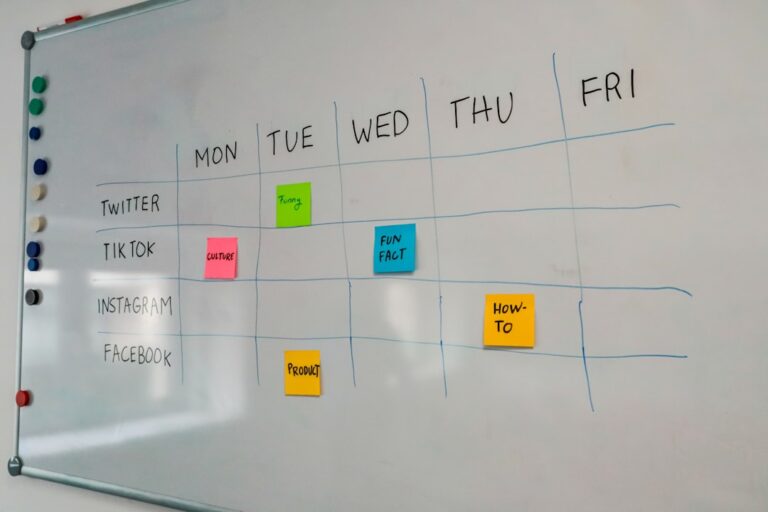
Learn how to use an AI lesson plan generator as an ESL teacher — with a practical workflow for evaluating, adapting, and improving AI output for your real classroom.

AI hallucination isn’t a bug to be patched — it’s a built-in feature of how language models work. Here’s what every ESL teacher needs to understand about why AI invents facts, and how to protect your lessons from fabricated citations and grammar rules.

The quality of an AI-generated ESL test depends almost entirely on the prompt behind it. Here is how to write prompts that produce classroom-ready assessments and curriculum instead of vague, off-level filler.
 EN
 ZH
 ZH_CN
 KO
 VI
 FR
 AR
 ES
 HI
 PT
 BN
 RU
 JA
 TR
 DE
 IT
 PL
 ID
 TH
 FA
 UK
 TL
 HE
 UR
 SW
 RO
 NL
 MS
 TA
 PS
 HU
 EL
 SV
 NB
 NN
 DA
 CS
 SR
 AM