
Zvířecí idiomy: 15 zábavných anglických výrazů, které byste měli znát
Animal idioms are some of the most colorful and fun expressions in English. These phrases use animals to describe everyday situations—and once you learn them, you’ll hear them everywhere!
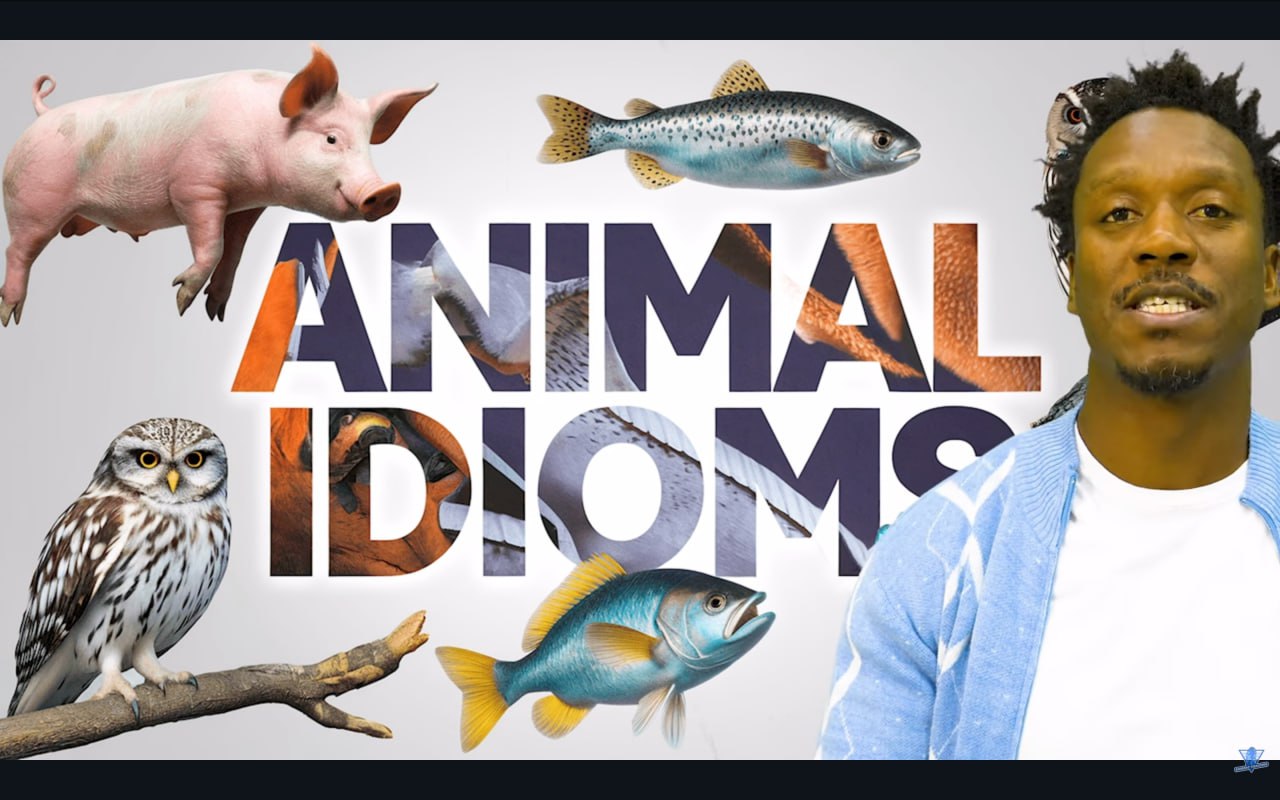
The English language has over 25,000 idioms—and many of the best ones involve animals. Whether you’re studying for an English exam, preparing for the Cambridge English exam, or just want to sound more natural in conversation, learning animal idioms is one of the fastest ways to level up your English.
Today we’re covering 17 essential animal idioms you’ll encounter in movies, conversations, and everyday English—plus bonus classroom activities to help you practice.
What Are Idioms?
Idioms are phrases we use to compare situations. They’re a shorthand—a way to communicate an idea quickly without having to explain everything. The meaning isn’t literal; it’s figurative. For example, when someone says “it’s raining cats and dogs,” no animals are falling from the sky. It simply means it’s raining very hard.
Idioms exist in every language, but English is especially rich with them. The EF Education considers idioms an essential part of fluency because native speakers use them constantly without even thinking about it. If you don’t know them, you’ll miss half the meaning in everyday conversations.
1. Hold Your Horses
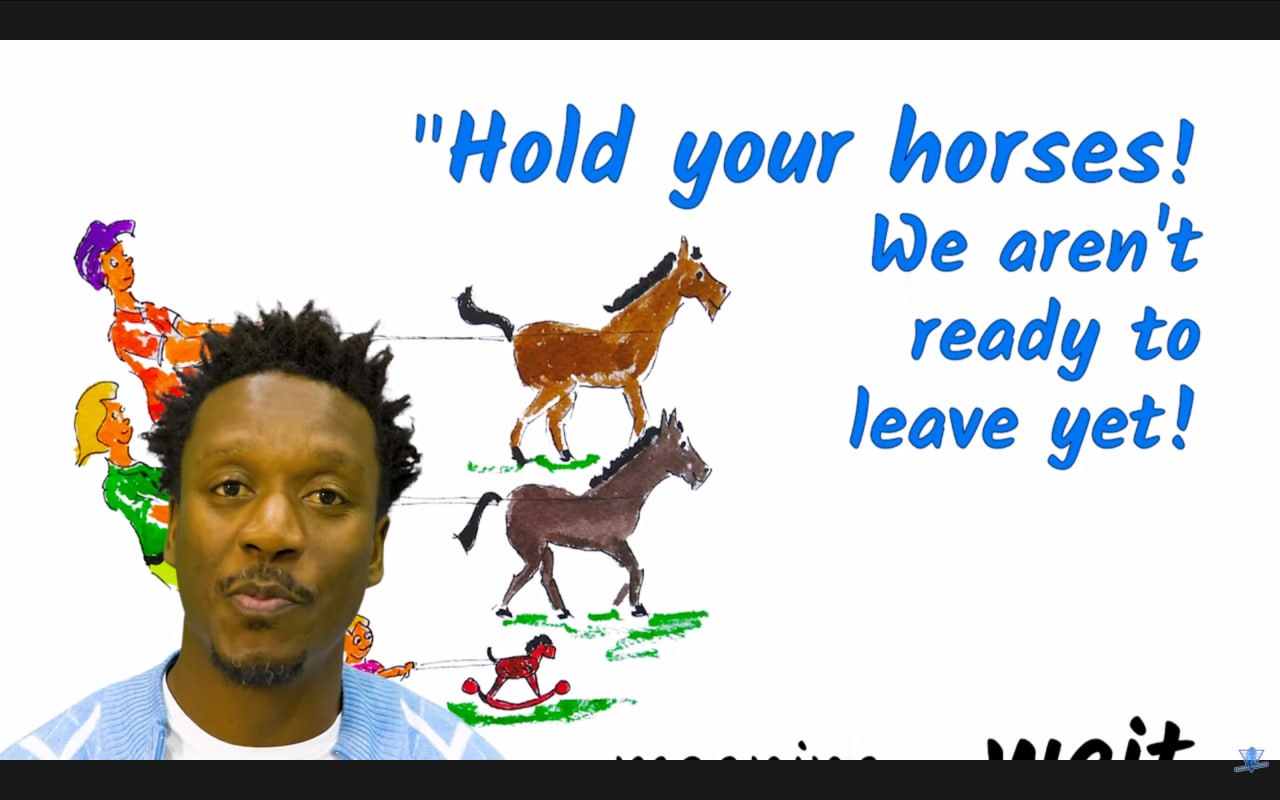
Význam: Wait or slow down.
Příklad: “Hold your horses! We aren’t ready to leave yet!”
Původ: From a time when people traveled by horse. To “hold your horses” meant to pull the reins and stop the horses from moving.
Usage tip: This is a casual, friendly expression. Use it with friends and family when someone is being too impatient. You might hear parents say this to excited children, or a boss might say it to a team rushing through a project.
2. Let the Cat Out of the Bag

Význam: Reveal a secret.
Příklad: “Don’t tell anyone about the surprise party—we don’t want to let the cat out of the bag.”
Původ: Possibly from dishonest butchers who would put cats in bags instead of pigs. When the cat escaped, the secret was out!
Usage tip: This idiom works well in both casual and semi-formal settings. You can use it when talking about any kind of revealed secret, from birthday surprises to business announcements.
3. The Elephant in the Room

Význam: An obvious problem or topic that everyone is avoiding.
Příklad: “We need to address the elephant in the room—the project is over budget.”
Původ: Imagine sitting in a room with an elephant, but everyone pretends it’s not there. That’s how obvious the ignored topic is!
Usage tip: This is a powerful expression for meetings and serious conversations. It’s a polite way to bring up an uncomfortable truth. You’ll hear it in business, politics, and family discussions.
4. Raining Cats and Dogs
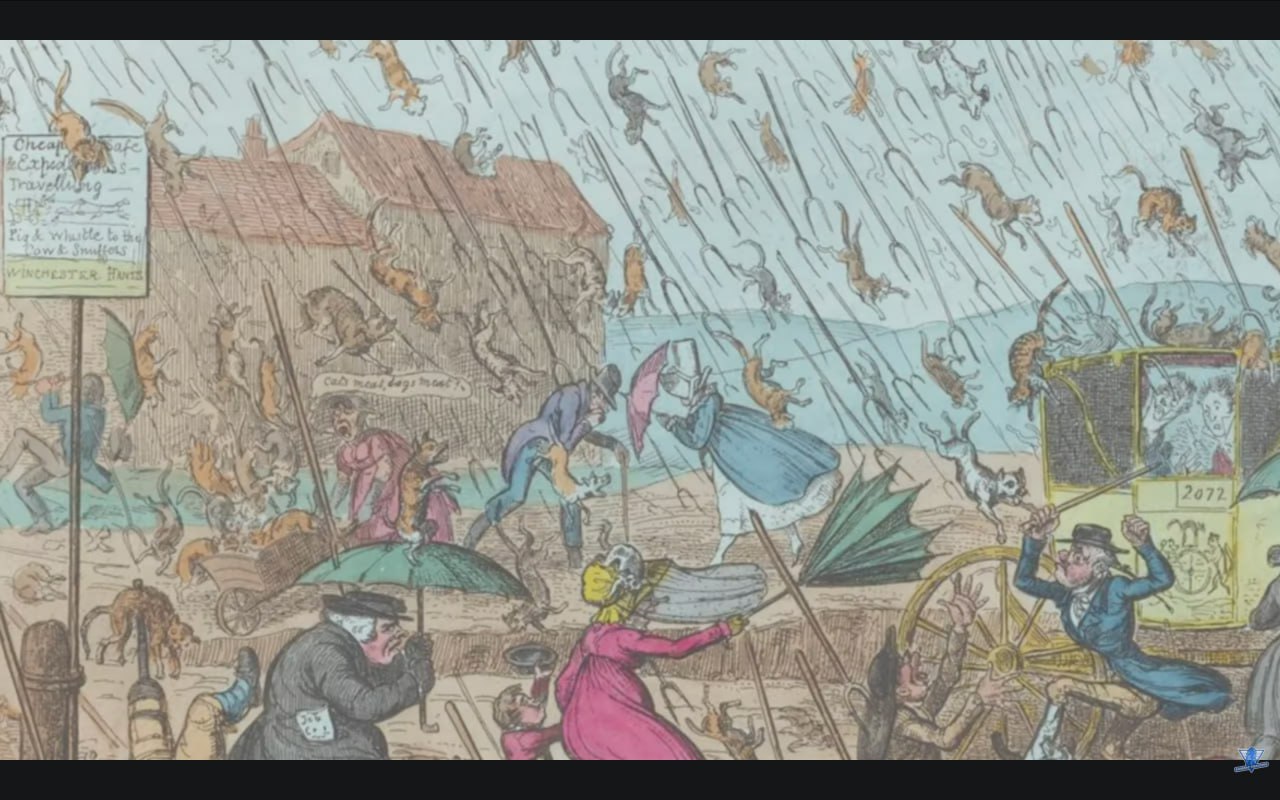
Význam: Raining very heavily.
Příklad: “Bring an umbrella—it’s raining cats and dogs out there!”
Původ: Unclear, but one theory is that heavy rain in old England would wash dead animals into storm drains. Another theory connects it to Norse mythology.
Usage tip: This is probably the most well-known English idiom worldwide. It’s casual and fun—perfect for small talk about the weather. British people especially love this one.
5. Barking Up the Wrong Tree
Význam: Looking in the wrong place or making a wrong assumption.
Příklad: “If you think I ate your sandwich, you’re barking up the wrong tree.”
Původ: From hunting dogs that bark at trees where they think prey is hiding—but sometimes they pick the wrong tree.
Usage tip: Use this when someone accuses you of something you didn’t do, or when someone is looking for answers in the wrong place. It’s direct but not rude.
6. Birds of a Feather Flock Together

Význam: People with similar interests tend to spend time together.
Příklad: “Those two are always together—birds of a feather flock together.”
Původ: Birds of the same species fly together in groups. Sparrows with sparrows, swans with swans.
Usage tip: This idiom can be positive or negative. You might use it to describe best friends who share interests, or it could be a gentle criticism—suggesting someone hangs out with the wrong crowd.
7. Let Sleeping Dogs Lie

Význam: Don’t disturb a situation that could cause trouble.
Příklad: “I know you want to bring up that old argument, but let sleeping dogs lie.”
Původ: If you wake a sleeping dog suddenly, it might react aggressively. Better to leave it alone!
Usage tip: Great advice for relationships and workplace situations. Use it when someone wants to revisit a conflict that’s already been resolved—or at least forgotten.
8. A Fish Out of Water
Význam: Feeling uncomfortable in an unfamiliar situation.
Příklad: “On my first day at the new school, I felt like a fish out of water.”
Původ: Pretty obvious—a fish can’t survive outside water. It’s completely out of its element.
Usage tip: This idiom is great for describing travel experiences, new jobs, or any time you’re outside your comfort zone. ESL students often relate to this one—learning a language in a new country can make anyone feel like a fish out of water!
9. Ants in Your Pants
Význam: Unable to sit still; fidgety and restless.
Příklad: “Why can’t you relax? Do you have ants in your pants?”
Původ: Imagine having pants full of ants—you’d definitely be moving around uncomfortably!
Usage tip: This is mostly used with children or in humorous situations. Teachers love this one for fidgety students. It’s light and playful—never mean.
10. A Wild Goose Chase
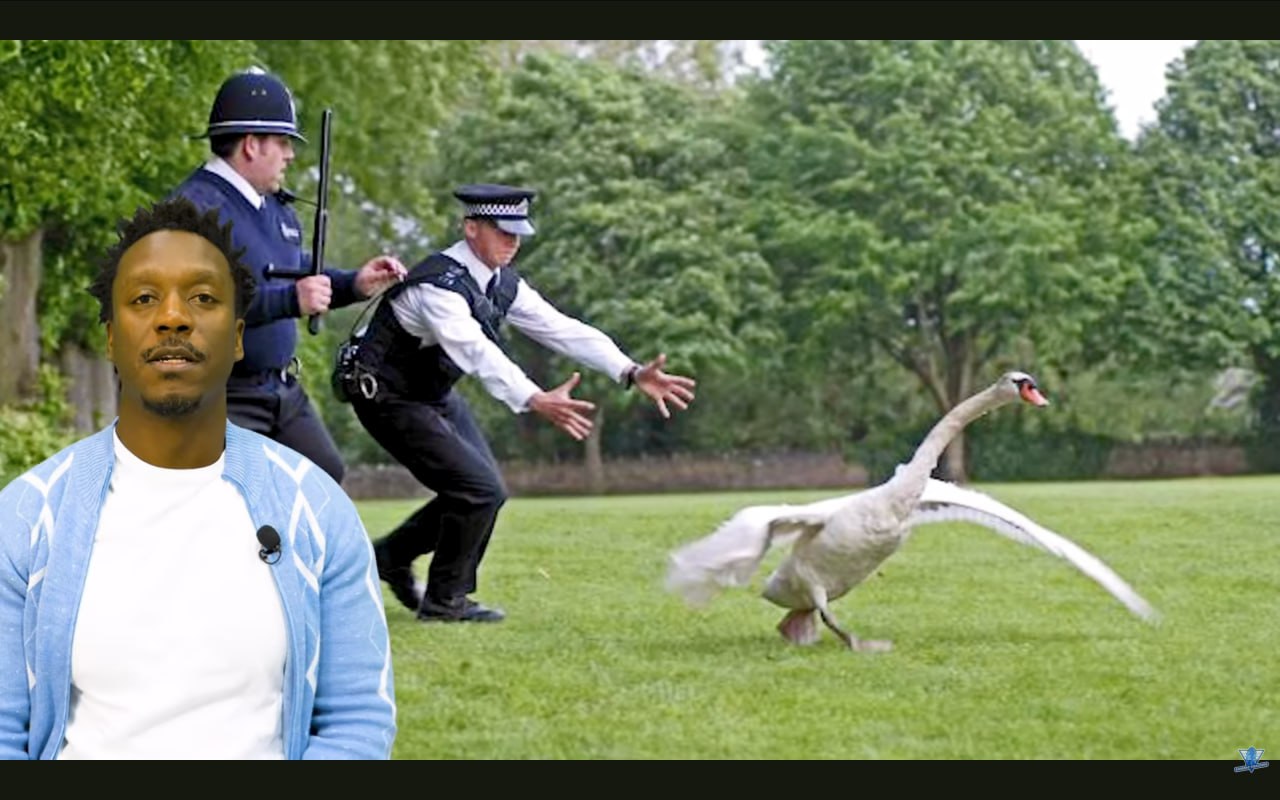
Význam: A pointless search or pursuit of something unattainable.
Příklad: “Looking for parking downtown was a wild goose chase.”
Původ: Chasing a wild goose is difficult because they fly unpredictably. Also references a 16th-century horse race.
Usage tip: Perfect for describing frustrating experiences where you wasted time looking for something. Shopping for sold-out items, searching for lost keys, looking for an address with bad directions—all wild goose chases.
11. Cat Got Your Tongue?
Význam: Why aren’t you speaking? (Usually asked when someone is unusually quiet.)
Příklad: “You’re usually so talkative—cat got your tongue?”
Původ: Possibly from the “cat o’ nine tails,” a whip used on sailors. Speaking out of turn meant getting whipped!
Usage tip: Use this playfully when someone suddenly goes quiet. It’s a gentle way to encourage someone to speak up, especially in class discussions or group conversations.
12. Piggyback
Význam: To carry someone on your back.
Příklad: “My daughter was tired, so I gave her a piggyback ride home.”
Původ: May come from “pick-a-back,” referring to how you might carry a pig from the butcher.
Usage tip: “Piggyback” has also become a verb in business English. You might hear “let’s piggyback on that idea” meaning “let’s build on top of what was already said.” Two uses for the price of one!
13. When Pigs Fly
Význam: Something that will never happen.
Příklad: “He’ll clean his room when pigs fly.”
Původ: Pigs can’t fly, so this describes an impossible event.
Usage tip: This is a sarcastic expression. Use it when you’re 100% sure something won’t happen. It’s humorous—not hostile. Different cultures have similar idioms: in Turkish, they say “when fish climb trees.”
14. Crocodile Tears

Význam: Fake or insincere crying; pretending to be sad.
Příklad: “Don’t believe her crocodile tears—she’s not really sorry.”
Původ: Ancient belief that crocodiles would cry while eating their prey, appearing sad while doing something harmful.
Usage tip: Be careful with this one—calling someone’s tears “crocodile tears” is a strong accusation. You’re saying their emotions are completely fake. Use it only when you’re sure.
15. The Early Bird Gets the Worm
Význam: Those who act first have an advantage.
Příklad: “The sale starts at 6 AM—remember, the early bird gets the worm!”
Původ: Birds that wake up early have the best chance of finding food.
Usage tip: Great motivation for students and workers. Many businesses reference “early bird” pricing or discounts. You’ll also hear the counter-expression: “The second mouse gets the cheese” (the first mouse gets caught in the trap!).
16. Busy as a Bee

Význam: Very busy and hardworking.
Příklad: “She has been busy as a bee preparing for the wedding.”
Původ: Bees are constantly working—collecting pollen, making honey, and building their hive. They never seem to rest!
Usage tip: This is always a compliment. When you describe someone as “busy as a bee,” you’re praising their work ethic. It’s warm and positive, and works in both casual and professional contexts.
17. Kill Two Birds with One Stone

Význam: Accomplish two goals with a single action.
Příklad: “By biking to work, I can kill two birds with one stone—save money and get exercise.”
Původ: The idea of being so skilled that you could hit two birds with one thrown stone. Very efficient!
Usage tip: This is one of the most useful idioms for everyday life. Use it whenever you find a clever way to handle two tasks at once. Some modern speakers prefer “feed two birds with one scone” as a gentler alternative!
Classroom Activities for Practicing Animal Idioms
Here are some hands-on activities teachers and self-study learners can use to practice these idioms. The Cambridgský slovník is an excellent tool for looking up additional examples and pronunciation for each idiom.
Activity 1: Idiom Charades
Write each idiom on a slip of paper. Students take turns drawing a slip and acting out the idiom without speaking. The rest of the class guesses which idiom is being performed. “Raining cats and dogs” and “ants in your pants” are especially fun to watch!
Activity 2: Story Chain
Working in groups of 4-5, students create a short story that uses at least five animal idioms naturally. Each student adds one sentence to the story, and it must include an idiom. The stories get wonderfully creative—and sometimes hilarious.
Activity 3: Match the Meaning
Create two columns: idioms on the left, definitions on the right. Scramble the order and have students draw lines connecting each idiom to its correct meaning. This works great as a warm-up exercise or a quick quiz.
Activity 4: Real-World Idiom Hunt
Challenge students to find animal idioms in movies, TV shows, podcasts, or songs during the week. They bring their examples to class and explain the context. This builds awareness and helps students recognize idioms in natural speech.
Opakování slovní zásoby
- Idiom – A phrase with a figurative meaning different from its literal meaning
- Figurative – Not literal; symbolic or metaphorical
- Origin – Where something comes from; its beginning
- Fidgety – Unable to stay still; restless
- Insincere – Not genuine; fake
- Sarcastic – Using irony to mock or show contempt
- Shorthand – A quicker way of saying or expressing something
Practice Using These Idioms
Try using these idioms in your daily English practice:
- Describe the weather using “raining cats and dogs”
- Tell a friend to “hold their horses” when they’re being impatient
- Share a situation where you felt like “a fish out of water”
- Describe a time you went on a “wild goose chase”
- Use “kill two birds with one stone” to describe a clever solution
The secret to mastering idioms is using them. Don’t just memorize the list—try dropping one into conversation each day. Within a few weeks, they’ll feel completely natural.





 CS
CS  EN
EN  ZH
ZH  ZH_CN
ZH_CN  KO
KO  VI
VI  FR
FR  AR
AR  ES
ES  HI
HI  PT
PT  BN
BN  RU
RU  JA
JA  TR
TR  DE
DE  IT
IT  PL
PL  ID
ID  TH
TH  FA
FA  UK
UK  TL
TL  HE
HE  UR
UR  SW
SW  RO
RO  NL
NL  MS
MS  TA
TA  PS
PS  HU
HU  EL
EL  SV
SV  NB
NB  NN
NN  DA
DA  SR
SR  AM
AM