
Interleaving Practice: 7 ESL Techniques for Better Retention
A teacher who spends an entire week on the present perfect and then moves to the past simple the following week is running blocked practice — and it’s the default structure of nearly every ESL coursebook on the market. Students perform well on Friday’s present perfect quiz. Three weeks later, when a writing task calls for a mix of tenses, half the class reverts to present simple for everything. That gap between quiz performance and real use is the single biggest argument for interleaving, and it’s backed by decades of cognitive psychology research that most language teacher training never covers.
This isn’t a call to throw out unit-based curricula. It’s a case for restructuring the last 15 minutes of class, the homework sets, and the review sessions so that old material keeps resurfacing next to new material, forcing students to tell the difference rather than just recognize a pattern in isolation.
What Interleaving Practice Actually Means in an ESL Classroom
Blocked practice groups all repetitions of one skill together — ten present perfect sentences, then move on. Interleaved practice mixes items from multiple categories within the same set, so a student might see a present perfect sentence, then a past simple sentence, then a present perfect again, forced to identify which structure applies each time rather than just repeating the same choice ten times in a row.
The distinction matters because blocked practice trains pattern completion, not selection. If every item in a drill is the same tense, a student can succeed without ever actually deciding which tense fits the context — they already know the answer before reading the sentence. Interleaving removes that shortcut. Every item requires a fresh decision, which is exactly the skill students need outside the classroom, where nobody announces which grammar point is coming next.

Why Mixing Topics Beats Grouping Them
Yuichi Suzuki’s research on working memory and L2 grammar proceduralization found that interleaved practice produced stronger discrimination between similar structures than blocked practice, though blocked groups showed faster initial fluency during training itself. That trade-off shows up consistently across the literature: blocked practice feels more productive in the room because students are getting things right quickly, while interleaved practice feels harder because students are constantly switching gears and making more errors along the way.
A 2025 study in Language Learning examining low-achieving adolescents found something worth taking seriously before converting every lesson to full interleaving: students with weaker foundational knowledge actually benefited from an initial block of practice before interleaving was introduced, while stronger students did better jumping straight into mixed practice. The lesson isn’t “interleaving always wins” — it’s that sequencing matters, and a class of true beginners needs a different on-ramp than an intermediate class reviewing familiar material.
Studies on L2 grammar specifically have found that interleaved groups often show better accuracy on immediate post-tests, while blocked groups show better fluency during the practice phase itself — you’re essentially choosing between short-term speed and longer-term precision. For most ESL classrooms, where the actual goal is students using correct structures independently months later, that trade favors interleaving once the basics are in place.
7 Ways to Build Interleaving Into Your Lessons
None of these require rewriting your curriculum. They’re modifications to review time, homework, and warm-ups — the parts of a lesson that are already flexible.
1. Mix Verb Tenses Instead of Blocking Them
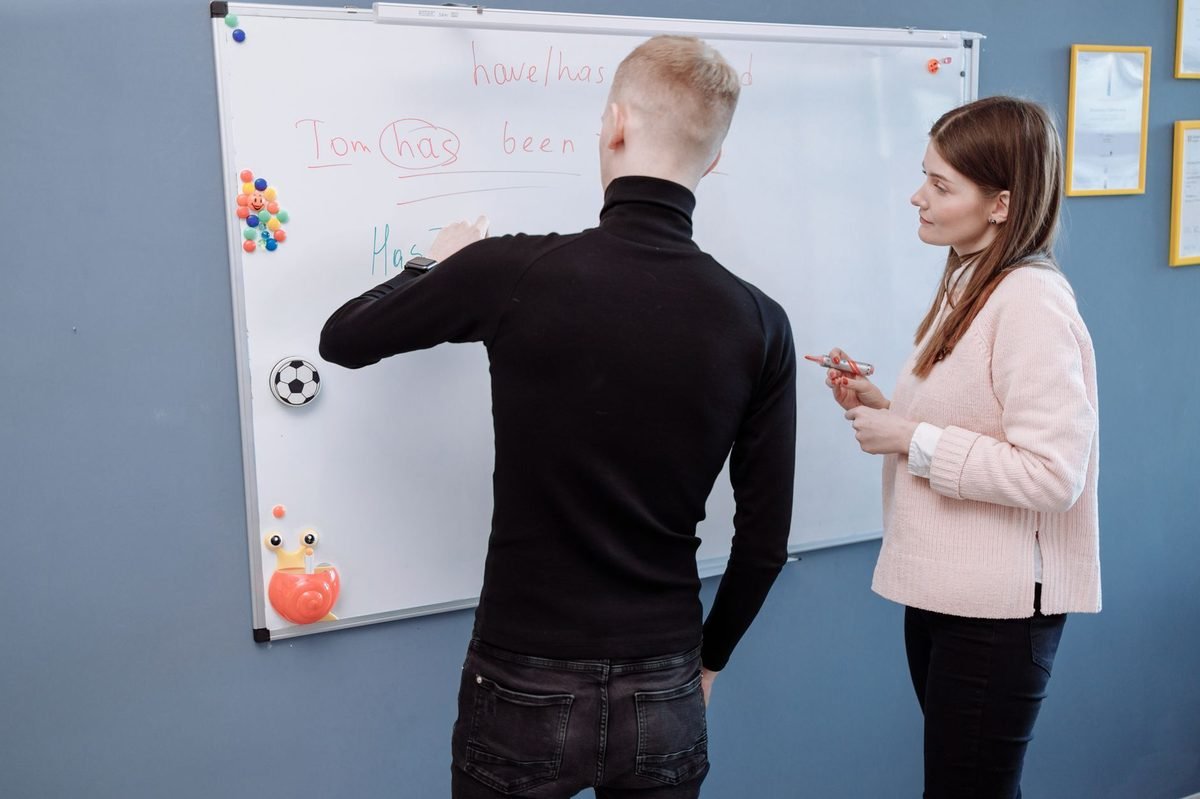
Once a class has been introduced to a second tense, stop drilling tenses in isolation. Build a ten-sentence gap-fill where three sentences need present perfect, three need past simple, two need present continuous, and two need future forms — mixed in random order, not grouped by type. Students have to read for context clues every single time, which is the actual skill a native listener assumes they have.
2. Build Retrieval-Style Warm-Ups From Old Units
Spend the first five minutes of class on three questions pulled from units taught two, four, and eight weeks ago — never the unit you just finished. This is close cousin to spaced repetition, but the interleaving element is choosing questions from different grammar points and vocabulary sets rather than repeating the same item on a schedule. The combination of spacing and mixing outperforms either technique used alone.

3. Randomize Vocabulary Quiz Order
If last week covered a set of 15 words about travel, and two weeks ago covered 15 words about food, don’t quiz them separately. Build one 20-item quiz that pulls from both sets plus a handful from a month back, shuffled so students never know which category is coming. Alphabetizing or grouping by topic makes the quiz easier and the learning weaker — the categorization itself becomes the crutch students lean on.
4. Run Spiral Grammar Reviews Every Friday
Reserve the last 15 minutes of Friday’s class for a review that touches every grammar point covered since the term started, not just the current unit. Rotate which points get emphasis so nothing goes untouched for more than three or four weeks. This is the single most effective habit on this list because it requires no new materials — just a different selection process for existing worksheets and quiz banks.
5. Interleave Skills, Not Just Topics
Interleaving doesn’t have to stay inside grammar. A 20-minute block that alternates between a two-minute listening clip, a grammar correction task, and a short speaking prompt trains students to switch modes quickly — which mirrors real conversation far more than 20 straight minutes of any single skill. Teachers who run this report that students initially resist the switching and settle into it within two or three sessions.
6. Mix Error Types in Correction Drills
Instead of a worksheet where every sentence has a subject-verb agreement error, build one where errors rotate between agreement, tense, preposition choice, and article use. Students have to diagnose the type of error before they can fix it, which is a meaningfully harder — and more useful — skill than pattern-matching a single error type ten times in a row.
7. Design Assessments That Cross Units
A unit test that only covers the unit just finished tells you almost nothing about retention. Add a section — even just 20% of the test — pulling questions from two or three prior units. Students who crammed the current unit and forgot everything before it will show it immediately, and that data should change what gets reviewed next, not just what grade gets recorded.

When Blocked Practice Still Makes Sense
Interleaving is not the right choice for the very first exposure to a brand-new structure. A student who has never seen the present perfect before needs a block of focused, repetitive practice to build the basic form before being asked to discriminate it from three other tenses under time pressure. Introduce interleaving once a structure has had its initial blocked exposure — typically after the first lesson or two — not on day one.
Low-achieving or lower-level classes also benefit from a longer initial blocked phase than stronger classes, based on the adolescent learner research cited above. If a class is consistently confused rather than productively challenged by mixed practice, that’s a signal to extend blocked practice a bit longer before layering in the mix — not a reason to abandon interleaving altogether.
A Simple Weekly Schedule You Can Copy Tomorrow
Monday and Tuesday stay focused on the new unit’s core content, largely blocked, so students build a working foundation. From Wednesday onward, warm-ups start pulling in one or two items from earlier units. Thursday’s homework set mixes new material with two or three review items. Friday closes the week with the 15-minute spiral review described above, touching material from the last month, not just the current unit. Repeat that rhythm every week and by the eighth or ninth week, a genuinely cumulative review culture exists without a single extra planning period.

The Mistake Teachers Make When They First Try Interleaving
The most common failure isn’t resistance from students — it’s teachers mixing too many unrelated topics too soon and calling it interleaving. Combining present perfect with a vocabulary set about weather and a reading strategy in one ten-minute block isn’t interleaving, it’s just clutter. Effective interleaving mixes items that are similar enough to require real discrimination — different tenses, different but related structures, vocabulary from the same semantic field — not items so unrelated that there’s nothing to actually compare.
The second mistake is giving up after one confused-looking class. Interleaved practice is what researchers call a desirable difficulty: it produces worse-looking performance in the moment specifically because it’s building a more durable and flexible kind of knowledge. A teacher watching a slower, messier review session needs to trust that the awkwardness is the mechanism working, not evidence that it isn’t.

Retention is the whole point of teaching a language — a student who can produce a structure correctly in an isolated drill but not in a mixed conversation hasn’t actually learned it yet, they’ve memorized a pattern for a test. Pick two of the seven techniques above, run them for the next four weeks, and pay attention to whether students hold onto material past the unit test. For a related technique that pairs naturally with mixed review, see ESL review games, and for the scaffolding principles that make mixed practice manageable for weaker students, see scaffolding in ESL.
Zdroje
- The What, Why, and How of ‘Interleaving’ — EdWeek overview of interleaving research and classroom application.
- Does Anyone Use Interleaving When Teaching ELLs? — Larry Ferlazzo’s classroom discussion of interleaving specifically for English language learners.
- Nakata, T. & Suzuki, Y. (2019). Effects of Massing and Spacing on the Learning of Semantically Related and Unrelated Words. Časopis moderního jazyka. — Research on blocked vs. interleaved practice schedules in L2 learning.
- The Effects of Interleaving and Blocking Practice on L2 Contextualized Grammar Learning — Journal of Second Language Studies, comparing accuracy and fluency outcomes between practice types.
- Hwang, S. (2025). Undesirable Difficulty of Interleaved Practice: The Importance of Initial Blocked Practice for Declarative Knowledge Development in Low-Achieving Adolescents. Language Learning. — Study on sequencing blocked and interleaved practice by learner proficiency.









 CS
CS  EN
EN  ZH
ZH  ZH_CN
ZH_CN  KO
KO  VI
VI  FR
FR  AR
AR  ES
ES  HI
HI  PT
PT  BN
BN  RU
RU  JA
JA  TR
TR  DE
DE  IT
IT  PL
PL  ID
ID  TH
TH  FA
FA  UK
UK  TL
TL  HE
HE  UR
UR  SW
SW  RO
RO  NL
NL  MS
MS  TA
TA  PS
PS  HU
HU  EL
EL  SV
SV  NB
NB  NN
NN  DA
DA  SR
SR  AM
AM