

Exit Tickets for ESL Classrooms: 15 Quick Formative Assessment Ideas
Last Tuesday I handed my intermediate class a sticky note each and asked them to write one sentence using the third conditional before they packed up. Four of eighteen got it wrong in the same way — mixing up “would have” and “would” — and I knew exactly what to open Wednesday’s class with. That’s the entire pitch for exit tickets: thirty seconds of writing tells you more than a homework set you won’t mark until the weekend.

What an Exit Ticket Actually Checks in an ESL Class
An exit ticket isn’t a quiz and it isn’t graded — the moment students think it counts toward a grade, they stop answering honestly and start guessing what you want to hear. The point is narrower than that: one lesson, one objective, one quick check of whether it landed. If you taught reported speech today, the ticket asks students to report one sentence. If you drilled listening for gist, the ticket asks for the main idea in five words. Anything broader than that and you’re back to writing a test.
This matters more in ESL classrooms than in most subjects because language skill doesn’t show up cleanly in class participation. A student can nod along to a grammar explanation and still produce the wrong form the second they have to use it unprompted. Exit tickets catch that gap before it turns into a habit, because you’re reading it that same afternoon, not three days later when the class has already moved on.
They also fit naturally alongside the wider set of formative assessment tools already covered on this site — cold calling, mini whiteboards, quick pair checks. The exit ticket’s advantage over all of those is that it’s individual and silent. A confident student can dominate a cold-call check while three quieter students nod along without understanding a word, and you’d never know from the front of the room. Exit tickets remove that hiding spot because every single student answers, on their own, with nobody watching what they write.

Paper Exit Ticket Ideas That Take No Prep
Most of what works best costs nothing and needs no photocopying. Sticky notes on the way out the door are still the fastest option I’ve used in fifteen years of doing this.
- One sentence, today’s target. Write one sentence using the grammar or vocabulary you taught. Collect on the way out.
- Explain it to a new student. In two sentences, explain today’s rule to someone who missed class. This exposes shaky understanding fast — students who can’t explain it usually can’t use it either.
- Muddiest point. Write down the one thing from today that’s still confusing. Read these before the next lesson and open with the most common answer.
- Traffic light rating. Draw a red, yellow, or green dot next to today’s objective. It takes five seconds and gives you a headcount without a single word of writing.
- Three words. Write the three most useful words or phrases from today’s lesson. Great for vocabulary-heavy classes — you’ll see immediately which words didn’t stick.
- Fix the sentence. Hand out one sentence with a deliberate error in today’s target structure. Students correct it and hand it back.
- Question I still have. One genuine question about the topic, no matter how basic. This works particularly well with shy students who won’t raise a hand in front of classmates.
None of these need a template. A stack of sticky notes by the door or scrap paper cut into quarters does the job. The only rule is consistency — pick one format per unit so students know exactly what’s expected and stop treating it as a surprise quiz.

Digital Exit Tickets for Classes With Devices
If your students have phones or a shared classroom set of tablets, digital tools save you the sorting-through-sticky-notes step and give you a chart instead of a pile of paper. Google Forms is the plain option almost every school already has access to — three questions, five-minute setup, results in a spreadsheet you can scan in the hallway. Formative and Poll Everywhere add live response walls where the whole class sees anonymous answers appear in real time, which works well for the “muddiest point” format because students see they’re not the only one confused.
The tradeoff is speed of setup versus speed of reading. Paper tickets take zero minutes to hand out and a few minutes to read through by hand. Digital tickets take a couple of minutes to set up but sort themselves — a spreadsheet will show you at a glance that six students missed the same question, where a stack of sticky notes makes you count by hand. For a once-a-week check-in, paper wins on convenience. For a daily habit across multiple classes, the five minutes spent building one reusable digital form pays for itself by week two.


Matching the Ticket to the Skill You Taught
A generic “what did you learn today” prompt gets generic answers. Tying the ticket directly to the skill you drilled gets you something you can actually act on.
For grammatik, ask for one original sentence using the target structure — not a fill-in-the-blank, since students can guess those without understanding the rule. For ordforråd, ask students to use one new word in a sentence about their own life; a word only sticks once it’s attached to something personal. For listening, ask for the main idea in five words or fewer — this forces students to process gist rather than transcribe individual words they caught. For taler, skip the written ticket entirely and do a thirty-second “exit interview” at the door where each student answers one question verbally before leaving; it’s the closest thing to real conversation pressure you’ll get in a lesson. For reading, ask students to write the question they’d ask the author if they could.
Reading a Stack of Tickets in Under Five Minutes
Thirty tickets sound like a grading burden until you stop grading them. Sort into three rough piles — got it, close, missed it — while walking back to your desk. You’re not correcting grammar or writing feedback on each one; you’re counting. If two-thirds landed in “got it,” move on tomorrow. If half landed in “missed it,” that’s not a student problem, that’s a re-teach problem, and the fix is a five-minute warm-up review before the next topic, not individual remediation for fifteen students.

Keep a simple log — one line per class, per day, noting the rough split. After a month you’ll see patterns: maybe Tuesday classes consistently score lower because they’re right after lunch, or maybe past-tense irregular verbs need two full lessons instead of one every single time you teach them. That log is worth more than any single day’s tickets on their own.
Making It a Weekly Habit Instead of a One-Off
The classes where this actually works long-term are the ones where the ticket shows up at the same point in the lesson, every single day, without exception. Pick the last three minutes, every time, and students stop treating it as an interruption and start treating it as part of the lesson’s shape — the same way they expect a warm-up at the start. Skip it for a week because you’re behind on the syllabus and you’ll find it takes real effort to restart the habit, both for you and for them.
It also pairs well with the classroom routines covered in this site’s classroom management guide — a consistent exit routine does double duty as a settling mechanic for classes that tend to get loud in the last five minutes before the bell. Students writing quietly on a sticky note is a calmer way to end a lesson than a class packing bags while you’re still trying to give instructions for homework.
One caution worth naming directly: don’t run more than one exit ticket format per week with younger or lower-level classes. Switching between sticky notes, a Google Form, and a verbal check in the same week adds a layer of “figuring out the format” on top of the actual language task, and that extra cognitive load is exactly what you’re trying to strip away with a tool this simple.
Where Exit Tickets Go Wrong
The most common mistake is grading them. The instant a student suspects the ticket affects their grade, the honest “I still don’t get this” answer disappears and gets replaced with whatever they think earns marks. Keep it ungraded, always, and tell students that directly on day one.
The second mistake is collecting them and never looking again. I’ve watched teachers build a beautiful digital exit ticket system, run it for two weeks, and quietly let it die because nobody built in the five minutes to actually read the results before the next class. An exit ticket you don’t read is just a worksheet with a different name.
The third is asking too much. “What did you think of today’s lesson?” is too vague to act on. “Write one sentence using the past continuous” gives you a yes-or-no answer for every single student in the room. Narrow the question until there’s only one way to mark it right or wrong.
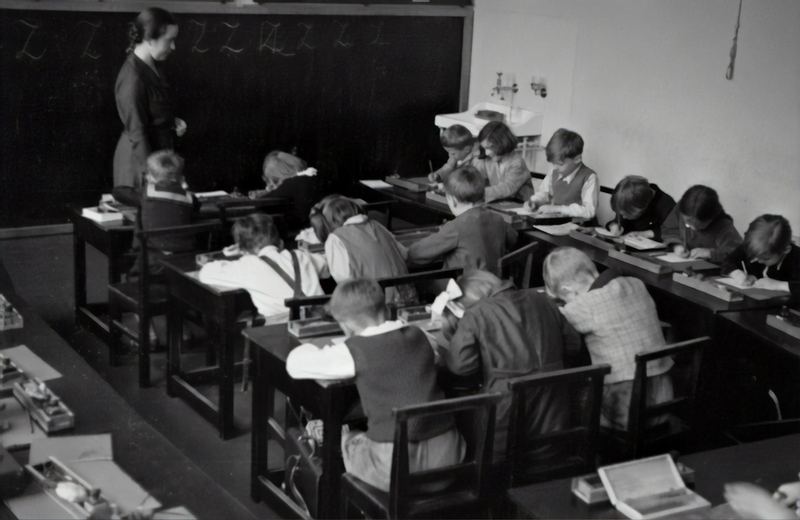
Exit tickets won’t replace a proper unit test or tell you a student’s overall level, and they’re not meant to. What they do is give you same-day proof of whether one specific thing you taught actually transferred — which is the one piece of information a weekly quiz can’t give you fast enough to act on. Pick one format, run it for two weeks straight before you judge it, and read every single one before the next class starts.
Kilder
- 24 Exit Ticket Ideas and Examples That Give Immediate Feedback — We Are Teachers
- Using Exit Tickets Effectively in the Elementary Grades — Edutopia
- Exit Ticket Ideas: 35 Examples for Every Teacher — Ziplet









 DA
DA  EN
EN  ZH
ZH  ZH_CN
ZH_CN  KO
KO  VI
VI  FR
FR  AR
AR  ES
ES  HI
HI  PT
PT  BN
BN  RU
RU  JA
JA  TR
TR  DE
DE  IT
IT  PL
PL  ID
ID  TH
TH  FA
FA  UK
UK  TL
TL  HE
HE  UR
UR  SW
SW  RO
RO  NL
NL  MS
MS  TA
TA  PS
PS  HU
HU  EL
EL  SV
SV  NB
NB  NN
NN  CS
CS  SR
SR  AM
AM