
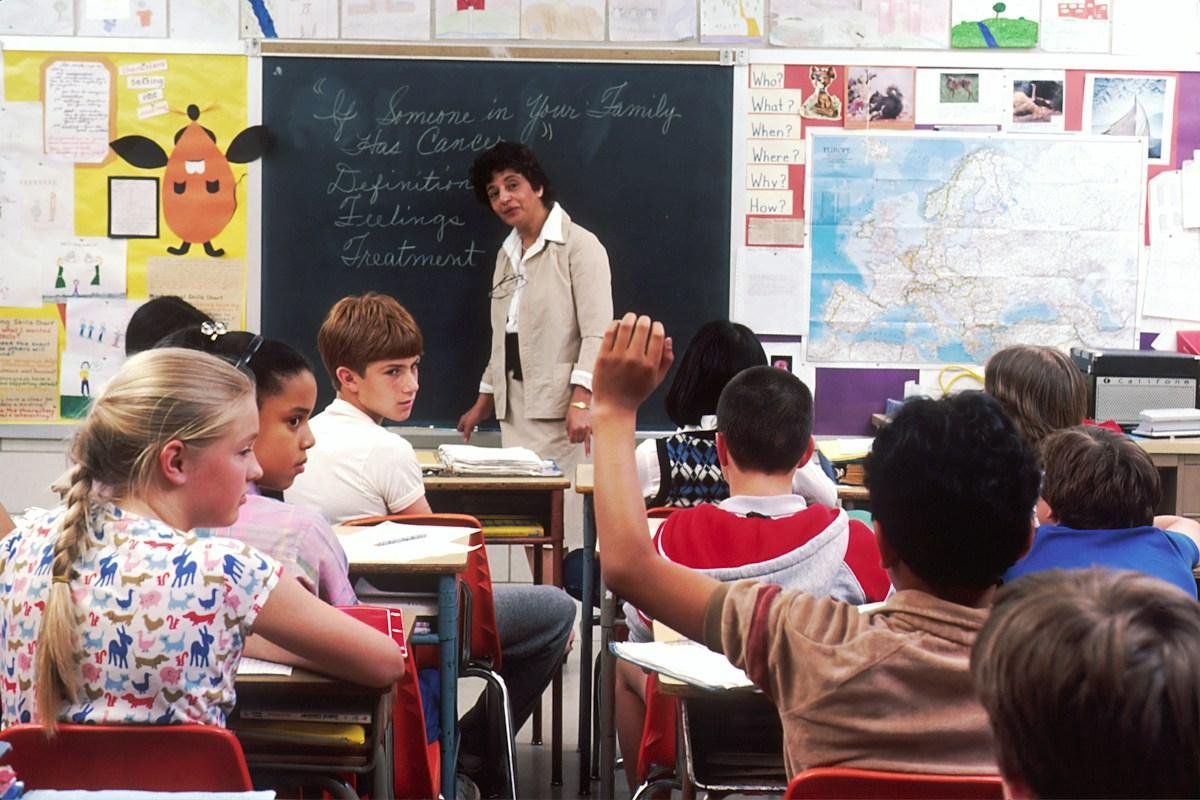
Deaf ESL Students: 8 Proven Strategies
Allen’s 1986 study on deaf literacy found that the average deaf high school graduate in the US reads English at roughly a third- or fourth-grade level — not because deaf students can’t learn language, but because most English instruction assumes a sound-based on-ramp they never had access to. For an ESL teacher used to drilling pronunciation and listening comprehension, a deaf or hard-of-hearing student in the room means rethinking the entire delivery system, not just turning up the volume.
The good news: deaf ESL learners aren’t missing a cognitive piece. They’re missing an auditory channel, and English just happens to be taught almost entirely through that channel by default. Swap the channel and the content mostly stays the same.
1. Deaf ESL Students Need Two Languages, Not One Delayed One
A deaf student who signs ASL is not a hearing student who’s behind — they’re bilingual, with ASL as a first language and English as a second one, exactly like any other ESL learner with a different L1. Linguist Charrow argued back in 1981 that “it is not the inability to hear that causes the most persistent problems” for deaf English learners, but the lack of access to the structure of spoken English during the years hearing kids absorb it automatically.
The practical fix is a bilingual/bicultural approach: let the student draft ideas in ASL first — recorded on video if an interpreter isn’t in the room — then translate that draft into written English. This mirrors exactly what you’d do with a Spanish-speaking or Mandarin-speaking ESL student who thinks in L1 before writing in L2. Treating ASL as a legitimate first language, not a deficit, changes how a student relates to the whole class.

2. Make Every Lesson Visual by Default, Not as a Backup
Deaf students learn through their eyes first, so pictures, diagrams, written prompts, and physical objects can’t be an occasional supplement — they need to be the main delivery method for every lesson. If a hearing student gets a vocabulary word spoken aloud three times, a deaf student needs that same word shown in print, shown in a picture, and ideally fingerspelled or signed, all at once.
This isn’t extra work if you build it into lesson planning from the start rather than retrofitting it. Slide decks with text and images instead of verbal-only explanations, physical props for new vocabulary, and written instructions alongside spoken ones all do double duty — they help deaf students and they help every other ESL learner in the room who’s still decoding spoken English in real time.

3. Guarantee Eye Contact Before You Speak — Every Time
A deaf or hard-of-hearing student who relies on lipreading or an interpreter cannot process anything said while their attention is elsewhere. The fix sounds almost too simple: get the student’s visual attention — a wave, a light tap on the desk or shoulder, a signal from a classroom buddy — before a single word leaves your mouth.
This also means staying still and visible while talking. Pacing around the room, turning to write on the board mid-sentence, or covering your mouth with a hand or a mask erases the information a lipreading student depends on. The University of Idaho’s instructional accommodations guide for deaf and hard-of-hearing students lists “ensure the student can see your face” as a non-negotiable baseline, not a nice-to-have — and it costs a teacher nothing to do consistently.
4. Build In Processing Time Before Expecting a Response
Whether a student is lipreading, watching an interpreter, or reading captions, there’s a built-in lag between when something is said and when it’s fully received. Cold-calling a deaf ESL student the instant you finish a question doesn’t test comprehension — it tests reaction speed, and it will look like the student doesn’t know the answer when they’re still catching up.
Build a short, deliberate pause into every question-and-answer cycle. Repeat classmates’ comments and questions before responding to them, since a deaf student following an interpreter or lipreading the teacher misses everything said by peers across the room. Small-group and pair work, where the physical distance to the speaker is short, often produces far more participation from deaf students than whole-class discussion ever does.

5. Never Play Audio or Video Without Captions
Listening comprehension exercises are a staple of ESL teaching, and they’re close to useless for a deaf student if there’s no caption track. The rule that actually works: if a video or audio clip can’t be captioned or scripted, don’t use it in a mixed classroom — swap it for a captioned alternative or skip the activity until you have one.
This has gotten easier, not harder. Nearly every streaming platform and YouTube auto-generates captions now, and closed-captioned television has long been flagged as a genuinely useful recreational English-exposure tool for deaf learners — it turns passive screen time into incidental vocabulary and grammar exposure without singling the student out as different from their hearing classmates watching the same show.

6. Use Interactive Writing Instead of Red-Pen Error Correction
Deaf ESL writers tend to make a specific, predictable set of English errors — dropped articles, mixed-up prepositions, inconsistent verb tense markers — because those features of English have no equivalent gesture or sign in ASL. Marking every instance in red ink teaches a student what’s wrong without teaching them what to do instead, and it tends to shut writing confidence down fast.
Interactive and dialogue-journal writing works better: the student writes, the teacher responds in writing with a model of correct usage embedded naturally in the reply, and the back-and-forth continues without a grade attached to every sentence. Some programs have used video recording — the student signs a draft in ASL, reviews the recording, then writes the English version from that visual draft — as a bridge between the two languages that cuts down on direct translation errors.
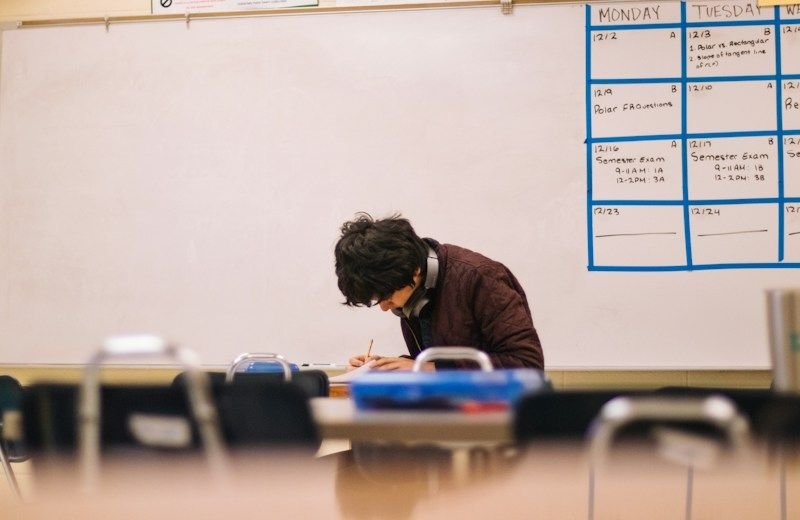
7. Fix the Room Before You Fix the Lesson
Seating and lighting decide how much information a deaf student can actually access, independent of how good the lesson itself is. A semi-circle or U-shaped seating arrangement lets a student see every speaker’s face without constantly turning around, and front-row seating only helps if the rest of the class is behind, not beside, the student.
Lighting matters more than most teachers expect: a backlit teacher standing in front of a bright window becomes a silhouette, and lipreading or signing becomes impossible. Comfortably lit rooms with natural light on the speaker’s face, minus glare, are the baseline the Ava accessibility guide recommends. If the room has an FM or sound-field amplification system available for hard-of-hearing students, confirm it’s actually on and working before class starts — not after a student mentions they couldn’t follow anything.

8. Set Up a Note-Taking and Interpreter Protocol — Then Stick to It
A deaf student watching an interpreter or lipreading the teacher physically cannot take notes at the same time most hearing students do, since looking down at a notebook means missing the next three sentences. A designated peer note-taker, pre-shared lesson notes, or a recorded lecture transcript solves this without singling the student out as needing “extra help.”
If an interpreter is present, speak to the student directly — “What do you think about this text?” — never to the interpreter (“Ask her what she thinks”). It’s a small habit that signals who the teacher is actually talking to, and it’s one of the most commonly violated rules in mixed classrooms according to accessibility guidance from multiple university disability offices. Confirm the communication method the student actually prefers early in the term rather than assuming, since not every deaf student signs, and not every hard-of-hearing student lipreads.

What This Looks Like Across a Full Semester
None of these eight strategies work as a one-time fix applied during a single observed lesson. The ASL-to-English bilingual drafting habit, the captioned-media rule, the note-taking protocol — they need to run every day until they’re just how the classroom operates, not an accommodation bolted onto a lesson plan written for someone else. Teachers who’ve made this shift consistently report that deaf and hard-of-hearing students stop being the exception the lesson has to work around and start being just another ESL learner with a different first language.
Every one of these strategies also happens to be Universal Design for Learning in practice — build flexibility in from the start and most students benefit, not just the one the lesson was adjusted for. The same logic shows up in classrooms adapting for selective mutism or anxiety: lower the barrier to participation and the whole room gets easier to teach, not harder.
If there’s one habit worth starting this week, it’s the eye-contact rule. It costs nothing, it takes no planning, and it immediately tells a deaf or hard-of-hearing student that the room is built to include them rather than tolerate them.
Quellen
- ESL Literacy for a Linguistic Minority: The Deaf Experience — Center for Applied Linguistics — literacy statistics and bilingual/bicultural teaching methods for deaf ESL learners.
- 12 Ways to Make Classrooms Accessible for Deaf & Hard-of-Hearing Students — Ava — lighting, seating, and interpreter-protocol accommodations.
- Instructional Accommodations for Deaf and Hard of Hearing Students — Idaho Training Clearinghouse — visual vs. aural accommodation categories.
- Instructional Strategies for Students Who Are Deaf and Hard of Hearing — TTAC Online — classroom communication and note-taking strategies.








 DE
DE  EN
EN  ZH
ZH  ZH_CN
ZH_CN  KO
KO  VI
VI  FR
FR  AR
AR  ES
ES  HI
HI  PT
PT  BN
BN  RU
RU  JA
JA  TR
TR  IT
IT  PL
PL  ID
ID  TH
TH  FA
FA  UK
UK  TL
TL  HE
HE  UR
UR  SW
SW  RO
RO  NL
NL  MS
MS  TA
TA  PS
PS  HU
HU  EL
EL  SV
SV  NB
NB  NN
NN  DA
DA  CS
CS  SR
SR  AM
AM