
Teaching Comparatives and Superlatives: 9 ESL Games
Ask a class to compare two phones and you will hear “this one is more good” within about ten seconds. That single error tells you exactly why comparatives and superlatives deserve a full lesson rather than a footnote in your adjectives unit. The rules look simple on the board, but the exceptions — irregular forms, the -y Zu -ier spelling shift, the doubled consonant in bigger — are where learners stumble. This guide walks through the formation rules, the errors that actually show up in real classrooms, and nine activities that turn a dry grammar point into the noisiest, most useful twenty minutes of your week.

Teaching Comparatives and Superlatives: Where to Start
Start with meaning, not form. Before a single -er ending goes on the board, students need to feel the difference between comparing two items and ranking one against many. Hold up two pens and say “This pen is longer than that one.” Then add three more and say “This is the longest pen.” The physical demonstration does more than a definition ever will, and it gives you a reference point to return to every time someone drifts.
Once the concept lands, introduce the pattern in a fixed frame: [adjective]-er + than for comparatives, and the + [adjective]-est for superlatives. Keeping “than” glued to the comparative and “the” glued to the superlative heads off two of the most common gaps before they open. Adjectives are the natural launchpad here, and a class that already handled a solid grammar structure like modal verbs will find the sentence-frame approach familiar.

What’s the Difference Between Comparative and Superlative?
A comparative measures one thing against exactly one other thing: “Taipei is bigger than Tainan.” A superlative measures one thing against every other member of a group: “Taipei is the biggest city in northern Taiwan.” The tell is the number of items in play. Two items call for the comparative; three or more call for the superlative.
Learners blur this line because their first language often marks comparison differently — Mandarin, for instance, uses 比 (bǐ) for comparison without changing the adjective at all. That is why “New York is more big than Boston” feels correct to a beginner: they are translating structure, not learning it. Naming that interference out loud helps. Tell students directly that English changes the adjective, not just adds a comparison word, and the penny drops faster.
The Formation Rules Every Student Needs
English decides between -er/-est Und more/most mostly by counting syllables, and this is the single most teachable part of the topic. One-syllable adjectives take the endings (fast → faster → fastest). Three-syllable-and-up adjectives take more/most (expensive → more expensive → the most expensive). The two-syllable middle ground is where you slow down: adjectives ending in -y switch to -ier/-iest (happy → happier → happiest), while most others take more/most.

Spelling changes trip up even strong learners, so put the four patterns on the board and leave them there:
| Adjective type | Comparative | Superlative |
|---|---|---|
| One syllable (tall) | taller | the tallest |
| Ends in -e (nice) | nicer | the nicest |
| Short vowel + consonant (big) | bigger | the biggest |
| Ends in -y (happy) | happier | the happiest |
| Two+ syllables (modern) | more modern | the most modern |
Then teach the irregulars as vocabulary, not grammar. Good → better → best, bad → worse → worst, Und far → farther/further → farthest/furthest follow no rule, so drill them like flashcards until they are automatic. These three pairs cover the overwhelming majority of irregular forms your learners will ever need, and getting them fluent early stops the “more good” error at its root.
The Mistakes ESL Students Actually Make
The double comparative is the headline error: “more taller,” “more bigger,” “more easier.” It happens because students hedge — they add more as insurance in case the ending is wrong. The fix is a hard rule stated once and enforced every time: you use -er OR more, never both. I like to draw a big “pick one” sign and point at it whenever the double form slips out. It becomes a running class joke, and the error fades within a week.

The other repeat offenders are predictable. Students drop “than” (“She is taller me”), drop “the” before superlatives (“He is fastest runner”), and confuse than mit then in writing. Adverbs cause a quieter problem: “He runs more fast” instead of “faster.” Address each one as its own mini-target rather than lumping them together — a class that has just wrestled with concept checking questions will respond well to short, pointed checks like “How many things are we comparing? So which form?”
How Do You Teach Comparatives to Beginners?
Sequence it. Beginners get overwhelmed when the syllable rule, the spelling changes, and the irregulars all land in one lesson. Teach one-syllable comparatives first and drill them until they are solid. Add superlatives of the same adjectives in the next lesson. Bring in more/most for long adjectives in a third. Save the irregulars and adverb forms for once the core pattern is stable. Rushing the full system is the fastest way to manufacture the exact errors you are trying to prevent.
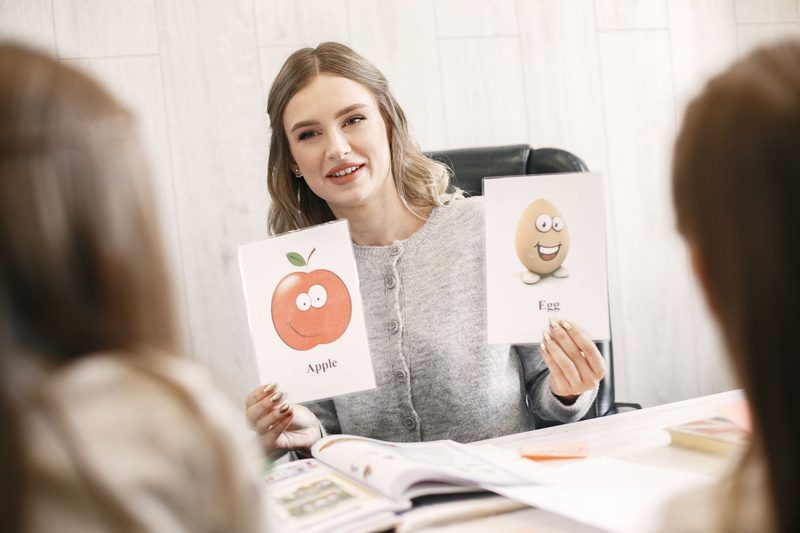
Visuals carry beginners a long way. Picture flashcards of two animals, two cars, or two buildings let students produce real sentences before they can explain any rule, and that productive success is what keeps a low-level class engaged. Concrete, comparable images beat abstract adjectives every time.
9 ESL Activities and Games for Comparatives and Superlatives
Grammar sticks when students use it under mild pressure and a little fun. These nine activities move from controlled practice to free speaking, so you can pick the right one for where your class is. Most need nothing more than the whiteboard, some pictures, and a bit of noise tolerance.
1. Class survey line-up. Students physically arrange themselves by height, then by the length of their commute, describing each move out loud: “I am taller than Mei, but Ken is the tallest.” The movement locks the meaning in and burns off some energy at the same time.
2. Two-picture battles. Show two images — a cheetah and a turtle, a mansion and a hut — and students race to write or shout as many correct comparative sentences as they can in sixty seconds. Fast, competitive, and it generates a pile of language you can correct together afterward.
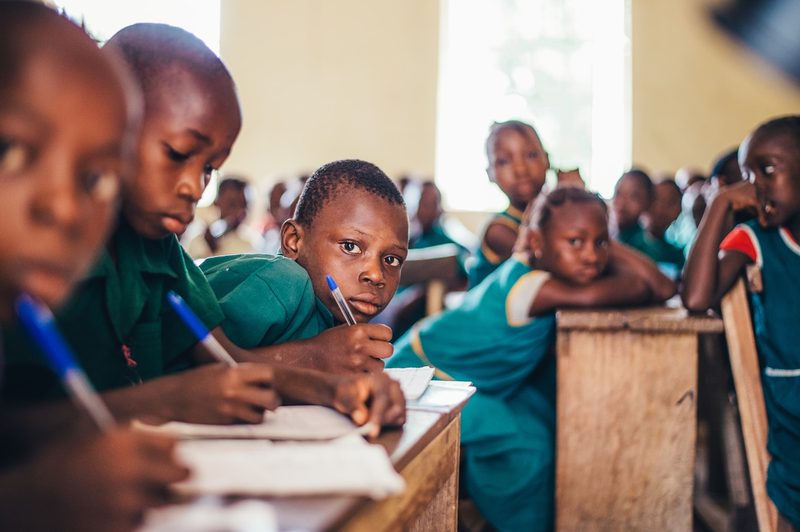
3. “The most in the class” hunt. Give groups a list — the oldest sibling, the longest hair, the earliest bedtime — and they interview each other to find the superlative holder. Reporting back forces clean superlative sentences with “the.”
4. Would-you-rather chains. Students justify choices using comparatives: “I’d rather live in Taipei because it’s more convenient than my hometown.” Opinions make the grammar personal, which is exactly when learners stop translating and start producing.
5. Superlative city quiz. Ask questions with real answers — the tallest building, the longest river, the largest country — and let teams compete. It smuggles general knowledge into grammar practice, and students remember Burj Khalifa longer than they remember a gap-fill.

6. Spot-the-error relay. Post ten sentences, half of them wrong (“more taller,” “he is fastest”), and teams race to correct them at the board. Turning students into the error police makes them far more alert to their own mistakes.
7. Product comparison roleplay. In pairs, one student sells a phone or a car by comparing it to a rival: “This model is faster and more reliable, and it’s the cheapest in the shop.” It rehearses the exact language they will use outside class.
8. Comparative board game. A simple track where each square holds an adjective; landing on it means producing a correct comparative and superlative to move on. Low prep, endlessly reusable, and it pairs naturally with the broader set of ESL grammar games you already run.

9. Classmate superlative awards. The class invents friendly award categories — the most helpful, the funniest, the most organized — and votes with full sentences. End the unit here; it is warm, memorable, and every vote is a superlative in the wild.
For a compact model of the target language before you set students loose, this EasyTeaching lesson lays out the forms cleanly and works as a two-minute warm-up:
How to Check They’ve Really Got It
A gap-fill worksheet tells you whether students can apply a rule in silence; it does not tell you whether they can use the grammar in speech, which is the whole point. Build a thirty-second output check into the end of every lesson: hold up two objects and have each student produce one comparative and one superlative on the spot. If “more” and “-er” still collide, they need another round of controlled practice before you move on.
Watch for the quiet errors too. A student who nails the written forms but says “more fast” in conversation has learned the adjective rule without learning that adverbs follow the same logic. Catching that gap early saves a fossilized mistake later — the kind that survives years of study because no one flagged it the first week.
Comparatives and superlatives are one of the rare grammar points where students can see their own progress inside a single lesson, which makes them a confidence win as much as a language one. Nail the syllable rule, drill the irregulars like vocabulary, and get learners talking fast — the rules only become automatic once students have heard themselves say them wrong and self-corrected. For your next structure, keep the same “meaning first, form second” order and your grammar lessons will carry a rhythm students come to expect.
Quellen
- British Council LearnEnglish — Comparative and Superlative Adjectives — reference grammar rules and examples.
- Cambridge Dictionary Grammar — Comparison: Adjectives — formation and spelling rules.
- EF English Resources — Comparatives and Superlatives — usage guide with irregular forms.









 DE
DE  EN
EN  ZH
ZH  ZH_CN
ZH_CN  KO
KO  VI
VI  FR
FR  AR
AR  ES
ES  HI
HI  PT
PT  BN
BN  RU
RU  JA
JA  TR
TR  IT
IT  PL
PL  ID
ID  TH
TH  FA
FA  UK
UK  TL
TL  HE
HE  UR
UR  SW
SW  RO
RO  NL
NL  MS
MS  TA
TA  PS
PS  HU
HU  EL
EL  SV
SV  NB
NB  NN
NN  DA
DA  CS
CS  SR
SR  AM
AM