
Zone of Proximal Development: 6 Essential Examples
A child who can read a picture book alone but stumbles through a chapter book with a parent reading alongside is sitting squarely in her zone of proximal development. That narrow band — too hard for solo work, achievable with a nudge — is where Lev Vygotsky said all meaningful learning happens. He died in 1934 at age 37, but the idea has outlived nearly every learning theory that came after it, and it still quietly shapes how good teachers plan a lesson today.
What Is the Zone of Proximal Development?
The zone of proximal development is the distance between what a learner can accomplish independently and what they can accomplish with guidance from someone more capable. Vygotsky defined it in 1978 as “the distance between the actual developmental level as determined by independent problem solving and the level of potential development as determined through problem solving under adult guidance or in collaboration with more capable peers.”
Strip away the academic phrasing and it’s simple. The word “proximal” means near. The zone holds the skills a student is close to mastering — not the ones already locked in, and not the ones still far out of reach. A grammar point a beginner can already use correctly is behind them. The subjunctive mood is probably ahead of them. Somewhere in between sits the structure they can use today only if you model it first. That’s the target.

The Three Zones: Comfort, Learning, and Frustration
It helps to picture three concentric rings around each student. Vygotsky only named one of them, but the other two make the model usable in a real classroom.
The inner ring is the comfort zone — the actual developmental level. Here the student works alone, no help needed. Drills that live entirely in this ring feel easy and build confidence, but they don’t move anyone forward. The outer ring is the frustration zone: tasks so far beyond reach that even with help, the student shuts down. Hand a CEFR A2 learner an unedited legal contract and you’ll watch this happen in real time.
The middle ring is the zone of proximal development itself — the learning zone. Tasks here are hard enough to require a teacher, a worked example, or a stronger classmate, yet close enough that the support actually carries the student across. The honest truth is that most worksheets sold as “differentiated” still aim at the comfort zone, because comfort-zone work is quiet and easy to grade. Learning lives one ring out, where it’s noisier.
Vygotsky and the More Knowledgeable Other
None of this works without a second person. Vygotsky called that person the More Knowledgeable Other, or MKO — anyone with a higher skill level on the specific task at hand. Usually it’s the teacher. Often it’s a classmate who already gets it. Sometimes, for a tech-confident generation, it’s a well-built app or a worked video.
The MKO matters because Vygotsky saw learning as social before it becomes individual. A skill shows up first in conversation — between the learner and someone who already has it — and only later gets internalized as something the student can do alone. This is why a quiet, lecture-only classroom underperforms: it removes the dialogue that turns a guided skill into an independent one. Pair work and peer tutoring aren’t soft extras here. They’re the mechanism.

For a four-minute visual walkthrough of the concept, this explainer covers the core idea cleanly:
ZPD vs Scaffolding: What’s the Difference?
People use these two terms as if they’re interchangeable. They aren’t. The zone of proximal development is the place — the gap where learning is possible. Scaffolding is the support you provide to get a student across it. Vygotsky named the zone; the word “scaffolding” came later, from researchers Wood, Bruner, and Ross in 1976, to describe the help itself.
Think of building construction. The zone is the half-finished structure that can’t yet stand on its own. Scaffolding is the temporary framework around it — and the whole point of scaffolding is that you take it down once the building holds. A sentence frame, a glossary, a worked example, a “we do it together” round before students fly solo: all scaffolds. Remove them too early and the student collapses. Leave them up forever and the student never learns to stand. If you want the practical side, our guides on scaffolding in teaching and concrete scaffolding examples break down the techniques in detail.

6 Zone of Proximal Development Examples for the Classroom
The theory clicks once you see it running in a real lesson. Here are six examples, each showing a student inside the zone and an MKO providing just enough support.
1. Guided Reading Groups
A teacher pulls four students reading at roughly the same level and gives them a text one notch above what they’d choose alone. She prompts, asks a question at a tricky sentence, and lets them work the rest out. The book is in their zone; her questions are the scaffold. Swap in a text they could already read fluently and the group becomes story time, not instruction.
2. Sentence Frames in ESL Writing
An intermediate learner can’t yet produce “Although the data suggests X, the author argues Y” on demand. Hand her the frame — “Although ______, the author argues ______” — and she fills it accurately. The idea was always in her head; the structure to express it wasn’t. Over a few weeks you drop the frame, and the structure stays.
3. “I Do, We Do, You Do”
The teacher solves the first problem aloud (I do), the class solves the second together (we do), then students solve the third alone (you do). The “we do” step is the zone made visible. Skip it and you’ve thrown students from watching straight to independent work — the exact jump the model is built to cushion.
4. Peer Tutoring
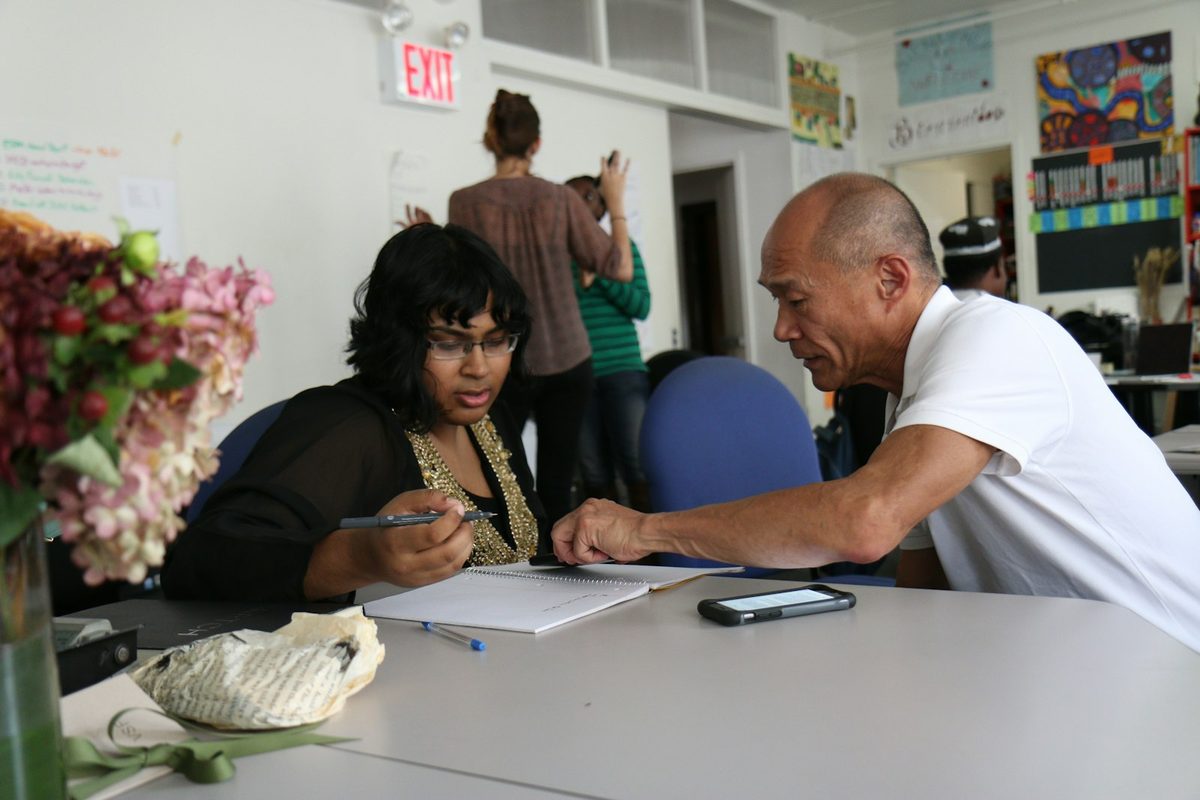
A student who grasped the present perfect last week explains it to one who didn’t. The tutor isn’t a polished expert, and that’s the strength — they remember the confusion and explain it in the learner’s own register. Vygotsky would call the tutor a textbook MKO.

5. Worked Examples with Fading
Give students a fully solved math or grammar problem, then a half-solved one, then a blank one. Each step removes a little support. By the third problem the student is doing what looked impossible at the first — a clean walk across the zone.
6. Think-Alouds
The teacher narrates her own thinking while reading a difficult passage: “I don’t know this word, but the sentence before it talks about money, so I’ll guess it means something financial.” She’s modeling the invisible strategy a strong reader uses, which is exactly the kind of help that pulls a student through the zone.
How to Find a Student’s Zone of Proximal Development
Here’s the part most articles skip: the zone isn’t a fixed number you can look up. It shifts with the task, the day, and the topic. A student can sit in the comfort zone for speaking and the frustration zone for writing in the same hour. So you find it by probing, not by testing once and filing the result.
The fastest method is to give a task slightly above the student’s independent level and watch what happens. If they finish alone with no struggle, you aimed too low — push harder. If they can’t move even with a hint, you aimed too high — back off. If a single prompt or example opens the task up, you’ve found the zone. Running formative assessment mid-lesson — a quick check, a thumbs-up poll, a one-line exit response — is how you keep re-locating that moving target without stopping to grade a quiz.

Using ZPD in the ESL Classroom
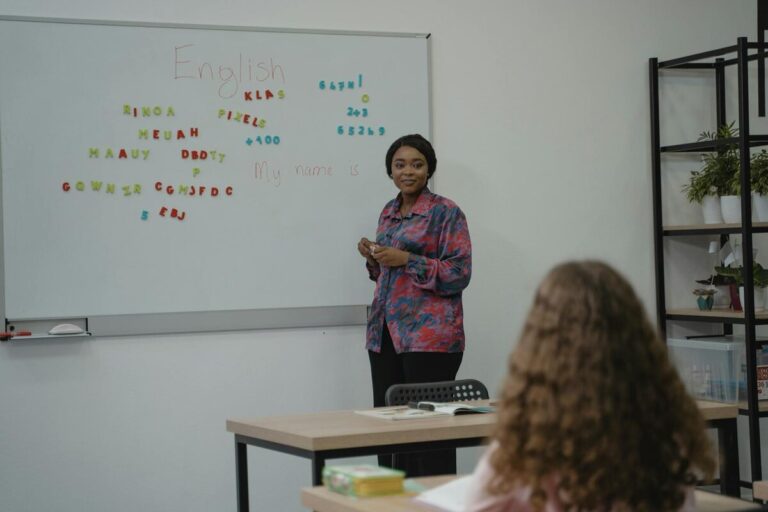
The zone of proximal development carries extra weight in language teaching, because ESL students face a double load: they’re learning content Und the language used to deliver it at the same time. A native-speaking student reading about photosynthesis only has to handle the biology. An English learner has to handle the biology and the vocabulary, syntax, and idioms wrapped around it. That doubles how fast a task slides from the learning zone into the frustration zone.
This is why blanket instruction fails a mixed-level class. The same reading that lands in one student’s zone sits in another’s comfort zone and a third’s frustration zone. Differentiated instruction isn’t a separate philosophy from ZPD — it’s ZPD applied to thirty different zones at once. Tiered texts, optional sentence frames, and flexible pairing all exist to keep each learner in their own band. The New York State Education Department’s guidance on teaching English learners frames the zone as an “affirmative” lens: assume every student has a reachable next step, then build the bridge to it.

Common Mistakes Teachers Make With the ZPD
The most common error is mistaking busywork for zone work. Worksheets that recycle what students already know feel productive and keep a room quiet, but they park everyone in the comfort zone. If a task generates zero questions, it’s probably too easy to teach anything.
The opposite mistake is just as costly: assigning a stretch task and then walking away. The zone only works with an MKO present. Hard task plus no support equals the frustration zone, every time — and frustration teaches students that the subject isn’t for them. A third trap is leaving the scaffold up too long. The goal is independence, so every support you add needs an exit plan. If your strongest readers still need sentence frames in May, the frames stopped helping and started holding them back.

Häufig gestellte Fragen
Who created the zone of proximal development?
Soviet psychologist Lev Vygotsky introduced it as part of his sociocultural theory in the 1920s and 1930s. It reached Western classrooms decades later when his work, especially the 1978 collection Mind in Society, was translated into English.
What is a simple zone of proximal development example?
A child learning to ride a bike with a parent steadying the seat. The child can’t balance alone yet, but with that light support they pedal successfully — and once the parent lets go, the skill stays. The seat is the scaffold; the wobbly ride is the zone.
Is the zone of proximal development the same as scaffolding?
No. The zone is the gap where learning is possible; scaffolding is the support that carries a student across it. You can’t scaffold a task that’s already in the comfort zone, and no amount of scaffolding rescues a task buried in the frustration zone.
The Real Takeaway
The zone of proximal development isn’t a strategy you bolt onto a lesson — it’s a question you ask before you plan one: what can this student almost do, and what’s the smallest amount of help that gets them there? Aim every task at that edge, supply an MKO, and plan to remove the support on a schedule. Do that consistently and you stop teaching to the middle of the room and start teaching to the growing edge of each student. Start with one lesson tomorrow: pick a task slightly above what your class can do alone, build one scaffold, and watch where the learning actually happens.
Quellen
- Simply Psychology — Zone of Proximal Development — Vygotsky’s definition, the three zones, and the More Knowledgeable Other.
- ERIC — Vygotsky’s Zone of Proximal Development: Instructional Implications — peer-reviewed overview of classroom application.
- New York State Education Department — The ZPD: An Affirmative Perspective in Teaching ELLs — guidance for English and multilingual learners.
Looking for free ESL worksheets? Browse our full collection — printable resources for every level and age group. Browse Free Worksheets →
Students can access free worksheets and reading materials at 18KEnglish.com.








 DE
DE  EN
EN  ZH
ZH  ZH_CN
ZH_CN  KO
KO  VI
VI  FR
FR  AR
AR  ES
ES  HI
HI  PT
PT  BN
BN  RU
RU  JA
JA  TR
TR  IT
IT  PL
PL  ID
ID  TH
TH  FA
FA  UK
UK  TL
TL  HE
HE  UR
UR  SW
SW  RO
RO  NL
NL  MS
MS  TA
TA  PS
PS  HU
HU  EL
EL  SV
SV  NB
NB  NN
NN  DA
DA  CS
CS  SR
SR  AM
AM