
Do Plants Feel Pain? The Science Explained
In 2018, a research team at the University of Wisconsin-Madison filmed a plant lighting up like a nervous system after a single bite. Using a fluorescent protein that glows around calcium, Masatsugu Toyota and Simon Gilroy watched a wave of light race from a chewed leaf to the rest of the plant in under two minutes — triggered by glutamate, the same signaling molecule your own neurons use. The plant had no brain to register the damage. It responded anyway, at every leaf, within moments.

Do Plants Feel Pain? What the Science Actually Shows
The short answer from plant biologists is consistent: plants can’t feel pain because pain, as we define it, requires a brain to generate a subjective experience of suffering. Dr. Elizabeth Van Volkenburgh, a plant biologist who has studied this question publicly, puts it bluntly — the whole business of feeling relies on a brain, and plants don’t have one. What plants do have is a signaling network spread through roots, stems, and leaves that detects injury and coordinates a response, without any central place where “pain” could be experienced.
That distinction matters more than it sounds like it should. A smoke detector reacts to fire. It doesn’t feel fear. Plants are closer to an extremely sophisticated smoke detector than to an animal nervous system — but calling that reaction “nothing” undersells just how much is happening underneath.
Plants Under Attack: What Happens in the First Few Seconds
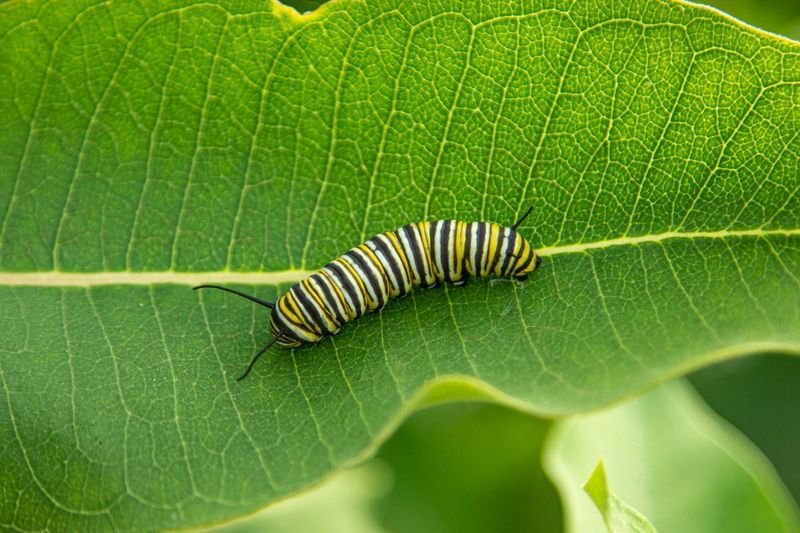
When a caterpillar starts eating a leaf, an electrical signal travels through the plant at roughly a millimeter per second — slow compared to a human nerve impulse, but fast enough to warn the rest of the plant before the caterpillar finishes its meal. The Toyota and Gilroy study showed that glutamate leaking from the wound site triggers a burst of calcium that spreads cell to cell, switching on genes that produce defensive chemicals in leaves the caterpillar hasn’t even reached yet.
It isn’t limited to chewing. A separate line of research from the University of Missouri found that Arabidopsis plants exposed to a recording of caterpillar feeding vibrations — with no actual caterpillar present — produced more mustard oil, a chemical that deters insects, than plants left in silence. Heidi Appel and Rex Cocroft, who ran the study, recorded the chewing with a laser pointed at a leaf and played it back through two-hour sessions. Plants that heard gentle wind or unrelated insect sounds didn’t respond the same way. Somehow, the plant was telling the difference between a threat and background noise.
The Mimosa Experiment: Can a Plant Learn Something?

Dr. Monica Gagliano, then at the University of Western Australia, ran one of the most argued-about experiments in plant science. She built a rig that dropped potted Mimosa pudica — the “sensitive plant” that folds its leaves defensively when touched — 15 centimeters onto a foam pad, over and over. Every plant curled up the first few times. By the end of a session, most had stopped reacting at all. A month later, with no further drops, Gagliano tested the same plants again. They still didn’t fold.
Her team published the results in Oecologia in 2014, describing it as habituation — a basic form of learning previously documented only in animals with nervous systems. The finding didn’t go unchallenged. A 2018 response paper in the same journal argued the original setup couldn’t rule out the plants simply running out of the resources needed to keep folding, rather than “remembering” anything. Gagliano’s team pushed back, and the debate is still open. That disagreement is worth sitting with: even the researchers most convinced that plants do remarkable things disagree with each other about what the data proves.
Electrical Signals Aren’t Unique to Animals

The Venus flytrap is the clearest demonstration that plants use the same basic electrical currency as nerves. When an insect brushes one of the trap’s trigger hairs, it generates an action potential — the exact term used for the signal that fires down a human neuron. One touch isn’t enough to close the trap; it takes two triggers within about twenty seconds, which functions as a simple counting mechanism that stops the plant from wasting energy snapping shut on raindrops. Charles Darwin was fascinated by this in the 1870s, decades before anyone understood the chemistry behind it.
The takeaway isn’t that flytraps think. It’s that “electrical signaling” and “nervous system” aren’t the same thing, and plants evolved the first one without ever needing the second.
Following Smell: How Roots Make Decisions
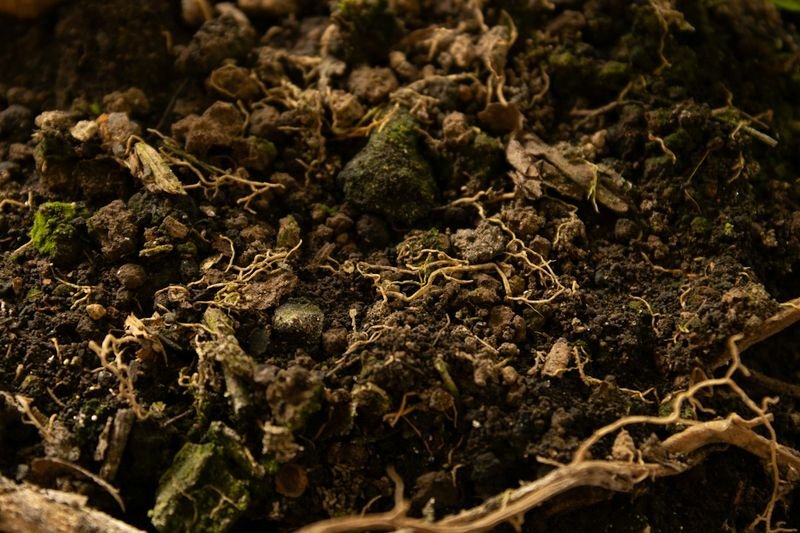
Pea plant roots, tested in lab mazes, consistently grow toward the smell of water even when the source is hidden behind a solid barrier, choosing the branch of a fork that leads closer to moisture far more often than chance would predict. No neurons are involved. Instead, roots carry chemical gradient detectors cell by cell, and the growing tip effectively runs a constant calculation of where resources are concentrated. Call it what you want — the behavior looks like searching, and it looks like choosing.
Are Plants Conscious, or Just Reactive?
This is where biology turns into philosophy. “Consciousness” usually means being aware of your own existence, which most researchers tie to having a brain. Plants don’t have one, so by that definition the conversation is short. But a growing, controversial field called plant neurobiology argues that if you define awareness behaviorally — sensing an environment, processing it, and responding flexibly — plants check several of those boxes, just through a decentralized network instead of a single control center.
Most mainstream biologists stop short of calling that consciousness. The honest position is that plants are doing something more sophisticated than a thermostat and less sophisticated than a dog, and we don’t yet have good language for what sits in between.
Plant Blindness: Why We Barely Notice Any of This

Walk through a forest and most people notice the birds, maybe a deer, rarely the plants — despite plants making up the overwhelming majority of visible living matter in that forest. Botanists call this plant blindness, and it isn’t a character flaw. Human vision evolved to track movement, because moving things were historically either predators or prey. Stationary green matter got filtered out as background.
That blind spot has consequences beyond missing a nice view. Conservation funding and public attention overwhelmingly favor animals — a university is far more likely to run a panda fundraiser than a fern fundraiser — even when the plant is more endangered. Once you know the calcium waves and the root navigation are happening, the forest looks different. It stops being scenery and starts looking like it’s doing something.
Plants Fight Each Other, Too

Plants compete for light, water, and root space, and some of them compete aggressively. Certain species release allelopathic chemicals into the soil that stunt or poison nearby competitors. Strangler figs are the most visible example: a fig seed lands in the canopy of a host tree, drops roots down the trunk, and over decades tightens around it, cutting off light and eventually outliving the tree it grew on. The BBC’s The Green Planet, narrated by David Attenborough, used months of time-lapse footage to show this kind of plant-on-plant competition at a pace the human eye normally never catches.
Bringing This Into the ESL Classroom
This topic works well as a discussion-based reading because it has a built-in hook: most students have an intuitive, confident answer before they read a word, and the article complicates it without fully overturning it. That tension drives better classroom debate than a passage where the “right answer” is obvious from the title. Pre-teach nervous system, stimulus, habituation, και sentient before reading — these four terms carry most of the article’s argument, and intermediate students will stall on “habituation” specifically if it isn’t introduced first.
For a warm-up, ask students to vote yes or no on “plants feel pain” before reading, then revisit the vote after. The goal isn’t to flip every answer to “no” — it’s to get students using evidence (“the plant sent a signal” vs. “the plant felt something”) instead of gut instinct. Our Mushrooms Are Our Cousins worksheet and Home Gardens and Plants worksheet pair naturally with this one for a short biology unit, and Forest Conservation extends the plant-blindness angle into an environmental-studies discussion if you want a third session.
Classroom Discussion Questions
- If a plant can learn and remember something, does that change how you feel about eating it?
- What’s the difference between reacting to damage and actually feeling it? Can you give a non-plant example of the difference?
- Why do you think humans notice animals far more easily than plants — and what does that cost us?
- Gagliano’s mimosa study is disputed by other scientists. Why might researchers disagree about the same data?
- Can you think of another living thing whose intelligence we probably underestimate?
None of this means your salad is screaming. It means the line between “simple” organisms and “complex” ones is blurrier than the straightforward plants-don’t-feel-pain answer suggests. Plants have been solving the problem of staying alive without a brain for roughly 450 million years. The more closely scientists look at how, the less that answer seems like the end of the conversation.

Πηγές
- Toyota, M. & Gilroy, S. (2018), “Glutamate triggers long-distance, calcium-based plant defense signaling,” Science — the calcium-wave wounding study from the University of Wisconsin-Madison.
- Appel, H. & Cocroft, R. (2014), University of Missouri caterpillar-vibration study, reported by NPR — plants producing defensive mustard oil in response to recorded chewing sounds.
- Gagliano, M. et al. (2014), “Experience teaches plants to learn faster and forget slower in environments where it matters,” Oecologia 175(1):63–72 — the Mimosa pudica habituation experiment.
- Markel, K. (2018), “Insufficient evidence for habituation in Mimosa pudica,” Oecologia — the published critique of the Gagliano findings.
- Sentient Media, “Do Plants Feel Pain? No, and Here’s How Scientists Know” — overview of the nociceptor and nervous-system argument, including comment from Dr. Elizabeth Van Volkenburgh.









 EL
EL  EN
EN  ZH
ZH  ZH_CN
ZH_CN  KO
KO  VI
VI  FR
FR  AR
AR  ES
ES  HI
HI  PT
PT  BN
BN  RU
RU  JA
JA  TR
TR  DE
DE  IT
IT  PL
PL  ID
ID  TH
TH  FA
FA  UK
UK  TL
TL  HE
HE  UR
UR  SW
SW  RO
RO  NL
NL  MS
MS  TA
TA  PS
PS  HU
HU  SV
SV  NB
NB  NN
NN  DA
DA  CS
CS  SR
SR  AM
AM