

Countable and Uncountable Nouns: 7 Easy Rules & Games
Ask a class of intermediate learners to correct “I need some informations,” and about half will freeze. That single missing distinction — countable versus uncountable — is behind a huge share of the article and quantifier errors teachers mark every week. Get it clear once, with the right examples and a couple of games, and the mistakes drop fast. This guide breaks countable and uncountable nouns into seven plain rules, shows the quantifiers that go with each, and gives you five classroom activities that make the difference stick.
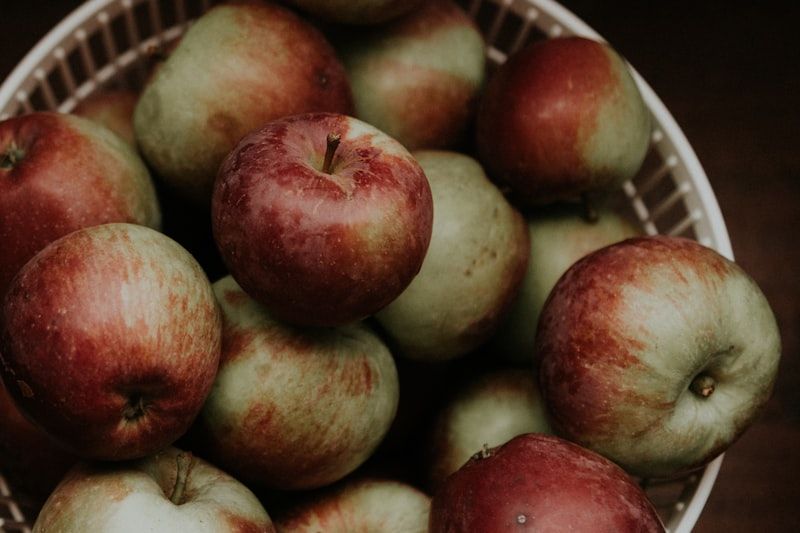
Apples are countable — you can point at one, two, or a dozen.
What Are Countable and Uncountable Nouns?
Countable and uncountable nouns split English nouns by whether the thing they name comes in separate units you can count. A countable noun names something you can number directly: one book, three books, forty students. It has both a singular and a plural form, and it works with numbers and with a/an.
An uncountable noun (some grammar books call it a mass noun or non-count noun) names something we treat as a whole rather than as separate pieces: agua, rice, music, advice. You cannot say “two advices” or “a music.” To count these, English borrows a container or unit — a glass of water, a bowl of rice, a piece of advice. The noun itself stays singular and never takes -s.
Here is the part that trips people up: the split isn’t really about physical size. Rice has thousands of tiny grains and is uncountable; a mountain is enormous and countable. The grammar cares about how English decides to treat the noun, not how big or small it is.
7 Easy Rules for Countable and Uncountable Nouns
Most of the confusion clears up once these seven rules are in front of a learner on one page. I teach them in this order because each one builds on the last.
1. Countable nouns have singular and plural forms. Add -s or use the irregular plural: one child, two children; a city, three cities. If a noun has a natural plural, it’s countable.
2. Uncountable nouns have no plural. They stay in one form: information, not “informations”; furniture, not “furnitures.” If adding -s sounds wrong to a native speaker, the noun is almost certainly uncountable.
3. Use a o an only with singular countable nouns. “A pen,” “an hour,” “an idea” all work. You never put a/an in front of an uncountable noun — “a water” and “an advice” are both wrong.
4. Uncountable nouns take no article when general. “Milk is good for you” needs no article. Add el only when you mean a specific quantity: “The milk in the fridge is off.”
5. Match the quantifier to the noun type. Use many, few, y a number of with countable nouns; use much, little, y a great deal of with uncountable ones. “How many chairs?” but “How much furniture?”
6. Some nouns are both, and the meaning shifts. “Chicken” is uncountable when it’s food (“I ate chicken”) and countable when it’s the animal (“two chickens in the yard”). More on this below — it’s a favorite exam trap.
7. Count an uncountable noun with a unit word. Use a partitive — a container, portion, or piece — to give it number: two cups of coffee, three pieces of paper, a loaf of bread. The unit is what gets pluralized, not the uncountable noun.

Water is uncountable — you count it by the glass, not by the “water.”
Countable vs. Uncountable Nouns: A Quick Reference Table
When learners can see the two columns side by side, the pattern clicks faster than any explanation. Keep this table on the board during practice.
| Feature | Countable nouns | Uncountable nouns |
|---|---|---|
| Examples | apple, dog, table, minute | water, sugar, money, news |
| Plural form? | Yes — apples, dogs | No — always singular |
| Use a/an? | Yes — a dog | No — |
| many / much | many apples | much water |
| few / little | few chairs | little time |
| How to count | use a number: two apples | use a unit: two glasses of water |
Quantifiers: Some, Any, Much, Many, A Few, A Little
Quantifiers are where the countable/uncountable split does its real work, because choosing the wrong one is the error that survives into advanced writing. The rule is simple once the noun type is settled: some quantifiers pair with countable nouns, some with uncountable, and a few work with both.
Use many, a few, y few with countable nouns. Use much, a little, y little with uncountable nouns. Some, any, a lot of, plenty of, y enough sit comfortably with both, which is why they’re a safe fallback for a nervous speaker. One nuance worth teaching explicitly: a few y a little mean “a small but positive amount,” while few y little (no article) carry a negative sense — “not enough.” “I have a few friends here” is cheerful; “I have few friends here” is lonely.
| Countable only | Uncountable only | Both |
|---|---|---|
| many, a few, few, several, a number of | much, a little, little, a great deal of | some, any, a lot of, plenty of, enough, no |

“Coffee” is uncountable, but you can order two cups of coffee.
Nouns That Are Both Countable and Uncountable
This is the category that makes learners throw up their hands, so name it early and treat it as normal rather than an exception. A large group of English nouns switch between countable and uncountable depending on meaning, and the switch usually follows the pattern “whole substance” versus “individual item or type.”
Hair is uncountable for the mass on your head (“She has long hair”) and countable for a single strand (“There’s a hair in my soup”). Paper is uncountable as a material and countable when it means a newspaper or an academic essay. Glass is the material, but a glass is a drinking vessel. Time is uncountable in general (“I don’t have time”) and countable when it means an occasion (“I’ve been there three times”). Room means space when uncountable (“make room”) and a part of a building when countable (“four rooms”). Coffee, tea, beer, and cheese follow the food rule: uncountable as a substance, countable when you mean servings or varieties — “three coffees, please” is perfectly natural at a café.

Rice stays uncountable even though it’s made of countable grains.
Common Mistakes ESL Students Make
The same handful of errors show up in classrooms from Taipei to São Paulo, and most trace back to the learner’s first language treating the noun as countable. The biggest offenders are a short list worth drilling directly.
- Pluralizing uncountable nouns: “informations,” “advices,” “furnitures,” “equipments,” “homeworks.” None take -s.
- Using a/an with uncountables: “a good news,” “a nice weather.” Fix with a unit — “a piece of good news,” “nice weather.”
- Mixing many and much: “How much students?” instead of “How many students?”
- Treating money and news as plural: both are uncountable and singular — “the news is good,” not “the news are good.”
A note on why this matters beyond a red pen: these errors are the ones that survive into professional emails and exams. A learner can speak fluently and still lose points on IELTS Writing for “many informations.” Fixing the noun type fixes a whole cluster of downstream mistakes at once — which is exactly why it earns a dedicated lesson rather than a passing mention.

How to Teach Countable and Uncountable Nouns
Start concrete, not with the terminology. Put real objects and a jug of water on the table before you ever write “uncountable” on the board — learners grasp the split by sorting things they can see long before they can name the rule. Sort a pile of classroom items into “count it” and “can’t count it,” then ask por qué, and let the definition emerge from their answers.
Concept-checking questions do the heavy lifting here. After teaching “water,” ask “Can I say two waters?” and “Can I say two bottles of water?” — the contrast forces the unit-word rule into the open without a grammar lecture. Build the lesson so learners produce the forms in speaking, not just recognize them on a worksheet; recognition fades, production sticks. For more on questioning technique that surfaces gaps like this, our guide on how to teach vocabulary pairs well with a noun-focused lesson, since much of this overlaps with lexical work.

5 Classroom Activities and Games
These five activities move learners from sorting to producing, roughly in order of difficulty. Each one takes ten minutes or less and needs almost no prep.
1. The shopping list. Give pairs a recipe or a party budget and have them write a shopping list using correct quantifiers: “a kilo of flour, six eggs, some milk, a few lemons.” It forces unit words and countable/uncountable choices in one natural task.
2. Fridge sort race. Project a photo of a full fridge. Teams race to write two columns — countable and uncountable — from what they see. First accurate list wins. Great five-minute warmer or filler.
3. Twenty questions with much/many. One student thinks of a place; the others ask only “How much…?” and “How many…?” questions to guess it. Wrong quantifier, the question doesn’t count. This drills the exact error learners make most.
4. Menu roleplay. Set up a café. Customers order using countable and uncountable forms correctly — “two coffees, a bottle of water, some fries.” Servers can only serve orders that are grammatically correct, which turns self-correction into a game.
5. Error auction. Hand out ten sentences, some right and some wrong (“I need three informations”). Teams “bid” on the sentences they believe are correct. It rewards spotting uncountable errors and generates loud debate. If you like game-based grammar, it slots neatly beside the techniques in our post on teaching modal verbs.

Watch: Countable and Uncountable Nouns Explained
This short lesson from Woodward English walks through the core distinction with clear visuals — useful as a flipped-classroom warm-up or a review for absent students.
Preguntas frecuentes
Is “water” countable or uncountable? Uncountable. You count it with a unit — a glass of water, two bottles of water. “A water” is only acceptable as café shorthand for “a glass of water.”
Is “money” countable or uncountable? Uncountable, and singular — “the money is on the table.” The countable words are the units: dollars, coins, notes.
Can a noun be both countable and uncountable? Yes. Many switch by meaning — chicken (food vs. animal), glass (material vs. cup), time (duration vs. occasion). The grammar follows the meaning.
Why is “news” not plural? Despite the -s, “news” is uncountable and takes a singular verb: “the news is good.” The same holds for “physics,” “mathematics,” and “economics.”
En resumen
The single habit that fixes most noun errors is asking one question before writing a quantifier: can I count this directly, or do I need a unit? Learners who internalize that test stop guessing between much y many and stop pluralizing information. Build one focused lesson around the seven rules, back it with the fridge sort and the error auction, and you’ll spend far less red ink next term. For the next grammar block, pair this with our guide on definite and indefinite articles — articles and noun types are two halves of the same problem, and teaching them together saves everyone a headache.
Fuentes
- Cambridge Dictionary — Nouns: countable and uncountable — reference grammar with examples and quantifier tables.
- British Council LearnEnglish — Countable and uncountable nouns — learner-facing rules and practice exercises.
- Woodward English — Countable and Uncountable Nouns in English — video lesson used in the flipped-classroom step above.









 ES
ES  EN
EN  ZH
ZH  ZH_CN
ZH_CN  KO
KO  VI
VI  FR
FR  AR
AR  HI
HI  PT
PT  BN
BN  RU
RU  JA
JA  TR
TR  DE
DE  IT
IT  PL
PL  ID
ID  TH
TH  FA
FA  UK
UK  TL
TL  HE
HE  UR
UR  SW
SW  RO
RO  NL
NL  MS
MS  TA
TA  PS
PS  HU
HU  EL
EL  SV
SV  NB
NB  NN
NN  DA
DA  CS
CS  SR
SR  AM
AM