
Exploración espacial intermedia
Pasaje de lectura
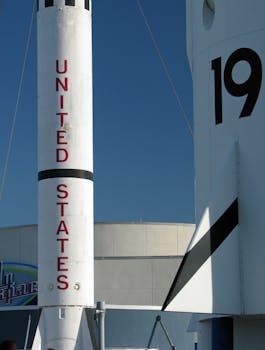
Humans have always looked up at the stars and dreamed of exploring the universo beyond our planet. Space exploration began in nineteen fifty-seven when the Soviet Union launched Sputnik, the first satellite. This small metal ball orbiting Earth started a race between nations to explore space further. Just twelve years later, American astronautas Neil Armstrong and Buzz Aldrin became the first humans to walk on the moon. That historic moment showed the world that reaching the stars was truly possible.
Today, astronauts live and work on the International Space Station floating high above our planet. The station orbits Earth about sixteen times every single day at incredible speeds. Scientists conduct experiments in microgravity to learn how space affects plants, animals, and human bodies. Astronauts must exercise for two hours daily to keep their muscles and bones strong in space. Living in space is challenging but teaches us valuable lessons about human survival beyond Earth.

Robots and spacecraft have traveled to every planet in our solar system and beyond. The Voyager probes launched in nineteen seventy-seven are now the farthest human-made objects from Earth. Mars rovers like Curiosity and Perseverance explore the red planet searching for signs of ancient life. These robots send back amazing photographs and data that scientists use to understand other worlds better. Robotic missions are cheaper and safer than sending humans to dangerous distant locations.
Private companies are now joining governments in the exciting race to explorar outer space further. SpaceX has developed rockets that can land and be reused multiple times, saving millions of dollars. Blue Origin and Virgin Galactic offer tourists short trips to the edge of space for adventure. These companies dream of building colonies on the moon and Mars within the next few decades. Space tourism might become as common as airplane travel someday in the future.
The future of space exploration holds incredible possibilities for all of humanity ahead. Scientists hope to find water and resources on other planets that could support human life eventually. Telescopes search for Earth-like planets around distant stars where life might already exist somewhere. Space mining could provide rare metals and minerals that are running low on Earth today. Exploring space pushes technology forward and inspires young people to become scientists and ingenieros.
Nivel: Nivel F
A. Coincidencia de vocabulario
Relaciona cada palabra con su definición.
1. universo ______
2. satellite ______
3. astronautas ______
4. orbits ______
5. microgravity ______
6. spacecraft ______
7. data ______
8. explorar ______
9. colonies ______
10. ingenieros ______
a. an object that orbits around a planet
b. people who design and build machines
c. to travel and discover new places
d. travels in a circular path around something
e. information collected for study
f. all of space and everything in it
g. very weak gravity, like weightlessness
h. settlements in new territories
i. vehicles designed to travel in space
j. people trained to travel in space
B. Verdadero o falso
Escriba V (Verdadero) o F (Falso) para cada afirmación.
- Sputnik was launched in 1957. ______
- Neil Armstrong was the first human on the moon. ______
- The space station orbits Earth once per day. ______
- Astronauts must exercise daily in space. ______
- Voyager probes are the farthest human-made objects. ______
- SpaceX rockets can only be used once. ______
- Mars rovers search for signs of life. ______
- Space tourism is currently impossible. ______
- Scientists hope to find water on other planets. ______

C. Complete los espacios en blanco
Banco de palabras: universe | satellite | astronauts | orbits | microgravity | explore | engineers
- Humans have always dreamed of exploring the _______________ beyond Earth.
- Sputnik was the first _______________ launched into space.
- American _______________ were the first humans to walk on the moon.
- The International Space Station _______________ Earth about sixteen times daily.
- Space exploration inspires young people to become scientists and _______________.
D. Preguntas de comprensión
- What event started the space race in 1957?
- Who were the first humans to walk on the moon?
- Why must astronauts exercise for two hours daily in space?
- What are Mars rovers searching for on the red planet?
- How are private companies changing space exploration?

E. Preguntas para discusión
Habla sobre estas preguntas con un compañero o escribe tus respuestas.
- Would you like to travel to space someday? Why or why not?
- Do you think humans will live on Mars in your lifetime?
- Why is it important for humans to explore space?
📝 Haz clic para ver la clave de respuestas
Comprueba tus respuestas a continuación.
A. Vocabulario: 1-f, 2-a, 3-j, 4-d, 5-g, 6-i, 7-e, 8-c, 9-h, 10-b
B. Verdadero/Falso: 1-T, 2-T, 3-F, 4-T, 5-T, 6-F, 7-T, 8-F, 9-T
C. Complete los espacios en blanco: 1-universe, 2-satellite, 3-astronauts, 4-orbits, 5-engineers
D. Comprensión: 1. The Soviet Union launching Sputnik, the first satellite; 2. Neil Armstrong and Buzz Aldrin; 3. To keep their muscles and bones strong in microgravity; 4. Signs of ancient life; 5. They develop reusable rockets and offer space tourism
Explora nuestra colección completa de Hojas de trabajo y recursos de aprendizaje de ESL gratuitos Cubriendo la cultura de Taiwán, la ciencia, la historia mundial y más.

 ES
ES  EN
EN  ZH
ZH  ZH_CN
ZH_CN  KO
KO  VI
VI  FR
FR  AR
AR  HI
HI  PT
PT  BN
BN  RU
RU  JA
JA  TR
TR  DE
DE  IT
IT  PL
PL  ID
ID  TH
TH  FA
FA  UK
UK  TL
TL  HE
HE  UR
UR  SW
SW  RO
RO  NL
NL  MS
MS  TA
TA  PS
PS  HU
HU  EL
EL  SV
SV  NB
NB  NN
NN  DA
DA  CS
CS  SR
SR  AM
AM