ESL Teaching Strategies That Actually Work: A Complete Guide for Modern Classrooms
Walk into any ESL classroom around the world and you’ll see something striking: the methods that worked decades ago are still being used, even when research and real-world results have moved on. Teachers know there’s a better way — they just don’t always have time to dig through academic journals to find it. This guide collects the ESL teaching strategies that consistently produce results, drawn from classroom experience and current second-language acquisition research.
Whether you teach young learners, university students, or adult professionals preparing for TOEIC or IELTS, the strategies below will give you a framework you can adapt to any context.

Why Traditional Grammar-Translation Falls Short
For generations, English was taught the way Latin was taught: memorize vocabulary lists, conjugate verbs, translate sentences. This approach produces students who can pass written tests but freeze when a stranger asks for directions. Modern ESL teaching strategies recognize that language is a tool for communication first, and a system of rules second.
The shift away from grammar-translation toward communicative methods isn’t ideology — it’s a response to outcomes. Stephen Krashen’s input hypothesis, Merrill Swain’s output hypothesis, and decades of research from the British Council all point to the same conclusion: students acquire language through meaningful interaction, not through drills alone.
What Research Tells Us About Acquisition
Three principles run through nearly every successful ESL program:
- Comprehensible input — students need exposure to language that’s slightly above their current level, but understandable in context.
- Pushed output — they need opportunities to produce language under pressure, which forces them to notice gaps in their knowledge.
- Low affective filter — anxiety and embarrassment block acquisition. Classrooms must feel safe enough to take risks.
Every strategy below maps to at least one of these principles.
The Communicative Language Teaching (CLT) Approach
CLT remains the dominant framework in modern ESL, and for good reason. It centers communication as the goal of language learning, with grammar serving that goal rather than the other way around.
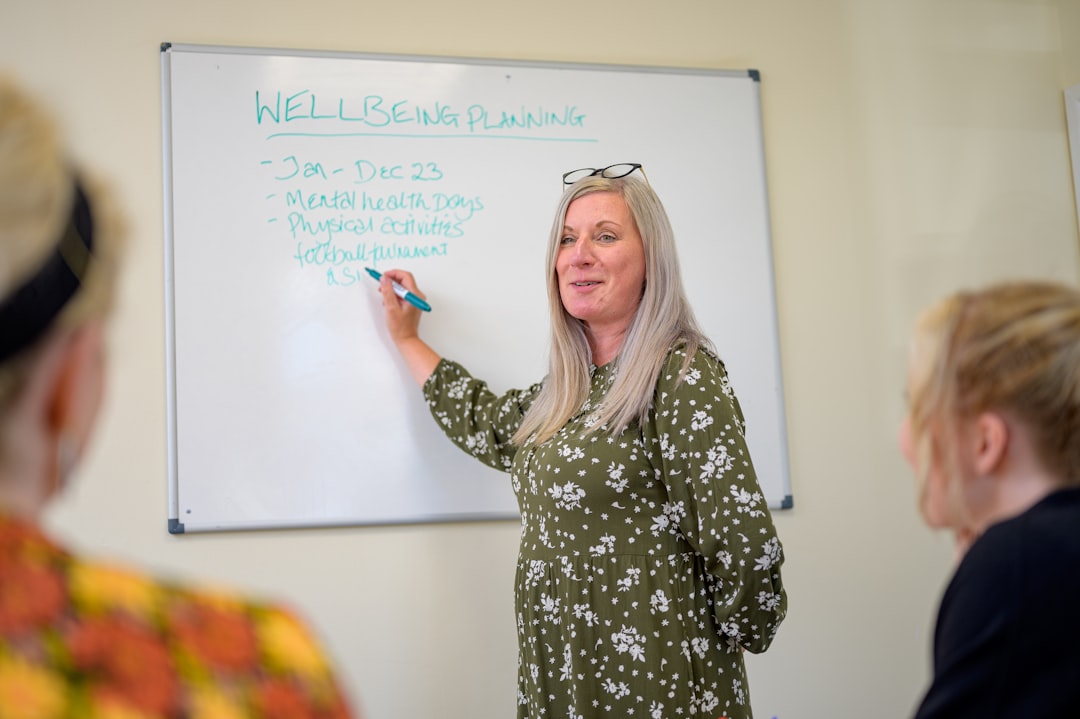
In a CLT classroom, you’ll see students negotiating meaning through information-gap activities, role plays, and problem-solving tasks. The teacher’s role shifts from lecturer to facilitator — designing tasks, monitoring progress, and stepping in only when students need help.
Practical CLT Activities You Can Use Tomorrow
- Information gaps — Pair students with different versions of a picture or schedule and have them ask questions to find the differences.
- Surveys and interviews — Give students a grid of questions to ask classmates, then report findings.
- Jigsaw reading — Split a text into sections, assign each student one part, and require them to share information to complete a task.
- Role play with stakes — Customer complaint, job interview, lost luggage. Add real consequences (a vote on who handled the situation best).
Task-Based Language Teaching (TBLT)
Task-based learning takes CLT one step further. Instead of practicing language and then applying it, students complete a real task — and the language they need emerges from the work itself.
A classic example: tell pairs they need to plan a one-day trip to a city, with a fixed budget and time constraints. They’ll need to compare options, agree on activities, calculate costs, and present their plan. Vocabulary, modal verbs, comparatives, future tenses — all surface naturally as students try to complete the task.
The teacher’s job in TBLT is to design tasks that require the target language without explicitly demanding it. After the task, you debrief: what language did students need? Where did they struggle? This is when explicit instruction becomes most effective, because students now have a reason to care.
Total Physical Response (TPR) for Beginners and Young Learners
James Asher’s TPR approach connects language to physical movement, which dramatically improves retention for beginners and young learners. “Stand up, walk to the window, point to the tree” engages multiple parts of the brain simultaneously.
TPR works because it lowers the affective filter. Students don’t have to produce language until they’re ready — they just demonstrate understanding through action. By the time they speak, they’ve already internalized far more than traditional drilling would have given them.

Adapting TPR for Adult Learners
Many teachers assume TPR is only for kids, but adapted versions work brilliantly with adults. Try “TPR Storytelling” — narrate a short story while students act out key events. Or use TPR for vocabulary review: rather than asking adults to stand and walk, have them mime actions, point to images, or sort cards as you give instructions.
Scaffolding: The Art of Strategic Support
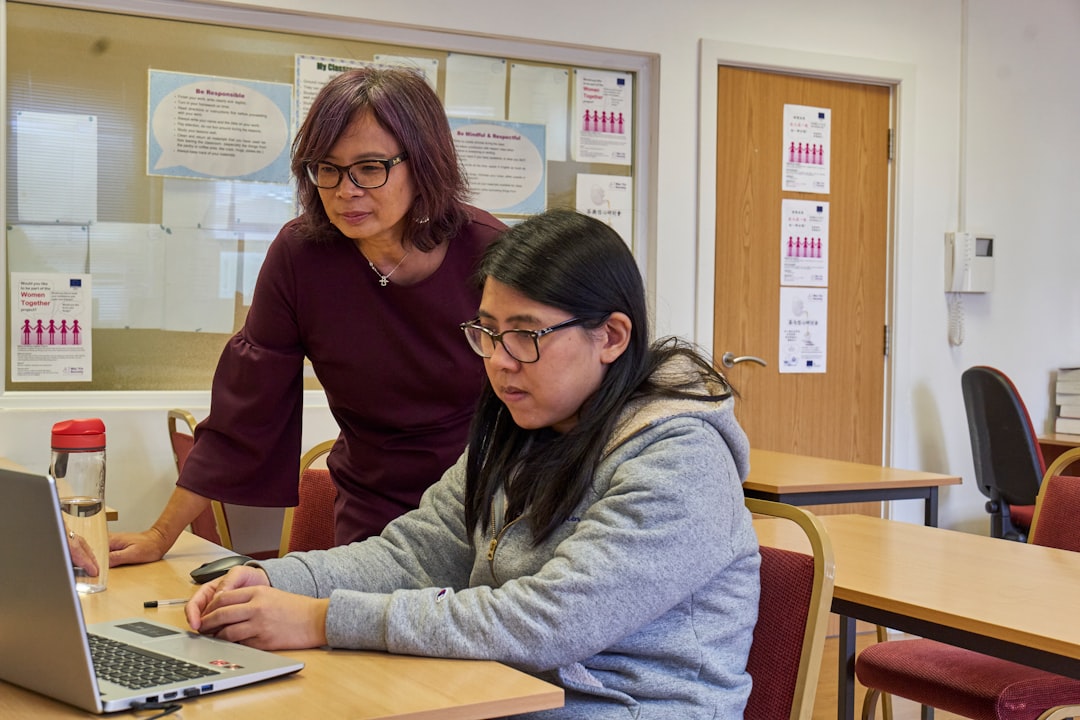
Scaffolding is what separates great ESL teachers from average ones. It’s the practice of providing temporary support that allows students to do something they couldn’t do alone — and then gradually removing that support as they grow.
Scaffolding looks different at every level:
- Beginner — Sentence frames (“I think ___ because ___”), word banks, visual supports, and modeling.
- Intermediate — Pre-teach key vocabulary, provide graphic organizers, use guided questions to structure thinking.
- Advanced — Hand over more responsibility. Let students lead discussions, choose their own examples, and self-assess.
The mistake new teachers make is over-scaffolding indefinitely. The point is to fade the support. Each week, ask yourself: what crutch can I remove this lesson?
Differentiation in Mixed-Level Classes
Most ESL classrooms aren’t homogeneous. You’ll have a student who lived in Australia for a year sitting next to one who joined the program last week. Effective ESL teaching strategies account for this reality.
The trick is to design tasks with multiple entry points. A reading task might give beginners a vocabulary matching exercise, intermediates a comprehension question set, and advanced students an analysis or extension prompt — all from the same text. Pair work also helps: rotate between same-level pairs (for confidence) and mixed-level pairs (where stronger students naturally scaffold weaker ones).
Vocabulary Strategies That Actually Stick
Vocabulary is the single biggest predictor of reading comprehension and overall fluency, yet most ESL programs teach it badly — long lists, passive memorization, no context. Here’s what works instead.

Spaced Repetition
Students need to encounter a new word seven to twelve times in different contexts before it sticks. Build review into every lesson: revisit last week’s vocabulary in today’s warmer, recycle terms across speaking and writing tasks, use apps like Anki or Quizlet for self-study.
Word Networks, Not Word Lists
Teach vocabulary in semantic groups (kitchen items, weather, business meetings) and through collocations (“make a decision,” “take a risk,” “strong coffee”). The brain stores words by association, so teach them that way.
Productive Use Beats Passive Recognition
If students can only recognize a word, they don’t really know it. Build activities that force production: speed writing, vocabulary-specific role plays, journals where they must use ten new words from the week.
Strategies for Test Prep: TOEIC and IELTS
Test preparation gets a bad reputation, but for many learners, a strong score is the gateway to university or a better job. Treating it seriously matters.
TOEIC: Pattern Recognition and Time Management
TOEIC rewards students who recognize question patterns. Train them to predict the structure of part 2 (short response) questions before the answer choices appear. Teach skimming for part 7 (reading comprehension) — they don’t have time to read every word. Daily timed practice with realistic conditions matters more than any specific content.
IELTS: Skill-Specific Coaching
IELTS is more demanding because it tests productive skills — speaking and writing — that can’t be gamed through pattern recognition. Focus on:
- Writing Task 2 — A clear four-paragraph structure (intro, two body paragraphs, conclusion) with topic sentences. Teach students to use specific examples and complex sentences.
- Speaking Part 2 — The two-minute monologue. Drill the four-part structure (when, where, what, why) repeatedly.
- Listening — Predict before listening. Teach students to scan questions during pauses and anticipate the type of information needed.

Error Correction: When and How
Over-correcting kills confidence. Under-correcting reinforces bad habits. The solution is selective, purposeful correction.
Use this rule of thumb: in fluency activities (free speaking, debates, role plays), don’t interrupt — note errors and address them after. In accuracy activities (controlled practice, drills), correct immediately.
Train students to self-correct. After a speaking task, replay a recording or write a few sentences they produced on the board. Ask: “What’s wrong here?” When students notice their own errors, they retain corrections far better than when you simply tell them.
Building a Low-Anxiety Classroom Culture
None of these strategies work if students are too afraid to take risks. The affective filter is real, and it’s the teacher’s job to lower it.
- Normalize errors publicly — Make your own mistakes in class and laugh them off. Show students that errors are evidence of learning, not failure.
- Use pair and group work generously — Most students will speak more freely to one peer than to a whole class.
- Praise effort, not ability — “You worked through that really clearly” is more motivating than “You’re so smart.”
- Vary participation patterns — Cold-calling stresses some students out. Use think-pair-share, written responses, and volunteer-only formats too.

Technology: Use It, Don’t Worship It
Tech tools have transformed ESL teaching, but the temptation to use them for everything is strong — and often counterproductive. The best teachers use technology where it genuinely adds value.
Useful applications include:
- Authentic listening — YouTube, podcasts, and TED Talks expose students to real-world English.
- AI conversation partners — Tools like ChatGPT or specialized language apps let students practice speaking without judgment.
- Spaced repetition apps — Anki, Quizlet, and Memrise handle the cognitive load of vocabulary review.
- Pronunciation feedback — Apps using speech recognition give immediate, objective feedback on pronunciation.
What technology can’t replace: meaningful human interaction, a teacher who understands a specific student’s struggles, or the cultural context that makes language come alive.
Assessment That Actually Measures Progress
Most ESL assessment is summative — final tests that tell you what a student doesn’t know after it’s too late to help. Shift toward formative assessment instead: quick checks during lessons that tell you what to do next.
Try exit tickets (one sentence summarizing what they learned), thumbs up/middle/down checks, or one-minute writing tasks at the end of class. Use the data to plan tomorrow’s lesson — that’s what makes assessment formative rather than just frequent.

Putting It All Together
You don’t need to use every strategy in every lesson. The best teachers build a personal toolkit and pull out what fits the moment. Start with two or three of the strategies above, master them, then add more.
If you’re new to ESL, focus first on lowering anxiety and maximizing comprehensible input. If you’re experienced, audit your lessons: are you scaffolding effectively? Are your tasks pushing output? Are you correcting strategically?
Great ESL teaching strategies aren’t a checklist — they’re a way of seeing your classroom. Every student in front of you is trying to do something genuinely hard: rebuild their identity in another language. The strategies in this guide are tools to help them get there.
Final Thoughts
Twenty years of teaching has convinced me of one thing: the teacher who keeps learning is the teacher whose students keep improving. Read research, watch other teachers, try new methods, and adapt what works. Your students will tell you — through their progress, their engagement, and their willingness to come back — when you’ve found the right balance.
Sources
- British Council — TeachingEnglish
- TESOL International Association
- Cambridge English Language Teaching
- ETS — TOEIC Official Resources
- IELTS Official Site
- Oxford Learner’s Dictionaries
Looking for free ESL worksheets? Browse our full collection — printable resources for every level and age group. Browse Free Worksheets →
Students can access free worksheets and reading materials at 18KEnglish.com.








 EN
EN  ZH
ZH  ZH_CN
ZH_CN  KO
KO  VI
VI  FR
FR  AR
AR  ES
ES  HI
HI  PT
PT  BN
BN  RU
RU  JA
JA  TR
TR  DE
DE  IT
IT  PL
PL  ID
ID  TH
TH  FA
FA  UK
UK  TL
TL  HE
HE  UR
UR  SW
SW  RO
RO  NL
NL  MS
MS  TA
TA  PS
PS  HU
HU  EL
EL  SV
SV  NB
NB  NN
NN  DA
DA  CS
CS  SR
SR  AM
AM