

ESL Writing Activities | 13 Engaging Strategies to Build Student Confidence
Writing is one of the most challenging skills for ESL students to develop. Unlike speaking — where gestures and context fill gaps — writing demands precision, structure, and vocabulary that many learners struggle to produce on their own. Yet writing is also one of the most powerful tools for language acquisition. It forces students to think carefully about grammar, word choice, and organization in ways that other skills simply do not.
The problem? Many ESL writing lessons fall flat. Students stare at blank pages. They copy sentences from textbooks. They write the same five-sentence paragraph week after week with zero enthusiasm. Sound familiar?
The good news is that writing does not have to be painful — for you or your students. The activities in this article are designed to get pens moving, ideas flowing, and confidence growing. Whether you teach beginners who are just learning to form sentences or advanced learners polishing essays, you will find practical strategies here that you can use in your next class.
Why ESL Students Struggle with Writing
Before jumping into activities, it helps to understand why writing feels so difficult for English language learners. Most ESL students face a combination of these barriers:
- Limited vocabulary — They know what they want to say but cannot find the right English words
- Grammar anxiety — Fear of making mistakes paralyzes them before they even start
- L1 interference — Their first language has different sentence structures, punctuation rules, or writing conventions
- Lack of models — They have never seen examples of what good English writing looks like at their level
- Perfectionism — They try to write perfect sentences on the first attempt instead of getting ideas down first
Every activity below addresses one or more of these barriers. The goal is not perfect writing. The goal is fluent, confident, increasingly accurate writing (NCTE) — and that only comes through regular, low-stakes practice.

Photo by Towfiqu barbhuiya on Unsplash
1. Freewriting Warm-Ups
Start every writing class with five minutes of freewriting. Give students a simple prompt — “What did you eat yesterday?” or “Describe your favorite place” — and tell them to write without stopping. No erasing. No dictionaries. No worrying about grammar.
Freewriting builds writing fluency the same way conversation practice builds speaking fluency. It trains the brain to produce English without the internal editor screaming about every mistake. After a few weeks of consistent freewriting, most students notice they can produce more text in less time.
Teacher tip: Collect freewriting occasionally but do not grade it for accuracy. Instead, count the total words written and track growth over time. Students love seeing their word count increase from 30 words to 80 words in a single session.
2. Picture-Prompt Writing
Show students an interesting photograph — a crowded market scene, a person looking out a window, animals doing something unexpected — and ask them to write about it. You can differentiate by giving different prompts for different levels:
- Beginner: Write five sentences describing what you see
- Intermediate: Write a short story about what happened before and after this picture
- Advanced: Write from the perspective of one person in the photograph
Pictures activate visual thinking and give students something concrete to write about. This removes the “I don’t know what to write” problem entirely.

Photo by Rewired Digital on Unsplash
3. Dictogloss
Read a short paragraph aloud at natural speed. Students listen the first time without writing. Read it again, and this time students jot down key words and phrases. Then, working in pairs or small groups, they reconstruct the paragraph from memory.
Dictogloss combines listening, vocabulary, grammar, and writing into one activity. It also naturally produces discussion about language — “Did she say ‘was going’ or ‘went’?” — which deepens understanding. The reconstructed text does not need to match the original word-for-word. What matters is that it communicates the same meaning.
4. Collaborative Story Chains
Give each student a piece of paper and a story starter: “It was raining when Maria opened the door and saw…” Students write two or three sentences continuing the story, then pass the paper to the next person. After five or six rotations, each paper has a complete (and often hilarious) short story.
Read the best ones aloud. Students love hearing how their contributions fit into the bigger narrative. This activity works especially well because it removes individual pressure — nobody “owns” the whole story, so mistakes feel less personal.

Photo by Akinyemi Gbadamosi on Unsplash
5. Sentence Expansion
Write a simple sentence on the board: “The cat sat.” Then ask students to expand it by adding details. Where did the cat sit? When? Why? What did it look like?
“The fat orange cat sat on the warm windowsill every afternoon because it liked watching the birds outside.”
This activity teaches students that good writing is not about using difficult words — it is about adding specific details. It also naturally practices adjectives, adverbs, prepositional phrases, and subordinate clauses without any grammar lecture.
6. Peer Letter Exchange
Pair students and have them write letters to each other. The first letter introduces themselves and asks three questions. The partner reads the letter and writes back, answering the questions and asking three of their own. Continue for several rounds.
Letter writing gives students an authentic audience and a real reason to write. It also practices question formation, which many ESL students find tricky. You can do this with physical paper or through a class email system.
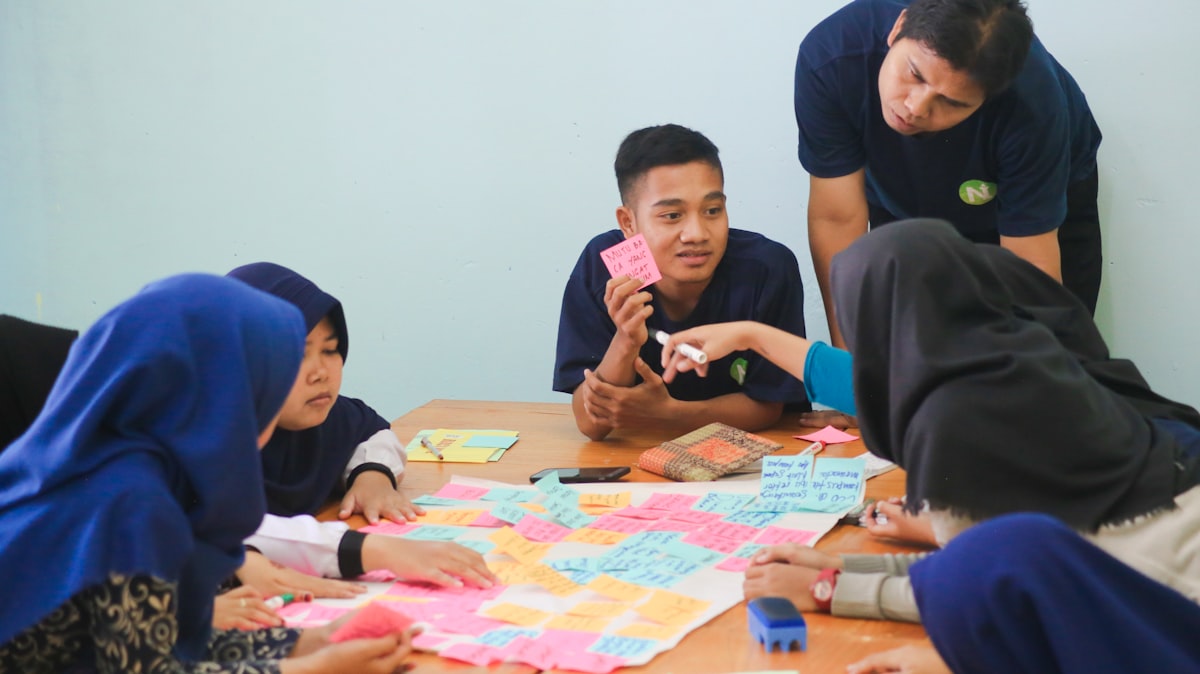
Photo by Zainul Yasni on Unsplash
7. Writing from Listening
Play a short audio clip — a song, a podcast excerpt, a news report — and have students write a summary or response. For lower levels, provide a gap-fill transcript. For higher levels, ask students to write their opinion about the topic discussed.
This integrates listening and writing skills in a way that mirrors real-world language use. Students regularly need to listen to information and then write about it — in academic settings, at work, and in daily life.
Here is an excellent video from Jackie Bolen demonstrating some of the best ESL writing activities you can try immediately:
8. Dialogue Journals
Give each student a notebook that becomes their dialogue journal. They write an entry every class — it can be about anything. You respond to each entry with a short written comment, not correcting errors but engaging with the content.
“You wrote about visiting your grandmother. That sounds lovely! What is your favorite food that she makes?”
Dialogue journals build a personal connection between teacher and student while providing regular writing practice. Research consistently shows they improve both writing fluency and student motivation (IELTS.org). The key is responding to meaning, not form.

Photo by Leo_Visions on Unsplash
9. Error Correction Auction
Take common errors from student writing (anonymized, of course) and put 15 to 20 sentences on the board — some correct, some with errors. Give each team fake money and let them “bid” on which sentences they think have errors. If they correctly identify and fix an error, they win points. If they bid on a correct sentence, they lose money.
This turns grammar review into a game that students actually enjoy. It also teaches proofreading and self-editing skills, which are essential for developing writers.
10. Structured Paragraph Templates
For students who freeze when facing a blank page, provide paragraph templates that break writing into manageable steps:
- Topic sentence: [Topic] is important because _______________.
- Supporting detail 1: First, _______________.
- Supporting detail 2: Also, _______________.
- Supporting detail 3: Finally, _______________.
- Closing sentence: For these reasons, _______________.
Templates are scaffolding, not crutches. As students gain confidence, gradually remove parts of the template until they can write paragraphs independently. This approach works particularly well for students preparing for academic writing tasks or standardized tests.

Photo by luca romano on Unsplash
11. Two-Minute Quick Writes
Give a topic and set a timer for two minutes. Students write as much as they can. When time is up, they count their words and record the number. Repeat the same topic the next day. Most students write significantly more the second time because they have already thought about the topic once.
Quick writes are perfect for the last five minutes of class. They reinforce vocabulary from the day’s lesson while building writing speed. Keep a class chart showing everyone’s progress to motivate students.
12. Rewrite and Improve
Give students a deliberately boring paragraph: “I went to the store. I bought food. I went home. I cooked dinner. It was good.” Their job is to rewrite it and make it interesting by adding adjectives, changing sentence structure, and including sensory details.
This activity is less intimidating than writing from scratch because students start with existing content. It also teaches revision as a skill — the understanding that first drafts are never final drafts, and good writing is really good rewriting.
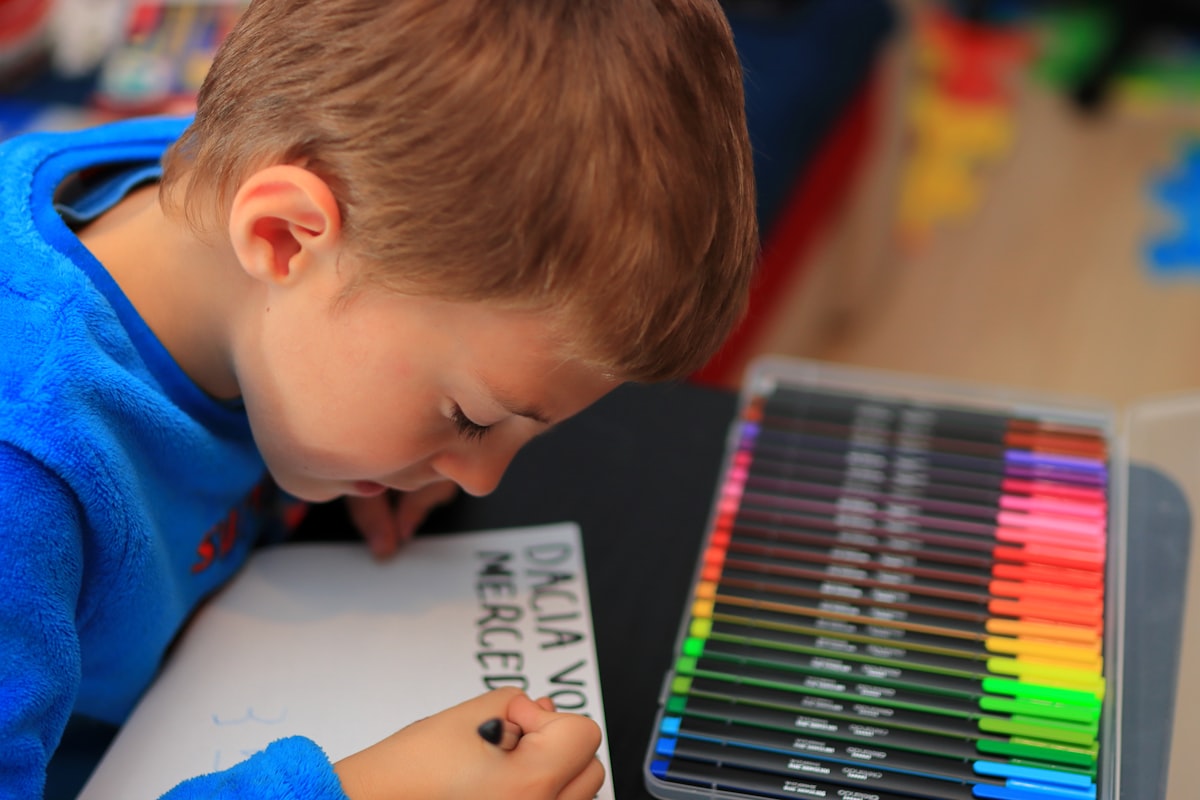
Photo by Gabriel Vasiliu on Unsplash
13. Exit Ticket Reflections
At the end of every class, have students write three to four sentences answering one of these questions:
- What did you learn today?
- What was confusing?
- What do you want to practice more?
- Write one sentence using a new word from today’s lesson.
Exit tickets serve double duty: students get daily writing practice, and you get immediate feedback on what is working and what needs review. Read them before your next class and adjust your lesson plan accordingly.

Making It All Work Together
You do not need to use all 13 activities in a single week. Pick two or three that match your students’ level and your teaching style. Rotate them so students experience variety without losing the consistency that builds skill.
A typical writing-rich week might look like this:
- Monday: Freewriting warm-up (5 min) + picture-prompt writing (20 min)
- Tuesday: Dictogloss activity (25 min) + exit ticket (5 min)
- Wednesday: Sentence expansion practice (15 min) + peer letter exchange (15 min)
- Thursday: Collaborative story chain (25 min) + quick write (5 min)
- Friday: Error correction auction (20 min) + dialogue journal time (10 min)
The most important thing is to make writing a regular part of every class, not something that only happens during “writing lessons.” When students write every day — even for just five minutes — they stop seeing writing as a special, scary event and start treating it as a normal part of learning English.
Your students can become confident writers. They just need regular practice, meaningful feedback, and activities that make them want to pick up a pen. Try one of these strategies in your next class and see what happens.





 EN
EN  ZH
ZH  ZH_CN
ZH_CN  KO
KO  VI
VI  FR
FR  AR
AR  ES
ES  HI
HI  PT
PT  BN
BN  RU
RU  JA
JA  TR
TR  DE
DE  IT
IT  PL
PL  ID
ID  TH
TH  FA
FA  UK
UK  TL
TL  HE
HE  UR
UR  SW
SW  RO
RO  NL
NL  MS
MS  TA
TA  PS
PS  HU
HU  EL
EL  SV
SV  NB
NB  NN
NN  DA
DA  CS
CS  SR
SR  AM
AM