
ESL Speaking Activities That Actually Build Confidence
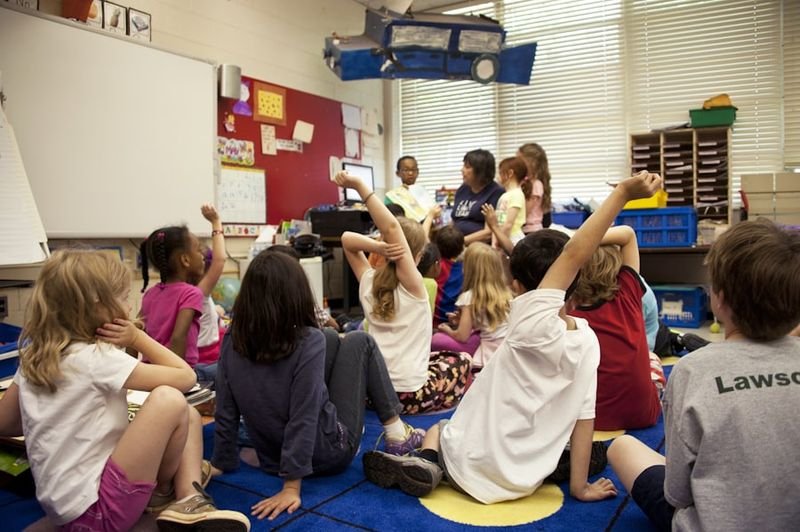
Most ESL teachers know the drill. You ask the class a question. Twenty-four students stare at the floor. The one extrovert in the front row answers, and everyone else copies. What you’re watching isn’t language incompetence — these same students can write complete paragraphs. It’s anxiety. Speaking in a second language in public triggers the same cortisol spike as public speaking in the first language, then layers on the fear of making grammatical errors in front of peers. The solution isn’t drilling students until they’re perfect. It’s designing ESL speaking activities that lower the threat level enough that language actually flows.
Why the Affective Filter Shuts Students Down
Stephen Krashen’s affective filter hypothesis (1982) holds that anxious learners effectively block language input and output even when they have the ability to perform. Any experienced teacher has watched it happen: the same student who chats easily in the corridor freezes at the board. The filter is up.
A 2019 study in the فصلنامه TESOL found that 73% of adult EFL learners ranked speaking as their most anxiety-inducing skill — far ahead of writing (31%) or listening (24%). The researchers identified two interventions with the strongest effect sizes: reducing perceived threat (peer audience instead of teacher audience, clear task structure instead of open-ended performance) and providing scaffolding (sentence frames, preparation time, model language). Every activity in this article plugs into one or both of those categories.

ESL Speaking Activities: Information Gap Tasks
Information gap activities are the closest thing to a silver bullet in ESL speaking instruction. Each partner holds information the other partner needs. The speaking happens automatically, because conversation is the only way to complete the task. Students stop monitoring their grammar and start focusing on getting the message across — and that shift is exactly when natural language production takes over.
The classic format: Partner A has a map with five locations marked. Partner B has a blank map. They must describe and ask questions until B’s map matches A’s. The “spot the difference” variation gives each partner a nearly identical picture; they find discrepancies through conversation only. A jigsaw version splits a short article into four sections, one per group member, and each person must share their section verbally to answer a shared comprehension question.
Setup takes about three minutes. Output per student: four to eight minutes of actual speaking, compared to fifteen seconds in a teacher-fronted Q&A session where individuals get called on. That ratio matters more than anything else when your goal is fluency.

Find Someone Who — Movement That Multiplies Output
This activity is deceptively simple. Students receive a worksheet with a list of prompts: Find someone who has visited more than three countries. Find someone who has never eaten pizza. Find someone who woke up before 6 a.m. today. They circulate the room, ask classmates questions, and collect names. The teacher’s role during the activity: nothing. It’s peer-to-peer speaking with no authority figure evaluating output in real time.
Research on mingling activities in EFL classrooms consistently shows that students produce three to five times more speaking output compared to teacher-fronted formats. The arithmetic is obvious once you see it: instead of waiting for a turn in a group of twenty, every student talks simultaneously. Run this for ten minutes and every student has spoken more English than they typically do across a full week of standard lessons.
Research-backed frameworks for output-focused activities explain why student-to-student interaction consistently outperforms teacher-centered speaking at the fluency level. Worth reading before your next lesson plan.

Sentence Frames and Opinion Ladders
Unscaffolded discussion — “OK, class, discuss this topic in your groups” — consistently produces either silence or one dominant voice. The fix is sentence frames: printed cards or board-written starters that tell students exactly how to begin. For opinion sharing: I think… because… For disagreement: That’s an interesting point, but I’d argue that… For adding to a point: Another thing worth considering is…
Opinion ladders take this further. Write a mildly controversial statement on the board — “Social media has made communication worse.” Students physically position themselves along a line from “strongly agree” to “strongly disagree,” then explain their position to the person standing nearest to them. The spatial element removes the blank-page anxiety of having to think of something to say. Their position on the line IS their opening argument.
As students gain confidence over multiple sessions, start removing frames progressively. Strip the connectors first, then the starters, until students generate their own openers. The scaffolding was always temporary — its job is to get speaking happening, not to become a permanent crutch.
Semi-Scripted Role-Play with Preparation Time
Pure improvised role-play — “You’re a customer, you’re the shop assistant, go” — tends to produce stilted, short exchanges from anxious students and chaos from overconfident ones. Fully scripted role-plays aren’t speaking practice at all; they’re reading out loud with a partner.
The middle ground is semi-scripted role-play. Give students a clear situation (the flight is delayed, the customer is unhappy, the candidate isn’t fully qualified for the job they want), a set of five to eight key phrases they might use (not must use), and three minutes of preparation time. Then let the conversation run.
The preparation time is the critical variable. A 2016 study in Language Teaching Research found that students given sixty seconds of planning time before a speaking task produced measurably more grammatically complex utterances than those given no preparation — and that gap held across proficiency levels. Preparation transforms speaking from improvisation into performance. Anxious students can manage performance. They cannot manage improvisation.

Storytelling Activities and Picture Prompts
Story chains work in circles of four. Student 1 says the first sentence of a story. Student 2 adds the next sentence. The story continues until it reaches a logical — or gloriously illogical — conclusion. Nobody presents to the full class. The audience is three classmates, and error correction is irrelevant because the story has to keep moving.
Picture prompt monologues push individual speaking further without the terror of formal presentation. Each student gets a photograph — a busy market, an unusual building, a human expression — and has ninety seconds to describe what they see, what might be happening, and what occurred just before this moment. One student speaks at a time, but only to their small group of four, not the whole class.
For teachers who want to understand the deeper research behind why learner-centered speaking practice matters, Chris Lonsdale’s TEDx talk breaks down exactly how adults acquire language efficiently — and why producing language from the start, even imperfectly, is non-negotiable:

Recording Activities for Confidence Tracking
This one gets resistance from teachers who assume students will hate it. Most don’t. Ask students to record a sixty-second voice memo on their phone — describing their weekend, sharing an opinion, or retelling a short news story they’ve read. No audience. No immediate judgment. Just the recording, and then listening back alone.
A 2020 paper in the Journal of English Teaching and Research tracked speaking anxiety scores over a six-week recording program. Students who made weekly voice memos and listened to their own playback showed statistically significant anxiety reduction by week four — not because they spoke perfectly, but because they heard themselves improving. Progress became audible.
The progression matters: private recording first. Then, after two weeks, optional pair listening (share with one classmate of your choice). By week four, some students will volunteer to play their clip for the group. Never make that final step mandatory — the volunteer rate is the clearest measure of how much confidence has genuinely grown.
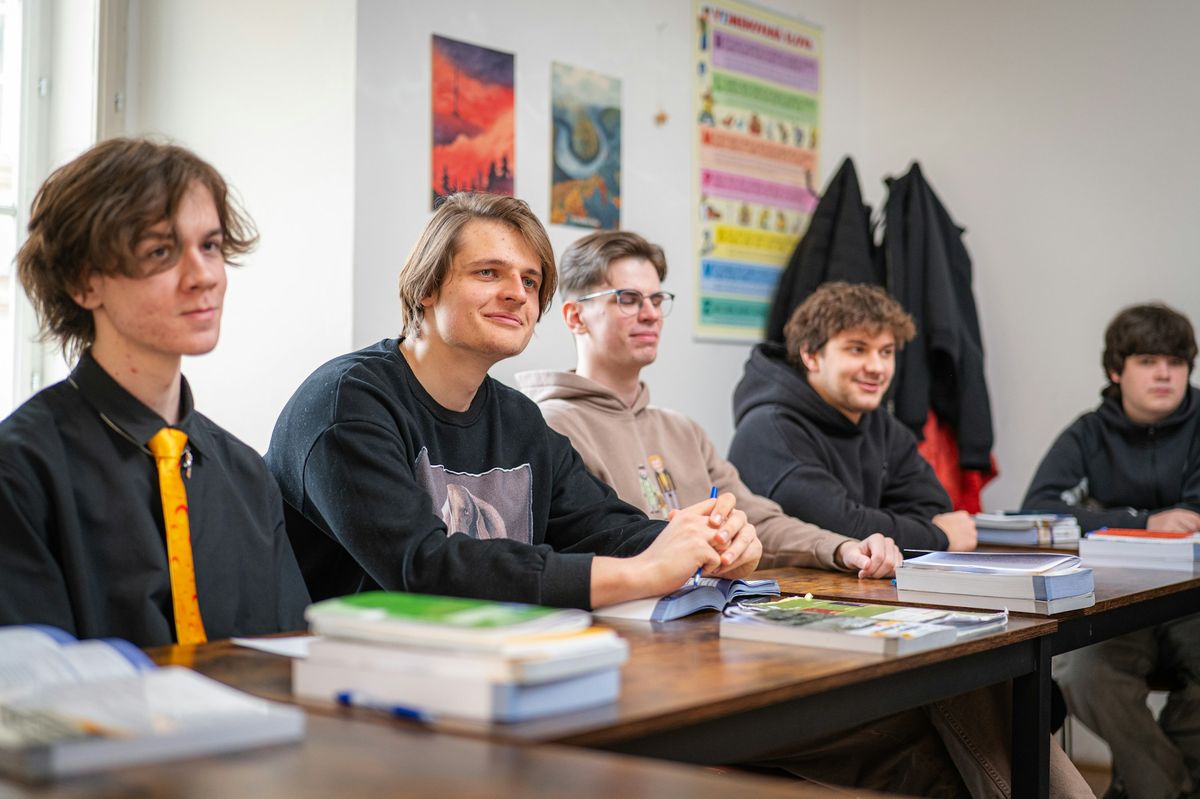
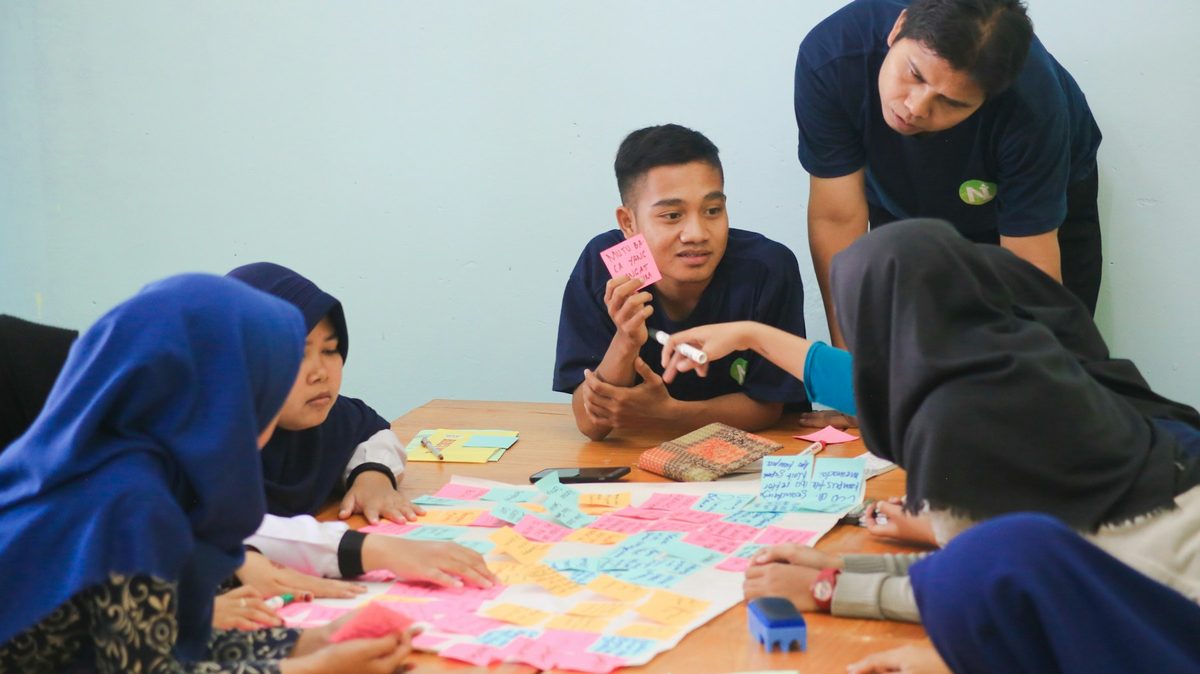
Cooperative learning structures pair naturally with recording activities. The small-group formats reduce threat levels enough that the risks students take privately start transferring to face-to-face interaction.

Sequencing ESL Speaking Activities in a Single Lesson
Dropping any of these activities cold into a lesson without sequencing them produces mediocre results. The structure matters as much as the activity itself. A lesson built around building speaking confidence should follow a low-to-high anxiety arc from first minute to last.
Open with two minutes of free talk on a topic with zero wrong answers — Tell your partner the best thing you ate this week — just to get mouths moving and establish a low-stakes speaking norm. Follow with a structured activity that has a clear task and built-in scaffolding: an information gap, Find Someone Who, or sentence frame discussion. Then move to freer production — semi-scripted role-play or storytelling — where the scaffolding comes partway off. Close with one minute of reflection: each student names one thing they said today that they were satisfied with.
That final reflection minute isn’t filler. When students articulate their own progress, they encode it differently than when a teacher says “good work.” It becomes their evidence. Over a semester, that accumulating stack of personal evidence is what turns an anxious speaker into a willing one. The activities build the skill. The reflection builds the identity.
For a structured approach to designing every stage of your speaking lesson — from warm-up through to wrap-up — this classroom activity framework covers the full arc with practical examples.
منابع
- Krashen, S. (1982). Principles and Practice in Second Language Acquisition. Pergamon Press — Foundational text on the affective filter hypothesis and its role in second language production.
- فصلنامه TESOL — Peer-reviewed research on speaking anxiety in EFL contexts, including the 2019 study on skill-specific anxiety rankings.
- Language Teaching Research — Source for the 2016 study on planning time and grammatical complexity in speaking tasks across proficiency levels.
- FluentU: 20 ESL Speaking Activities — Practical classroom activity reference including the public figure mimicry activity framework cited in this article.







 FA
FA  EN
EN  ZH
ZH  ZH_CN
ZH_CN  KO
KO  VI
VI  FR
FR  AR
AR  ES
ES  HI
HI  PT
PT  BN
BN  RU
RU  JA
JA  TR
TR  DE
DE  IT
IT  PL
PL  ID
ID  TH
TH  UK
UK  TL
TL  HE
HE  UR
UR  SW
SW  RO
RO  NL
NL  MS
MS  TA
TA  PS
PS  HU
HU  EL
EL  SV
SV  NB
NB  NN
NN  DA
DA  CS
CS  SR
SR  AM
AM