
Switchboard Operators Worksheet | Intermediate ESL Reading PDF
متن خواندنی
THE BIRTH OF THE TELEPHONE EXCHANGE
The first telephone exchange in New Haven, Connecticut, 1878, was pure chaos. Alexander Graham Bell’s brilliant invention had created an unexpected problem: how do you connect two phones? The initial solution was primitive — teenage boys with attitude problems manning a dozen lines, shouting instructions, pulling cables, and occasionally entertaining themselves by eavesdropping on conversations or simply disconnecting calls for fun.
These early operators were disasters. They fought each other, played pranks on customers, used profanity that would make sailors blush, and treated the whole enterprise as their personal entertainment system. One Hartford exchange manager reported that his boy operators spent more time starting fistfights than connecting calls. The boys had to go.
The solution came from Emma Nutt, who became America’s first female telephone operator on September 1, 1881, in Boston. Within months, telephone companies across the country began firing their male operators en masse. The transformation was immediate and dramatic — women’s voices were clearer, their manners more pleasant, and most importantly, they actually did the job. By 1910, there were nearly 90,000 switchboard operators in America, and over 99% were women.
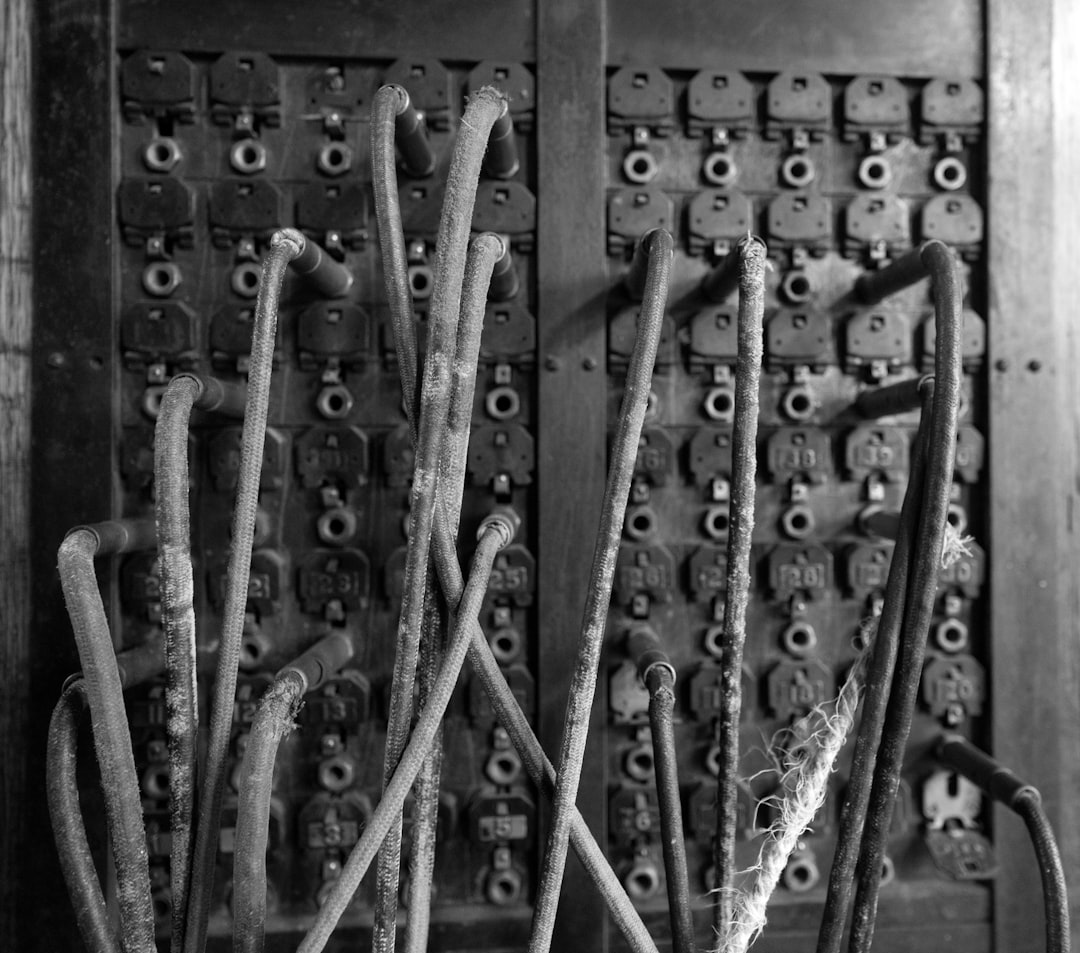
The equipment grew as fast as the workforce. What began as wooden boards with a few dozen jacks exploded into massive panels stretching six feet wide and four feet high. Operators needed long arms — literally. Most companies required a minimum arm span to reach across the entire board. The ‘spaghetti wire’ maze of connections behind these boards looked like the nervous system of some mechanical giant, pulsing with the communications of an entire city.
“”The most essential requirement for a telephone operator is a good disposition. She must be patient, courteous, and alert. Her voice must be pleasant and distinct, and she must be able to work rapidly without becoming confused.””
— Bell Telephone Company Training Manual, 1905
NUMBER PLEASE
‘Number please?’ became the most spoken phrase in America. Every conversation, every business deal, every emergency call, every love confession — it all began with those two words, spoken by a young woman sitting on a high stool, headset clamped to her ears, arms dancing across a board bristling with jacks and cords.
The choreography was breathtaking. Picture fifty operators at a single exchange, working in perfect synchronization. Lights blinked. Hands moved like pianists. Plug into jack. ‘Number please?’ Listen. Unplug. Plug into destination. Wait for answer. Connect. Next light. Repeat. The goal was ten seconds or less from pickup to connection. In busy downtown exchanges during business hours, operators handled a call every thirty seconds.
The physical demands were brutal. Operators sat for eight-hour shifts, reaching constantly across boards that required a six-foot arm span. Their left hands operated the keyboard, their right hands manipulated the cord pairs. The headset — a heavy contraption of metal and leather — pressed into their skulls. Many operators developed permanent indentations behind their ears from years of wear.
The technology was surprisingly sophisticated. Each call required two cords — one for the calling party, one for the receiving party. Operators could monitor conversations, break in with emergency announcements, and handle complex conference calls involving multiple parties. They were the human routers of a national network, processing millions of connections daily with nothing but their hands, ears, and memory.
“”A good operator can handle 150 calls per hour during peak times. Her hands never stop moving, her mind never stops calculating. She is the nerve center of modern communication.””
— The Independent Telephone Pioneer, 1912
THE DELIBERATE HIRING OF WOMEN
The shift to female operators wasn’t accidental — it was calculated corporate strategy. Telephone companies discovered that women possessed exactly the qualities they needed: pleasant voices, perceived patience, cultural training in deference, and most importantly, they worked for half the wages of men. The industry created detailed hiring criteria that were both practical and deeply discriminatory.
Height requirements were standard. AT&T required operators to be between 5’2″ and 5’8″ — tall enough to reach the entire board, short enough to fit the standardized workstations. Weight restrictions were common. Age limits were rigid: typically 18-30 years old. Marriage was grounds for immediate termination. The logic was brutally simple: married women had ‘divided loyalties’ and might get pregnant.
The training was intensive and unforgiving. New operators spent weeks learning to recognize every voice tone, memorizing hundreds of subscriber numbers, and practicing the precise diction required. They were taught to say ‘Number please’ in exactly the same cadence every time, to handle abusive callers with unfailing politeness, and to never, ever lose their temper. Voice lessons were mandatory. Posture classes were common.
This systematic employment of young, unmarried women represented a seismic shift in American labor. Before telephone operating, women’s work was largely domestic service, factory labor, or teaching. The switchboard created the first large-scale ‘white collar’ employment for women — clean, respectable work that required skill and intelligence. By 1920, telephone operating was the largest single occupation for employed women in America.
“”We prefer young ladies of good breeding, pleasing address, and neat appearance. They must be unmarried, between the ages of 18 and 30, with arms long enough to reach across our boards and voices sweet enough to charm our subscribers.””
— Pacific Bell Employment Advertisement, 1915
POWER, EAVESDROPPING, AND PARTY LINES
Operators wielded enormous power. They could listen to any conversation, delay connections to people they disliked, prioritize calls from friends, and single-handedly cut off service to entire neighborhoods. In small towns, the operator knew everyone’s business — who was having an affair, who owed money, who was planning to skip town. They were the original social network, processing information faster than any newspaper.
Eavesdropping was rampant and largely tolerated. Operators were human beings, and human beings are curious. They listened to romantic conversations, business negotiations, family arguments, and political conspiracies. Some operators became local celebrities for their ability to predict divorces, bankruptcies, and scandals. The phrase ‘operator, are you listening?’ became a standard part of sensitive phone calls.
Party lines — where multiple households shared a single telephone line — turned operators into air traffic controllers for domestic chaos. A typical rural party line might serve eight families, all sharing the same wire. When the operator connected a call, everyone on the line could potentially listen. Operators managed this madness, deciding who got priority, how long calls could last, and when to break in with emergency messages.
During emergencies, operators became heroes. They were the 911 system before 911 existed. Fire calls, medical emergencies, police situations — it all went through the switchboard. Operators worked through natural disasters, staying at their posts during floods, earthquakes, and fires to maintain communications. During the 1918 influenza pandemic, many exchanges operated with skeleton crews as operators fell ill, yet they kept the lines open, connecting doctors to patients and families to each other.
“”The telephone operator is the most trusted person in town. She knows our secrets, handles our emergencies, and connects our hearts. In return, we pretend not to notice when she occasionally listens in.””
— Rural Telephone Association Newsletter, 1923
THE DECLINE — AUTOMATION AND DIRECT DIAL
The beginning of the end came with Almon Brown Strowger’s automatic switching system in 1888. Strowger, a Kansas City undertaker, was convinced that the local operator was routing calls for funeral services to his competitor instead of to him. His solution was elegantly simple: eliminate the operator entirely. The first automatic exchange opened in LaPorte, Indiana, in 1892, but widespread adoption took decades.
Direct dialing rolled out like a slow-motion tsunami. The first crossbar switches appeared in the 1930s, followed by electronic switching systems in the 1960s. Each upgrade eliminated dozens, then hundreds of operator positions. AT&T exchanges that once employed 200 operators were reduced to zero overnight. The Bell System, once the largest employer of women in America, was systematically eliminating its female workforce.
The operators fought back. The International Brotherhood of Electrical Workers organized massive strikes in the 1940s and 1950s. The 1947 nationwide telephone strike involved 350,000 workers, most of them operators, and paralyzed American communications for weeks. But automation was inevitable and relentless. You can’t strike against a machine.
The last manual exchange in the United States closed in 1983 in Bryant Pond, Maine. Operator Arlene Caron, who had worked the board for 37 years, made the final manual connection and then unplugged the system forever. By then, there were fewer than 50,000 operators left in the entire country, down from a peak of over 350,000 in 1950. The most common female occupation in America had virtually disappeared in a single generation.
“”Progress is inevitable, but that doesn’t make it any less heartbreaking. These women gave their lives to connecting America, and now America has decided it doesn’t need them anymore.””
— Communications Workers of America Newsletter, 1965
THE MODERN ECHO
The switchboard operator never really died — she just became electronic. Today’s call centers employ millions of people worldwide, handling customer service, technical support, and sales calls with the same core mission: connecting people to the information they need. The headsets are lighter, the boards are digital, but the fundamental job remains surprisingly similar.
Siri, Alexa, and Google Assistant are the digital descendants of Emma Nutt. They respond to voice commands, connect us to information, and maintain pleasant, helpful personas designed to make technology feel human. The artificial intelligence that powers these systems was trained on millions of conversations — conversations that echo the patient, courteous tone that telephone operators perfected over seventy years.
Modern phone systems use Interactive Voice Response (IVR) technology to route calls automatically, but when those systems fail or when problems become too complex, we still reach for a human operator. That familiar phrase has evolved — ‘Number please?’ became ‘How may I help you?’ — but the essential human need for connection and assistance remains unchanged.
The irony is complete. We eliminated human operators to save money and increase efficiency, but now we pay premium prices for ‘concierge services,’ ‘personal assistants,’ and ‘white-glove customer support’ that promise the kind of personalized attention that every phone call once received as standard service. We automated away the personal touch, then spent decades trying to engineer it back into our technology. The switchboard operator’s legacy lives on in every customer service smile, every helpful voice prompt, and every algorithm designed to anticipate our needs before we even know we have them.
“”We thought we were replacing operators with better technology. What we actually did was replace human intelligence with artificial intelligence, and spend the next fifty years trying to make the machines as smart and helpful as the people we let go.””
— Digital Communications Today, 2019
سطح: سطح F
📺 Related Videos
🎬 AT&T Archives: Switchboards, Old and New — Actual AT&T archive footage showing the evolution of telephone switching
🎬 Bell Telephone Switchboard Operators (1940s/50s Archive Footage) — Raw footage of operators working the boards — Library and Archives Canada
🎬 The World’s Switchboard! (1932 British Pathé) — London’s overseas telephone exchange connecting calls worldwide
الف. تطبیق واژگان
هر کلمه را به تعریف آن وصل کنید.
1. switchboard
2. operator
3. exchange
4. subscriber
5. jack
6. cord pair
7. party line
8. crossbar switch
9. direct dial
10. automation
11. eavesdropping
12. cadence
13. infrastructure
14. choreography
15. obsolete
a. a central device for connecting telephone lines and routing calls between different parties
b. a person who worked at a telephone exchange to manually connect calls between users
c. a central office where telephone calls were connected and routed to their destinations
d. a person who paid for telephone service and had access to the telephone network
e. a socket or receptacle on a switchboard into which plugs could be inserted to make connections
f. two connected cables used by operators to link the calling and receiving parties
g. a telephone circuit shared by multiple households in the same area
h. an early form of automatic telephone switching equipment that reduced need for operators
i. a telephone system allowing users to place calls without operator assistance
j. the use of machines and technology to perform tasks previously done by humans
k. secretly listening to private conversations without permission
l. the rhythm and flow of speech, especially important for telephone operators
m. the basic physical systems and structures needed for communication networks
n. the coordinated sequence of movements, like operators working together efficiently
o. no longer in use or relevant; outdated by newer technology or methods
B. Vocabulary in Context
Fill in each blank with the correct vocabulary word.
- The ________ required operators to quickly plug cords into the correct jacks to connect calls.
- Each telephone customer was called a ________ and paid monthly fees for service.
- Rural families often shared a ________, meaning multiple households used the same phone line.
- The development of ________ technology eventually eliminated the need for human operators.
- Operators were trained to speak with a specific ________ that was pleasant and professional.
- Many operators engaged in ________ by secretly listening to private conversations.
- The telephone ________ served as the central hub where all local calls were processed.
C. Comprehension Questions
- Why were teenage boys quickly replaced as the first telephone operators?
- What specific physical requirements did telephone companies have for female operators?
- Describe the process an operator went through to connect a single phone call.
- How did party lines work, and what challenges did they create for operators?
- What was Almon Brown Strowger’s motivation for inventing automatic switching?
- How did the role of telephone operator impact women’s employment opportunities?
- What happened during the last manual exchange closure in Bryant Pond, Maine?
D. Critical Thinking
- Analyze the ethical implications of telephone companies’ discriminatory hiring practices. Were these policies justified by business needs, or did they reflect broader social prejudices?
- Compare the role of switchboard operators to modern AI assistants. What human qualities were lost in the transition to automation?
- Evaluate whether the elimination of operator positions represented genuine progress or simply cost-cutting at the expense of human employment.
ه. سوالات بحث
- How did switchboard operators challenge or reinforce traditional gender roles in early 20th century society?
- What can the history of telephone automation teach us about managing technological disruption in today’s job market?
- Should companies have a moral obligation to retrain displaced workers when they implement automation?
کلید پاسخ
درک مطلب:
- Teenage boys were replaced because they were rude, played pranks, fought each other, and used profanity with customers instead of professionally handling calls.
- Companies required women to be between 5’2″ and 5’8″ tall, have long arm spans to reach across boards, be between 18-30 years old, remain unmarried, and have pleasant voices.
- Operators would receive a call signal, say ‘Number please?’, listen to the requested number, plug the calling cord into the appropriate jack, wait for an answer, then connect both parties using cord pairs.
- Party lines allowed multiple households (typically 8 families) to share one telephone line. Operators had to manage who could use the line, prioritize calls, and handle conflicts between users.
- Strowger believed the local operator was deliberately routing funeral service calls to his competitor instead of his business, so he invented automatic switching to eliminate operator bias.
- Telephone operating became the largest single occupation for employed women and represented the first major ‘white collar’ employment opportunity for women outside domestic service.
- Operator Arlene Caron, who had worked for 37 years, made the final manual connection in 1983 and then permanently unplugged the last manual exchange system.
B. Vocabulary in Context: switchboard, subscriber, party line, automation, cadence, eavesdropping, exchange


 FA
FA  EN
EN  ZH
ZH  ZH_CN
ZH_CN  KO
KO  VI
VI  FR
FR  AR
AR  ES
ES  HI
HI  PT
PT  BN
BN  RU
RU  JA
JA  TR
TR  DE
DE  IT
IT  PL
PL  ID
ID  TH
TH  UK
UK  TL
TL  HE
HE  UR
UR  SW
SW  RO
RO  NL
NL  MS
MS  TA
TA  PS
PS  HU
HU  EL
EL  SV
SV  NB
NB  NN
NN  DA
DA  CS
CS  SR
SR  AM
AM