Teaching ESL Students to Spot AI Errors: A Digital Literacy Guide
Your students are already using AI. They paste essay prompts into chatbots, ask for definitions of words they do not know, and check their grammar with tools that answer in confident, fluent English. The question for language teachers is no longer whether learners use these tools, but whether they can tell when the tools are wrong. A chatbot that invents a fake historical date or misremembers an idiom sounds exactly as sure of itself as one giving a correct answer. For an English learner still building confidence in the language, that false certainty is dangerous — and it is also one of the richest teaching opportunities to arrive in the ESL classroom in years.
Teaching students to fact-check AI-generated content is not a technology lesson bolted onto your syllabus. Done well, it is a reading lesson, a speaking lesson, and a critical-thinking lesson all at once. This guide walks through why the skill matters for language learners specifically, and how to build it into activities you probably already teach.

Why AI Fact-Checking Is a Language Skill, Not Just a Tech Skill
When a native speaker reads an AI answer, they bring years of background knowledge and an intuitive feel for what sounds plausible. Language learners have neither in full measure. A B1 student reading a chatbot’s summary of a news event cannot easily separate a real fact from a fluent-sounding fabrication, because every sentence arrives in polished, grammatically correct English. The very fluency that makes AI useful for language input also makes its mistakes invisible to the people most likely to trust them.
This is why fact-checking belongs in the language classroom rather than being left to a general “digital citizenship” unit. Verifying an AI claim forces a learner to read closely, to identify the specific factual assertion buried inside a paragraph, to rephrase it as a searchable question, and to compare two sources and articulate the difference. Those are exactly the sub-skills that reading and research syllabuses have always tried to build. AI simply gives them an urgent, real-world reason to exist.
There is a vocabulary payoff too. Talking about reliability pulls in a cluster of high-value academic words — source, claim, evidence, bias, verify, accurate, misleading, reliable — that appear constantly in TOEIC and IELTS reading passages. Students who learn to say “I could not verify that claim in a second source” have gained both a life skill and a band-score-worthy sentence.
Start by Showing Students That AI Gets Things Wrong
Most learners assume that if a machine wrote it, it must be correct. The first job is to break that assumption gently and memorably. The most effective way is not to lecture about hallucinations — it is to let students catch the AI in the act.

Ask a chatbot a question you already know it will fumble. Requests about very local knowledge work beautifully: the name of a small night market near your school, the plot of an obscure local film, or the biography of a minor local figure. AI tools frequently invent confident, detailed, and completely fabricated answers to these prompts. Project the response and let students who know the real answer react. The laughter that follows when a class realises the chatbot has invented an entire fake festival is worth more than any warning you could give.
Follow this with a short discussion in English about how the mistake felt. Did the wrong answer look different from a right one? Could they have spotted it without prior knowledge? This meta-conversation, conducted in the target language, is where the critical-thinking framing takes root. The lesson students walk away with is not “AI is bad” but “AI is confident whether or not it is correct, so confidence is not evidence.”
Teach the Difference Between a Fact and a Claim
Before students can check anything, they need to isolate what exactly is being asserted. AI output is often a dense paragraph mixing verifiable facts, reasonable opinions, and invented details in the same breath. Learners tend to treat the whole block as a single true-or-false unit. The skill you are building is decomposition: pulling individual claims out of a paragraph so each can be tested.

A simple classroom routine works here. Give students a short AI-written paragraph — three or four sentences about a topic in your unit. Ask them to underline every statement that could, in principle, be checked against an outside source: dates, numbers, names, definitions, cause-and-effect claims. Then have them cross out the parts that are opinion or generalisation. This underline-and-cross-out task is quiet, low-stakes reading practice, and it sharpens the exact scanning skill that reading exams reward.
Turning a Claim Into a Searchable Question
Turning a Claim Into a Searchable Question
Once a claim is isolated, students must convert it into something they can look up. “The Great Barrier Reef is the largest living structure on Earth” becomes the search “largest living structure Earth.” This rephrasing is genuine productive language practice: learners strip a full sentence down to keywords, then reconstruct a verification question. For lower levels, give them a sentence frame — “Is it true that ___?” — and let them fill it. Higher levels can practise more precise queries and learn why “biggest thing alive” returns weaker results than “largest living organism.”
Show Students Where to Look — and How to Read What They Find
Handing learners a search box is not enough. Many will type the claim, see the AI-generated summary at the top of the results page, and treat that as confirmation — checking one machine’s work against another machine’s work. Part of teaching verification is teaching students to scroll past the automated answer and reach a human-published, nameable source.

Give students a short, memorable set of questions to ask about any source: Who published this? When? Are they likely to know? Can I find the same fact somewhere else that did not copy the first place? A claim confirmed by an encyclopaedia entry, a government statistics page, and a major news outlet is on firm ground. A claim that only appears on the chatbot’s own suggested link, or on a single anonymous blog, is not verified — it is merely repeated.
This is also where you teach the idea of a second, independent source in plain language. Two sources that both trace back to the same origin are really one source wearing two coats. Learners find this genuinely interesting, and the concept transfers directly to the academic reading and writing tasks in exam preparation, where evaluating source reliability is an explicit assessment criterion.
Build It Into Activities You Already Teach
The strongest version of this skill is not a standalone “AI lesson” but a habit woven through your normal syllabus. A few adaptations of familiar activities carry most of the weight.

Turn verification into an information gap. Give half the class an AI-generated paragraph containing two planted errors and the other half access to reliable reference material. Pairs must talk to each other in English to locate the mistakes — the checkers describing what they found, the readers describing what their text claims. The gap between the two versions generates exactly the kind of negotiated, meaning-focused talk that speaking practice depends on.
Run it as a debate. Present an AI answer to a mildly contested question and split the room: one side argues the answer is trustworthy, the other argues it cannot be trusted until checked. Students marshal evidence, use hedging and certainty language — “it seems reliable because,” “we cannot be sure until” — and practise the register of academic disagreement. Nobody has to memorise a rule about AI reliability; they perform it.
Fold it into writing feedback. When students hand in work they clearly drafted with AI help, do not simply penalise it. Ask them to find and verify one factual claim in their own draft and add a source note. This reframes AI from a shortcut to be hidden into a first draft that a responsible writer is expected to check — a stance that will serve them far beyond your classroom.
Watch for the Language Learner’s Specific Traps
A few pitfalls hit English learners harder than native speakers, and it is worth naming them explicitly. The first is trusting fluency. Because your students are still working to produce polished English themselves, a fluent AI paragraph can read as authoritative simply because it is more grammatically confident than their own writing. Remind them that fluency and accuracy are different things — a sentence can be perfectly formed and entirely false.
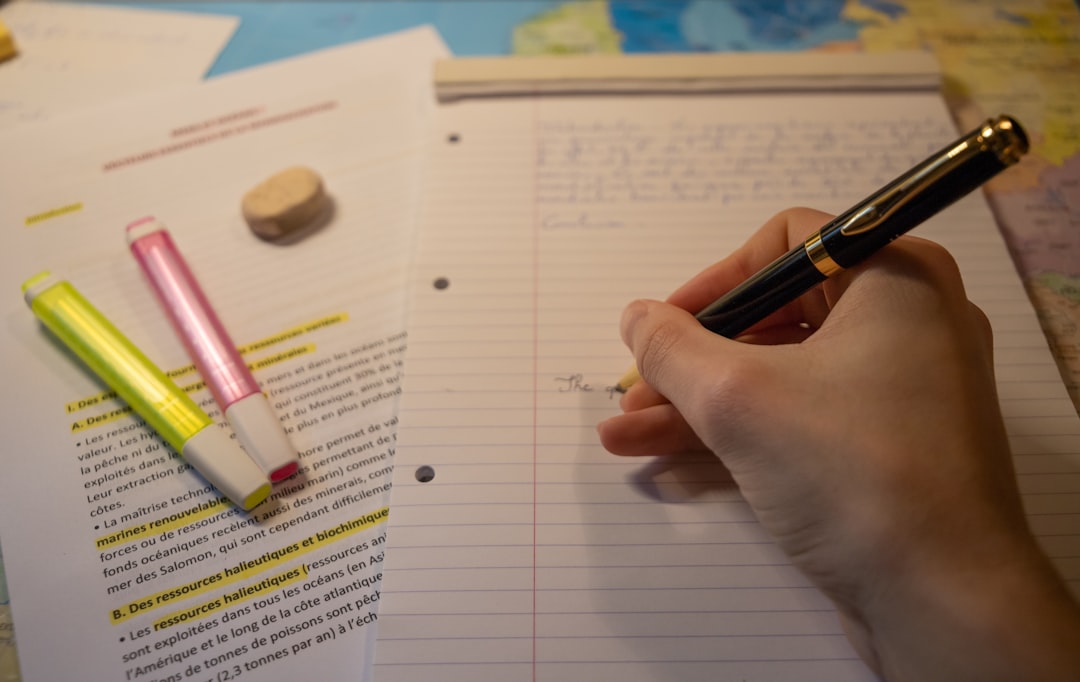
The second trap is the fabricated language example. AI tools sometimes invent idioms, mislabel a phrasal verb’s meaning, or confidently offer a “common expression” that no native speaker actually uses. Because students are asking about language they do not yet know, they have no way to catch these errors — the AI is wrong about the very thing they came to learn. Teach learners to cross-check any vocabulary or idiom claim against a real learner’s dictionary before they adopt it, and they will avoid absorbing confident-sounding nonsense into their own English.
The third is translation drift. When students use AI to translate between their first language and English, small errors of nuance slip through invisibly. Encourage them to verify a suspicious translation by checking how the English phrase is actually used in example sentences, not by trusting the translation in isolation.
The Goal Is Healthy Scepticism, Not Fear
It is easy for a lesson about AI errors to tip into a lesson about AI being untrustworthy or forbidden. That framing does not survive contact with reality — your students will keep using these tools regardless, and a blanket ban simply pushes the use underground where you cannot coach it. The healthier target is calibrated trust: a learner who reaches for AI comfortably, but who has an automatic internal pause before accepting a factual claim, and a small toolkit for checking it.

That habit — read the claim, isolate it, question it, check it against a nameable human source — is transferable far beyond artificial intelligence. It is the same discipline that guards against rumour, advertising, and misinformation of every kind. By teaching it through the AI content your students already touch every day, you give them a critical-thinking skill wrapped inside genuine English practice. Few lessons in the modern ESL classroom offer that much return, and fewer still feel this relevant to the learners in front of you.
Begin small. Pick one activity from this guide, plant one error in one paragraph, and watch what happens when your class realises the confident machine was wrong. The conversation that follows will be in English, it will be about evidence, and it will be entirely their own.
منابع
- British Council — English teaching and digital literacy resources
- UNESCO — Media and Information Literacy
- Cambridge Dictionary — verifying vocabulary and idioms
- Common Sense Media — digital literacy for educators
Looking for free ESL worksheets? Browse our full collection — printable resources for every level and age group. Browse Free Worksheets →
Students can access free worksheets and reading materials at 18KEnglish.com.





 FA
FA  EN
EN  ZH
ZH  ZH_CN
ZH_CN  KO
KO  VI
VI  FR
FR  AR
AR  ES
ES  HI
HI  PT
PT  BN
BN  RU
RU  JA
JA  TR
TR  DE
DE  IT
IT  PL
PL  ID
ID  TH
TH  UK
UK  TL
TL  HE
HE  UR
UR  SW
SW  RO
RO  NL
NL  MS
MS  TA
TA  PS
PS  HU
HU  EL
EL  SV
SV  NB
NB  NN
NN  DA
DA  CS
CS  SR
SR  AM
AM