
ESL Question Formation: 10 Activities That Actually Work
Teaching question formation should be simple. The rules are not complicated — invert the subject and auxiliary, add a wh-word for information questions, done. But walk into any ESL classroom at the A2 or B1 level and you will hear “You are a teacher?” and “What he does on weekends?” on a daily basis. The grammar sticks in the notebook but not in the mouth. According to the Virtual Writing Tutor’s analysis of L2 grammar errors, question formation mistakes — particularly dropped auxiliaries and wrong word order — are among the most persistent errors that students carry well into intermediate levels. These 10 activities are designed to close that gap, from first exposure all the way to fluent, automatic question asking.
Why the Inversion Pattern Is So Hard to Automate
The core problem is not that students fail to understand how questions work. Most of them can complete a worksheet perfectly. The problem is that understanding a rule and using it automatically in real-time speech are two entirely different cognitive tasks.
When a student is focused on communicating meaning — choosing vocabulary, reading the listener’s face, tracking the conversation — the newly-learned inversion rule disappears. It is the first thing to drop under cognitive pressure. This is why drilling with fill-in-the-blank exercises rarely sticks beyond the test. For inversion to become automatic, students need repeated exposure in communicative contexts where forming a question correctly is the price of entry into the conversation. That is what these activities deliver.

Inversion becomes automatic through communicative repetition, not worksheet drills.
Build the Habit First: A Daily Warm-Up
Before any of the structured activities below, run a five-minute inversion warm-up at the start of every class for two weeks. Write a statement on the board — “She works at a hospital.” — and have students race to produce the question form aloud. First correct answer earns a point. This sounds trivial, but after ten classes of daily repetition it builds the pattern recognition that makes every subsequent activity smoother.
One decision worth making early: will you correct errors mid-conversation or after? Mid-conversation correction kills fluency and discourages risk-taking. The better approach is to keep a notepad during activities and collect 4–5 error patterns you hear — not individual names, just the errors. Write them on the board after the activity. Ask the class which is correct. The feedback feels anonymous, no one is embarrassed, and the whole class benefits from the examples.
Activities 1–3: Yes/No Question Practice
These three activities work best in the A2–B1 range, though B2 students who are still producing “You like it?” also benefit from the repetition. Yes/No questions are the gateway — once inversion is solid here, Wh- questions come faster.
Activity 1 — Sentence Strip Inversion Drill. Print statement sentences on strips of paper and cut them into subject, auxiliary, and main verb segments. Students physically reassemble the cards into question form. The kinesthetic element helps students who have been taught inversion cognitively but still produce wrong word order — moving the auxiliary card in front of the subject card makes the rule tangible. Run it as a pair race: 10 minutes, 15 statements.
Activity 2 — Twenty Questions (Modified). One student thinks of a person, place, or object. The class has 20 yes/no questions to guess it. The rule: any student who asks a question with incorrect word order loses their team’s turn. This creates real stakes for accuracy without the teacher being the enforcer — students start monitoring each other’s questions naturally. The competitive angle generates high-volume repetition in a context where students are genuinely motivated to get the question right.
Activity 3 — Find Someone Who. A classic activity for good reason. Students circulate with a survey sheet (“Find someone who has never eaten at a night market,” “Find someone who woke up before 6 AM today,” etc.) and must form yes/no questions to complete it. The communicative pressure makes them reach for questions over statements. The debrief is where the real learning happens — compare how different students phrased the same question and discuss which forms were most natural.

Yes/No question activities create natural stakes for accuracy without teacher enforcement.
Activities 4–7: Wh- Question Practice
Wh- questions add a layer because students must choose the correct question word AND produce inversion. The most frequent ongoing error: “What happened?” gets produced correctly (no auxiliary needed when quoi is the subject), but “What does she like?” comes out as “What she like?” because the auxiliary gets dropped the moment real communication starts. These four activities target that pattern directly.
Activity 4 — Information Gap. Student A has a partially completed profile card — name, age, job, hobby, hometown, with some fields blank. Student B has the missing data. They cannot show each other the cards. Student A must ask Wh- questions to fill the gaps. The physical constraint of hidden information forces real questions instead of pointing and guessing. Run it twice with swapped roles so both students practice asking.
Activity 5 — Celebrity Interview Role-Play. One student is a famous person of their choosing. The other plays a journalist. The journalist must write five interview questions before the role-play begins. This pre-writing step catches errors before the speaking stage — circulate during the writing and correct written questions quietly, which is far less threatening than correcting spoken errors mid-performance. During the interview itself, students rehearse the questions they have already fixed.
Activity 6 — Question Ball Toss. Students stand in a circle. Toss a ball or soft object. The catcher must ask a Wh- question using the target question word written on the board (rotate: what, where, when, who, why, how). The person they throw to must answer, then toss to someone else with a new question. Fast-paced, high-repetition, and the unpredictability keeps students alert. Works well as a five-minute energy break mid-class.
Activity 7 — Question Transformation Cards. Cards have a statement on one side. Students flip them and produce the question form without looking at the card for help. Differentiate naturally: give present simple cards to lower students, present perfect or embedded questions to stronger ones. Works well as a timed individual challenge — how many can you transform correctly in 90 seconds?

Information gap activities force genuine Wh- question production because students need the information to complete the task.
Activities 8–9: Tag Questions and Negative Questions
Tag questions land at B1–B2 and they are genuinely tricky. The structure is logical — invert the auxiliary, flip the polarity — but in real speech they happen fast and the intonation changes whether you are seeking agreement or actual information. Most textbooks teach the structure without teaching the pragmatics, which is why students can produce “She lives in Taipei, doesn’t she?” on a worksheet but freeze when they need to use it naturally.

Group activities expose students to a wider range of question forms than teacher-led drills.
Activity 8 — Negative Question Hot Seat. One student sits in the hot seat. The class asks negative yes/no questions: “Don’t you live near the school?” “Hasn’t she ever tried spicy food?” The seated student must respond to the actual meaning — this forces the class to think about what the negative form implies, not just how to construct it. It is a subtle distinction that trips up students who learned the structure without the pragmatics.
Activity 9 — Tag Question Chain Drill. The first student states a fact: “She has been to London.” The next student adds the correct tag: “…hasn’t she?” The third student confirms or corrects. Continue around the room. Faster and more engaging than it sounds, and the peer accountability element works well at higher levels where students are ready to evaluate each other’s production.
Correcting Errors Without Killing Participation
The trickiest part of teaching question formation is not the activities — it is the feedback loop. Correct every question error in real time and students stop attempting questions. Never correct and the errors fossilize. The delayed feedback method described at the start of this piece is the most reliable middle ground, but there is a second technique worth adding to your toolkit: reformulation.
When a student asks “What she does at weekends?”, respond naturally to the content — “Oh, she usually goes hiking on weekends” — and fold the correct form into your reply: “You were asking what she does, right?” Students hear the correct form in context without feeling corrected. This approach, backed by Ellii’s guidance on question formation teaching priorities, tends to produce more self-correction over time than direct correction does.

Reformulation — echoing the correct question form in your response — helps students self-correct over time.
These activities also pair naturally with speaking activities that build confidence — question formation and fluent speaking reinforce each other. Students who can form questions accurately tend to take more risks in conversation overall.
Sequencing These Activities Across a Unit
The sequence matters more than the individual activities. Move from controlled to semi-controlled to free production:
- Controlled (Day 1–2): Sentence Strip Drill (Activity 1), Transformation Cards (Activity 7). Students need correct repetitions before communicative pressure.
- Semi-controlled (Day 3–5): Information Gap (Activity 4), Celebrity Interview (Activity 5), Find Someone Who (Activity 3). Communication goals motivate accuracy.
- Free production (Day 6–8): Twenty Questions (Activity 2), Ball Toss (Activity 6), Hot Seat (Activity 8), Chain Drill (Activity 9).
- Extended (Day 9–10): Quiz Show (Activity 10), debate prep using questions as a tool — see how to run ESL debates once question formation is solid enough to use as an argument tool.
Skip the controlled stage and students attempt fluency before they have enough correct repetitions to draw on. The result is high output with high error rates, which is discouraging for everyone. For more on sequencing activities from controlled to free practice, the overview in ESL activities that actually build real language skills covers the broader framework.

Sequencing from controlled drills to free production is the difference between temporary and lasting accuracy.
Activity 10: Student-Generated Quiz Show
Groups of four create a five-question quiz on any topic they choose — sports, music, local history, anything. The constraint: the quiz must include at least two yes/no questions, two Wh- questions, and one negative or tag question. Groups quiz each other. You get question formation practice and content knowledge in one activity, and the competition angle keeps energy high even at the end of a unit when students are fatigued from drilling.
This activity also doubles as a good diagnostic. Watch which question types groups default to when they have full freedom. If every group writes five Wh- questions and zero tag questions, you know what to revisit in the next unit.
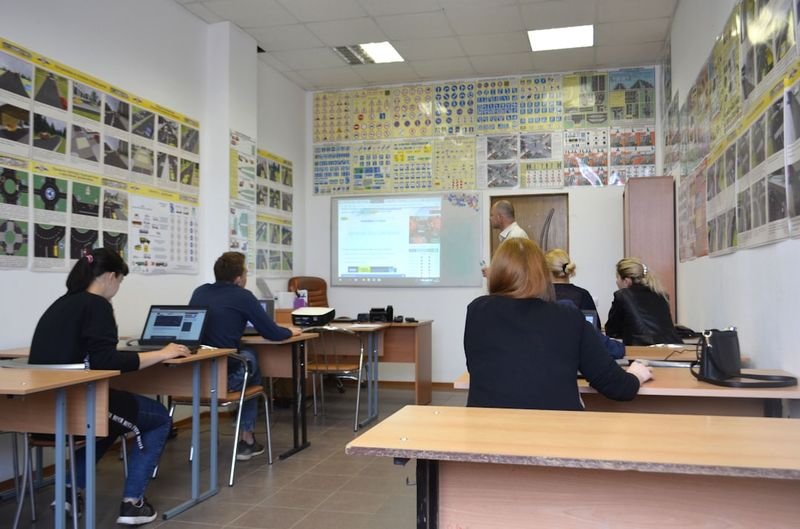
Student-generated quizzes push question formation into independent, unguided production.
Question formation is one of those grammar points that never fully resolves — even B2 learners produce errors under pressure. The goal is not elimination of all mistakes; it is reducing their frequency and helping students self-correct more quickly when they slip. Run these 10 activities in sequence, keep the delayed feedback habit, and most students will reach a level where accurate question formation is the default rather than the exception.
Watch: Grammar Lesson on English Question Forms
Sources
- Virtual Writing Tutor — Question Formation Errors — Analysis of the most persistent L2 question formation errors in writing and speech, with frequency data.
- Ellii — Question Formation in English — Level-by-level breakdown of question forms, common teaching priorities, and reformulation as a correction strategy.
- British Council Teaching English — What’s the Question? — Classroom activity framework for A2 level question formation practice with downloadable resources.








 FR
FR  EN
EN  ZH
ZH  ZH_CN
ZH_CN  KO
KO  VI
VI  AR
AR  ES
ES  HI
HI  PT
PT  BN
BN  RU
RU  JA
JA  TR
TR  DE
DE  IT
IT  PL
PL  ID
ID  TH
TH  FA
FA  UK
UK  TL
TL  HE
HE  UR
UR  SW
SW  RO
RO  NL
NL  MS
MS  TA
TA  PS
PS  HU
HU  EL
EL  SV
SV  NB
NB  NN
NN  DA
DA  CS
CS  SR
SR  AM
AM