

ESL Warm Up Activities: 15 Best Openers for Any Level
The first five minutes of an ESL class decide the next forty-five. Walk in, hand out a worksheet, and you can watch eyes drop to phones in real time. Walk in with one well-chosen warm up activity and the same group is laughing, arguing, and using the target language before they realize class has started. That is the entire game, and most teacher training programs barely cover it.
Good activités d'échauffement en anglais langue seconde aren’t filler. They lower the affective filter, recycle yesterday’s vocabulary, and tell every student in the room that this hour is going to require their voice. The 15 openers below are the ones that have survived years of actual classrooms — beginner kids in Taipei, adult business English in Tokyo, mixed-level online groups on Zoom, and everything in between. Each one is short, cheap, and tested. Pick three, keep them in your back pocket, and you will never face a flat opening again.

Why ESL Warm Up Activities Make or Break the Next 50 Minutes
Stephen Krashen’s affective filter hypothesis is decades old and still the single best argument for warming up properly. When students feel anxious, bored, or self-conscious, the input you spend the rest of the lesson delivering simply does not get processed. The warm up is the part of the lesson where you lower that filter on purpose, not by accident.
The truth is, most teachers who skip warmers aren’t saving time — they’re paying for it in dead air later. A flat opener forces you to drag energy uphill for the entire class. A sharp one makes everything from grammar drills to free production easier, because the room is already speaking.
What Separates a Real Warm Up From Filler
A warm up that works has four traits, and you can use this as a quick gut-check before you commit to one. First, it gets every student talking within three minutes — not just the two confident ones. Second, it uses language at or just below the level you’re about to teach, so it primes rather than confuses. Third, it has a clear end signal, so you can pivot to the lesson without losing the energy you just built. Fourth, it requires almost no materials, because anything that takes ten minutes to set up isn’t a warm up anymore.
If a so-called warmer fails three of those, it’s a stage one activity in disguise. Move it to controlled practice and find something cleaner for the open.
Quick-Fire Speaking Warm Ups

These four are the workhorses. They need zero prep, scale from teens to executives, and produce real speaking inside five minutes. The order below moves from lowest to highest cognitive load — start with whichever fits your group’s energy on the day.
1. Two Truths and a Lie. Every student writes two true statements and one false one on a slip of paper. Pairs swap and guess which is the lie, then justify why. Works at A2 and up because the question forms recycle naturally — “Did you really…?” and “I don’t believe you ate…” come out without prompting. Five minutes flat, no materials.
2. Three Things in Common. Pairs have two minutes to find three things they share that aren’t obvious — not “we both have hair,” but “we both took the bus today” or “we both hate coriander.” It forces negotiation, follow-up questions, and listening. Switch partners and run it again — different pairings produce wildly different conversations.
3. Word Association Race. Stand the class in a circle. You say a target-vocabulary word, the next student gives the first English word that comes to mind, and around it goes. Hesitation longer than three seconds and they sit. The last student standing picks the next starter word. This one is brilliant for recycling yesterday’s lexical set without it feeling like review.
4. Hot Seat. One student sits facing away from the board. You write a word; the class describes it without saying it or using gestures. The seated student guesses. Rotate every 90 seconds. Hot Seat is the highest-impact vocabulary warmer in the kit because it forces circumlocution — the exact skill weaker students avoid. If you only ever steal one activity from this article, steal this one.
Vocabulary Warm Ups That Prime the Next Lesson

Speaking warmers wake the class up. Vocabulary warmers also wake up the language they actually need today. Use these when your main lesson is content-heavy and you want students arriving at the new material with related words already loaded.
5. Last Letter First. First student says any word in a target category — “food,” “jobs,” “things in a house.” Next student must say a word starting with the last letter of the previous one. Apple → eggplant → tomato → orange… Whole class plays in a circle, or split into teams and race. Three minutes builds genuine retrieval speed.
6. Categories. Give one letter and three categories on the board — for example, letter “B” with categories animal, city, food. Pairs race to fill each box. First pair done shouts “stop,” everyone compares. Unique answers score two points, duplicates score one. Categories scales from A1 to C1 because you control the difficulty by the categories you pick.
7. Backs to the Board. Two volunteers sit facing the class with their backs to the whiteboard. You write a word behind them. The class describes it; the seated pair race to guess. First to call it correctly wins. This produces the same circumlocution as Hot Seat but with a competitive layer that adult classes especially eat up. For a deeper menu of recycling techniques after the warmer, our ESL lesson stage toolkit maps activities to each phase of the lesson.
Movement-Based Warm Ups for Sleepy Classes

The 8 AM class, the post-lunch class, the Friday afternoon class — these are where stand-and-stare warmers die. Get them on their feet for 90 seconds and the rest of the lesson runs differently.
8. Four Corners. Label each corner of the room with an option — agree, strongly agree, disagree, strongly disagree, or four answer choices. Read a statement and students walk to their corner. Then they explain why to whoever’s standing near them. Movement plus opinion plus pair speaking in one move. Beats any sitting-in-rows opener.
9. Stand Up If… Students start seated. You read prompts — “Stand up if you watched a movie this weekend,” “Stand up if you’ve been to Japan.” After each one, the people standing have to add a detail before sitting back down. It’s a one-minute setup that produces individual speaking from every student without the spotlight feeling forced.
ESL Warm Up Activities for Adults That Don’t Feel Childish
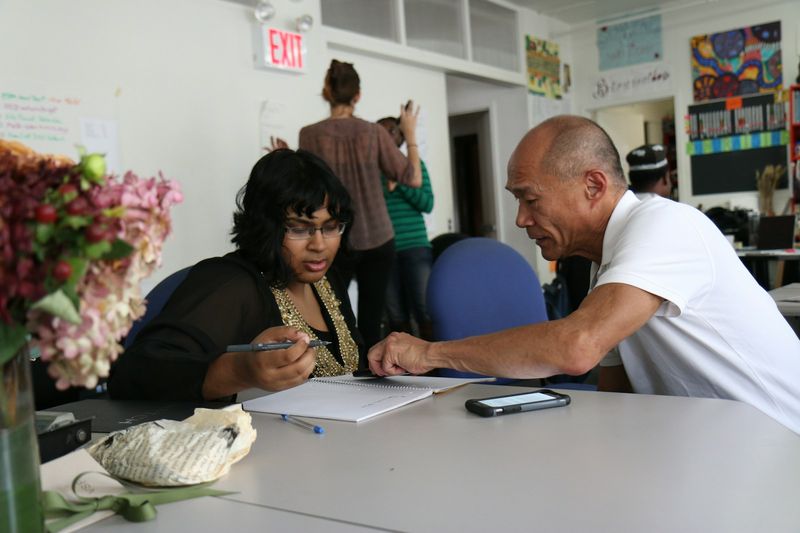
The fastest way to lose an adult class is to ask them to mime a banana or pretend to be an animal. Adult learners — especially business English students — need warmers that respect what they came for. These three are the safest bets for professionals.
10. Headlines. Open today’s news on the projector or share three headlines on a slide. Pairs pick one and have three minutes to discuss what they think the story is about, then read the first paragraph to check. The conversation happens entirely in English, on authentic input, with zero prep on your end. Pull headlines from BBC News for cleaner language than tabloid sites.
11. Two-Minute Pitch. Each student gets a random topic — their last meal, their commute, the worst meeting they ever attended — and 60 seconds to plan, then 90 seconds to talk. A partner times them and asks one follow-up question at the end. This one builds the exact stamina business English students fail at: speaking under mild pressure without rehearsal.
12. Would You Rather. Pose two awkward choices — work from home forever vs. never have to commute again, or speak fluent English but only in writing vs. fluent only in speech. Pairs argue their side for two minutes. The dilemmas need to be genuine, not silly — that’s the line between this working with adults and it falling flat. Want a wider speaking menu after the warm up? Our 20 ESL speaking activities for quiet classes covers the next stage of the lesson.
Online ESL Warm Ups That Actually Work Over Zoom

The hardest moment in any online class is the first 30 seconds, when half the room is muted, two cameras are off, and the teacher is staring at black squares wondering if anyone can hear them. Online warmers have to solve that engagement problem first; the language practice comes second. These three solve it.
13. Annotation Race. Share your screen with a single image — a busy market, a cluttered desk, a beach scene. Give students 60 seconds to annotate everything they can name in English using Zoom’s annotation tools. Whoever labels the most unique items wins. It forces immediate engagement and surfaces vocabulary gaps you can target later in the lesson.
14. Photo Description with a Twist. Send each student a different photo via private chat. They take 90 seconds to describe it in the main chat without naming the central object. The rest of the class guesses from their description. Pure circumlocution practice with the added bonus that it works even when one student’s camera is broken.
15. Live Polls. Most video platforms have built-in polls. Open with a poll on something low-stakes — “How much sleep did you get?” or “Favorite season?” — then immediately ask one person to defend their answer. The poll is the engagement hook; the follow-up is the speaking. Three minutes total. If listening is your weak spot too, our 15 ESL listening activities picks up where the warm up ends.
The YouTube Video Worth Watching
For teachers who want to see ESL warm up activities in action, Jackie Bolen’s compilation walks through several of the patterns above and a few variants. It’s worth fifteen minutes if you’ve never seen the rhythm of a well-paced opener in another teacher’s classroom.
Mistakes That Turn Warm Ups Into Wasted Minutes

Most ESL warm up activities don’t fail because the activity is bad. They fail because of how they’re run. The pattern is identical across every classroom I’ve watched, and the fixes are small but specific.
Letting it run too long. If your warm up bleeds past eight minutes, you’ve started a lesson, not opened one. Set a visible timer. When it goes off, transition immediately even mid-sentence — the energy is the point, not the completion.
Picking content the students don’t care about. A warmer about a teenage popstar will sink a business English class. A warmer about quarterly forecasts will kill a teen class. Read the room first, pick second.
Doing the same warmer every Monday. Predictability is the enemy of energy. Rotate. Five different warmers cycled through the month keeps the format fresh while still building the routine students need to feel safe speaking.
Treating the warm up as separate from the lesson. The best warmers seed vocabulary or structures you’re about to teach. If today’s lesson is past simple narratives, the warmer should produce past tense talk, not random questions. Connect them, and the lesson body lands faster.
How Long Should an ESL Warm Up Actually Be?
Five to eight minutes for a 50-minute class. Three to five for a 25-minute kids class. Ten only if the warmer is also doubling as your lead-in to the main task. Going longer than that compresses everything after it, and the warmer was meant to buy time, not steal it.
One rule that’s saved me more than once — when the energy in the room peaks during the warmer, cut it ten seconds early. Always leave them wanting another round. That carries the momentum straight into the next stage, which is the entire point.
How to Pick the Right Warm Up for Your Class
Three questions decide which ESL warm up activities to pull off the shelf on any given day. What’s the energy in the room right now — sleepy, manic, or somewhere in between? What’s the language target for the rest of the class? And who’s in the room — kids, teens, adults, mixed levels? Match those three answers against the 15 above and one will fit obviously. Don’t overthink it. The worst warmer run with conviction beats the best warmer run with hesitation.
If you want a structured next step after the opener, the ESL lesson stage toolkit covers practice, production, and wrap-ups — the three stages that come after the warm up does its job. Most teachers nail the warmer and lose the rest of the hour. Don’t be that teacher. Build the whole arc.
Sources
- British Council — Why warm-ups matter in the language classroom — overview of warm-up purpose and pedagogy from the British Council teaching network.
- Cambridge University Press & Assessment — Warm-ups and icebreakers — collection of classroom-tested warmer activities published by Cambridge ELT.
- Association internationale TESOL — professional body for English language teaching with research and standards on classroom practice.
- Krashen, S. — The Affective Filter Hypothesis — original paper on how anxiety and motivation gate language acquisition in the classroom.








 FR
FR  EN
EN  ZH
ZH  ZH_CN
ZH_CN  KO
KO  VI
VI  AR
AR  ES
ES  HI
HI  PT
PT  BN
BN  RU
RU  JA
JA  TR
TR  DE
DE  IT
IT  PL
PL  ID
ID  TH
TH  FA
FA  UK
UK  TL
TL  HE
HE  UR
UR  SW
SW  RO
RO  NL
NL  MS
MS  TA
TA  PS
PS  HU
HU  EL
EL  SV
SV  NB
NB  NN
NN  DA
DA  CS
CS  SR
SR  AM
AM