

8 Drama Activities for ESL: Build Fluency
A 2011 study in Research in Drama Education found that drama-based instruction produced significant gains in speaking fluency and willingness to communicate compared to conventional instruction — not because drama is magic, but because it removes the most common reason students stay silent: fear of being judged. When you’re playing a character, mistakes belong to the character, not to you.
That shift in accountability is the whole mechanism. Here are eight drama activities for ESL classes, ordered roughly from lowest to highest risk — so you can start small and build student confidence before attempting anything that requires a full performance.
Why Drama Activities Work for ESL Learning
The research on drama in second language acquisition points to three consistent benefits: increased speaking time per student, reduced anxiety, and stronger retention of new vocabulary through embodied memory. “Embodied” means physical — you remember the word “negotiate” better if you actually negotiated in a role-play than if you copied it from a worksheet.
The practical case is even simpler. In a class of 25 students doing a standard question-and-answer activity, each student might speak for 30 seconds in a 60-minute period. In a drama activity with students working in pairs or small groups simultaneously, each student might speak for eight to ten minutes. That is the real argument for drama activities in ESL — raw speaking time.

1. Role-Play Simulations
Role-play is the most widely used drama activity in ESL for good reason: it maps directly onto real-world communication goals. You give each student a card with a character and a goal — “You are a customer. Your new phone is broken and you want a refund” — and let the interaction unfold.
The key is specificity. Vague scenarios produce vague language. “Have a conversation about a problem” gets you five minutes of hesitation and apology. Tight scenarios — a job interview, an apartment lease dispute, an airline check-in with an overweight bag — produce the negotiation and persuasion language your students actually need.
Run the same scenario twice with different partners. After the first round, give one piece of feedback. The second round is noticeably sharper. Total prep time: 10 minutes to write four scenario cards that you can reuse all semester.
2. Improvisation: The Yes, And Game
The foundational improv rule is “yes, and” — whatever your partner says, you accept it as true and add to it. It forces listening, real-time processing, and spontaneous production, which is exactly what classroom grammar drills do not train.
Start with a simple two-person scene: “You are on a bus. One person starts.” The only rule is “yes, and.” No blocking, no corrections mid-scene. Students who tend to overthink their grammar get pulled into the story and forget to be afraid.
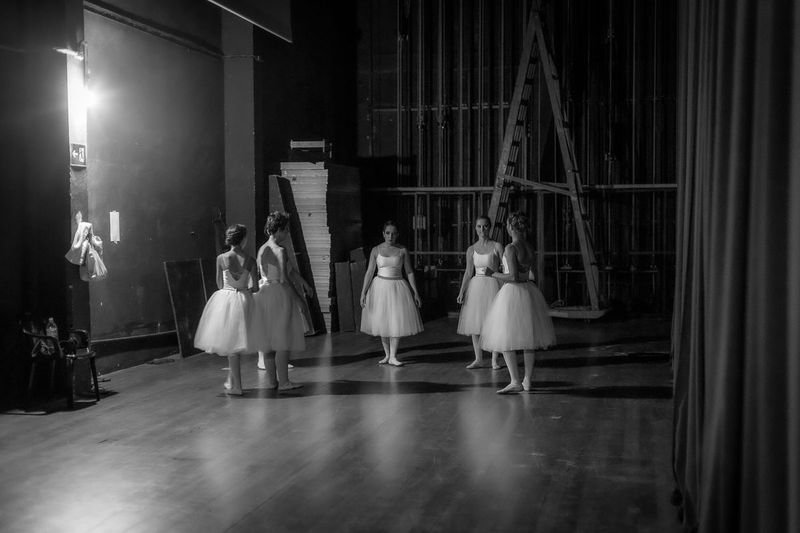
The vocabulary version: deal each pair a random noun card. They must start an improv scene that incorporates that word naturally within the first minute. This works particularly well for idioms — it forces students to use the phrase in context rather than just recognize it in a reading exercise.
3. Reader’s Theater
Reader’s Theater is the lowest-risk drama activity on this list because students keep their scripts in hand. They are not memorizing lines — they are performing a reading. That small shift removes the intimidation factor and puts the focus where it belongs: expression, pacing, and intonation.

It is also one of the most practical tools for pronunciation work. Reading aloud from a script lets you stop and isolate specific sounds or stress patterns, then immediately put them back into context. The combination of explicit instruction and meaningful practice is hard to replicate with pronunciation drills alone.
Scripts do not need to be long. A two-page dialogue between three characters covering a topic from your current unit is enough. Assign parts, do a cold reading, give targeted feedback, then run a second performance read. Most classes improve noticeably within a single session. This pairs well with the broader framework in the how to teach speaking skills guide if you are building a full speaking unit.
4. מושב חם
Hot Seat puts one student “in character” — a historical figure, a character from a text the class has read, or even an abstract concept personified — and the rest of the class asks questions. The person in the hot seat must answer in character.
The skeptics in the class usually become the sharpest questioners. They want to catch the student in the hot seat giving a wrong or inconsistent answer. That competitive edge drives the kind of precise, targeted questioning that formal speaking activities rarely produce on their own.

Hot Seat works particularly well as a post-reading activity. After students read about a famous inventor or historical event, one student “becomes” the key figure and defends decisions in character. The class questions in English, reinforcing the text’s vocabulary and comprehension through active production rather than passive recall.
5. Freeze Frame and Thought Tracking
Freeze Frame is a drama technique where you stop a role-play or improvisation mid-scene and ask a student to describe exactly what their character is thinking at that moment. It looks simple on paper. In practice, it generates some of the most sophisticated language production in any of these activities because it requires students to articulate internal states — emotions, doubts, intentions — in real time.
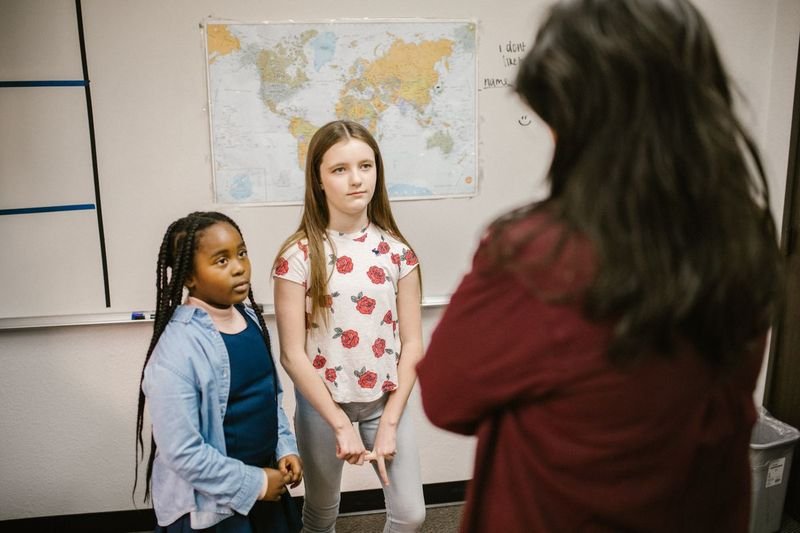
The procedure: run a short scene, call “freeze,” tap a student on the shoulder, and ask “What is your character feeling right now? What do they want?” Other students can ask follow-up questions before you call “action” again. The debrief targets the specific language students used — or struggled to find — during the thought-tracking moment. This connects naturally to the discussion techniques in the Socratic Seminar guide if you want to extend the debrief into structured argumentation.
6. Mime and Gesture Games
Mime strips language away entirely — and paradoxically, that makes students think harder about it. After watching a student mime someone frantically searching for car keys, finding them, then realizing the car is gone, the class races to describe what they saw. The urgency produces fluent, spontaneous output because students are competing to narrate, not performing.
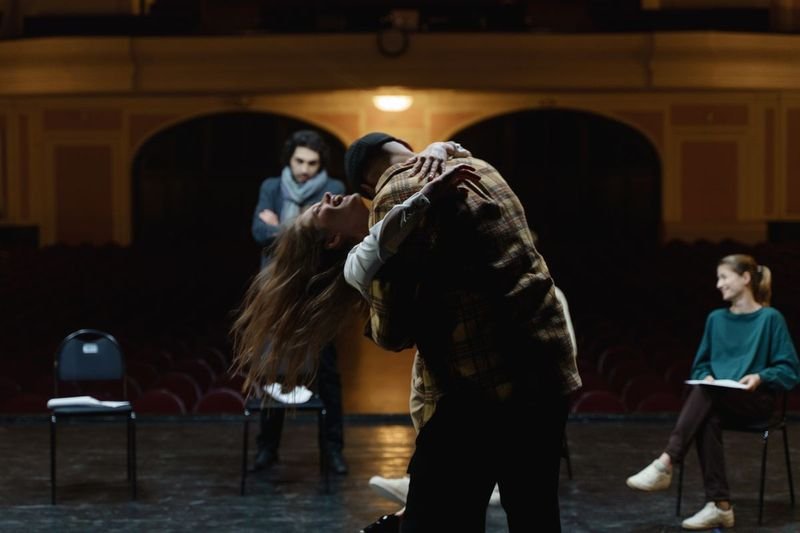
Vocabulary mime is the most direct version: one student draws a word card and mimes it, the class guesses. Scale it up by miming phrasal verbs or idioms — “give up,” “run into an old friend” — and the activity forces students to think about meaning rather than just sound. Pairs or small groups can run their own mime rounds simultaneously, which multiplies speaking time across the whole class.
7. Forum Theater
Forum Theater, developed by Brazilian director Augusto Boal in the 1970s, was originally a tool for community problem-solving. In the ESL classroom it works as a high-engagement discussion activator: a short scene depicting a conflict is performed, and at a key moment students call “stop” and suggest an alternative approach for the character.
The language load is high. Students have to describe what they would do differently, argue for their solution when challenged by classmates, and respond to counter-proposals on the fly. The cooperative learning framework pairs well here — Forum Theater works best when students already feel comfortable disagreeing productively in English.
Scenarios that generate strong debate: a job negotiation, a conflict between housemates over shared responsibilities, a customer complaint that keeps escalating. Keep the initial scene under three minutes; the forum discussion typically runs twice as long and produces more complex language than the performance itself.
8. Script Writing and Mini-Performance
The most extended of these drama activities for ESL requires students to write a short script, rehearse it, and perform it for the class. The writing phase alone is worth the time — producing dialogue in a second language demands control of register, turn-taking conventions, and conversational markers that descriptive writing never requires.

Give students a constraint: “Your script must include one disagreement, one piece of advice, and one surprise.” The constraint prevents the classic student approach of writing an entirely agreeable conversation. Conflict requires persuasion language; surprise requires explanation. Both are exactly what B1 and B2 students need to practice most.
Run Script Writing across two 60-minute classes: one for drafting and teacher feedback on language accuracy, one for rehearsal and performance. Peer feedback forms — one thing they did well, one thing to improve — keep the audience engaged and give performers specific notes rather than polite applause.
Sequencing Drama Activities by Level
Mime and Reader’s Theater work from A1 upward. They are low-production risk: students can gesture, point, or read from a script without generating language on the fly. Role-play and Yes-And improv work well from A2, once students have enough core vocabulary to sustain a short scene. Hot Seat, Freeze Frame, and Forum Theater are best introduced at B1 and above, where students can manage the cognitive load of articulating internal states and arguing positions under pressure. Script Writing fits B1–B2 as a project across multiple lessons.
The sequencing that works across a unit: start each new drama type with Mime or a short Role-Play round to warm students up and lower inhibitions before moving to the target activity. Finish with a brief debrief — “What language did you need that you didn’t have?” — which turns the experience into explicit learning rather than just a fun activity. Pair the creative outputs here with the vocabulary techniques in the using songs in ESL guide for a complete creative skills block.
What to Do When Students Resist
Every class has students who refuse to perform. The instinct is to push them. The better move is to give resistant students structural roles that still require production: the director who gives instructions to the actors, the audience member designated to ask one question during Hot Seat, the script editor who gives feedback after a Reader’s Theater. They are still using English. They are still participating. Most of them step into the scene by the third session once they see it is safe.
The resistance usually comes from cultural background, not disengagement. In many Asian classroom cultures, a visible mistake in front of peers carries significant face risk. Honor that. Never force a student into a spotlight performance. Offer an opt-out that still involves speaking, and you will keep almost everyone engaged across a drama unit.
מקורות
- Stinson, M. & Winston, J. (2011). Drama education and second language learning. Research in Drama Education — peer-reviewed research on drama instruction and L2 fluency gains.
- Bridge TEFL — Using Drama as an ESL Teaching Method — practical overview of drama techniques for language classrooms.
- FluentU Educator Blog — 10 Fun Drama Activities for Language Learning — classroom-tested formats with implementation notes.
- Drama Notebook — ESL Drama Activities and Scripts — free scripts and structured drama frameworks for language teachers.







 HE
HE  EN
EN  ZH
ZH  ZH_CN
ZH_CN  KO
KO  VI
VI  FR
FR  AR
AR  ES
ES  HI
HI  PT
PT  BN
BN  RU
RU  JA
JA  TR
TR  DE
DE  IT
IT  PL
PL  ID
ID  TH
TH  FA
FA  UK
UK  TL
TL  UR
UR  SW
SW  RO
RO  NL
NL  MS
MS  TA
TA  PS
PS  HU
HU  EL
EL  SV
SV  NB
NB  NN
NN  DA
DA  CS
CS  SR
SR  AM
AM