

Fact-Checking AI Content: A Teacher’s Verification Workflow
An AI writing tool can produce a polished reading passage, a grammar explanation, or a set of TOEIC practice questions in seconds. The text reads smoothly, the tone is confident, and everything looks correct. That confidence is exactly the problem. AI systems generate language that sounds authoritative whether or not the underlying facts are true, which means a teacher can unknowingly hand students a passage with a wrong date, a misquoted author, or a grammar rule that simply does not exist in English. Learning to fact-check AI-generated content is no longer optional for ESL teachers. It is part of the job, in the same way that proofreading a worksheet always has been.
The good news is that verification does not have to swallow your prep time. With a clear, repeatable workflow, you can catch the errors that matter most in a few focused minutes. This guide walks through that workflow: what to check first, how to trace claims back to real sources, and how the process changes depending on the type of content you are using in class.

Why AI Content Needs a Teacher’s Second Look
Large language models do not retrieve facts from a database the way a search engine does. They predict the most likely next word based on patterns in their training data. Most of the time that prediction lands on something true, because true statements are common in the text these models learned from. But the model has no built-in sense of certainty. When it does not have the right information, it produces a plausible-sounding answer anyway. This is what researchers call a hallucination, and it can appear in any kind of content a teacher might generate.
For an ESL classroom, the stakes are specific. If a reading passage about Taiwanese history contains an invented statistic, students absorb it as fact while they focus on vocabulary. If a grammar explanation invents a rule about article usage, learners internalize a mistake that is hard to unlearn later. And because the writing is fluent, neither the teacher skimming at 11 p.m. nor the student in class is likely to notice. Fluency hides error. That is the core reason a human verification step has to sit between the AI and your learners.
It helps to treat every AI draft the way you would treat a paper written by a bright but overconfident student. The structure may be excellent and the language clean, but you still check the claims before you put your name on it.
Building a Quick Verification Habit
The aim is not to verify every single word, which would be exhausting and unnecessary. The aim is to verify the parts that are both checkable and consequential. A good workflow separates those high-risk elements from the low-risk ones so your attention goes where it counts.
Start With the Claims, Not the Grammar
When you first read an AI-generated passage, resist the urge to polish the prose. Instead, hunt for factual claims: names, dates, numbers, places, cause-and-effect statements, and anything presented as a definition or rule. Mentally flag each one. These are the points where the model could have fabricated something, and they are the points students will take as truth. A useful trick is to read with a pen and underline every sentence that asserts a fact about the world rather than simply describing or narrating.

Once the claims are flagged, ask a quick triage question for each one: would a mistake here matter to my lesson? A passing reference to a season being warm carries almost no risk. A specific claim that a treaty was signed in a particular year, or that a word has a particular origin, carries real risk and earns a check. This triage is what keeps verification fast. You are not auditing the whole text; you are checking the handful of load-bearing facts.
Trace Every Fact to a Real Source
For each flagged claim that matters, open a separate browser tab and confirm it against a source you trust. Do not ask the same AI tool to verify itself, because it can repeat the same error with the same confidence. Instead go to an independent reference: an encyclopedia entry, a government or university page, a dictionary, or an established news outlet. The standard worth holding is simple. If you cannot find independent confirmation in a minute or two, treat the claim as unverified and either cut it or rewrite it as something you can stand behind.
Be especially wary of citations the AI offers on its own. Models are notorious for inventing book titles, author names, and study results that do not exist. If an AI-generated text says a particular researcher found a particular statistic, that is a red flag, not a green light. Search for the study yourself. A surprising number of confident academic-sounding citations evaporate the moment you look for them.
Checking Different Types of AI Content
Not all classroom material carries the same risks, so the workflow shifts slightly depending on what you generated. Three categories cover most of what an ESL teacher produces with AI.
Reading Passages and Texts
Reading passages are where hallucinations do the most quiet damage, because the whole point is for students to absorb the content. When you generate a passage about a topic such as a famous inventor, a natural phenomenon, or a piece of cultural history, treat every proper noun and number as a checkpoint. Confirm the spelling of names, the accuracy of dates, and the truth of any cause-and-effect explanation. If the passage is built around a single central fact, verify that fact first, because if it is wrong the entire text needs reworking.

A practical shortcut for graded readers is to ask the AI to write about a topic you already know well, or to keep a small bank of pre-verified topics you reuse. When the subject matter is familiar to you, fact-checking becomes a glance rather than a research project.
Grammar Rules and Example Sentences
AI is generally strong at producing grammatical English, but it can be unreliable when it explains מַדוּעַ something is correct. Models sometimes invent tidy-sounding rules, overstate exceptions, or give an explanation that contradicts the example beneath it. When you generate a grammar lesson, check the metalanguage against a respected reference grammar or a trusted teaching resource, not just your gut. Read each example sentence on its own and ask whether a careful native speaker would actually say it.
Pay particular attention to areas English handles messily, such as articles, prepositions, and phrasal verbs. These are precisely the topics where a confident but wrong explanation can mislead learners, and where you most want a second source confirming the rule before it goes on the board.

Statistics, Dates, and Quotations
Numbers and quotes are the highest-risk content of all, and they appear constantly in exam-prep materials. A TOEIC or IELTS reading task built around a fabricated percentage teaches students to trust a fiction, and a famous quotation attributed to the wrong person spreads a small myth. Verify every statistic against its original source and confirm every quotation word for word and speaker by speaker. If you cannot pin a quote to a reliable origin, drop it. Misattributed quotations are one of the most common AI errors precisely because so many of them already circulate online.
Tools and Routines That Catch Errors Fast
A few lightweight habits make the whole process faster. Keep a single trusted reference open while you review, such as a reputable encyclopedia and a learner’s dictionary, so checking a claim is one click rather than a fresh search every time. When a passage hinges on a date or figure, copy the exact phrase into a search engine in quotation marks; if no credible page returns it, that absence is itself a warning. And when you ask the AI to generate material, prompt it to mark anything it is unsure about, then treat those flagged sections as your first stop.
It also pays to write prompts that reduce error in the first place. Asking for content at a defined reading level, on a topic you can verify, and with a request to avoid specific statistics unless they are essential will produce drafts that need less correction. Prevention is cheaper than cleanup, and a well-scoped prompt is the cheapest prevention there is. For teachers building a personal library of vetted material, a simple folder of reusable, already-checked passages turns next term’s prep into editing rather than verifying from scratch.
Teaching Students to Fact-Check Too
The verification skills you use behind the scenes are also a lesson worth teaching directly. Your students are already using AI tools for homework, and many will enter workplaces where evaluating machine-generated text is a daily task. Turning fact-checking into a classroom activity builds both language skills and digital literacy at once. Give learners a short AI-generated paragraph that contains a planted error, and ask them to find it, explain how they know, and locate a source that confirms the correct version. The exercise generates rich speaking and reading practice while it teaches a genuinely useful habit.
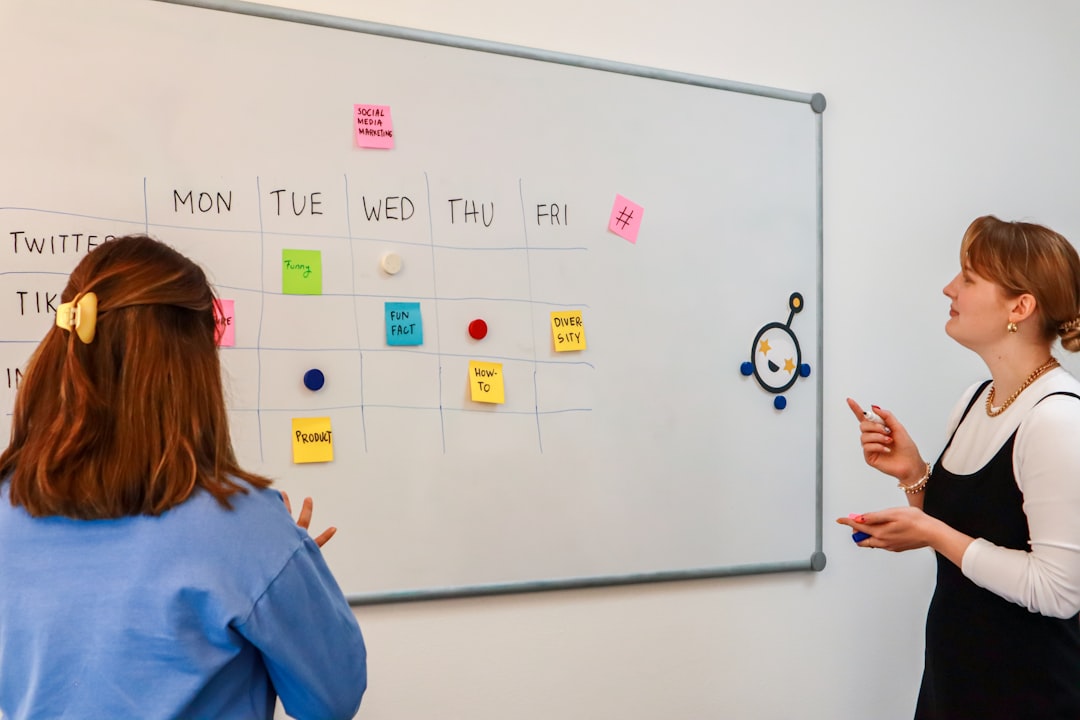
Framing matters here. The goal is not to make students distrust technology, but to make them thoughtful users of it. A learner who can ask “how would I check that?” has gained a transferable skill that outlasts any single tool or trend. For higher levels, you can extend the activity into evaluating sources, comparing how two references describe the same event, and discussing why confident writing is not the same as correct writing.
A Realistic Workflow for Busy Teachers
Pulled together, the routine is short enough to use every time. First, read the AI draft once and underline every factual claim. Second, triage those claims and keep only the ones that would matter if they were wrong. Third, confirm each surviving claim against an independent, trusted source, never against the same AI tool. Fourth, give numbers, dates, and quotations extra scrutiny because they fail most often. Finally, polish the language only after the facts are solid, so you never spend time perfecting a sentence you are about to delete.

None of this means abandoning AI. Used well, these tools save real hours and open up creative lesson ideas that would be hard to produce by hand. The point is simply that the teacher remains the editor, the final check between a confident draft and a classroom of trusting learners. Build the verification habit once, keep it light, and AI becomes what it should be: a fast first draft that your judgment makes trustworthy.
מקורות
- Wikipedia — Hallucination (artificial intelligence)
- המועצה הבריטית
- מילון קיימברידג'
- Common Sense Media — Digital Literacy Resources
Looking for free ESL worksheets? Browse our full collection — printable resources for every level and age group. Browse Free Worksheets →
Students can access free worksheets and reading materials at 18KEnglish.com.
Need help ranking on Google? RankOnRepeat manages your entire blog — keyword research, writing, and publishing — so your business shows up when customers search. See how it works →






 HE
HE  EN
EN  ZH
ZH  ZH_CN
ZH_CN  KO
KO  VI
VI  FR
FR  AR
AR  ES
ES  HI
HI  PT
PT  BN
BN  RU
RU  JA
JA  TR
TR  DE
DE  IT
IT  PL
PL  ID
ID  TH
TH  FA
FA  UK
UK  TL
TL  UR
UR  SW
SW  RO
RO  NL
NL  MS
MS  TA
TA  PS
PS  HU
HU  EL
EL  SV
SV  NB
NB  NN
NN  DA
DA  CS
CS  SR
SR  AM
AM