

Graded Readers for ESL: How to Use Them in Your Classroom
A student who reads 30 minutes per week in a well-matched graded reader picks up roughly 300 new vocabulary items per year — through context alone, without a single worksheet. That estimate comes from Nation and Wang’s foundational 1999 research on vocabulary acquisition and graded texts, and it still holds up. Most ESL teachers know graded readers exist. Far fewer use them consistently, and even fewer use them well. This guide is for the teacher who wants to change that.
What Are Graded Readers (and How They Differ from Regular Books)
Graded readers are purpose-built books for language learners — not just simplified versions of classics with the nuance stripped out. The best series use a controlled vocabulary at each level, typically ranging from 300 headwords at Starter up to 4,000+ at Advanced, while still delivering a complete and readable story. The Extensive Reading Foundation defines six standardized levels, though individual publishers vary in their labeling systems.
The distinction from standard novels matters more than it sounds. When a learner picks up a native-level book, they typically hit five to ten unknown words per page. Research consistently shows that readers need to recognize at least 98% of words on a page to comprehend what they’re reading without constant dictionary interruptions. A graded reader at the right level keeps students comfortably above that threshold — which is where fluency development actually occurs.

Extensive reading builds fluency through repeated, comfortable exposure to vocabulary in context.
Three series dominate ESL classrooms worldwide. Oxford Bookworms Library runs six levels with a mix of classic adaptations and original fiction — the headword counts are clearly labeled and the quality is consistent across levels. Penguin Readers are particularly strong at lower levels for adult learners who find some of the classic-heavy Oxford titles dated. Cambridge English Readers use original stories written specifically for learners, which gives the dialogue a more natural feel than adapted texts.
What the Research Actually Shows
A 2025 meta-analysis in Educational Psychology Review, covering decades of studies on extensive reading programs, found consistent gains across vocabulary, reading speed, and overall language competence in L2 learners. That finding lines up with the classroom experience of teachers who have run sustained reading programs — but the timescale surprises most people. Gains show up within a semester, not after a year.

Students who read extensively together develop both vocabulary and discussion skills.
A three-month extensive reading program documented in the International Journal of TESOL & Education showed measurable improvement in both reading and writing — not because students studied more grammar, but because they encountered it repeatedly in context. The British Council’s teaching guidance on extensive reading cites similar patterns: learners in reading programs consistently outperform control groups on vocabulary posttests and fluency measures.
One caveat that rarely makes it into the marketing: level matching is everything. A reader that’s too difficult produces frustration, not learning. One that’s too easy produces boredom. Both outcomes are worse than no reading program at all — because they kill the reading habit before it starts.
How to Choose the Right Level for Your Students
The 98% word recognition rule is the clearest practical guide. Sit a student with a page from a candidate reader and have them read aloud for two minutes. Mark every word they stumble on or don’t know. If more than one word in fifty trips them up, the book is too hard. If they sail through with fewer than one unknown word per hundred, consider moving them up a level.
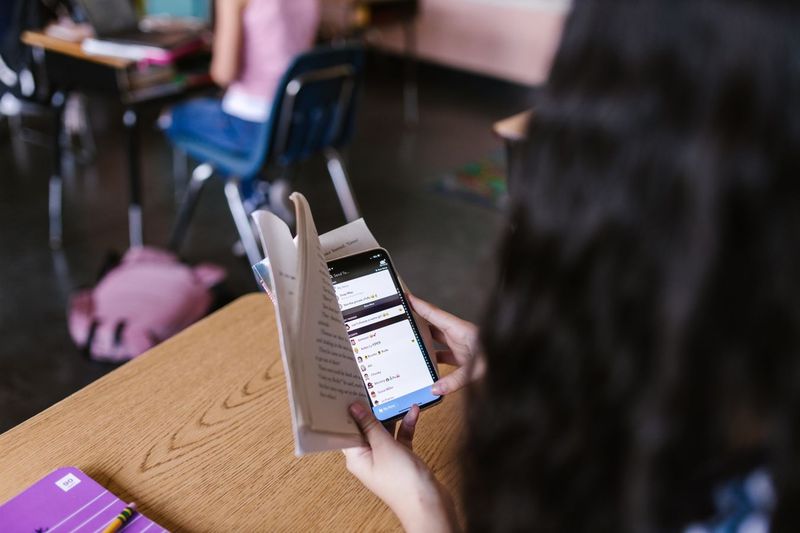
Level matching is the single most important factor in a successful graded reading program.
A faster check: give students one paragraph from the first chapter without preparation and ask them to retell the main idea in one or two sentences. If they can’t, drop to the level below. If they can do it with ease and detail, consider going up. This takes three minutes per student and is far more reliable than asking them to self-report their level.
For mixed-ability classes — which is most classes — don’t try to find a single reader that works for everyone. Stock two or three levels and let students self-select after a quick placement check. Research on ESL activities that actually build engagement consistently shows that student choice is a strong predictor of sustained participation. A student who picks their own book reads more of it.
The Best Graded Reader Series for ESL Teachers
Oxford Bookworms Library remains the default choice for most classrooms, and with good reason. The six-level range is well-calibrated, the headword counts are clearly marked on every cover, and the catalog includes both literary adaptations and original fiction. The consistency across levels is better than most competitors. If you’re building a classroom library from scratch and can only choose one series, start here.

Organizing graded readers by level with a clear color system removes barriers to student self-selection.
Penguin Readers have improved significantly in recent years. Their Level 1 and 2 titles — including contemporary and popular fiction — hold adult attention better than some of the more literary Bookworms options. For adult beginners who don’t connect with classic British literature, Penguin is often the more pragmatic call.
Cambridge English Readers are worth using when you want stories written specifically for learners rather than adapted from existing literature. The dialogue feels contemporary and natural. They work especially well at Intermediate and Upper-Intermediate, where students can follow more complex character development.
Macmillan Readers fill a useful niche with their factual non-fiction titles. For students who genuinely dislike fiction — and some do, especially adult business English learners — a reader on climate change or space exploration at their level can unlock a reading habit that literary fiction never will.
5 Ways to Use Graded Readers in Your ESL Classroom
Sustained Silent Reading (SSR) is the most-researched approach and the simplest to implement. Students read self-chosen books at their own pace for 15 to 20 minutes, uninterrupted. No comprehension checks during reading. No vocabulary lists. The teacher reads too — this matters because it signals that reading is something adults do for real reasons, not a task being imposed on students.
Watch the video below for a practical walkthrough of how experienced teachers use graded readers as part of an extensive reading program:
Audio + text pairing works especially well with lower-level students. Most major series now publish audio versions alongside the print editions. Having students read along while listening improves pronunciation mapping and reading speed at the same time. For students who struggle to decode text independently, it’s often the fastest route into a sustainable reading habit.

Light note-taking — just a word or two per chapter — helps students track character and plot without turning reading into a test.
Book clubs (small group) work well at Intermediate and above. Two or three students read the same title, then meet for ten minutes at the end of class to discuss it in English — without a structured worksheet. One open question (“What would you have done differently?”) is enough to generate real conversation. The key is keeping it social rather than evaluative.
Jigsaw reading assigns different chapters of the same book to different students, who then teach each other the plot. This approach forces active comprehension and works well with longer titles. It also mirrors the kind of cooperative learning that research shows builds fluency faster than individual work alone.
Homework reading is the most common approach and the most frequently abandoned. The fix is a five-minute verbal check-in at the start of the next class — not a quiz, just “what happened in your book last night?” Students quickly learn that the reading has a social payoff. That small accountability loop makes the difference between homework that gets done and homework that doesn’t.
Common Mistakes ESL Teachers Make With Graded Readers
The most common error is placing students at too high a level. Teachers want students challenged. The research says challenge kills the reading habit. Comfortable reading — where comprehension is effortless and vocabulary acquisition happens quietly in the background — produces better long-term results than a steady diet of struggle. A student who finishes three easy readers has done more vocabulary work than one who abandoned two hard ones at chapter two.

A brief teacher check-in — rather than a formal test — keeps reading motivation intact while maintaining accountability.
The second mistake is turning every reader into a comprehension worksheet. Checking understanding has its place, but extensive reading works precisely because it separates reading from assessment. When every chapter becomes a test, the intrinsic motivation drains. A brief verbal reaction or one-paragraph written response is enough. Save the detailed comprehension questions for the formative assessment tools designed for that purpose.
The third problem is ignoring student interest when selecting titles. A shelf full of 1920s mystery adaptations will not engage a group of adult business English students. Ten minutes spent surveying student interests before ordering saves months of low engagement later. The Extensive Reading Foundation’s free catalog at erfoundation.org lets you search by topic across multiple publishers and levels — use it.
Building a Classroom Graded Reader Library on a Budget
Twenty physical books — five titles across four levels — is a workable starting library for most class sizes. Budget roughly $150–200 USD for a mixed set. Once purchased, they last years with reasonable handling. Label each book on the spine with the level using a colored sticker system (green for Starter, yellow for Elementary, and so on). Students won’t dig into publisher level guides on their own — visible labeling removes that friction entirely.

A small classroom library of 20–30 graded readers is enough to run a sustained reading program for most class sizes.
For teachers who can’t justify the upfront cost, the digital route is now genuinely viable. The Extensive Reading Foundation maintains a list of free and low-cost online graded reader resources. Platforms like ReadTheory offer leveled reading with built-in vocabulary support. Macmillan’s teacher portal offers a free graded reader download monthly. Start digital, build physical as the program proves its value to administrators or parents.
The bottom line on graded readers: the research is clear, the implementation is simple, and the cost is low. What they require is commitment — consistent class time, a light accountability structure, and the discipline to keep the program from sliding into another round of grammar drills. Teachers who protect that reading time tend to keep it, because students notice the difference.
מקורות
- Nation, I.S.P. & Wang, K. (1999). Extensive Reading as a Means of Input to L2 Learning — Foundational research on vocabulary acquisition through extensive reading
- Learning a Language Through Reading: A Meta-analysis (2025) — Educational Psychology Review, Springer Nature — meta-analysis of extensive reading studies on L2 learners
- Extensive Reading on Postgraduate Students’ Perceptions and Its Effects on Reading Comprehension — International Journal of TESOL & Education
- Extensive Reading — British Council TeachingEnglish, professional development guidance
- Graded Readers Catalog — The Extensive Reading Foundation — publisher and level guide for ESL graded reader series









 HE
HE  EN
EN  ZH
ZH  ZH_CN
ZH_CN  KO
KO  VI
VI  FR
FR  AR
AR  ES
ES  HI
HI  PT
PT  BN
BN  RU
RU  JA
JA  TR
TR  DE
DE  IT
IT  PL
PL  ID
ID  TH
TH  FA
FA  UK
UK  TL
TL  UR
UR  SW
SW  RO
RO  NL
NL  MS
MS  TA
TA  PS
PS  HU
HU  EL
EL  SV
SV  NB
NB  NN
NN  DA
DA  CS
CS  SR
SR  AM
AM