

Teaching Listening Skills: 8 Proven ESL Methods
Most ESL learners spend roughly 45 percent of their communication time listening, according to the classic Adler communication studies — more than reading, writing, or speaking. Yet listening is the skill teachers plan for last, if at all. The coursebook CD gets pressed play, the class scribbles a few answers, and everyone moves on. That approach trains almost nothing. Real listening instruction gives students a strategy they can carry into the messy, fast, accented English they meet outside the classroom.

Why Listening Is the Skill Most Teachers Underplan
Listening feels passive, so it gets treated as a filler activity between the “real” work of grammar and speaking. That is backwards. Listening is where learners build the phonological map they need to understand connected speech — the way “want to” becomes “wanna” and “did you” collapses into “didja.” A student can ace a written grammar test and still freeze the moment a native speaker talks at natural speed.
The trap is testing instead of teaching. Handing out a comprehension worksheet and playing the audio checks whether students understood; it does nothing to build the skill for next time. Teaching listening means giving learners something to do before, during, and after the audio that makes the next recording easier to decode. That is the difference between a class that panics at fast speech and one that leans in.
The Three-Stage Listening Lesson
Every strong listening lesson runs on the same skeleton: pre-listening, while-listening, and post-listening. Skip a stage and comprehension drops. The British Council builds its listening framework on exactly this structure, and it holds up whether you teach five-year-olds or executives.

Pre-listening primes the brain. You show the topic, pre-teach three or four blocking words, and get students predicting what they’ll hear. A class that has guessed the content understands far more than a class hearing it cold. While-listening is where the task lives — and the task should match a real listening purpose, not test memory. Post-listening is the payoff: students use what they heard to speak, argue, or write, which cements the language and tells you what actually landed.
Here’s the difference the three stages make, side by side:
| Stage | Passive lesson (test) | Active lesson (teach) |
|---|---|---|
| Before | Press play immediately | Predict topic, pre-teach 3–4 key words |
| During | Answer 10 detail questions on first play | Gist question first, details on replay |
| After | Check answers, move on | Role-play, debate, or retell the content |
| Result | Students who understood, understood | Students who couldn’t, now can |
8 Methods for Teaching Listening Skills That Actually Work
These are the techniques I keep coming back to after years of ESL classrooms in Taiwan. None of them need fancy equipment — a phone speaker and a bit of planning are enough.
1. Front-load a prediction task before you press play
Before students hear a word, put the topic on the board and ask them to predict five words they expect to hear. If the audio is about booking a hotel, they’ll guess “reservation,” “night,” “price.” When those words show up, recognition is instant because the brain was already primed to catch them. Prediction shrinks the cognitive load of live listening more than any vocabulary drill.
2. Play it twice — gist first, detail second
The single biggest mistake is asking for specific details on the first play. Nobody listens like that in real life. First listen: one big-picture question only (“Where are these people? Are they happy or angry?”). Second listen: the detailed questions. Splitting the load this way mirrors how fluent listeners actually process speech — grabbing the situation first, then filling in specifics.
3. Use authentic audio, not just the coursebook CD
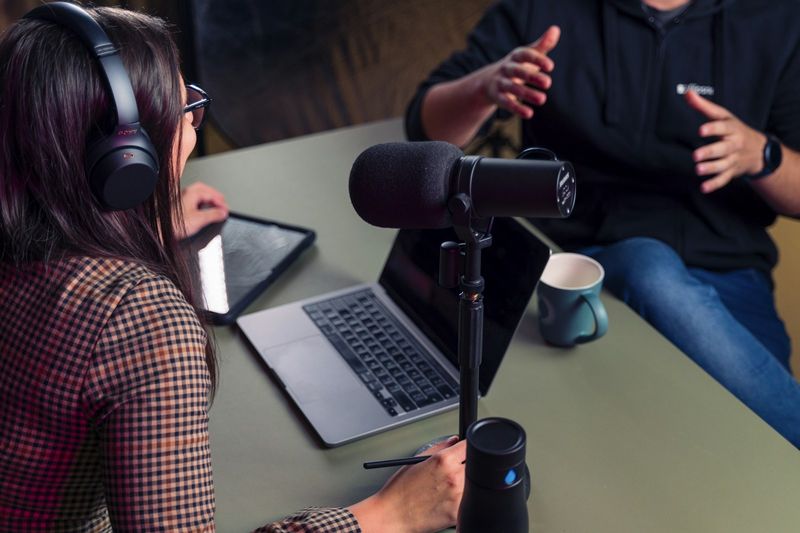
Scripted coursebook audio is clean, slow, and grammatically perfect — which is exactly why it doesn’t prepare students for real English. People interrupt, mumble, use filler words, and trail off. Feed learners a short clip of a real podcast, a movie scene, or a two-minute news segment. Keep it short and give heavy pre-listening support, but let them wrestle with speech that behaves like the real thing. FluentU’s classroom guides make the same case: authentic input builds resilience that scripted audio can’t.
4. Teach shadowing for connected speech
Shadowing means students listen to a short line and repeat it immediately, copying the speaker’s rhythm, stress, and linking. It bridges listening and speaking in one move, and it forces learners to notice the reductions they usually miss. Run it for two minutes with a single sentence played on loop. Because shadowing trains the ear and the mouth together, it pairs naturally with your work on teaching English pronunciation.
5. Build a post-listening speaking bridge
The audio should never be the finish line. After listening, students should do something with the content — role-play the next line of the conversation, argue with the speaker’s opinion, or retell the story to a partner from memory. This is also where you keep teacher talking time low: once the task is set, the room fills with student voices, not yours.

6. Narrow the task before you press play
“Listen and understand” is not a task — it’s an invitation to panic. Give one clear, achievable job per listen: count how many times the speaker says “actually,” note the three prices mentioned, or tick the emotions you hear. A narrow task gives anxious learners a foothold and a way to succeed even when 40 percent of the words fly past them. Success builds the confidence to listen again.
7. Expose students to many accents
A learner who only ever hears one teacher’s accent is unprepared for the real world of Indian call centres, Australian coworkers, and Scottish tourists. Rotate accents deliberately — American, British, Australian, and non-native speakers of English too, since most English conversations worldwide happen between non-native speakers. Variety early prevents the “I can only understand my teacher” trap that stalls learners at intermediate level.
8. Turn YouTube into a graded listening lab
YouTube is the biggest listening library on earth, and its built-in captions and playback-speed controls make it a teaching tool, not just content. Drop the speed to 0.75x for lower levels, use captions as scaffolding on the second viewing, and pick clips with strong visuals so images carry meaning the words don’t. The British Council walks through this exact approach in the video below.
Common Mistakes When Teaching Listening
The fastest way to improve listening lessons is to stop doing a few things. Reading the transcript aloud yourself instead of playing real audio robs students of the accent and speed practice they came for. Playing a five-minute clip in one unbroken block overloads working memory — chunk it into 30-second pieces. And correcting every wrong answer kills the willingness to guess, which is the exact skill you want to grow.
One more: don’t confuse background listening with active listening. Playing an English song while students color a worksheet is pleasant, but it isn’t training comprehension. That said, songs used with real tasks — gap-fills, ordering lyrics, discussing meaning — are a genuinely strong tool, which is why using songs to teach English earns its place when the task is deliberate.

How Do You Assess Listening Skills?
Assess listening the way it happens in life — through response, not recall. A gap-fill checks whether students caught specific words. A “listen and draw” task shows whether they followed instructions. A “listen and summarize in one sentence” reveals whether they grasped the main idea. Mix these formats rather than defaulting to multiple choice, which often tests reading speed more than listening.
For a running check, use the confidence hand signal: after a clip, students hold up one to five fingers for how much they understood. It takes three seconds, tells you whether to replay, and gives quiet learners a voice. Over a term, watching that average climb is a cleaner measure of progress than any single test score.

שאלות נפוצות
How many times should I play a listening track? Two to three times for most tasks — gist, detail, and an optional final play with the transcript for language noticing. Beyond three, attention collapses and it stops being listening practice.
What level should authentic audio start at? Any level, if the task is easy enough. Even beginners can handle a fast native clip when the job is simply “how many people are speaking?” Grade the task, not the audio.
Should students see the transcript? Not on the first two listens — it turns listening into reading. Save the transcript for the final play, where students match sound to spelling and catch the reductions they missed.
How do I help a student who understands nothing? Drop the task difficulty, not the audio. Give that learner a single yes/no question while stronger students answer five. Everyone hears the same clip, but each succeeds at their own level — which keeps the weakest student in the game instead of shutting down.
Start With One Change Tomorrow
You don’t need to overhaul every lesson. Pick one class this week, take whatever listening you already planned, and add a single pre-listening prediction task and a two-play gist-then-detail structure. That one shift does more for comprehension than a month of vocabulary lists. Listening is a skill you build, not a test you administer — and the students who learn to decode fast, messy English are the ones who go on to actually use the language. For the speaking side of that equation, see our guide to getting students to do the talking.
מקורות
- British Council — TeachingEnglish: Teaching Listening — the three-stage pre/while/post listening framework.
- FluentU — How to Teach Listening in the ESL Classroom — authentic audio and classroom activity ideas.
- Oxford TEFL — 8 Techniques to Teach Advanced Listening Skills — shadowing and top-down listening strategies.
Looking for free ESL worksheets? Browse our full collection — printable resources for every level and age group. Browse Free Worksheets →
Students can access free worksheets and reading materials at 18KEnglish.com.
Shop on Amazon
ESL Teaching Resources on Amazon →
As an Amazon Associate we earn from qualifying purchases.









 HE
HE  EN
EN  ZH
ZH  ZH_CN
ZH_CN  KO
KO  VI
VI  FR
FR  AR
AR  ES
ES  HI
HI  PT
PT  BN
BN  RU
RU  JA
JA  TR
TR  DE
DE  IT
IT  PL
PL  ID
ID  TH
TH  FA
FA  UK
UK  TL
TL  UR
UR  SW
SW  RO
RO  NL
NL  MS
MS  TA
TA  PS
PS  HU
HU  EL
EL  SV
SV  NB
NB  NN
NN  DA
DA  CS
CS  SR
SR  AM
AM