
Eliciting Techniques: 12 Ways to Get ESL Students Talking
Eliciting techniques are the difference between a teacher who talks for 45 minutes and a teacher whose students leave class actually able to use English. The skill is simple to describe and brutal to practice: instead of handing students a word, a rule, or an answer, you pull it out of them with prompts, pictures, questions, and well-timed silence. New ESL teachers waste enormous amounts of class time on explanations that students forget by Friday. Trained teachers spend the same minutes setting up moments where the students do the cognitive lifting — and the language actually sticks.
This guide walks through twelve eliciting techniques that work in real classrooms, when to use each one, and how to adjust them by CEFR level. There is also a short, honest section on when eliciting fails and you should just tell the class the answer.
What Eliciting Actually Means in TEFL
The British Council defines elicitation as the technique by which the teacher gets the learners to give information rather than giving it to them. That sounds obvious until you watch a beginner teacher introduce the word nervous by writing the definition on the board, translating it, and moving on. Twenty minutes later, no student can produce the word in a sentence. The teacher did the thinking. The students did nothing.

Eliciting flips the workload. The teacher acts like a quiz host who knows the answer but refuses to say it. Pictures, gestures, half-sentences, and questions push students to produce the target language themselves. When they do — even messily — the word or rule is anchored to a moment of effort, and the memory holds.
Why Eliciting Beats Telling (Most of the Time)
The truth is, most overworked ESL teachers default to telling because telling is faster. It also produces worse results almost every time. Active production beats passive listening for retention; this is one of the better-replicated findings in second language acquisition research, and it shows up in everything from Krashen’s input-output hypothesis to current task-based learning literature.
There is also a classroom-level reason. Teacher Talk Time (TTT) is one of the easiest things to measure in an observation, and the cheapest way to lower it is to elicit. A teacher who elicits well moves from 70% TTT to under 40% without losing a minute of content. Students talk more. Students retain more. Energy in the room rises. It is almost too good a trade to refuse.

That said, eliciting is not magic. A teacher who tries to elicit everything wastes time and frustrates students who genuinely do not know the answer. Picking the right moments — and knowing when to stop — is what separates competent eliciting from a slow, painful guessing game.
12 Eliciting Techniques That Get ESL Students Producing Language
The techniques below cover vocabulary, grammar, meaning, and pronunciation. Most teachers use four or five reliably and ignore the rest. Aim to add one new technique to your toolkit each month rather than rotating through all twelve in a single lesson.

1. Set a Vivid Context First
Context does half the work. Before you elicit delayed, paint the scene: “Your flight is at 9. It is 8:55. The plane is still on the ground. You see this on the screen…” Then point. Most intermediate students will offer late first, then delayed as you nudge. Context-poor eliciting (cold board work with no setup) almost always fails.
2. Use Visuals, Realia, and Mime
A picture of a thermometer at 39°C will pull fever from any pre-intermediate class. A real apple in your hand teaches bruised faster than a definition. Mime works for verbs: yawn, stretch, sneeze, limp, juggle. These are not props for young learners only. Adult business English classes respond just as well, and they remember the word because they laughed.
3. Show a Gap-Fill on the Board
Write: “She ___ to the gym every morning.” Then point at the verb slot. The blank itself is the prompt. Gap-fills are how trained CELTA teachers elicit target grammar without giving the rule. The student offers the form; you confirm it; you ask क्यों.
4. Give the Definition, Get the Word
“A piece of furniture you sleep on at night. What is it?” This is the simplest eliciting move, and it works at every level. The trick is making the definition tight. Vague definitions (“something you use”) elicit twelve guesses and no winner. A good definition narrows the answer to two or three possibilities.
5. Use Synonyms or Antonyms
“Big — but stronger?” pulls विशाल या enormous. “The opposite of generous?” pulls stingy या mean. This technique builds lexical sets faster than any vocabulary list. It also exposes gaps you can fill before the practice activity instead of during it.

6. Drop a Phonemic Clue
Tap the first sound: “Starts with /θ/…” or hum the rhythm of the word. This rescues a stuck class without spoiling the answer. Pair it with mouth-shape modeling and you have done a mini pronunciation lesson at the same time. (See our deeper guide to ESL pronunciation activities for the phoneme work that backs this up.)
7. Ask Concept Check Questions (CCQs)
CCQs check meaning by forcing yes/no decisions. For used to smoke: “Does she smoke now? Did she smoke before? For one day or many years?” Students hear the form, but they must commit to the meaning. CCQs are the single most underused eliciting tool in ESL classrooms. Our concept checking questions guide has 35 worked examples if this is new to you.
8. Use Half-Sentence Prompts
“On Mondays, I usually…” Students complete the sentence. You get the target adverb of frequency without explaining it. This works especially well as a warmer — you elicit five lexical chunks in three minutes while students think they are just chatting.
9. Personal Experience Hooks
“Tell me about a time you were scared.” This elicits past simple, narrative tense shifts, and emotion vocabulary in one prompt. Personal hooks generate more language than any textbook prompt because students actually have something to say. The trick is to limit your follow-up questions so the student carries the talk.
10. Word Webs and Categories
Write मौसम in the middle of the board, draw spokes, and step back. The class fills the web. You then group items: temperature, precipitation, wind. This elicits both vocabulary and a small piece of lexical organization. It is also one of the few eliciting techniques that scales gracefully from A1 to C1.
11. Yes/No Chains
For weaker classes, narrow the answer with a chain: “Is it an animal? A mammal? Does it live in water?” Students offer the word once the field is small enough. This is slower than other techniques but rescues classes that freeze at open prompts.
12. Make Their Error the Question
A student says “She go to school.” Instead of correcting, echo with rising intonation: “She go?” The class self-corrects. You have just elicited the third-person s from peer pressure, not from your authority. This is closer to an error-correction move, but it works as elicitation because the correct form comes from the students.
Eliciting Vocabulary vs Eliciting Grammar
The two are not interchangeable. Vocabulary eliciting is usually visual or definition-based: a picture, a synonym, a context sentence. Grammar eliciting is structural: a gap-fill, a timeline on the board, a CCQ that pins down meaning. The mistake new teachers make is using a vocabulary technique to elicit grammar — for example, miming the present perfect. It cannot be done. You can mime finish, but the tense itself needs a timeline, a context sentence, and a CCQ.
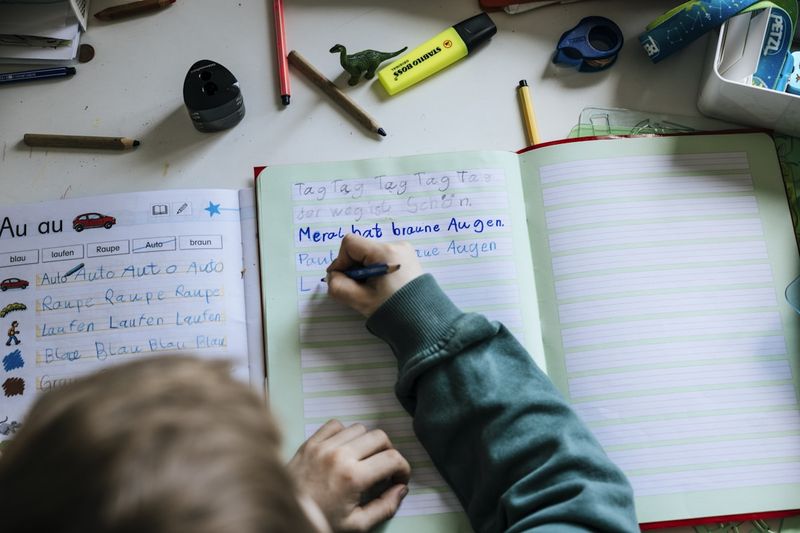
A useful test: if the language is concrete (nouns, action verbs, adjectives describing observable qualities), reach for a picture or mime first. If the language is abstract or structural (modals, conditionals, perfect tenses, articles), build a context sentence and a CCQ before you write anything on the board.
How to Adjust Eliciting by CEFR Level

At A1 and A2, lean heavily on visuals, mime, and yes/no chains. Definitions in English are usually too hard, and abstract synonyms backfire. Keep prompts short and accept one-word answers without forcing full sentences during the elicit stage. The production happens later in the lesson.
At B1 and B2, definitions, synonyms, antonyms, and gap-fills carry most of the load. This is the sweet spot for CCQs because students can handle yes/no logic in English. Personal experience hooks open up here as well — students finally have enough language to tell a real story.
At C1 and C2, eliciting shifts toward nuance: connotation, register, collocation. “What’s the difference between scared और terrified? Between thin और skinny? When would you use each?” Word webs become collocation webs. Half-sentences become discourse markers (“It’s not that I disagree, but…”). Our CEFR level guide goes deeper on the language-by-level mapping that drives these choices.
When Eliciting Fails — and What to Do
Eliciting fails when students genuinely do not have the language. Past a certain wait time, persistence becomes punishment. The rule of thumb a CELTA tutor once gave me: count silently to seven, then tell. Seven seconds is longer than it sounds in a classroom, and it is usually enough for someone to offer something. If the room stays silent at seven, the gap is real, and you should just supply the answer, drill it, and move on.

The second failure mode is eliciting in front of the whole class when only one student is engaging. You end up with a private conversation while twenty other students disengage. Switch to pair work, give the pairs the same prompt, then sample answers. You will get more language from more students in the same minute.
The Eliciting → CCQ → Drill Loop
Trained ESL teachers run a tight three-step sequence after every elicit. Elicit the target language. Concept-check the meaning with a CCQ. Drill the form for pronunciation and rhythm. The loop takes 90 seconds and produces students who can both use the language and say it cleanly.
Skipping any one step has predictable failures. Skip the CCQ and students walk away with the wrong meaning. Skip the drill and they cannot say the word fluently when the freer-practice activity starts. Skip the elicit and you are back to the textbook teacher whose class never speaks. The loop is not a TEFL slogan; it is the engine of any well-paced language lesson, and it is built around eliciting more than any other move. Communicative language teaching assumes this loop runs smoothly. When CLT classrooms fall flat, eliciting is usually the broken link.
See Eliciting in Action
This short walkthrough from Chris at The Language House shows eliciting techniques applied to a vocabulary presentation. It pairs well with the gap-fill and definition-first moves in the list above.
Common Mistakes Teachers Make While Eliciting

The most common mistake is open-ended prompts that have too many possible answers. “What do you think about traffic?” produces silence. “Is your morning commute relaxing or stressful? Why?” produces real language. Tighter prompts elicit better.
The second mistake is accepting the first answer without pushing further. A student says angry. You move on. You missed the chance to elicit furious, annoyed, frustrated — and now your lexical set has one item instead of four. Push for two or three more before confirming.
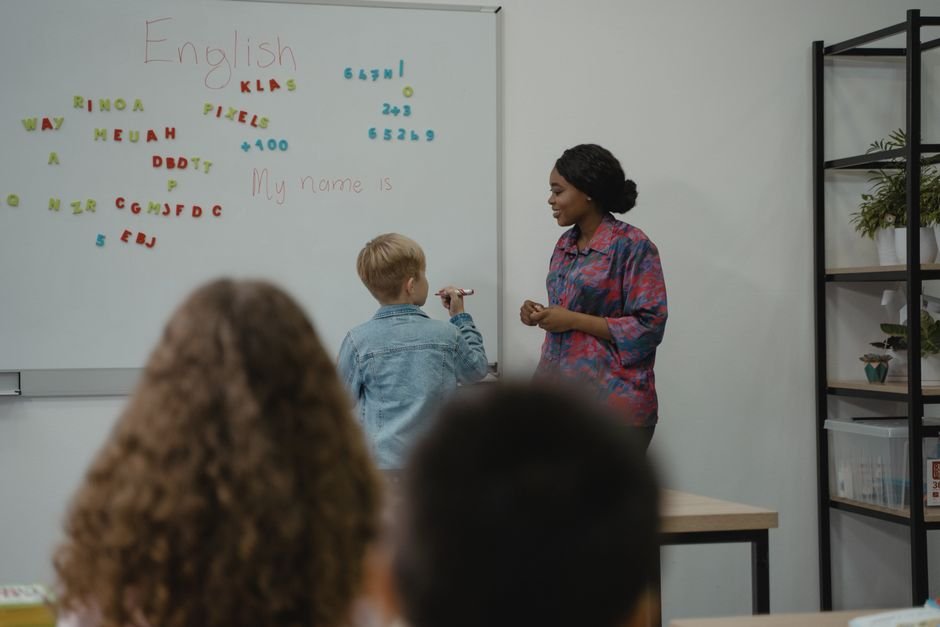
The third mistake is eliciting from the same three confident students every time. The quiet students learn that they can stay silent. Use cold-call, pair work, or written elicits on mini-whiteboards to spread the production. The goal is class-wide thinking, not a duet between you and the keenest student.
The fourth mistake is treating eliciting as a separate phase. The best ESL teachers elicit constantly — during presentation, during practice, during feedback. It is not a stage of the lesson; it is a habit. Start small. Pick one technique from the list above, use it five times tomorrow, and notice what happens to your students’ talk time by Friday.
सूत्रों का कहना है
- Elicitation — TeachingEnglish | British Council — Core definition and pedagogical rationale for elicitation.
- Eliciting Techniques: How to Use in the ESL Classroom — TPR Teaching — Practical classroom techniques with worked examples.
- Effective Elicitation Techniques in ESL Teaching — Sanako — Visual prompts and context-setting strategies.
- 15 Ways of Eliciting Vocabulary — TEFL.net — Vocabulary-specific eliciting moves.
- Concept Questions: Elicitation Techniques for Teaching Grammar — OnTESOL — CCQ design for grammar.
Looking for free ESL worksheets? Browse our full collection — printable resources for every level and age group. Browse Free Worksheets →
Students can access free worksheets and reading materials at 18KEnglish.com.







 HI
HI  EN
EN  ZH
ZH  ZH_CN
ZH_CN  KO
KO  VI
VI  FR
FR  AR
AR  ES
ES  PT
PT  BN
BN  RU
RU  JA
JA  TR
TR  DE
DE  IT
IT  PL
PL  ID
ID  TH
TH  FA
FA  UK
UK  TL
TL  HE
HE  UR
UR  SW
SW  RO
RO  NL
NL  MS
MS  TA
TA  PS
PS  HU
HU  EL
EL  SV
SV  NB
NB  NN
NN  DA
DA  CS
CS  SR
SR  AM
AM