

12 Proven Classroom Management Strategies for 2026
A teacher loses an average of 144 instructional minutes per week to disruptions and transitions, according to classroom-observation research compiled by the U.S. Department of Education. That is nearly two and a half hours of teaching gone every week, or close to four full weeks of school every year. The teachers who claw that time back rarely do it by getting louder or stricter. They do it with a handful of habits set up before the first bell rings. These are the classroom management strategies that survive contact with a real room full of real kids.
What Are Classroom Management Strategies?
Classroom management strategies are the routines, expectations, and responses a teacher uses to keep students focused, safe, and learning. They cover everything from how you start a lesson to how you handle a student who refuses to work. Good classroom management is not about control for its own sake; it is about creating enough structure that learning can actually happen.
The mistake new teachers make is treating management as discipline, something you reach for after a student acts out. Effective classroom management is the opposite. It is mostly invisible, built into the design of your room and your day so that misbehavior has fewer openings to begin with. The reactive part still matters, but it should account for a small slice of what you do.

The 4 Classroom Management Styles
Researchers usually sort teachers into four styles based on two questions: how much control they exert, and how much warmth they show. The authoritative style — high control paired with high warmth — consistently produces the best outcomes. These teachers set firm boundaries but explain them, and students trust that the rules exist for a reason.
The authoritarian style (high control, low warmth) gets short-term compliance but breeds resentment and falls apart the moment the teacher leaves the room. The permissive style (low control, high warmth) makes for a friendly room that rarely gets much done. The indulgent or neglectful style (low control, low warmth) is where behavior management collapses entirely. If you only change one thing this year, aim for authoritative: be the teacher who is both kind and impossible to push around.
12 Classroom Management Strategies That Actually Work
These are ordered roughly the way you would build them — relationships and routines first, in-the-moment techniques second. None of them require a budget, a new curriculum, or permission from anyone.
1. Build relationships before you build rules
Students work harder for teachers who clearly know and like them. Learn names in the first week, find out one real thing about each kid, and greet them at the door. Robert Marzano’s meta-analysis found that teachers with high-quality student relationships had 31% fewer discipline problems over a year than those without. The relationship is the strategy; everything else sits on top of it.
2. Teach routines, do not just announce them
A routine is only real once students can do it without you narrating. Pick the moments that eat your time — entering, handing in work, moving into groups — and practice each one until it is automatic. Spending twenty minutes in week one teaching how to transition saves you those 144 lost minutes every week after.
3. Set three to five visible expectations
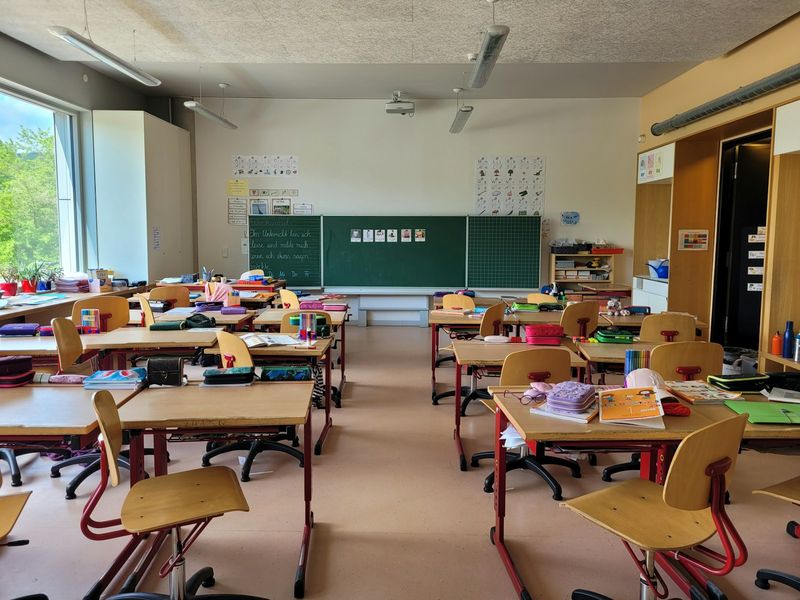
Long rule lists are noise. Boil your room down to three to five positively-framed expectations — “We listen when someone is speaking” beats “Don’t talk over people” — and post them where everyone can see. Better still, write them with your students. Responsive Classroom found that involving students in creating the rules dramatically increases how well they follow them, because the rules become theirs instead of yours.
4. Use proximity instead of volume
The single most underused classroom management technique is your own two feet. When two students start drifting off task, walk toward them while you keep teaching. You almost never have to say anything. Standing beside a distracted student resets their attention without stopping the lesson or putting anyone on the spot.
5. Catch them being good
Positive reinforcement is more powerful than punishment, and it is free. When you narrate the behavior you want — “Table three is already started, thank you” — the rest of the room recalibrates fast. Aim for a ratio of about five positive interactions to every corrective one. It feels excessive at first and it works almost immediately.

6. Give precise instructions, then check them
Half of off-task behavior is just confusion. Give one instruction at a time, in the order students will do it, and then check understanding before you release them — “Aisha, what is the first thing you’ll do?” Vague directions like “get to work” guarantee a cluster of raised hands and a slow start.
7. Plan the transitions, not just the lessons
Disruption lives in the cracks: the thirty seconds between activities, the shuffle from carpet to desks. Plan those moments as deliberately as you plan content. A timer, a countdown, or a transition song turns dead air into structure. This is doubly true in ESL rooms, where a quiet beginner can disappear mentally during a long, unstructured changeover.
8. Use nonverbal signals to reclaim attention
Train one quiet attention-getter and use it every single time. A raised hand the class mirrors, a specific chime, two claps — the channel matters less than the consistency. Nonverbal signals pull the room back without you having to talk over thirty voices, which only teaches students that the noise floor is acceptable.
9. Increase your wait time
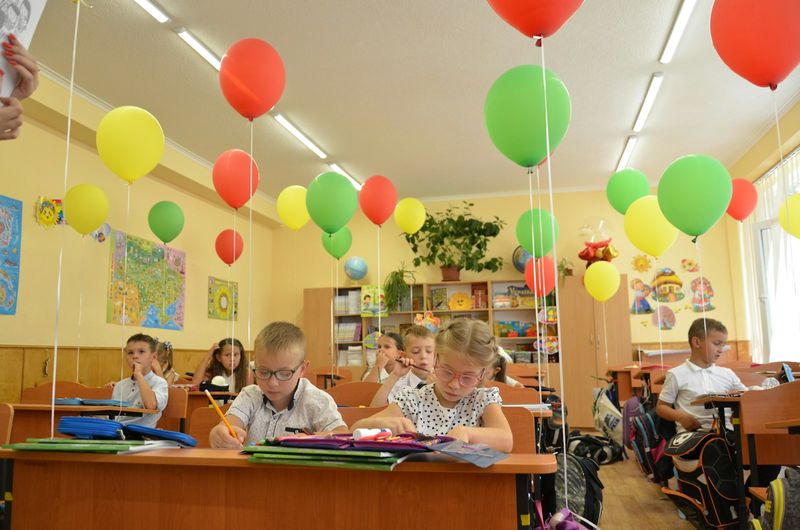
After you ask a question, most teachers wait less than one second before jumping in. Mary Budd Rowe’s classic research showed that stretching that pause to three seconds increases the length and quality of student answers and pulls in students who normally stay silent. Silence feels uncomfortable from the front of the room. To students, it feels like permission to think.
10. Correct quietly, praise publicly
Public call-outs almost always escalate, because now the student has an audience to perform for. Walk over, lower your voice, and address the behavior privately. Save the volume for recognition. A student corrected quietly keeps their dignity, and a student praised in front of peers gets a reason to repeat the behavior.
11. Build in movement and brain breaks
A lot of “behavior” is just bodies that have been still too long. Plan a sixty-second movement break every fifteen to twenty minutes for younger students, longer stretches for teens. A quick stand-and-stretch or a partner task resets focus far better than demanding stillness that no developing brain can sustain.

12. Reflect and adjust every week
Spend five minutes each Friday asking which moments went sideways and what came right before. Patterns surface fast — the same transition, the same time of day, the same pairing. Treating classroom management as something you tune weekly, not something you either have or do not, is what separates teachers who improve from teachers who burn out.
Classroom Management for New Teachers
Classroom management for new teachers is mostly about front-loading. The version of you that students meet in September sets the ceiling for the whole year, so be warmer than feels natural and firmer than feels comfortable from day one. You can always loosen up; you can almost never tighten up after the room has decided you are a pushover.
Pick two or three of the strategies above and do them relentlessly rather than attempting all twelve at once. Most first-year teachers try to manage with personality alone and crash by October. Lean on systems instead. A predictable routine carries you on the days your energy is gone, and those days will come. For more on building durable habits, our guide to reflective teaching pairs naturally with weekly management tune-ups.

How to Build a Classroom Management Plan
A classroom management plan is a one-page document that spells out your expectations, your routines, and your response to misbehavior before the year starts. Writing it down forces you to decide in advance how you will react, so you are not improvising consequences while your pulse is up. Calm decisions made on a Sunday beat angry ones made at 10 a.m. on a Tuesday.
A workable plan answers four questions: What are my three to five expectations? What routines will I teach and practice? What happens, step by step, when a student crosses a line? And how will I involve families early, before there is a problem to report? Keep the consequence ladder short and predictable — a quiet reminder, a brief one-on-one, a logical consequence, then a family contact. Tie the plan to your lesson design, too; a well-paced lesson with clear scaffolds prevents more misbehavior than any consequence ladder ever will, which is why solid lesson planning और मचान are management tools in their own right.
Common Classroom Management Mistakes to Avoid
The most common mistake is being inconsistent. A rule enforced on Monday and ignored on Thursday is worse than no rule, because it teaches students that your boundaries are negotiable and worth testing. Pick fewer rules and hold every one of them.
The second mistake is taking misbehavior personally. A disruptive student is almost always telling you something — the work is too hard, too easy, or they are lost — and reading it as a personal attack pushes you toward punishment instead of diagnosis. The third is over-relying on punishment. Behavior management built on consequences alone gets compliance at best and an adversarial room at worst. Lead with relationships and reinforcement, and keep consequences as the small, calm backstop they were meant to be.
The 2026 Shift: Restorative Over Punitive
The clearest trend in classroom management right now is the move away from zero-tolerance discipline toward restorative practices — approaches that repair harm and rebuild relationships instead of simply removing the offender. A student who damages the classroom community helps make it right; a conflict becomes a structured conversation rather than a suspension slip. The truth is, most rooms that lean hard on punishment are not actually safer. They are just quieter while the teacher is watching.
Restorative does not mean soft. It means the consequence has a purpose beyond making the adult feel in charge. Pair it with the proactive habits above and you get a room that mostly manages itself, which is the entire point. Spend your energy on the front end — relationships, routines, clear expectations — and you will spend far less of it on the back end putting out fires.

Start with the first three strategies this week — relationships, routines, and three visible expectations — and add one more each week until they are habit. The teachers with the calmest rooms are not the strictest or the most charismatic; they are the most consistent. If you want to go deeper on the planning side that prevents misbehavior in the first place, read our differentiated instruction guide next, then pick one strategy from this list and try it tomorrow.
सूत्रों का कहना है
- Marzano, R. & Marzano, J. — “The Key to Classroom Management,” ASCD Educational Leadership — meta-analysis showing strong teacher-student relationships cut discipline problems by ~31%.
- Edutopia — The Educator’s Guide to Excellent Classroom Management — research-based strategies for routines, relationships, and proactive management.
- Responsive Classroom — evidence-based approach to involving students in rule-creation and building community.
- Rowe, M.B. — Wait Time research — extending teacher wait time to three seconds improves the quality and reach of student responses.
Looking for free ESL worksheets? Browse our full collection — printable resources for every level and age group. Browse Free Worksheets →
Students can access free worksheets and reading materials at 18KEnglish.com.






 HI
HI  EN
EN  ZH
ZH  ZH_CN
ZH_CN  KO
KO  VI
VI  FR
FR  AR
AR  ES
ES  PT
PT  BN
BN  RU
RU  JA
JA  TR
TR  DE
DE  IT
IT  PL
PL  ID
ID  TH
TH  FA
FA  UK
UK  TL
TL  HE
HE  UR
UR  SW
SW  RO
RO  NL
NL  MS
MS  TA
TA  PS
PS  HU
HU  EL
EL  SV
SV  NB
NB  NN
NN  DA
DA  CS
CS  SR
SR  AM
AM