

ESL Student Engagement Strategies: Building Community and Motivation in Language Classrooms
# ESL Student Engagement Strategies: Building Community and Motivation in Language Classrooms
Keeping ESL students engaged is one of the most rewarding — yet challenging — aspects of language teaching. Unlike mainstream classrooms, ESL environments require teachers to simultaneously build language skills, cultural bridges, and learning communities. Students arrive with diverse backgrounds, varying proficiency levels, and often significant anxiety about using English in front of others.
But when you get it right? The energy is electric. Students lean forward instead of checking out. They volunteer answers. They help each other. They start using English outside class because they actually *want* to — not because they have to. That transformation doesn’t happen by accident. It requires intentional strategies that make students feel valued, connected, and motivated to participate.
Research from the **TESOL International Association** consistently shows that engaged ESL students achieve language proficiency gains 40% faster than their disengaged peers. More importantly, they develop the confidence needed to use English in real-world situations beyond the classroom walls.
This guide shares proven strategies for creating the kind of ESL classroom environment where every student feels empowered to take risks, make mistakes, and grow as English speakers.
## Why Student Engagement Matters More in ESL Classrooms
Language learning is inherently vulnerable. Students must practice imperfect English in front of others, make grammatical mistakes, and navigate cultural differences while processing new information. Without strong engagement strategies, many ESL students retreat into passive silence — physically present but emotionally checked out.
The stakes are higher in ESL classes because disengagement affects more than just test scores. Students who feel disconnected often:
– Avoid speaking practice, limiting oral language development
– Miss cultural learning opportunities embedded in classroom interactions
– Develop negative associations with English that persist outside class
– Fall behind academically in content areas where English is the medium of instruction
**Engaged ESL students, however, create positive feedback loops.** They participate more, receive more input and feedback, which improves their English faster, boosting confidence and encouraging even more participation. Breaking into this cycle early in the semester sets students up for sustained success.
The **American Council on the Teaching of Foreign Languages (ACTFL)** emphasizes that engagement is particularly crucial during the “intermediate plateau” phase, when students have basic communication skills but feel stuck. Strategic engagement techniques help learners push through this common stagnation point.
## Building a Supportive Learning Community from Day One
The first week of class determines much of what follows. Students form impressions about safety, expectations, and their potential for success that are difficult to change later. Smart ESL teachers use this critical window to establish community norms that support engagement throughout the semester.
**Start with humanizing activities.** Students need to see each other as real people with stories, dreams, and challenges — not just “the student from Korea” or “the quiet one in the back.” Try structured sharing activities like:
– **Cultural artifact exchanges** — Students bring objects representing their culture and explain their significance
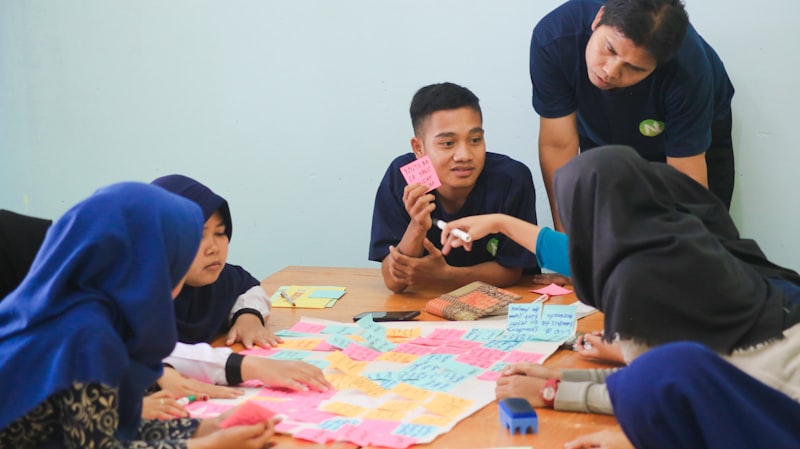
– **Learning goal posters** — Small groups create visual displays showing why they’re learning English and what they hope to achieve
– **Community mapping** — Students mark their home countries on a world map and share one interesting fact about their region
**Establish classroom norms collaboratively.** Instead of posting rules, engage students in creating community agreements. Ask questions like:
“What do you need from me to feel comfortable speaking English in class?”
“How can we help each other when someone makes a mistake?”
“What should we do when we don’t understand something?”
When students contribute to norm-setting, they’re more invested in upholding those expectations. Post their agreements prominently and reference them when challenges arise.
**Create predictable routines that reduce anxiety.** ESL students often feel overwhelmed by linguistic and cultural demands. Consistent class structures — always starting with a warm-up activity, using the same hand signal for partner work, ending with reflection time — provide emotional scaffolding that allows students to focus on language learning rather than figuring out what’s expected.
## Creating Culturally Responsive Learning Environments
Engagement plummets when students feel their cultures and experiences are invisible or devalued. **Culturally responsive pedagogy** isn’t about superficial multicultural decorations — it’s about genuinely integrating students’ backgrounds into meaningful learning opportunities.

**Leverage students’ funds of knowledge.** Every student brings expertise from their lived experiences. Design projects that tap into this knowledge:
– **Community research projects** — Students interview family members about immigration experiences, then share findings through presentations or digital storytelling
– **Cross-cultural comparisons** — Instead of teaching “American customs,” explore how different cultures handle similar situations (greetings, celebrations, family structures)
– **Heritage language as a resource** — When appropriate, encourage students to make connections between their first language and English, highlighting linguistic transfers rather than treating L1 as interference
**Address code-switching openly and positively.** Many ESL students feel shame about their accents or mixing languages. Reframe these as linguistic assets. Explain that successful multilinguals regularly code-switch based on context and audience — it’s a sophisticated language skill, not a deficit.
**Incorporate global perspectives into content.** Whether you’re teaching academic writing or conversation skills, include voices and examples from students’ home countries. This sends a clear message that their perspectives matter and English is a tool for sharing their knowledge with the world, not replacing their cultural identity.
## Interactive Activities That Boost Student Participation
Passive learning kills engagement faster than anything else. ESL students need multiple opportunities per class period to produce language, interact with peers, and experience success. The key is structuring activities so participation feels safe and achievable.

**Use think-pair-share religiously.** This simple structure gives every student processing time, practice opportunities, and social support before facing the larger group. It works across all proficiency levels and content areas. The “think” phase reduces anxiety, “pair” provides low-stakes practice, and “share” offers voluntary participation opportunities.
**Design information gap activities.** These tasks require students to exchange information to complete a goal — Student A has half a schedule, Student B has the other half, and they must communicate to fill in missing pieces. Information gaps create authentic reasons to speak and listen while practicing specific language structures.
**Incorporate movement regularly.** Standing, walking, and changing seats during activities increases blood flow to the brain and keeps energy levels high. Try:
– **Gallery walks** — Students post work around the room and circulate to read and comment on each other’s ideas
– **Four corners** — Post different opinion statements in room corners; students move to the corner representing their view and discuss their reasoning
– **Speed networking** — Students rotate partners every few minutes to practice the same conversation structure with multiple classmates
**Use collaborative learning structures.** Random grouping prevents cliques while ensuring students interact with classmates they might not choose independently. Assign specific roles within groups (timekeeper, recorder, presenter, questioner) so everyone has a defined contribution.
## Using Technology to Enhance ESL Student Engagement
When integrated thoughtfully, technology can dramatically increase ESL student engagement by providing multimodal learning experiences, immediate feedback, and opportunities for creative expression. The key word is *thoughtfully* — technology should amplify good pedagogy, not replace human interaction.

**Leverage mobile devices students already own.** Apps like **Padlet** create digital bulletin boards where students can post ideas, images, or questions anonymously, reducing anxiety about public participation. **Flipgrid** allows students to record video responses to prompts, letting them practice speaking at their own pace before sharing with the class.
**Use online collaboration tools for group projects.** **Google Docs** or **Microsoft Teams** enable real-time collaboration on writing projects, allowing teachers to observe the writing process and provide feedback during drafting rather than only on final products. Students can work together outside class time, extending learning beyond the physical classroom.
**Integrate multimedia content creation.** Students can create **digital storytelling projects**, recording personal narratives with images, music, and voice-overs. **Canva** makes it easy to design professional-looking infographics or presentation slides. **TikTok-style videos** (when appropriate for your context) let students practice English in formats they find naturally engaging.
**Provide immediate feedback through digital tools.** **Kahoot** or **Mentimeter** create game-like quiz experiences where students see results instantly. **Voice recording apps** let students practice pronunciation privately before sharing with the teacher or class. These tools reduce the fear of public mistakes while maintaining high engagement levels.
**Balance screen time with face-to-face interaction.** Technology should enhance human connection, not replace it. Design activities where students use devices to gather or create content, then discuss their findings with classmates. The most engaging classrooms blend digital and analog experiences seamlessly.
## Peer Collaboration and Group Work Strategies
Peer interaction is one of the most powerful engagement tools available to ESL teachers. Students often feel more comfortable practicing English with classmates than with the teacher, and peer feedback can be more meaningful because it comes from fellow learners facing similar challenges.
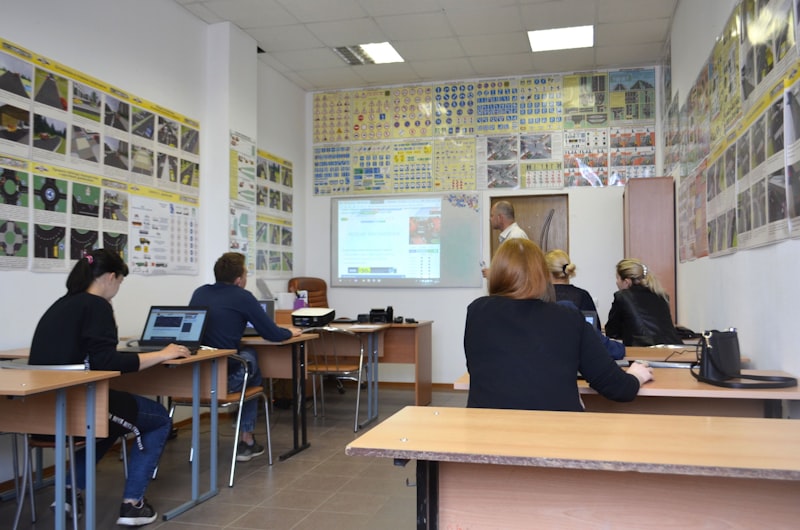
**Structure interactions carefully.** Random grouping works well, but consider language proficiency levels, personality types, and cultural compatibility. Mixed-proficiency pairs can work if tasks are designed for both students to contribute meaningfully — the stronger student might read complex instructions aloud while the developing student contributes content knowledge or creative ideas.
**Teach collaboration skills explicitly.** Don’t assume students know how to work effectively in groups. Model language for:
– Asking for clarification: “Could you repeat that?” “What do you mean by…?”
– Agreeing and disagreeing politely: “That’s a good point, and I also think…” “I see your point, but what about…?”
– Including quieter partners: “What do you think, Maria?” “We haven’t heard your idea yet.”
**Design tasks with positive interdependence.** Each group member should have information or skills the others need to complete the activity successfully. **Jigsaw activities** work well — each student researches one aspect of a topic, then teaches their findings to the group. No one can succeed without everyone else’s contribution.
**Build in individual accountability.** Group work fails when one student does all the work or others hide in the crowd. Include individual components within group projects — each student might complete a reflection, contribute specific content, or present one section of the group’s findings.
**Use peer feedback strategically.** Train students to give specific, constructive feedback using sentence frames like “One thing you did well was…” and “One suggestion for improvement is…” Peer editing worksheets provide structure for reviewing classmates’ writing. Students often accept constructive criticism more easily from peers than from teachers.
## Making Learning Relevant to Students’ Lives and Goals
Engagement soars when students see clear connections between classroom activities and their personal goals, professional aspirations, or daily challenges. **Relevance** isn’t just a nice-to-have — it’s the bridge between abstract language instruction and meaningful communication.
**Survey student goals at the beginning of the course.** Create a simple questionnaire asking why students are learning English, what they hope to achieve, and where they plan to use their language skills. Use this information to shape examples, scenarios, and projects throughout the semester.
**Design authentic task-based projects.** Instead of practicing job interview language through artificial dialogues, have students research companies they’re genuinely interested in working for, prepare actual interview questions, and conduct mock interviews for positions they might realistically seek.
**Connect to current events and popular culture.** Use news articles, social media posts, song lyrics, or movie clips that students actually engage with outside class. These materials make English feel relevant and current rather than academic and distant.
**Incorporate problem-based learning.** Present real-world challenges students might face — navigating healthcare systems, understanding apartment leases, communicating with children’s teachers — and have students work collaboratively to develop solutions. This approach builds both language skills and life skills simultaneously.
**Allow choice in topics and formats.** When students can choose research topics that interest them or presentation formats that match their strengths, engagement increases dramatically. Offer options like written reports, oral presentations, video projects, or infographic creations to accommodate different learning preferences and comfort levels.
## Assessment Strategies That Motivate Rather Than Intimidate
Traditional testing often kills engagement in ESL classrooms. High-stakes assessments create anxiety, discourage risk-taking, and focus attention on grades rather than learning. Alternative assessment approaches can actually increase engagement by providing meaningful feedback and celebrating growth.

**Use portfolio-based assessment.** Students collect their work over time and reflect on their progress, choosing pieces that demonstrate their learning journey. Portfolios make growth visible and allow students to see concrete evidence of improvement, which is highly motivating.
**Implement self-assessment and goal-setting.** Regular self-reflection develops metacognitive awareness and helps students take ownership of their learning. Provide structured forms asking questions like:
– “What English skills have you improved this month?”
– “What would you like to work on next?”
– “How will you practice English outside of class?”
**Design performance-based assessments.** Instead of traditional tests, create tasks that mirror real-world language use — giving directions to a lost tourist, explaining a cultural tradition to American colleagues, or writing an email to a professor. Students engage more deeply when assessments feel meaningful rather than artificial.
**Provide frequent, low-stakes feedback.** Brief, specific comments on student work (“I notice you’re using complex sentences more naturally” or “Try varying your transition words”) are more motivating than letter grades. Focus feedback on effort and growth rather than just accuracy.
**Celebrate progress publicly.** Create classroom displays showcasing student achievements — not just perfect work, but evidence of risk-taking, improvement, and creative thinking. “Student Spotlight” bulletin boards, “Growth Gallery” displays, or weekly “Courage Award” recognition help build a culture where progress is valued and visible.
## Addressing Common Engagement Challenges in ESL Classes
Even with strong strategies in place, certain engagement challenges appear regularly in ESL classrooms. Recognizing these patterns and having intervention strategies ready helps teachers respond quickly before disengagement becomes entrenched.
**Silent students who won’t participate.** Silence doesn’t always indicate disengagement — it might reflect cultural norms, language anxiety, or processing time needs. Strategies that help:
– Provide written response options alongside oral ones
– Use anonymous polling tools like **Mentimeter** for sharing opinions
– Create “think time” before calling on students
– Allow students to discuss with partners before whole-group sharing
– Check in privately with quiet students to understand their needs
**Students who dominate discussions.** Overeager participants can inadvertently silence others and create unbalanced classroom dynamics. Management techniques include:
– Using structured turn-taking systems (talking stick, numbered cards)
– Setting speaking time limits for individuals
– Assigning specific roles that rotate regularly
– Creating multiple small groups instead of whole-class discussions
– Having private conversations with dominant speakers about including others
**Mixed proficiency levels in the same class.** When students have vastly different English abilities, designing engaging activities for everyone becomes challenging. Differentiation strategies include:
– Tiered assignments with different complexity levels for the same topic
– Flexible grouping based on current ability and task requirements
– Choice boards offering multiple ways to demonstrate learning
– Peer tutoring systems pairing stronger with developing students
– Individual goal-setting based on each student’s starting point
**Technology resistance or access issues.** Not all students are comfortable with digital tools, and internet access remains uneven. Backup plans should include:
– Paper-based versions of digital activities
– Partner systems where tech-savvy students help others
– Basic technology training woven into content instruction
– Alternative assessment options for students without reliable internet
– Emphasis on interpersonal communication alongside digital literacy
## Sustaining Long-Term Student Motivation Throughout the Year
Initial engagement is easier to generate than sustained motivation over an entire semester or academic year. Students face inevitable plateaus, personal challenges, and competing priorities that can derail even the most enthusiastic learners. Smart teachers anticipate these dips and have strategies to reignite motivation.

**Plan variety systematically.** Map out your semester to ensure regular changes in activity types, grouping patterns, and assessment formats. When students can predict exactly what will happen each day, engagement naturally declines. Build in surprise elements — guest speakers, field trips, special projects, or themed weeks that break routine.
**Create milestone celebrations.** Break large goals into smaller, achievable targets and acknowledge progress along the way. End-of-unit parties, progress certificates, or skill demonstration events help students recognize their growth and maintain momentum toward longer-term objectives.
**Connect students with the broader English-speaking community.** Arrange video calls with native speakers, organize field trips to local museums or businesses, or invite community members to speak about their careers. These experiences help students see English as a bridge to real opportunities rather than just an academic requirement.
**Maintain individual relationships.** Get to know students as people — their families, hobbies, challenges, and dreams. Brief personal check-ins before class starts, written response to journal entries, or casual conversations during group work time strengthen the human connections that keep students engaged when content becomes challenging.
**End strong with reflection and goal-setting.** The last few weeks of class are crucial for sustaining motivation beyond your classroom. Help students articulate what they’ve learned, set goals for continued growth, and identify resources for ongoing English development. Students who leave with clear next steps are more likely to maintain their language learning journey.
## Building Your Engagement Toolkit
Transforming an ESL classroom from passive to engaged doesn’t happen overnight, but every small change moves you in the right direction. Start with one or two strategies that feel manageable given your context and resources. Notice which techniques generate the most positive student response, then gradually expand your toolkit.
The most engaging ESL teachers share certain characteristics: they view their students as whole people with rich experiences and valid perspectives, they create multiple pathways for participation and success, and they maintain genuine curiosity about their students’ cultures and goals. When students sense that kind of authentic interest and respect, engagement follows naturally.
Remember that engagement isn’t about entertainment — it’s about creating conditions where students feel safe to take risks, make mistakes, and grow as English speakers. The payoff is enormous: classrooms filled with energy, students who continue learning outside class, and the deep satisfaction of watching human beings discover new possibilities through language.
Your ESL students have chosen to embark on one of life’s most challenging journeys — learning to communicate in a new language and often a new culture. Your role in making that journey engaging, supportive, and successful is both a privilege and a responsibility. Every strategy you implement, every relationship you build, and every moment you create for genuine communication moves students closer to their dreams of English proficiency and global connection.
The path from silence to confident communication runs directly through engagement. Build it thoughtfully, nurture it consistently, and watch your students flourish in ways that extend far beyond your classroom walls.
### References
– American Council on the Teaching of Foreign Languages (ACTFL). (2023). *Proficiency Guidelines for Speaking*. ACTFL.
– Brown, H. D. (2021). *Principles of Language Learning and Teaching*. Pearson Education.
– Krashen, S. D. (2020). *The Power of Reading: Insights from the Research*. Libraries Unlimited.
– TESOL International Association. (2023). *Standards for ESL/EFL Teachers of Adults*. TESOL Press.
– Willis, J. (2022). *Task-Based Language Teaching: A Framework for Instructional Practice*. Cambridge University Press.




 HI
HI  EN
EN  ZH
ZH  ZH_CN
ZH_CN  KO
KO  VI
VI  FR
FR  AR
AR  ES
ES  PT
PT  BN
BN  RU
RU  JA
JA  TR
TR  DE
DE  IT
IT  PL
PL  ID
ID  TH
TH  FA
FA  UK
UK  TL
TL  HE
HE  UR
UR  SW
SW  RO
RO  NL
NL  MS
MS  TA
TA  PS
PS  HU
HU  EL
EL  SV
SV  NB
NB  NN
NN  DA
DA  CS
CS  SR
SR  AM
AM