

Robots and AI ESL Worksheet Level F (Advanced)
This advanced ESL worksheet tackles one of the most important technological topics of our time: robots and artificial intelligence. Designed for Level F readers, this reading passage challenges intermediate to advanced students with sophisticated vocabulary, complex sentence structures, and thought-provoking content about how robotics and AI are transforming industries worldwide.
Advanced Reading for Serious English Learners
The Level F reading passage goes far beyond basic robot descriptions. Students encounter academic vocabulary like revolutionary, sophisticated, algorithms, autonomous, and precision — words they will need for university coursework, professional communication, and standardized English proficiency exams.

Each paragraph focuses on a distinct aspect of modern robotics, from machine learning capabilities to medical applications and autonomous vehicle technology. The progression builds complexity naturally, allowing students to develop stamina for reading increasingly challenging academic text.
Reading Passage Highlights
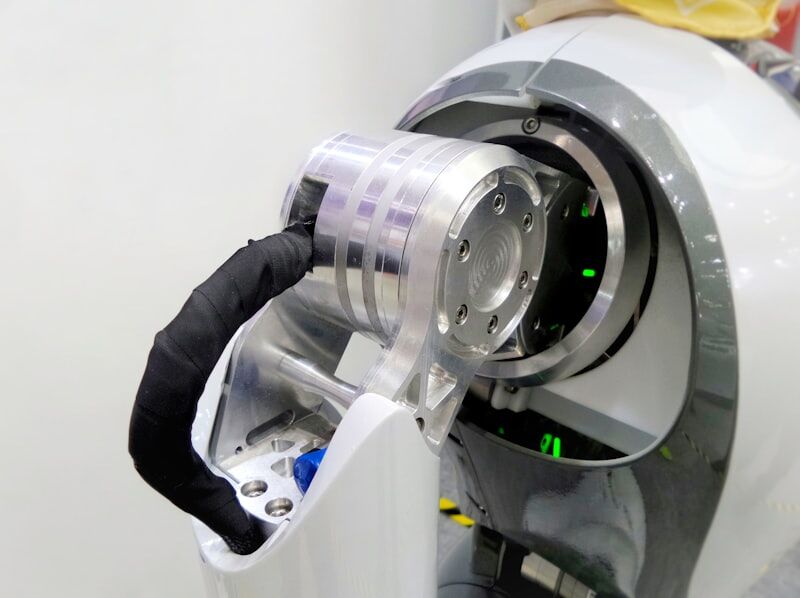
The passage opens by establishing robotics and AI as revolutionary technological developments. Unlike simplified descriptions aimed at beginners, this text explores how contemporary robots differ fundamentally from traditional machines. Students learn that modern robots adapt to new situations, recognize patterns, and make independent decisions based on environmental data.

The manufacturing section introduces precision engineering concepts. Students read about robots assembling intricate components with microscopic accuracy while maintaining consistent quality standards. This vocabulary — intricate, microscopic, consistency — appears frequently in academic and professional English contexts.
A detailed section on healthcare robotics describes surgical robots that enable minimally invasive procedures. Students encounter anatomical terminology and learn how robotic instruments provide surgeons with magnified visualization and tremor-free manipulation. This content connects naturally to science and health education curricula.

The passage culminates with autonomous vehicles and AI systems that process visual, auditory, and sensor data simultaneously. Students discover how robotics integration extends into agriculture, environmental monitoring, space exploration, and disaster response — demonstrating the breadth of real-world applications.
Vocabulary Deep Dive
Ten target vocabulary words represent the academic tier of English that separates intermediate learners from truly advanced speakers. The matching exercise requires students to connect words like invasiveness, anatomical, manipulation, and simultaneously with their definitions.
These are not everyday conversation words — they are the precise, discipline-specific terms that students encounter in textbooks, research articles, and professional presentations. Mastering them gives students a significant advantage in academic and career settings.

Critical Analysis Questions
The comprehension section moves beyond simple recall. Questions like “What makes contemporary robots different from traditional machines?” and “How do surgical robots benefit healthcare procedures?” require students to identify key distinctions and explain relationships between concepts — skills essential for academic success.
Nine true/false questions test careful reading. Several are intentionally designed to catch students who skim rather than read closely. For example, “Surgical robots replace doctors completely in operations” requires understanding the nuanced relationship between robotic assistance and human expertise described in the text.
Discussion Topics for Advanced Learners
Three discussion prompts challenge students to think beyond the text. How might advanced robotics change society in the next decade? What ethical considerations should guide AI development? Which industries would benefit most from robotic automation? These questions develop the analytical thinking and argumentation skills that advanced English learners need for academic writing and professional discourse.

Teaching Strategies for This Worksheet
Academic vocabulary pre-teaching: Before reading, present the ten vocabulary words with example sentences from different contexts. Have students predict how each word might appear in a text about robots. This pre-teaching strategy significantly improves comprehension for advanced reading passages.
Annotated reading: Ask students to underline unfamiliar words, circle connecting phrases, and write margin notes as they read. Collect annotations to assess reading strategies and identify areas where additional support is needed. Teachers looking for more advanced reading materials should also check our Coral Reefs ESL Worksheet.
Debate format: Use the discussion questions as formal debate topics. Assign “for” and “against” positions on questions like “Should AI development have strict government regulation?” This structured speaking activity pushes students to use academic language persuasively.

Research extension: Have students select one application mentioned in the passage (surgical robotics, autonomous vehicles, agricultural automation) and prepare a short presentation with additional research. This builds research skills, academic presentation language, and content knowledge simultaneously. For more technology-themed content, see our Solar Energy Complete Guide.
Perfect for Exam Preparation
The reading passage style and question types mirror what students encounter on TOEFL, IELTS, and Cambridge English exams. The true/false questions develop the careful reading skills tested in IELTS Reading. The comprehension questions practice the kind of analytical responses expected in academic English assessment.
For teachers preparing students for these high-stakes exams, this worksheet provides authentic practice with engaging content that students find genuinely interesting — a rare combination in exam preparation materials. Additional science and technology materials are available in our Organic Farming Complete Guide.
To learn more about artificial intelligence from authoritative sources, visit Britannica: Artificial Intelligence. For information about robotics in space exploration, check out NASA Robots in Space.
Understanding the Level F Rating
Level F on the standardized reading scale indicates intermediate to advanced proficiency, requiring students to process complex sentence structures, navigate academic vocabulary, and engage with abstract concepts presented through multiple interconnected ideas. Students at this level typically possess a vocabulary of 3,000-5,000 words and can handle texts with subordinate clauses, passive constructions, and discipline-specific terminology.
The reading passage deliberately employs academic English conventions that students will encounter in university textbooks and professional publications. Sentences average 15-25 words with multiple clauses, and paragraphs develop ideas through logical argumentation rather than simple description. This deliberate complexity prepares students for the authentic academic reading demands they will face in English-medium educational and professional environments.
Cross-Curricular Connections
The robots and AI topic creates natural bridges to multiple academic disciplines. Science and technology connections are obvious, but the worksheet also touches on ethics, economics, healthcare, environmental science, and transportation engineering. Teachers can leverage these connections by coordinating with colleagues in other departments or by assigning follow-up research projects that explore one specific application area in depth.
For students preparing for academic English programs, this cross-curricular vocabulary exposure is invaluable. Words like “precision,” “algorithms,” “autonomous,” and “integration” appear across scientific, business, and engineering contexts. Students who master these terms through an engaging robotics reading will recognize and use them confidently in other academic settings, accelerating their overall English acquisition trajectory.
The discussion questions at the end of the worksheet particularly support cross-curricular thinking. When students debate the ethical considerations of AI development, they practice philosophical argumentation in English. When they analyze which industries benefit most from automation, they engage with economic reasoning. This multidisciplinary approach reflects how language works in academic environments — always embedded in content-area knowledge rather than studied in isolation.
Differentiation Strategies
While this worksheet targets Level F readers, teachers can differentiate instruction to accommodate a range of proficiency levels within the same classroom. Stronger students can complete all sections independently and present their discussion responses as formal speeches. Students who need additional support can work through the vocabulary section first, building confidence with individual word meanings before tackling the full passage.
Pairing this Level F worksheet with the Level C elementary version on the same topic creates a natural differentiation tool. Students working at different levels read about the same subject, enabling whole-class discussions where all students can contribute meaningfully. The shared topic ensures that lower-level students are not excluded from class conversations, while higher-level students are still challenged by appropriately complex text.
For assessment purposes, the variety of exercise types allows teachers to evaluate different language skills independently. Vocabulary matching tests recognition, fill-in-the-blank tests productive vocabulary use, true/false tests reading comprehension accuracy, and open-ended questions test analytical thinking and written expression. This multi-modal assessment gives teachers a comprehensive picture of each student’s strengths and areas for growth.
Building a Technology Vocabulary Foundation
The vocabulary in this worksheet forms part of a broader academic word list that advanced English learners need across multiple disciplines. Words like “autonomous,” “integration,” and “precision” rank among the most frequently tested vocabulary items on international English proficiency exams including TOEFL iBT, IELTS Academic, and Cambridge C1 Advanced. By encountering these words in an engaging context rather than through rote memorization, students develop deeper semantic understanding and stronger retention.
Research in second language acquisition consistently demonstrates that vocabulary learned through meaningful reading contexts transfers more effectively to productive language use than vocabulary studied through flashcards or word lists alone. This worksheet capitalizes on that principle by embedding target words within compelling content that naturally demonstrates how each term functions in academic English discourse. Students not only learn what each word means but develop intuitive understanding of how and when to use it in their own academic writing and speaking.
Download Your Free Advanced Worksheet
Click below to download the complete “Robots and Artificial Intelligence” ESL worksheet (Level F – Advanced). The PDF includes the full reading passage, vocabulary exercises, comprehension questions, discussion prompts, and a complete answer key.
Print for classroom use, assign as homework, or share with colleagues. The answer key makes self-study possible for independent learners as well.



 HI
HI  EN
EN  ZH
ZH  ZH_CN
ZH_CN  KO
KO  VI
VI  FR
FR  AR
AR  ES
ES  PT
PT  BN
BN  RU
RU  JA
JA  TR
TR  DE
DE  IT
IT  PL
PL  ID
ID  TH
TH  FA
FA  UK
UK  TL
TL  HE
HE  UR
UR  SW
SW  RO
RO  NL
NL  MS
MS  TA
TA  PS
PS  HU
HU  EL
EL  SV
SV  NB
NB  NN
NN  DA
DA  CS
CS  SR
SR  AM
AM