

Station Rotation: 7 ESL Techniques That Work
A 50-minute ESL class with 30 students and five proficiency levels in the room is not a teaching problem you solve by talking louder or slowing down. It’s a grouping problem. Station rotation fixes it by breaking the class into three groups of ten, giving each group a different task, and rotating them through a set schedule — so the strongest students aren’t bored during a grammar drill built for the weakest, and the weakest aren’t lost during a discussion built for the strongest. It started in blended-learning classrooms in the US as a way to mix screen time with teacher time, but the structure itself has nothing to do with technology. It works in a room with zero devices just as well as one with thirty Chromebooks.
What Is the Station Rotation Model?
Station rotation is a classroom structure — not a single activity — where students move through a sequence of stations, each with its own task and its own mode of work. The defining feature, and the one most ESL writeups skip, is that at least one station must be teacher-led. That’s what separates station rotation from “centers” or “learning stations” as a loose concept: the teacher isn’t circulating and checking in, the teacher is parked at one table running small-group instruction while the other groups work independently or with peers. A typical three-station setup pairs a teacher-led table, an online or self-checking practice station, and a collaborative or creative task station, with groups rotating on a timer until everyone has hit every station.

Why It Works Especially Well in Mixed-Level ESL Classes
Most classroom management advice assumes a class with one effective reading level. ESL classes almost never have that, and pretending otherwise is why whole-class instruction underperforms in language classrooms specifically. The honest case for station rotation isn’t that it’s more engaging — plenty of whole-class activities are engaging — it’s that it’s the only structure that lets a teacher deliver three different levels of input in the same fifty minutes without three separate lesson plans. A teacher running a beginner-heavy table can slow down, repeat, and use L1 support without holding back the two advanced students across the room who’d rather be writing.
It also solves a quieter problem: participation inequality. In a 30-student whole-class discussion, six students talk and twenty-four don’t. In a ten-student station, silence is a lot harder to hide in, and a teacher running the small-group table can call on every single student by name within one rotation.
7 Station Rotation Techniques to Use This Week
These aren’t abstract station “types” — they’re specific tasks you can build a rotation around tomorrow, grouped by what skill they target.
1. The Teacher-Led Correction Table
Pull a small group and run live error correction on whatever they just wrote or said — not a prepared grammar lesson, the actual mistakes this specific group is making right now. This is the station’s highest-value use of your time, because it’s the one thing the other two stations structurally can’t replace.
2. The Self-Checking Digital Station
One device per pair, one app or site with instant feedback — vocabulary quizzing, a grammar practice tool, or a listening task with built-in answers. The requirement is that students can tell if they got it right without you. If a station needs your judgment call, it isn’t a self-checking station.
3. The Jigsaw Information-Gap Table
Each student at the table holds a different piece of information and has to speak to get the rest. This is a strong fit for the collaborative station because it forces output from every student at the table, not just the confident ones — see our full breakdown of jigsaw reading techniques for ready-to-run variations.
4. The Silent Writing Station
No talking, no devices — just a prompt and a timer. This is the station that gets cut first when teachers run out of ideas, which is exactly why it’s worth keeping: it’s the only place in a noisy rotation schedule where students produce sustained, unsupported written output.
5. The Listening-and-Respond Station
A short audio or video clip with a task attached — fill in a chart, answer three questions, predict what happens next. Keep clips under three minutes; a station built around a ten-minute video just becomes a passive-watching station, which defeats the point of rotating at all.
6. The Vocabulary Game Station
Low-prep, high-energy: charades with target vocabulary, a board race, a matching game with cards you’ve already made for a different lesson. This is the station that keeps energy up between the two heavier-focus tables, and it doubles as review for words taught the week before.
7. The Peer-Recording Station
Students record themselves on a phone or tablet reading a passage or answering a speaking prompt, then play it back and self-check against a simple rubric before moving on. It’s the one station that gives shy students real speaking practice without an audience, and it gives you a recording to spot-check later if you can’t get to every group live.

How Long Should Each Rotation Run?
Most writeups on station rotation skip timing entirely, which is the single question teachers ask first. The honest answer depends on your period length, not a fixed rule.
In a 60–70 minute block, run three stations at roughly 18–20 minutes each, with two minutes built in for the physical move between tables — that transition time disappears if you don’t plan for it and eats into your teacher-led station every time. In a standard 50-minute period, drop to two stations at around 22 minutes each rather than cramming three in; a rushed third station teaches students that the rotation itself isn’t serious. If your periods run 45 minutes or less, don’t force a daily rotation at all — run a full three-station cycle across two consecutive classes instead, with each day covering one and a half stations. Set a visible countdown timer every time. Without one, the loudest table decides when everyone moves.
How to Keep Students Accountable at Each Station
The station you’re not sitting at is the one where off-task behavior happens, and no amount of clear instructions fully prevents that. Build in a physical output at every non-teacher-led station — a completed worksheet, a recorded clip, a self-check sheet with a score written on it — so there’s something to collect at the end of the rotation, not just a verbal “did you finish?” check. For the digital station specifically, most platforms log completion automatically; if yours doesn’t, require a screenshot or a printed results page. At the collaborative table, assign roles (timekeeper, recorder, reporter) and rotate them each session, because open-ended group work without roles reliably collapses into one student doing the task and three watching.

Common Station Rotation Mistakes First-Time Teachers Make
The most common failure isn’t noise or chaos — it’s running three stations that are secretly the same task in different formats, which gives students no real reason to rotate at all. If every station is “read this and answer questions,” you’ve built one activity with extra furniture-moving. The second common mistake is making the independent stations too open-ended for the proficiency level in the room; a self-directed research task that works for an advanced class will stall out a beginner group within four minutes, and four minutes of stalling at a ten-minute station is a wasted session. The third is skipping a trial run: the first time you try station rotation, run it with a task you’ve already used successfully whole-class, so the only new variable is the structure itself, not the content.

Running Station Rotation Without a 1:1 Device Classroom
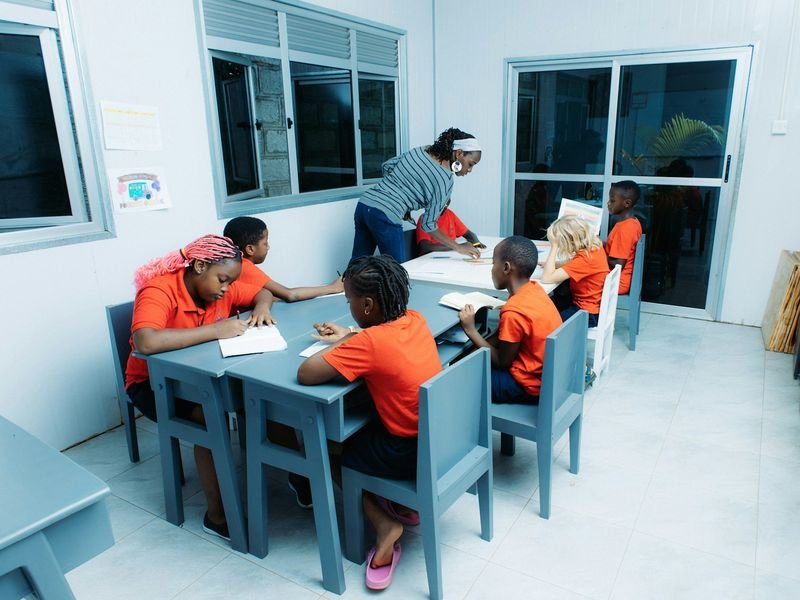
Station rotation gets written about as a blended-learning tool because it was popularized in US classrooms with a laptop or tablet for every student, but the structure doesn’t require any screens at all. Swap the digital station for a self-checking print station — a worksheet with an answer key taped face-down on the back of the table, or a set of task cards students check against a printed answer sheet after attempting each one. One shared device per table of ten still works for the listening station if you don’t have a full class set; queue the audio on a phone and let students share earbuds in pairs while they complete the written task together. The teacher-led and collaborative stations never needed technology in the first place, so in a zero-device classroom you’re really only solving for one station out of three, not rebuilding the whole model.
A Sample 60-Minute Rotation Schedule
Here’s a complete, usable example for a 60-minute intermediate class of 24 students split into three groups of eight:
- 0:00–0:03 — Instructions, group assignment, move to first station
- 0:03–0:20 — Rotation 1 (17 minutes)
- 0:20–0:22 — Transition
- 0:22–0:39 — Rotation 2 (17 minutes)
- 0:39–0:41 — Transition
- 0:41–0:58 — Rotation 3 (17 minutes)
- 0:58–1:00 — Whole-class wrap-up, collect station outputs
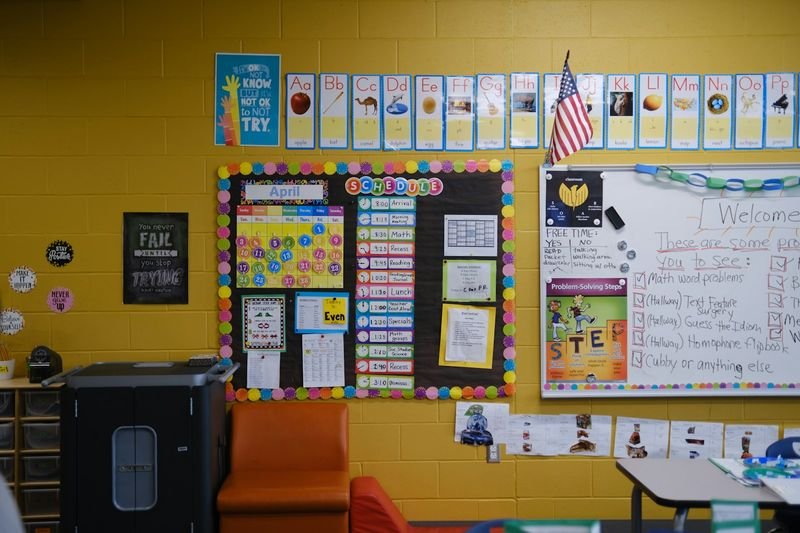
Post this schedule somewhere visible before the first rotation starts. Students who can see the clock move themselves without being told, which is most of the classroom-management benefit of the model in one sentence.
Watch It in Practice
This short walkthrough from Edpuzzle shows a live station rotation setup, including the teacher-led table and the transition routine between stations:

Where This Fits With Your Other Mixed-Level Strategies
Station rotation isn’t a replacement for differentiated instruction — it’s a delivery system for it. If you’ve already built tiered materials for a mixed-ability class, station rotation is the easiest structure to run them through, because each table can get a different version of the same task without the other groups noticing or feeling singled out. For a broader toolkit on managing proficiency gaps in one room, see our guide to differentiated instruction strategies for ESL. And if your collaborative station needs more structured task ideas, task-based language teaching activities slot directly into a rotation format.
Try it once with a lesson you already know works, track how far each group actually gets, and adjust your timing before you touch the content. The structure is the hard part to get right — once the rotation itself runs smoothly, swapping in new station content takes minutes.
सूत्रों का कहना है
- Planning a Station Rotation for Your English Classroom — Dr. Catlin Tucker — timing and balance framework for English-class rotations
- Supporting English Language Learners Through Station Rotation — ASCD — research on station rotation outcomes for ELLs
- Station Rotation Model for English Language Learners — Edmentum — three-station model breakdown for ELL classrooms







 HI
HI  EN
EN  ZH
ZH  ZH_CN
ZH_CN  KO
KO  VI
VI  FR
FR  AR
AR  ES
ES  PT
PT  BN
BN  RU
RU  JA
JA  TR
TR  DE
DE  IT
IT  PL
PL  ID
ID  TH
TH  FA
FA  UK
UK  TL
TL  HE
HE  UR
UR  SW
SW  RO
RO  NL
NL  MS
MS  TA
TA  PS
PS  HU
HU  EL
EL  SV
SV  NB
NB  NN
NN  DA
DA  CS
CS  SR
SR  AM
AM