
First Day ESL Activities: 12 Tested Ideas (2026)
First day ESL activities should answer three questions at once: who are these students, what can they already do in English, and will they trust me by minute sixty. The opening lessons that work mix one short input task with two or three low-pressure speaking activities — never a heavy grammar lecture, never silent reading. What follows is twelve classroom-tested activities, a sixty-minute lesson plan you can run tomorrow, and a short list of what to skip on day one. I have used every activity here with ages seven to sixty-five, from absolute beginner to C1.

What to Actually Do on the First Day of an ESL Class
The first day of an ESL class is a diagnostic disguised as a welcome. You are gathering data — listening level, speaking confidence, peer dynamics, who took English for ten years and learned nothing, who picked it up from YouTube last summer — while also lowering the affective filter so day two starts higher than day one ended. Stephen Krashen’s classic research on the affective filter argues that low anxiety is a precondition for acquisition, not a nice-to-have, and the first sixty minutes set the ceiling.1
Practically, that means three goals: every student speaks English out loud within the first fifteen minutes; you learn enough names to call on at least half the room by name before the bell; and the class ends with one tiny commitment that carries into the next session. The activities below are designed around those three goals, in that order.
A 60-Minute First Day Plan You Can Run Tomorrow
Most “first day ESL activities” lists hand you twenty options and zero structure. Here is the structure. Each block is a placeholder you fill in with one of the twelve activities below, depending on age, level, and class size.
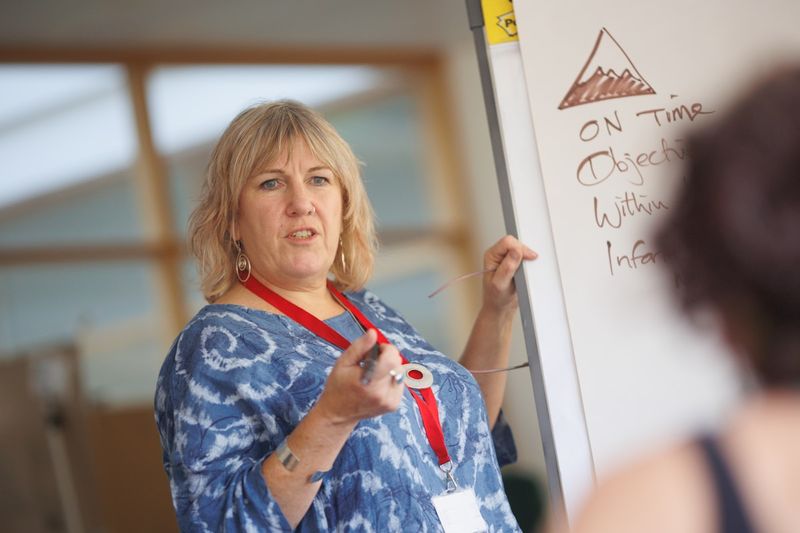
- 0–5 min · Settle and signal. Greet at the door. Music playing low. Names written on the board. Tell them what the hour will look like in three short sentences.
- 5–15 min · Warm-up icebreaker. Low-stakes, high-movement. Activity 2 or 3 below.
- 15–30 min · Diagnostic speaking task. Anything that surfaces listening + speaking level without feeling like a test. Activity 1, 4, or 6 below.
- 30–40 min · Norms and expectations. Co-write three classroom rules in English. Yes, three. Not twelve.
- 40–55 min · Pair or group production. A short collaborative task. Activity 5, 7, 8, or 11 below.
- 55–60 min · Exit ticket. Activity 12 below.
Pin this to your prep folder. Most teachers overload day one with content and underload it with rapport. The first lesson plan a new teacher should master is the rapport one, not the present perfect one. If you want a deeper planning template you can reuse all year, the ESL lesson plan template on this site walks through the five stages most experienced teachers settle into.
12 First Day ESL Activities That Actually Work
The activities below are ordered roughly from lowest-stakes to highest-stakes. With a brand-new beginner class, start at activity one and stop wherever you run out of time. With a confident intermediate class, you can skip ahead and combine.

1. Two Truths and a Lie (Adapted for Level)
Every ESL teacher has played this. Most play it wrong. With A1 learners, give them a sentence frame on the board — “I have ___. I like ___. I can ___.” — and let them slot vocabulary in. The lie should be small and concrete, not abstract. With B2+ learners, ban the obvious choices (“I have a pet, I have been to Japan”) and require past tense narration. The diagnostic value is enormous: in ten minutes you hear past tense, present simple, hedging language, and confidence under social pressure.
2. Name Toss
Soft ball. Stand in a circle. Toss it across the circle — never to your neighbor — and call out the catcher’s name plus one English word in a chosen category. Round one: food. Round two: jobs. Round three: feelings. It looks silly. It works because students hear every name pronounced seven times in three minutes, which is how name retention actually happens. Skip this with adult corporate learners who will refuse on principle; everyone else loves it.

3. Find Someone Who…
The workhorse of first-day ESL activities. Hand out a grid of nine to twelve prompts (“…has a sibling,” “…has eaten dragon fruit,” “…can drive a motorcycle”). Students stand up and circulate, asking each other questions. The rule that makes this work: they cannot show each other the paper. They must speak the question. With teenagers, add a small prize for the first full sheet; with adults, drop the prize and add a follow-up (“now tell the class one thing you learned about someone else”).
4. Speed Friending
Two rows of chairs facing each other. One minute per pair. Three rotation prompts written on the board. Students talk, the timer rings, the inner row shifts one seat. After three rotations every student has spoken to six classmates and the room temperature has shifted. Use lighter prompts for kids (“What is your favorite snack?”) and weightier ones for adults (“What brought you to study English now, in this year of your life?”).
5. Class Map
Print a world map on a sheet of A3 paper. Each student gets a sticker and places it on where they were born, then a second sticker on a place they want to visit. The teacher goes first. Suddenly the front of the room is a conversation starter for the whole semester, and every student has visible, low-pressure proof that they belong in the room.
6. Goal Cards
Hand out index cards. Three lines on each. “By the end of this term I want to be able to: ___, ___, ___.” Collect them. Read three out loud anonymously. This single activity gives you a roadmap for what to teach, written by the students themselves, before you have planned a single grammar point. I have caught entire curriculum miscalculations on day one this way — a class I was about to teach written grammar to actually wanted to survive in restaurants and clinics.
7. Picture Charades
Twenty vocabulary cards from a high-frequency list. Students draw a card, act it out, the room guesses in English. With young learners, this is the centerpiece of the lesson. With teenagers, it works as a five-minute energy reset. Total Physical Response was built on the idea that movement and language acquisition are linked at the neural level2 — day one is the time to lock that link in before bad sitting habits set in.

8. The Question Web
One ball of yarn. The first student holds the end, says their name and one fact, then tosses the ball to a classmate while holding their thread. By the end the class is connected by a literal web of yarn. Yes, it is corny. Yes, it works — especially with young teens, who pretend to find it embarrassing and then ask to do it again next week.
9. Six-Word Memoir
Inspired by the Ernest Hemingway story format, students write a six-word memoir of their life so far, in English. Examples on the board first: “Moved here last year. Still learning.” “Loved math. Now I love stories.” Display every memoir on the wall. This activity reads as low-stakes but is genuinely diagnostic — you see word choice, syntax control, and self-awareness all in one paragraph.
10. Classroom Treasure Hunt
Hide twenty vocabulary words on objects around the room (“door,” “chair,” “window,” “clock”) on small sticky notes. Students walk around in pairs, find them, and write a sentence using each word. Five minutes, total. It gets bodies moving, surfaces vocabulary gaps in seconds, and signals that the room itself is a learning resource — not just the textbook.
11. Survey Bingo
A 3×3 grid on a sheet. The teacher writes three prompts; students fill in three; the class fills in three together. (“Find someone who has lived in three countries”; “Find someone who speaks three languages.”) Students circulate, ask, collect signatures. First to complete a row shouts “bingo” — in English, no L1. The mechanic is familiar, the language is real.
12. Exit Ticket: One Thing, One Question
The most underused first-day move. A small slip of paper at the end of class with two lines: “One thing I learned today: ___” and “One question I still have: ___.” Collect them. Read them that evening. Use the answers to plan day two. The question line is the gold — it tells you exactly where the class is anxious, confused, or curious.
Adjusting for Age: Kids, Teens, Adults
The single most common first-day mistake is using the wrong activity for the age in the room. Young learners need movement-heavy, repetition-heavy activities — Name Toss, Picture Charades, the Treasure Hunt. They will not sit through Goal Cards. Teenagers need activities that protect their dignity; never single anyone out before they have volunteered. Adults need a clear “why this matters” before they will play any game — open with Goal Cards or the Six-Word Memoir, not a yarn ball.

The honest truth is that most published first-day plans are written for children and then quietly handed to adult instructors. Adult ESL learners are paying customers and tired professionals; they read a yarn ball as wasted time. Lead them with the diagnostic and the goal-setting, then earn the right to play later in the term.
First Day With a Mixed-Level Class
Almost every real ESL class is mixed-level once you scratch the surface. The level test placed them all in B1; on day one you discover three A2s and two B2s. Survey Bingo and Find Someone Who solve this problem by design — students operate at their own ceiling. A weaker student answers with a single phrase, a stronger student volunteers a paragraph, and neither feels exposed.

What kills mixed-level day ones: any activity that requires a single shared output. Group writing on day one is a trap. Group speaking with a shared task — like the Class Map — is the workaround. For more on running a multi-level room without losing the strong students or alienating the weak ones, ESL tantermi menedzsment covers the day-to-day logistics that make day fifteen as productive as day one.
Online and Hybrid First Day Notes
Online classes break two of the activities above outright: the Name Toss and the Treasure Hunt. Everything else adapts. Find Someone Who runs cleanly in breakout rooms of three. Speed Friending becomes a rotation through Zoom rooms with a one-minute timer. The Question Web works on a shared Jamboard with arrows instead of yarn.

The single thing online first days require that in-person classes do not: cameras on for the first activity, no exceptions. Day one is the only day where the social contract is still flexible enough that you can make this stick. If you do not enforce it on day one, you will fight for it every week after.
Beyond First Day Activities: Watch This Quick Walkthrough
This short video from Etacude English Teachers shows several first-day icebreakers in action with real adult students and is worth twelve minutes before your first day.
What to Skip on Day One
Most first-day articles tell you what to add. The harder advice is what to remove. The list below is short on purpose — these four moves quietly sabotage a first day even when every individual activity is sound.
- The level test. A formal placement test on day one signals “school” before it signals “welcome.” Run a diagnostic disguised as an activity instead.
- The full syllabus walkthrough. Hand out a syllabus, point to the calendar, move on. Do not read it aloud. They will read it for homework.
- Long teacher introduction. Three sentences about you. That is the entire monologue you are allowed. The class is about them.
- Heavy grammar. Day one grammar means day two attrition. Save it for the second lesson, when the trust is already there.
One veteran teacher I worked with in Taipei used to say that day one is where you spend the social capital you have not yet earned. The activities above earn it; the four traps above spend it before you have it.
Setting the Tone for Everything That Follows
The best first day ESL activity is the one that gets reused. If Two Truths and a Lie lands, run it again in week three with a grammar focus. If the Class Map gets attention, refer back to it every week (“Yuki, your sticker is on Korea — what did you eat for breakfast there as a kid?”). The point of day one is not to be magical; it is to plant references you can pull on for the rest of the semester.
If you want one more layer of first-day options, the longer-form ESL jégtörők reference on this site covers fifteen additional activities with full setup notes. Pair it with the sixty-minute plan above and you will not run out of material for the first three sessions, let alone the first hour.
Források
- Stephen Krashen — Principles and Practice in Second Language Acquisition — the affective filter hypothesis underpinning low-anxiety classroom design.
- TPRS / TPR overview — Blaine Ray — research summary on movement and language acquisition.
- Edutopia — Welcoming Students on the First Day — practical first-week routines for ELL and mainstream teachers.
- TESOL Nemzetközi Szövetség — professional standards and resources for ESL/EFL educators.
- British Council Teaching English — First lessons — practitioner notes on opening lessons for adult learners.





 HU
HU  EN
EN  ZH
ZH  ZH_CN
ZH_CN  KO
KO  VI
VI  FR
FR  AR
AR  ES
ES  HI
HI  PT
PT  BN
BN  RU
RU  JA
JA  TR
TR  DE
DE  IT
IT  PL
PL  ID
ID  TH
TH  FA
FA  UK
UK  TL
TL  HE
HE  UR
UR  SW
SW  RO
RO  NL
NL  MS
MS  TA
TA  PS
PS  EL
EL  SV
SV  NB
NB  NN
NN  DA
DA  CS
CS  SR
SR  AM
AM