
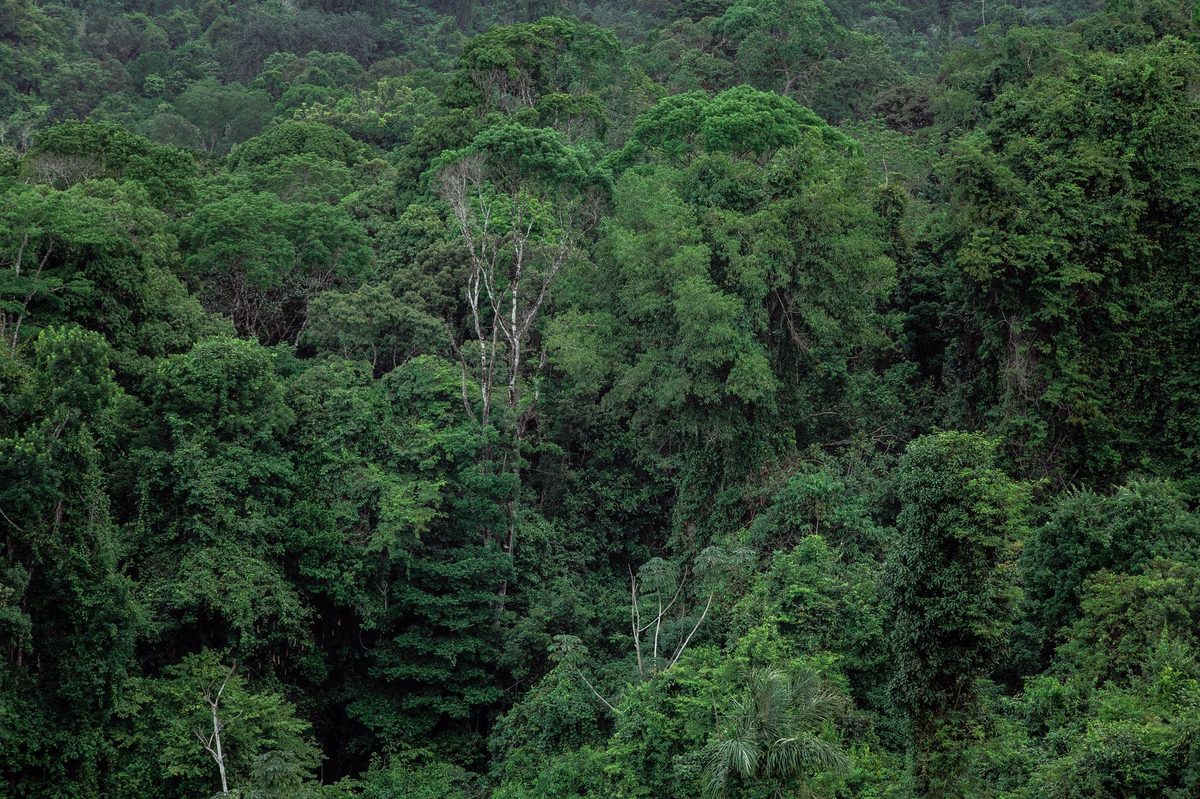
The Amazon Rainforest | Advanced ESL Reading Worksheet PDF
Free, classroom-ready, one click — includes answer key on page 3.
Reading Worksheet — Advanced (F) | tahricteaches.com
The Amazon Rainforest, often called the lungs of the planet, spans approximately 5.5 million square kilometers across nine South American countries. This vast ecosystem contains an estimated 390 billion individual trees representing more than 16,000 species, making it the most biologically diverse terrestrial region on Earth. Scientists estimate that the Amazon harbors roughly ten percent of all known species, though many remain undocumented.
The rainforest plays a critical role in regulating the global climate. Its trees absorb enormous quantities of carbon dioxide and release oxygen through photosynthesis, helping to stabilize atmospheric conditions. Furthermore, the Amazon generates its own rainfall through a process called evapotranspiration, in which moisture released from leaves forms clouds that sustain the entire region’s hydrological cycle.
Despite its ecological significance, the Amazon faces unprecedented threats. Deforestation driven by cattle ranching, soybean cultivation, and illegal logging has destroyed nearly twenty percent of the original forest cover. Mining operations contaminate rivers with mercury, while road construction fragments habitats and exposes previously ősi areas to exploitation. Climate change compounds these pressures, intensifying droughts and wildfires.
Indigenous communities have inhabited the Amazon for thousands of years, developing sophisticated knowledge of medicinal plants and sustainable agricultural practices. Their territories, when legally recognized, demonstrate significantly lower deforestation rates than surrounding lands. However, these communities frequently face violence and displacement from those seeking to exploit the forest’s resources, and their traditional ways of life remain veszélyeztetett.
Conservation efforts have produced mixed results. International agreements, protected reserves, and satellite monitoring systems have slowed deforestation in certain periods, yet political instability and economic pressures repeatedly undermine progress. Researchers warn that the Amazon may be approaching a tipping point, beyond which large portions could transition irreversibly into savanna. Protecting this irreplaceable biome requires coordinated global action, sustainable development policies, and genuine respect for indigenous sovereignty over ancestral lands.
A. Szókincs
- ecosystem ____
- biodiversity ____
- deforestation ____
- sustain ____
- pristine ____
- endangered ____
- indigenous ____
- canopy ____
- exploitation ____
- tipping point ____
- a. clearing or removal of forests, usually for human activities
- b. in original, untouched condition; free from pollution or damage
- c. uppermost layer of branches and leaves in a forest
- d. community of living organisms interacting with their physical environment
- e. variety of plant and animal life within a particular habitat
- f. originating naturally in a particular place; native
- g. at serious risk of extinction or disappearance
- h. use of resources for profit, often in an unfair or harmful way
- i. support, maintain, or keep something in existence over time
- j. critical threshold at which a small change causes a major, irreversible shift
B. Igaz vagy hamis
- ____ The Amazon Rainforest covers approximately 5.5 million square kilometers.
- ____ The Amazon contains fewer than 1,000 species of trees.
- ____ Evapotranspiration helps the Amazon generate its own rainfall.
- ____ Roughly half of the original Amazon forest has been destroyed by deforestation.
- ____ Indigenous territories generally show lower deforestation rates than surrounding lands.
- ____ Mining operations in the Amazon contaminate rivers with mercury.
- ____ Climate change has reduced the frequency of droughts in the Amazon region.
- ____ Scientists believe the Amazon may be approaching an irreversible tipping point.
- ____ The Amazon spans nine South American countries.
- ____ All species in the Amazon Rainforest have been fully documented by scientists.
C. Töltsd ki az üres helyeket
- The Amazon is the world’s most biologically diverse terrestrial ___.
- Cattle ranching and illegal logging are major drivers of ___ in the region.
- Many ___ communities have lived in the Amazon for thousands of years.
- Road construction has exposed previously ___ areas of forest to outside pressures.
- Commercial ___ of the rainforest’s resources threatens both wildlife and local people.
D. Szövegértési kérdések
- How does the Amazon Rainforest contribute to regulating the global climate?
- Why are indigenous territories important for conservation efforts in the Amazon?
- What is meant by a ‘tipping point’ in the context of the Amazon Rainforest?
E. Vitaindító kérdések
- What responsibilities, if any, do wealthy nations have in protecting the Amazon Rainforest, and how should this be balanced against the sovereignty of Amazon countries?
- If you had to choose between economic development and environmental conservation in a developing region, how would you weigh the trade-offs, and why?
Answer Key (click to reveal)
A. Szókincs: 1-d, 2-e, 3-a, 4-i, 5-b, 6-g, 7-f, 8-c, 9-h, 10-j
B. Igaz/Hamis: 1-T, 2-F, 3-T, 4-F, 5-T, 6-T, 7-F, 8-T, 9-T, 10-F
C. Üres helyek kitöltése: 1-ecosystem, 2-deforestation, 3-indigenous, 4-pristine, 5-exploitation
D. Értésértés:
- Its trees absorb carbon dioxide and release oxygen through photosynthesis, helping to stabilize atmospheric conditions.
- Legally recognized indigenous territories show significantly lower deforestation rates than surrounding lands, making them effective at protecting the forest.
- It refers to a critical threshold beyond which large portions of the rainforest could transition irreversibly into savanna.
© Tahric Teaches | tahricteaches.com
Looking for free ESL worksheets? Browse our full collection — printable resources for every level and age group. Browse Free Worksheets →






 HU
HU  EN
EN  ZH
ZH  ZH_CN
ZH_CN  KO
KO  VI
VI  FR
FR  AR
AR  ES
ES  HI
HI  PT
PT  BN
BN  RU
RU  JA
JA  TR
TR  DE
DE  IT
IT  PL
PL  ID
ID  TH
TH  FA
FA  UK
UK  TL
TL  HE
HE  UR
UR  SW
SW  RO
RO  NL
NL  MS
MS  TA
TA  PS
PS  EL
EL  SV
SV  NB
NB  NN
NN  DA
DA  CS
CS  SR
SR  AM
AM