AI in the ESL Classroom: A Teacher’s Complete Guide to Tools, Lessons, and Assessment
Two years ago, AI in the ESL classroom was a novelty. Today, it is a daily lesson companion for thousands of English teachers around the world. The question is no longer should we use AI with our learners — it is Bagaimana do we use it well, without breaking the parts of language teaching that already work. This complete guide to AI in the ESL classroom is written for the teacher who wants practical answers: which tools matter, which lessons actually run smoothly, how to handle TOEIC and IELTS prep, and where the real pitfalls sit.

Why AI Belongs in the ESL Classroom
ESL teaching has always wrestled with one stubborn problem: a single teacher, a wide range of levels, and never enough time for individual feedback. AI does not solve that problem entirely, but it narrows the gap in three concrete ways.
First, it scales differentiation. A chatbot can generate three versions of the same reading passage — A2, B1, and B2 — in under a minute. Second, it offers personalized practice. Learners who are shy in class can rehearse a dialogue with an AI partner before performing it with a human. Third, it frees teacher time. Marking ten short essays for grammar patterns used to cost an evening. With a structured AI workflow, the same task can be done in twenty minutes — leaving the teacher free to focus on meaning, ideas, and culture.
None of this replaces the teacher. AI is a power tool. A power tool in the hands of a skilled craftsperson speeds the work; in the hands of someone who does not know what good work looks like, it speeds the damage. That is why this guide leads with pedagogy, not prompts.
The Four Types of AI Tools Every ESL Teacher Should Know
Tool names change every few months. The categories do not. Learn the four buckets below and you will adapt to whatever launches next.
1. Conversational AI (chatbots)
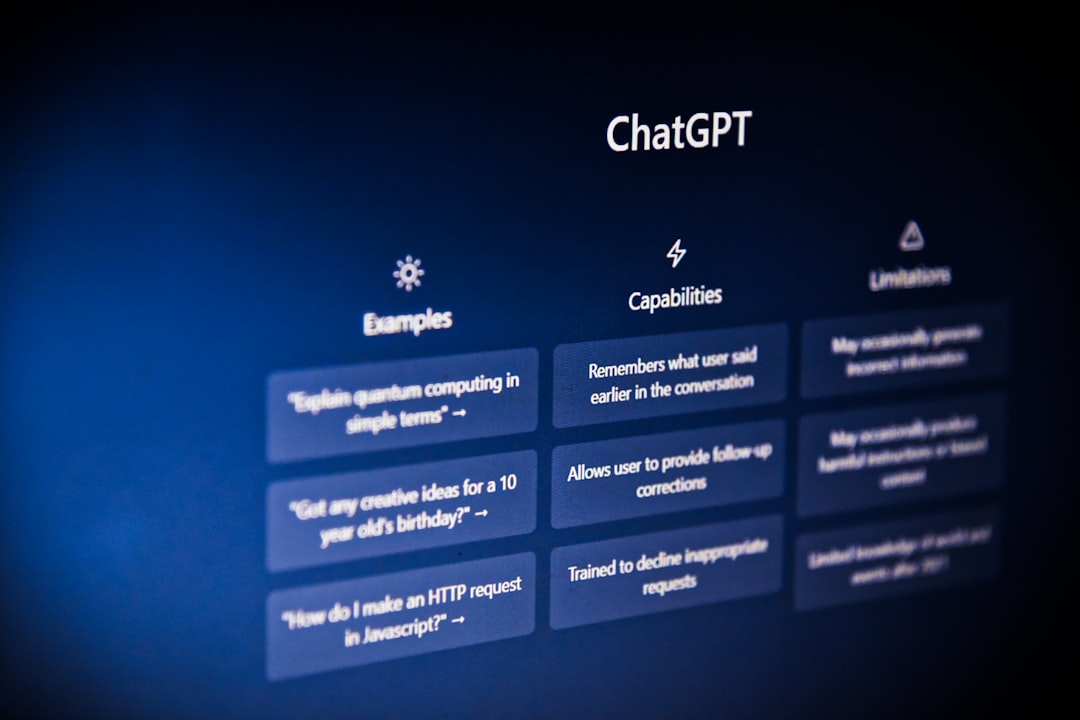
Tools like ChatGPT, Claude, and Gemini generate text, role-play characters, simplify passages, and give feedback. For ESL, these are your Swiss Army knife: dialogue practice, reading-passage creation, comprehension questions, lesson outlines, and rubric drafting all live here.
2. Speech and pronunciation tools
Apps such as ELSA Speak, Speechling, and the speaking modes built into newer chatbots give immediate pronunciation feedback. They are not perfect — they tend to be strict on phonemes and lenient on prosody — but they give learners a private space to fail safely. Use them for homework and warm-ups, not as a substitute for human conversation.
3. Writing assistants
Grammarly, LanguageTool, and the editing modes inside chatbots catch surface errors well. Their weakness is style and discourse-level coherence. Teach learners to use these tools as a first draft polish, then bring the work to class for the deeper conversation about argument, voice, and audience.
4. Media generators
AI image and audio tools let you build flashcards, listening clips, and visual prompts in seconds. A picture-description activity that once required hunting through stock libraries is now a thirty-second prompt away.


AI-Powered Lesson Plans That Actually Work
The lessons below have been tested in real ESL classrooms. They share one feature: AI does the boring scaling work, and the teacher does the human work of meaning, feedback, and connection.
Speaking practice with a chatbot role-play
Give learners a scenario — booking a hotel, complaining about a delivery, interviewing for a part-time job. Have them open a chatbot, paste a role-play prompt you have prepared, and rehearse for ten minutes. Then pair them up to perform the same scenario with a human partner. The AI rehearsal lowers anxiety and surfaces vocabulary; the human pairing restores spontaneity and listening pressure.
Writing feedback loops
Learners draft a paragraph, paste it into a chatbot with a specific prompt (“Identify three grammar issues and explain why each is wrong, but do not rewrite the paragraph for me”), then revise on their own. The constraint matters — without it, AI rewrites the entire paragraph and the learner produces nothing. Bring the revised drafts to class for a peer-review round on clarity and ideas.
Vocabulary in context
Pick ten target words. Ask the AI to write a short story (150 words) that uses all of them naturally. Learners read the story, underline the target words, then write their own story using any seven of the ten. The AI version becomes a model, not the final product.
Using AI for TOEIC and IELTS Preparation
High-stakes exam prep is one of the strongest use cases for AI in the ESL classroom. The exams are formulaic, the rubrics are public, and learners need huge volumes of practice that no single teacher can mark by hand.
- TOEIC Reading and Listening: ask the AI to generate Part 5 incomplete sentences or Part 7 short passages with four-option multiple-choice questions. Always sanity-check the answer key — chatbots occasionally pick the wrong option.
- IELTS Writing Task 2: learners draft an essay, then ask the AI to score it against the four band descriptors (Task Response, Coherence and Cohesion, Lexical Resource, Grammatical Range and Accuracy). The score is a rough signal, not gospel — band scoring requires human judgment — but the descriptor-by-descriptor feedback is genuinely useful.
- IELTS Speaking: use a voice-mode chatbot to simulate Parts 1, 2, and 3. Have learners record themselves, then listen back. Self-monitoring is the skill that lifts band scores.
One rule for exam prep: never let AI replace timed practice with official past papers. The AI-generated material is for drilling skills between tests. The real exam papers — from Cambridge, ETS, and the British Council — are still the anchor.
Assessment and Feedback at Scale
Marking is the part of teaching that quietly eats evenings and weekends. AI can help, but only if you design the workflow carefully.
Start by writing a clear rubric — four to six criteria, three or four levels each. Paste the rubric into the chatbot along with a student’s piece of work, and ask for criterion-by-criterion comments with one short suggestion per criterion. Read the AI output, edit it for accuracy, and add a personal sentence at the top. The result is faster feedback that still carries your voice.
For error-pattern analysis, paste an anonymized set of ten short writings and ask the AI to identify the top three recurring grammar issues across the class. You will get a ready-made target for next week’s grammar mini-lesson — grounded in your learners’ actual errors, not a textbook’s assumptions.

Common Pitfalls (and How to Avoid Them)
Every teacher I know who has integrated AI into ESL teaching has hit at least three of the following walls. Knowing them in advance saves a term of frustration.
- Hallucinated grammar rules. Chatbots sometimes invent rules that sound plausible. Always cross-check unusual claims against a reference grammar (Swan, Cambridge, or the British Council).
- Over-reliance by learners. If students paste prompts and accept the output without engaging, they learn nothing. Build prompts that require reflection or constraint (“explain three issues, don’t rewrite”).
- Privacy. Do not paste student names, contact details, or school records into public AI tools. Anonymize first, or use enterprise tools that promise data isolation.
- Academic integrity. Be explicit about what AI use is allowed for each task. “AI is allowed for vocabulary lookup but not for drafting” is a clearer rule than “don’t cheat.”
- Accent and dialect bias. Speech-recognition tools often favor North American English. If your learners are working toward British, Australian, or international varieties, set expectations and supplement with human models.
Building an AI-Literate Classroom Culture
The most valuable thing an ESL teacher can give learners right now is not a tool list — it is the habit of using AI critically. Three classroom routines build that habit quickly.
Prompt literacy. Teach a simple prompt frame: role, task, constraints, output. “Act as an IELTS examiner. Score the following essay against Task Response only. Give one sentence of feedback per band descriptor. Maximum 80 words.” Learners who internalize this frame stop getting useless replies.
Verification habit. When the AI gives a grammar explanation, the learner has to find one other source that confirms or contradicts it before accepting. This single rule turns AI from a magic oracle into a research starting point.
Transparency policy. Ask learners to keep a short “AI log” at the bottom of any assignment that used AI — which tool, which prompt, what they kept, what they changed. The log normalizes honest use and gives you, the teacher, a window into how they think.

A Starter Action Plan for This Week
If you finish this guide and do nothing, the guide was decoration. Pick one item from each of the five days below and try it.
- Senin: Generate three differentiated versions of the next reading you plan to teach.
- Selasa: Run a 10-minute chatbot role-play warm-up before a speaking class.
- Rabu: Use the AI to draft a rubric for an upcoming writing task, then edit it to fit your learners.
- Kamis: Paste an anonymized set of student writings and identify the top three recurring errors. Build a 15-minute mini-lesson around them.
- Jumat: Teach the prompt frame (role, task, constraints, output) explicitly to your learners. Have them practice on a vocabulary task.
After one week, you will know which of these workflows fit your style and which do not. Keep two, discard three. That is the entire game.

Final Word
AI in the ESL classroom is not a future trend — it is a present-tense teaching reality. The teachers who get the most from it are not the ones with the longest tool stacks; they are the ones who keep pedagogy in the driver’s seat and treat AI as a fast, slightly unreliable assistant. Use it for scale, drills, and first drafts. Use yourself for meaning, motivation, and the human conversation that no chatbot has ever replaced.
Sumber
- Dewan Inggris — teaching English resources and IELTS reference materials
- Cambridge University Press & Assessment — ESL methodology and exam preparation
- ETS — official TOEIC and TOEFL information
- Wikipedia: English as a Second or Foreign Language — background on ESL/EFL methodology
Looking for free ESL worksheets? Browse our full collection — printable resources for every level and age group. Browse Free Worksheets →
Students can access free worksheets and reading materials at 18KEnglish.com.









 ID
ID  EN
EN  ZH
ZH  ZH_CN
ZH_CN  KO
KO  VI
VI  FR
FR  AR
AR  ES
ES  HI
HI  PT
PT  BN
BN  RU
RU  JA
JA  TR
TR  DE
DE  IT
IT  PL
PL  TH
TH  FA
FA  UK
UK  TL
TL  HE
HE  UR
UR  SW
SW  RO
RO  NL
NL  MS
MS  TA
TA  PS
PS  HU
HU  EL
EL  SV
SV  NB
NB  NN
NN  DA
DA  CS
CS  SR
SR  AM
AM