
Teacher Talk Time: 8 Essential ESL Strategies
Teacher talk time matters because every extra minute the teacher controls the conversation is a minute students do not spend producing English. In most ESL classrooms, the goal is not a polished lecture. The goal is student language output, better comprehension, and more confident participation. If you want stronger speaking lessons, lower affective filters, and more visible progress, you need practical ways to reduce teacher talk time without losing control of the room.

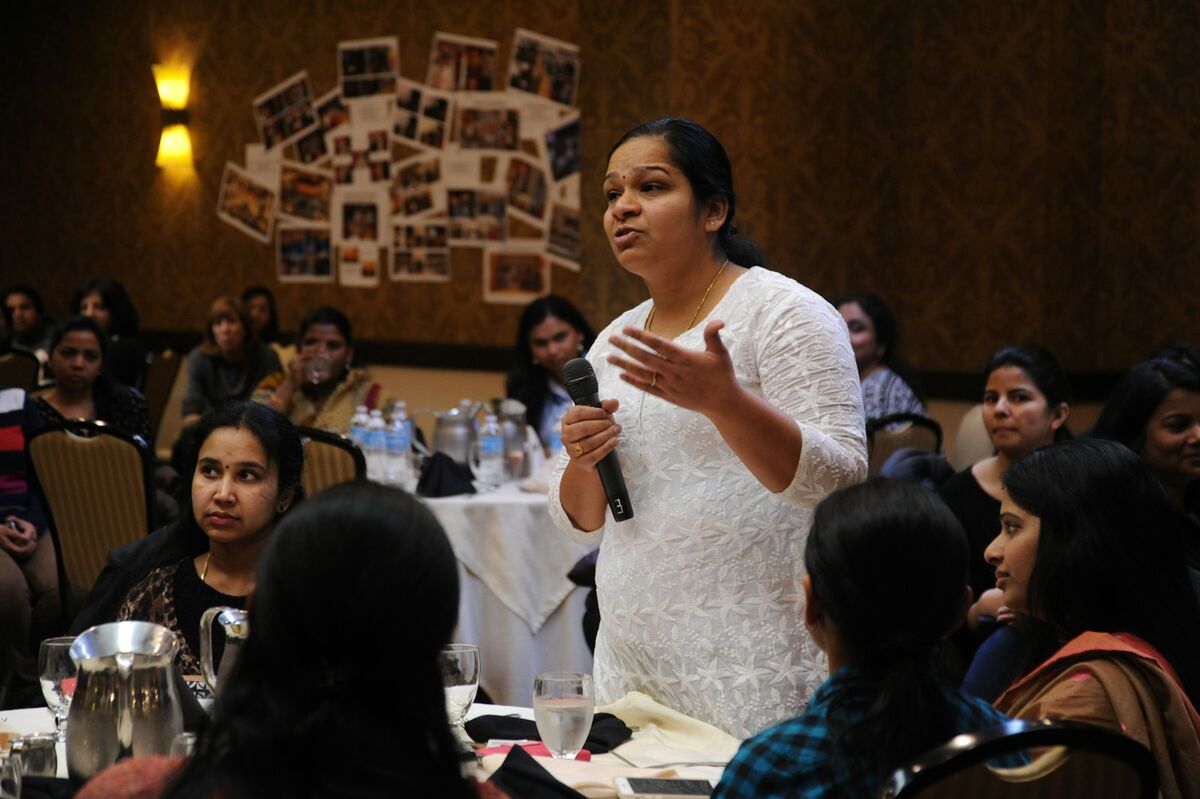
A clear routine helps teachers give less explanation and create more student speaking time.
What teacher talk time means in an ESL classroom
Teacher talk time, often shortened to TTT, is the amount of lesson time the teacher spends explaining, modeling, correcting, managing, or chatting while students mainly listen. Some teacher talk is essential. Students need instructions, examples, feedback, and emotional support. The problem starts when teacher talk replaces student practice.
In a language classroom, students need repeated chances to retrieve words, negotiate meaning, repair mistakes, and build fluency aloud. When the teacher fills every silence, answers every question immediately, or explains too long before an activity starts, students get less productive struggle. They may understand the lesson, but they do not get enough speaking reps.
That is why strong ESL teachers focus on balance, not silence. The aim is not to become quiet for the sake of it. The aim is to make every teacher word earn its place, then hand the lesson back to learners as quickly as possible.
1. Start with shorter instructions and a visible model
The fastest way to cut teacher talk time is to stop over-explaining tasks. Many classroom delays happen before students even begin because teachers give three or four minutes of instructions for an activity that only needs one example. A better move is to give the task in one sentence, show a model, then let students start.
For example, instead of explaining pair interview rules for two full minutes, write two model questions on the board, ask one student the first question, and tell pairs to continue. Students usually understand a live example faster than a long explanation. If you teach the same levels regularly, build a bank of recurring task frames like ask, answer, switch, read, underline, compare, or think, write, share. Reusable routines reduce the need for fresh explanations every lesson.
Board support helps too. When instructions stay visible, students stop depending on repeated teacher clarification. That means less talking from you and more independent work from them.

Visible task models reduce repeated explanations and free up more time for student output.
2. Replace long explanations with concept-checking questions
Teachers often talk too much because they are trying to prevent confusion. Ironically, that usually creates more confusion. Students nod politely, but they still are not sure what to do. Concept-checking questions are more efficient than repeating instructions with new wording.
Instead of asking, “Do you understand?” ask questions with obvious answers that prove students know the task. If students are doing a pair discussion, ask, “Are you writing full paragraphs or speaking?” “Do you work alone or with a partner?” “How many questions do you ask?” These quick checks reveal misunderstandings in seconds.
This strategy also improves pacing. You speak less because you stop recycling the same explanation. Students hear a short task, confirm the key parts, and begin faster. In speaking classes, that time saved is valuable because it turns setup minutes into practice minutes.
3. Build wait time into your questioning
One hidden cause of high teacher talk time is weak wait time. A teacher asks a question, gets no answer after one second, then rephrases, hints, answers it, or calls on a stronger student. The room becomes teacher-driven again. Research on classroom wait time has shown that when teachers pause longer after asking questions, student responses usually become longer and more thoughtful.
In ESL settings, wait time matters even more because students are processing meaning in a second language. They need time to understand the question, search for vocabulary, plan grammar, and speak. If you want more student talk, normalize the pause. Ask the question, count silently, and let the room work.
You can strengthen this move by warning students before the question comes. Say, “I’m going to ask everyone in ten seconds,” or “Think first, then I’ll call on you.” That short thinking window lowers pressure and raises participation. It also prevents the teacher from rushing in to rescue the silence.

Longer wait time usually produces fuller answers and more student confidence.
4. Turn teacher questions into pair work before whole-class answers
If the same three confident students answer every question, your classroom may look active while most learners stay passive. A simple fix is to move questions into pairs before opening them to the whole class. Ask the question, give partners thirty seconds, then take answers publicly.
This technique cuts teacher talk time in two ways. First, it reduces the need for you to keep prompting because students have already rehearsed an answer privately. Second, it spreads talk time across the room instead of concentrating it between teacher and a few volunteers.
Pair rehearsal is especially useful for opinion questions, prediction tasks, and reading checks. It gives weaker students a chance to test language quietly before speaking in front of the class. Over time, this creates a more talkative classroom culture because students expect to process language with peers, not wait passively for the teacher to do the thinking for them.
5. Plan student-to-student routines, not teacher-to-class routines
Some lessons generate too much teacher talk because the structure itself is teacher-centered. If every stage depends on the teacher asking, correcting, nominating, and transitioning, the teacher will naturally dominate the soundscape. A better design is to create routines where students interact with each other while the teacher monitors.
Useful low-prep examples include information gaps, speed speaking lines, find-someone-who surveys, peer dictation, mini role plays, and ranking tasks. These formats create repeated turns without requiring long teacher control. They also help students recycle the same target language with multiple partners, which is one of the fastest ways to build fluency.
When planning, ask a blunt question: Can students do this step with each other instead of through me? If the answer is yes, redesign it. That single planning habit can transform the sound balance of a lesson.

Pair and group structures make the classroom sound less like a lecture and more like language practice.
6. Save correction for better moments
Many teachers increase their own talk time by correcting every error as it happens. Constant interruption slows fluency work and shifts attention back to the teacher. During a communication task, delayed correction is often the better option. Listen, take notes, and address patterns after the activity ends.
This does not mean ignoring errors. It means choosing the right timing. If the target is fluency, let students keep speaking unless the mistake blocks meaning. If the target is accuracy, keep corrections brief and purposeful. A short reformulation or board note can do more than a long grammar lecture.
Delayed feedback also gives you richer teaching material. Instead of reacting to one student in the moment, you can pull three or four common errors after the task and turn them into a quick class correction stage. That reduces your total talking while making feedback more relevant to everyone.
7. Use board plans and slide prompts to stop repeating yourself
Teachers often repeat instructions because the language disappears as soon as they finish speaking. A simple board plan solves this. Keep key prompts visible: the task, time limit, sentence starters, success criteria, and transition cue. Students can look instead of asking you again.
Sentence starters are especially powerful in mixed-level ESL classes. Prompts like I agree because…, In my experience…, or The main reason is… help students start faster and stay in English longer. That means the teacher does not have to keep feeding vocabulary into the room.
If you use slides, avoid crowded text. One useful question, one model answer, and one timing cue are enough. Overloaded slides often lead to more teacher explanation, not less.

Visible prompts reduce dependency and keep learners working when the teacher steps back.
8. Audit your own lesson for teacher talk hot spots
The most reliable way to improve teacher talk time is to measure it honestly. Record a lesson audio clip, or ask a colleague to note when your voice dominates. Most teachers already know their danger zones. Common hot spots include lesson openings, grammar presentation, feedback after reading, and transitions between activities.
Once you identify those moments, make one targeted change at a time. Shorten your warm-up explanation. Add pair rehearsal before open answers. Replace one whole-class correction stage with delayed board feedback. Small adjustments are easier to sustain than a total teaching overhaul.
This is where reflective teaching becomes practical. You are not trying to sound like someone else. You are trying to create more space for learners to think, respond, and interact in English.
How much teacher talk time is too much?
There is no universal perfect ratio because lesson aims change. A pronunciation lesson, a story-based kindergarten lesson, and an advanced discussion class all sound different. Still, if students spend most of the hour listening to you rather than using English themselves, the balance is probably off.
A useful rule is to judge teacher talk by function. Ask whether your talking is moving students into productive language use or keeping them dependent on you. Clear modeling, strategic feedback, and concise setup are helpful. Long explanations, repeated paraphrasing, and unnecessary commentary usually are not.
For many teachers, the real breakthrough comes when they stop seeing silence as a problem. Silence is often processing. Processing leads to language. Language leads to progress.

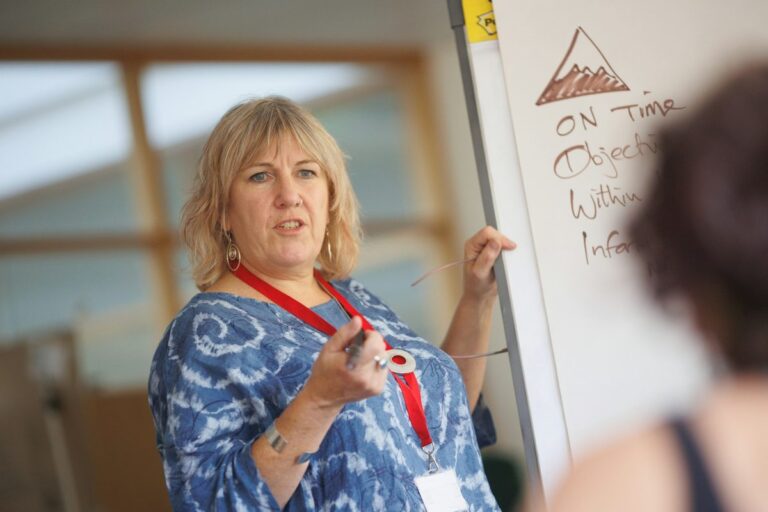
The teacher’s best position during a speaking task is often monitoring, not leading.
A practical teacher talk time checklist for your next lesson
- Can I explain this task in one sentence plus one model?
- Are the instructions visible on the board or slide?
- Will students think or discuss before whole-class answers?
- Where will I use wait time instead of rescuing silence?
- Which errors will I correct later, not immediately?
- Which stage can become pair work or group work instead of teacher-led talk?
If you build these questions into your planning, your lessons become lighter, faster, and more student-centered. That usually means more speaking, better engagement, and less end-of-day exhaustion for the teacher too.

Less teacher domination often leads to more independent, confident language use.
Teacher talk time is not just a classroom management issue. It is a learning opportunity issue. When teachers simplify instructions, use wait time, shift questions into pair work, and delay some correction, students get the repetition and confidence they need. If you want more English in the room, the first move is often not to add another activity. It is to say a little less, then let students do more. For more practical lesson ideas, see these ESL warm-up activities, these ESL listening activities, Dan these ESL grammar games.
Sumber
- Indiana University, Center for Innovative Teaching and Learning: Wait Time — overview of the classroom benefits of giving students longer thinking time after questions.
- Cambridge English blog: Teacher Talking Time — discussion of how TTT affects learner participation in language classes.
- British Council: 4 ways teachers can increase student talking time — practical ideas for shifting interaction from teacher-led to student-led speaking.
- How to avoid talking too much when teaching English — classroom-focused video that reinforces practical TTT reduction habits.
Looking for free ESL worksheets? Browse our full collection — printable resources for every level and age group. Browse Free Worksheets →
Students can access free worksheets and reading materials at 18KEnglish.com.







 ID
ID  EN
EN  ZH
ZH  ZH_CN
ZH_CN  KO
KO  VI
VI  FR
FR  AR
AR  ES
ES  HI
HI  PT
PT  BN
BN  RU
RU  JA
JA  TR
TR  DE
DE  IT
IT  PL
PL  TH
TH  FA
FA  UK
UK  TL
TL  HE
HE  UR
UR  SW
SW  RO
RO  NL
NL  MS
MS  TA
TA  PS
PS  HU
HU  EL
EL  SV
SV  NB
NB  NN
NN  DA
DA  CS
CS  SR
SR  AM
AM