
Sea Otter ESL Worksheet — Advanced Level F Reading PDF
How does a sea otter stay warm in freezing coastal water with no blubber at all? Why do scientists call the sea otter a “keystone species”? This advanced ESL reading worksheet explores sea otter biology, their use of tools to crack open shellfish, the historical fur trade that nearly drove them extinct, and their critical role in protecting kelp forest ecosystems, alongside academic vocabulary and critical-thinking prompts for intermediate to upper-intermediate readers.
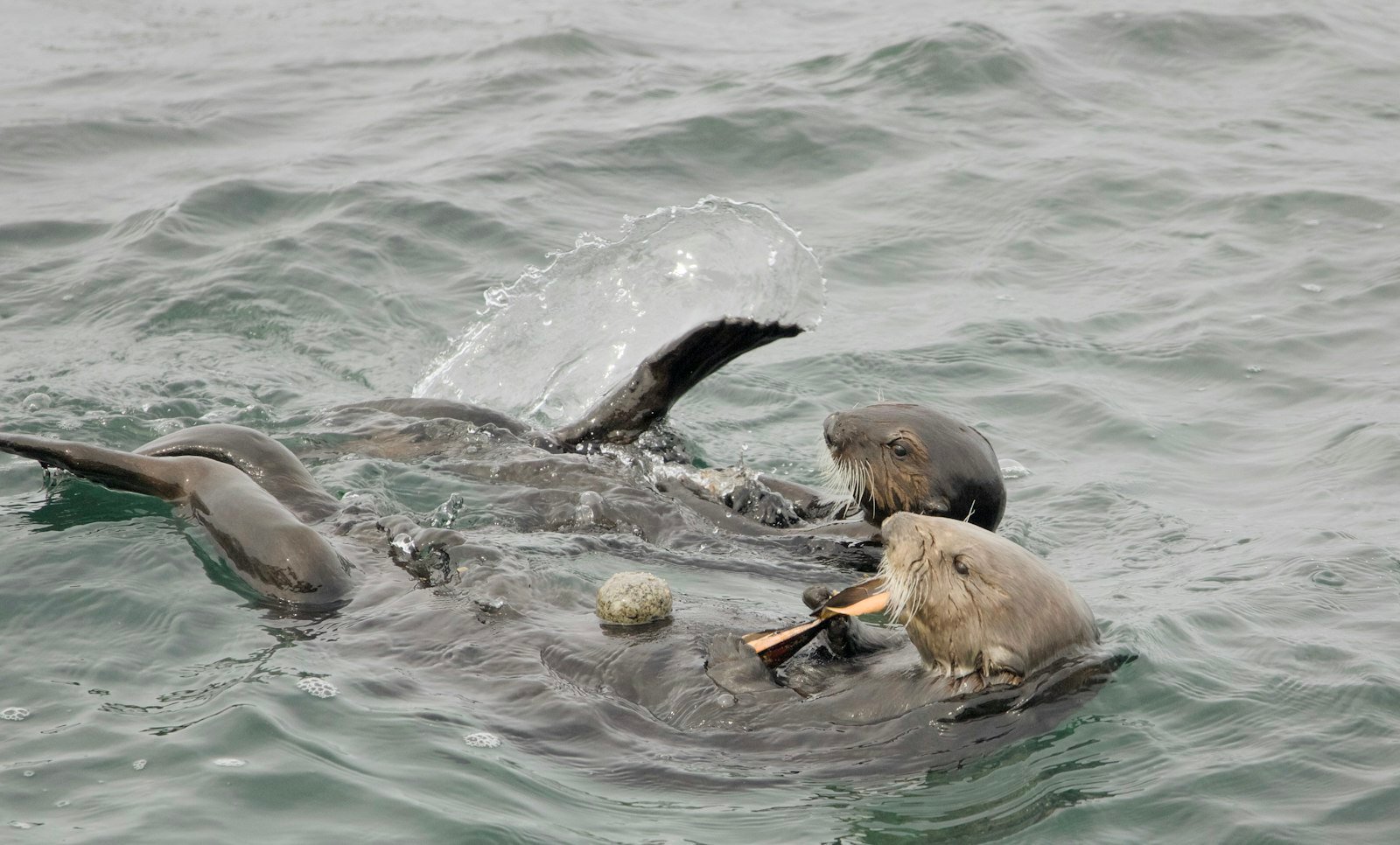
What’s Inside
- Reading passage: ~356 words at Grade 6+ reading level on sea otter biology, tool use, and conservation
- Vocabulary practice: 10 MOE Level 2-3 academic words with precise definitions
- True/False: 9 analytical comprehension items
- Fill in the blanks: 5 sentences using core vocabulary
- Comprehension questions: 5 prompts requiring synthesis and explanation
- Discussion questions: 3 critical-thinking prompts on conservation and ecology
- Chiave di risposta completa with full model answers
Vocabulary Targets (MOE Level 2-3)
fur · trap · bubble · float · dive · hunt · threat · survive · population · pollution
Perfetto per
- Intermediate to upper-intermediate ESL / EFL students
- GEPT and high school English exam prep
- Cross-curricular units on marine biology and conservation
- Discussion-driven reading classes
- Independent self-study or homework
Discussion Prompts Include
- Should governments spend money protecting species like the sea otter? Why or why not?
- What other animals are known to use tools, and how does tool use show intelligence?
- What steps could coastal communities take to reduce pollution and protect ocean habitats?
Printable A4 · 5 pages · Free to use in your classroom
🇹🇼 Also in Chinese: This topic is available on 18KEnglish.com — bilingual worksheets for Chinese-speaking students.







 IT
 EN
 ZH
 ZH_CN
 KO
 VI
 FR
 AR
 ES
 HI
 PT
 BN
 RU
 JA
 TR
 DE
 PL
 ID
 TH
 FA
 UK
 TL
 HE
 UR
 SW
 RO
 NL
 MS
 TA
 PS
 HU
 EL
 SV
 NB
 NN
 DA
 CS
 SR
 AM