

ESL Pronunciation Activities: 15 Ideas That Work (2026)
Most adult ESL learners can write a passable email and read a news article, but the moment they open their mouth at the coffee shop, the barista asks them to repeat themselves. That’s a pronunciation problem, not a vocabulary one — and it’s the single fastest fix in your toolkit as a teacher. The right ESL pronunciation activities can take a B1 student from “mumbled” to “intelligible” inside a six-week block, because pronunciation is muscle memory more than knowledge, and muscle memory responds to short, daily reps.
This article walks through 15 pronunciation activities that work on real students — not abstract theory, not gimmicks. Each one is mapped to a specific weakness (sound discrimination, mouth position, rhythm, connected speech, self-monitoring) and each can be dropped into a regular lesson with under ten minutes of prep.

Why Most ESL Pronunciation Activities Quietly Fail
Walk into ten ESL classrooms and you’ll find pronunciation treated like flossing — everyone agrees it’s important, almost nobody actually does it consistently. The standard excuse is that pronunciation is “too sensitive” or “embarrassing for students.” That’s partly true. The bigger truth is that most teachers were never taught a real procedure for it, so they default to a five-minute “repeat after me” once a week and call it covered.
The fix isn’t to add more pronunciation — it’s to add the right kind. Cambridge University Press published a 2024 review of L2 pronunciation instruction that found explicit, perception-first teaching (training students to hear the difference before producing it) produced measurable intelligibility gains in as little as four weeks. The activities below all lean on that principle: build the ear first, then the mouth, then the rhythm. Different ESL teaching methods handle this sequencing very differently, and pronunciation is one of the areas where method actually shows up in the results.
1. Minimal Pairs: The Foundation Activity You Can’t Skip
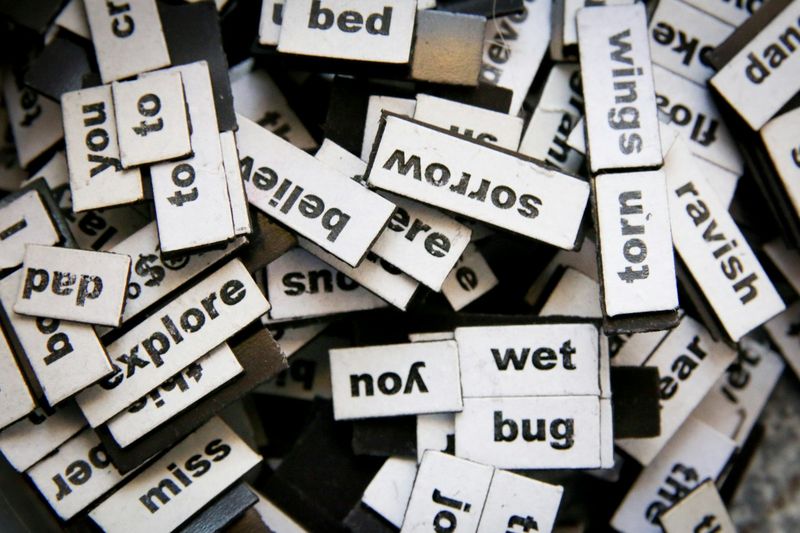
Le coppie minime sono due parole che differiscono per un solo suono: nave / sheep, cat / taglio, vote / boat. If a student can’t hear the difference, no amount of production practice will fix it. Start every pronunciation block with a 90-second perception drill: say one of the two words, students point or call out which one they heard. Five rounds, then swap to production.
The mistake teachers make here is jumping straight to production. A learner whose L1 doesn’t distinguish /b/ and /v/ literally hears the same sound twice. Until perception clicks, asking them to “just say it more like /v/” is asking them to aim at a target they can’t see. For a deeper drill set, my minimal pairs activities guide has 14 ready-to-use variations sorted by level.
2. The Phonemic Chart Wall — A 30-Second Daily Habit

Print the International Phonetic Alphabet chart at A3 size and stick it on the back wall. Every class, point to two random symbols and ask the closest student to produce the sound. Thirty seconds, no fuss. Within a month students start using the chart on their own when checking a new word in the dictionary — which is the actual goal.
Some teachers resist the IPA because they think it adds a second alphabet to learn. The truth is, most adult learners pick up the dozen or so symbols that represent the sounds their L1 doesn’t have within two weeks. They don’t need to master all 44 English phonemes. They need a written code for the four or five sounds that keep tripping them up.
3. Tongue Twisters With a Purpose, Not Just for Fun
“She sells seashells by the seashore” is fine for laughs, but a targeted tongue twister is a pronunciation gym. Write your own: pick the sound your students struggle with and pack a sentence with it. For Chinese L1 learners drilling /l/ and /r/: The lonely lorry rolled along the long lane. For Spanish L1 learners on /sh/ and /ch/: She should chew the shiny chestnut shoes.
Drill it three ways: slow and exaggerated, normal speed, then fast. Time them. Make a leaderboard. The competitive frame works on every age group above eight, and the repetition is doing exactly the kind of motor patterning that produces lasting change. Five minutes a class, three classes a week, and within six weeks the target sound stops being a stumble.
4. Backchain Drilling for Long Sentences
When a student chokes on a long sentence — “I would have been able to come if I’d known earlier” — don’t make them repeat the whole thing. Start from the end and work backward: earlier → known earlier → I’d known earlier → if I’d known earlier → and so on. Each chunk gets cleaner because the final, hardest piece (the natural sentence stress) is already locked in.
Backchaining sounds counterintuitive the first time you watch it, but it solves the specific problem of students rushing the end of a sentence because they’re tired. The intonation lands where it’s supposed to, and the rhythm of English — stress-timed, with the important word usually toward the end — becomes embodied instead of theoretical.
5. Choral Drilling Without the Robot Voice

Choral drilling — the whole class repeating in unison — has fallen out of fashion in some teacher-training circles. That’s a mistake. It builds confidence (the shy student hides in the group), it reveals timing problems (you can hear when students lag), and it warms up the vocal apparatus before solo work. The trick is to drill phrases, not isolated words, so the rhythm of English embeds along with the sounds.
To avoid the dead robot voice, vary the delivery: angry, sad, surprised, whispered, shouted, slow, fast. Same words, different emotion. Students laugh, the energy stays up, and you’ve quietly drilled the same target sound 12 times in 90 seconds.
6. Shadowing With Short Authentic Clips
Shadowing is when a student listens to a native-speaker audio clip and repeats simultaneously, half a beat behind, copying the rhythm and intonation as closely as possible. It’s the single most effective pronunciation activity for upper-intermediate and advanced learners, because it forces them to process and produce real-speed English without the safety net of pausing.
The clip must be short — 8 to 15 seconds — and replayable. Two-minute TED talk excerpts don’t work; the cognitive load is too high. Pick a single sentence from a podcast or a film clip and loop it until the student can shadow cleanly. A free tool like ELLLO’s conversation library has hundreds of natural short clips with transcripts that work beautifully for this.
7. Self-Recording: The Activity Every Student Avoids

Ask any adult learner to record themselves reading a paragraph and play it back. They’ll fight it. Make them do it anyway. Hearing your own voice is the most uncomfortable and most useful pronunciation tool ever invented. The gap between “I think I sound like this” and “I actually sound like this” closes faster from one self-recording than from ten teacher corrections.
The procedure: pick a 30-second passage, record once, listen back, mark every word that sounded different from what they expected, re-record. Two passes, five minutes total. Run this once a week and students start self-correcting in conversation within a month.
8. Pronunciation Games That Don’t Feel Like Punishment

The bingo grid is undefeated. Make a 4×4 grid with words containing your target sound (say, the /θ/ in think, thumb, third, thirty). Call the words; students mark them. To win, the student has to read their winning row aloud — clean enough that the rest of the class agrees. Suddenly nobody is bored, everyone is listening, and the target sound has appeared a hundred times in eight minutes.
Other proven games: pronunciation poker (students bid chips on which of two minimal-pair words you’ll say next), and shouting dictation (one student shouts a sentence across the room, partner writes it down, then compares — instant feedback on which words weren’t clear). The common thread is that students are listening hard because they want to win, not because the teacher told them to listen.
9. Connected Speech: The Real Reason Students Sound Choppy
A student can pronounce did E you perfectly in isolation and still mangle did you when it should sound like /dɪdʒə/. Connected speech — the linking, reduction, and assimilation that happens between words — is what makes the gap between textbook English and real English. Teach it explicitly, or your students will plateau at “understandable but obviously foreign.”
The minimum viable lesson: three reduction patterns. Going to → gonna. Want to → wanna. Have to → hafta. Drill these in context, then ask students to listen for them in a movie clip or podcast they already know. They’ll start hearing English differently within a week.
10. The Mirror Drill for Mouth Position
Hand every student a small mirror (or have them use their phone camera). Pick a sound — say, /æ/ as in cat. Demonstrate the mouth shape: jaw dropped, lips spread, tongue low and forward. Students watch their own faces while producing the sound. They self-correct in real time because they can see the difference between what their face is doing and what yours did.
This works especially well for vowels and for any sound that involves visible lip rounding (w, v, th). It feels silly for about two minutes, then it becomes the most efficient pronunciation feedback loop you’ve ever run.
11. Sentence Stress Spotting
Write a 10-word sentence on the board. Read it aloud naturally. Ask students to underline only the stressed words. Repeat with three more sentences. Within twenty minutes, students notice English has a binary rhythm — stressed content words plus unstressed function words — that their L1 may not share.
Once they spot it in listening, ask them to produce it in speaking. Pick a sentence from their homework, mark the stresses, and drill it with exaggerated rhythm. Then normalize. The pattern transfers to other sentences faster than you’d expect.
12. Songs and Jazz Chants for Rhythm
Carolyn Graham’s jazz chants from the 1970s still work in 2026 because the underlying problem hasn’t changed: English is stress-timed, and most of the world’s languages aren’t. A chant like “BANK on the CORN-er, MIL-lions of DOL-lars” trains the alternating heavy-light rhythm without the student ever having to think about it consciously.
Pop songs do the same job at a higher level. Pick a chorus with clear repeated rhythm — “I want to break free” O “Hey Jude, don’t make it bad” — and have students sing along with the recording. They’ll naturally adopt the timing because they’re matching the music, not analyzing the prosody.
13. Phoneme-Spelling Match-Up Cards
English spelling and English sound are notoriously unreliable partners. The letter a is pronounced six different ways across cat, father, Di, any, was, E label. Build a card set: one side has a phoneme, the other has 4-6 common spellings of that phoneme. Students sort, drill, and over time stop being thrown by the spelling-to-sound gap.
This is also a strong activity for learners who learn to read and write before they learn to speak — which is most students who studied English in school. They have a written-first relationship with the language and need help separating the visual word from the spoken one.
14. The 30-Second Voice Memo Diary
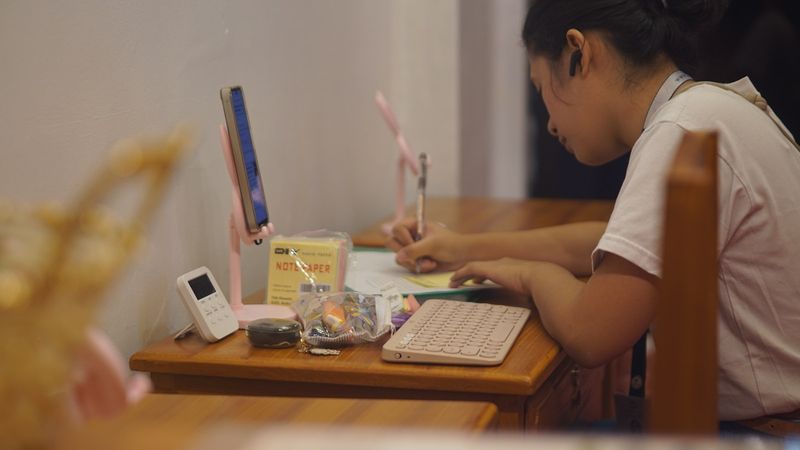
Homework that actually gets done: every day, students record a 30-second voice memo on their phone describing what they did that day. They send it to you (or to a study buddy). You don’t even have to listen to all of them. The act of recording forces self-monitoring, and that’s where the gains happen.
One small but real result: students who do this consistently for four weeks show measurable improvement on intelligibility scores, according to a 2023 study published in the journal Language Learning & Technology. The mechanism isn’t complicated — daily reps of speaking under mild observation pressure is what muscle memory needs.
15. Peer Feedback Pair Work
Pair students up. Student A reads a short paragraph. Student B listens with the text in hand and circles any word that sounded different from what they expected. Roles swap. They compare circles, discuss, re-read. Total time: eight minutes. Total teacher involvement: zero, after the initial setup.
The hidden value of this activity is that Student B has to listen extremely carefully — which trains their perception. And Student A gets immediate feedback that isn’t filtered through teacher politeness. For more low-prep speaking activities that get students talking, the same pair-work principle scales to dozens of other lesson goals.
How to Sequence These Activities Across a Term
Pick four: one perception drill (minimal pairs), one motor drill (tongue twisters or backchaining), one rhythm activity (jazz chants or sentence stress), and one self-monitoring activity (recording or peer feedback). Rotate through them in a 10-minute pronunciation slot at the start of every class. After four weeks, swap two of the four for new ones. Variety prevents fatigue, rotation builds depth.
The trap teachers fall into is doing pronunciation as a “special unit” once a term. That’s how you end up with students who can name the difference between /θ/ and /s/ on a quiz but still say tank you in the wild. Pronunciation belongs in every lesson, in small doses, for years.
Watch It in Action
The One Thing to Take Away
If you only change one habit after reading this, make it the daily 10-minute slot. Five minutes of perception drilling, three minutes of production, two minutes of self-recording or peer check. Run that pattern every class for a full term and your students will speak more clearly, more confidently, and with measurably better intelligibility — without you having to rewrite a single lesson plan. The activities are the toolkit. The daily reps are what actually move the needle.
Fonti
- Cambridge Language Teaching journal — State-of-the-art on L2 pronunciation — 2024 review of perception-first instruction outcomes.
- ELLLO — English Listening Lesson Library Online — Free authentic short audio clips ideal for shadowing.
- Language Learning & Technology journal — 2023 research on voice-memo homework and intelligibility gains.
- British Council TeachingEnglish — Teaching Pronunciation — Practical teacher development articles on pronunciation pedagogy.
Looking for free ESL worksheets? Browse our full collection — printable resources for every level and age group. Browse Free Worksheets →
Students can access free worksheets and reading materials at 18KEnglish.com.








 IT
IT  EN
EN  ZH
ZH  ZH_CN
ZH_CN  KO
KO  VI
VI  FR
FR  AR
AR  ES
ES  HI
HI  PT
PT  BN
BN  RU
RU  JA
JA  TR
TR  DE
DE  PL
PL  ID
ID  TH
TH  FA
FA  UK
UK  TL
TL  HE
HE  UR
UR  SW
SW  RO
RO  NL
NL  MS
MS  TA
TA  PS
PS  HU
HU  EL
EL  SV
SV  NB
NB  NN
NN  DA
DA  CS
CS  SR
SR  AM
AM