

ESL Error Correction: 7 Techniques That Actually Work (2026)
ESL error correction is the difference between a student who walks out fossilizing the wrong past tense for the next five years and one who walks out actually noticing the gap. Most ESL teachers correct too much during fluency tasks and too little during accuracy work — the exact inversion of what helps learners. This guide breaks down the seven techniques that actually move students forward, when to use each one, and the small adjustments that make corrections stick instead of sting.
The truth is, most teachers default to recasting because it feels polite. But research on classroom uptake — students actually incorporating the correction into their next utterance — has been telling us for two decades that recasts are the least noticed correction in the room. The fix is not more correction. It is more varied correction, timed to the activity type.
What Counts as an Error in an ESL Classroom?
An error is a systematic gap in the learner’s interlanguage — the student does not yet know the rule. A mistake is a slip — the student knows the rule but produced the wrong form because of fatigue, speed, or distraction. Errors need teaching. Mistakes need a quick prompt to self-correct.
The single most useful diagnostic question is this: can the student fix it when you point at it? If yes, it is a mistake and a brief gesture is enough. If no, it is an error and the student needs explicit instruction, not just a correction. This distinction shapes everything that follows in this guide.

Recasts: The Most Used and Most Ignored Technique
A recast reformulates the student’s utterance in correct form without flagging the mistake. Student: “Yesterday I go to the market.” Teacher: “Oh, you went to the market — what did you buy?” Conversation continues, error gets modeled, no one is embarrassed.
The catch is that students often hear recasts as confirmation, not correction. The classic Lyster and Ranta study tracked teacher feedback across French immersion classrooms and found recasts produced uptake — student repair of the error — only about 31% of the time, far lower than prompts, which clocked in around 60–86% depending on type. If the student does not notice you reformulated their sentence, the correction never happened.
Use recasts when meaning is the priority — during personal stories, opinion exchanges, role-plays — and stretch the corrected word slightly so the contrast is audible. “You went to the market” with a small lift on the verb gives the student a chance to register the difference without breaking flow.
Prompts: The Technique Most Teachers Underuse
Prompts push the student to self-correct instead of handing over the answer. There are four basic types, and switching between them keeps the class from getting stale.
- Clarification request — “Sorry, can you say that again?” Forces the student to listen to themselves.
- Repetition with rising intonation — Student says “He don’t like coffee” and you echo “He don’t?” with a question lift. The student usually catches it.
- Metalinguistic cue — “What tense are we using?” or “That verb needs an -s.” You name the rule without giving the form.
- Elicitation — Repeat the sentence and pause where the error was. “Yesterday she ____ to the gym.” Wait for the student to fill in “went.”
Prompts feel slower in the moment, but they generate noticing — the cognitive event that actually drives interlanguage change. The Lyster and Saito meta-analysis of 15 studies on corrective feedback found prompts and recasts both produced learning gains, but prompts had a larger effect on free-production tasks where students later had to retrieve the form without scaffolding.
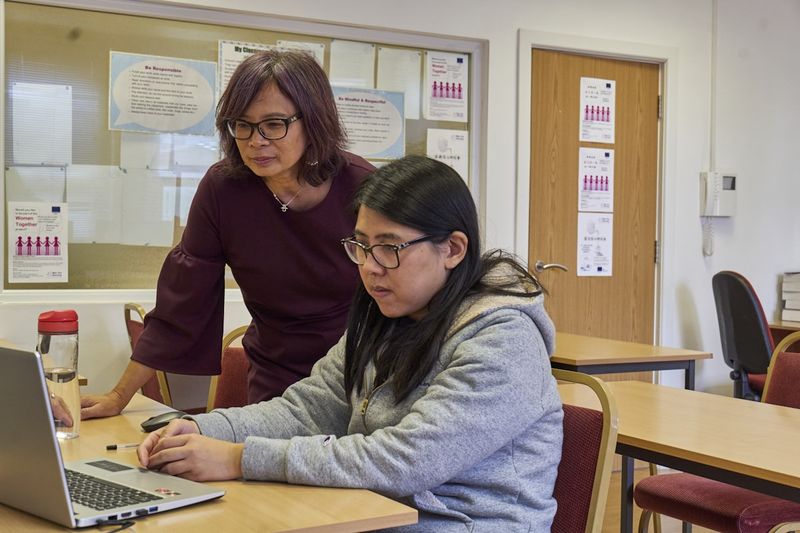
Finger Correction: A Visual Trick That Works for Word Order
Hold up a hand and assign each finger a word from the student’s sentence. “Yesterday — I — go — to — the — market.” Now wiggle the “go” finger. The student sees exactly which word is wrong without you saying anything. For word-order issues, swap two fingers physically — “Why you are tired?” becomes a left-right hand swap to show “Why are you tired?”
This technique is gold for young learners and visual processors. It also keeps teacher talk time low — a frequently overlooked SLA principle covered in our breakdown of コミュニケーション重視の言語教育. Finger correction also dodges the awkwardness of saying “no, wrong” out loud — which matters more than most teachers admit in cultures where face-saving is part of how feedback gets received.
Delayed Correction: Save the Errors for the End
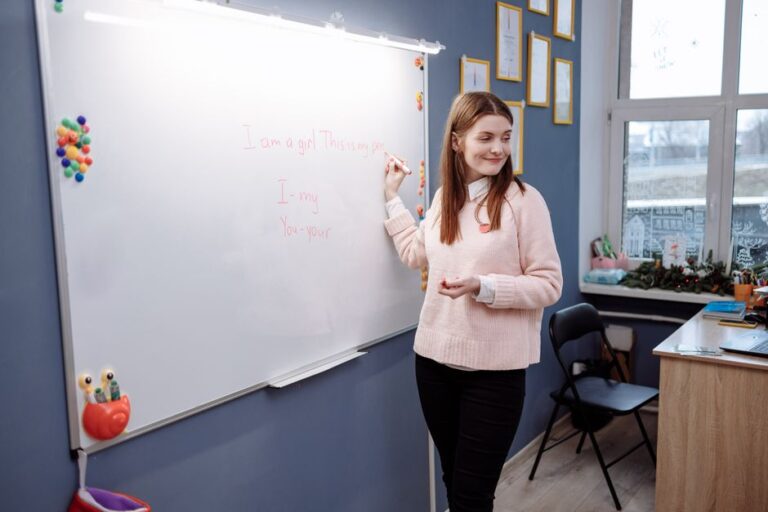
During fluency work — debates, conversation practice, role-play — every interruption kills the activity. So do not interrupt. Carry a clipboard or a tab open on your laptop and jot down 5–8 errors you hear across the group. When the activity ends, put four or five anonymized sentences on the board and let the class try to fix them together.
The reason this works is twofold. Students stay in the meaning-making zone during the task, which is when fluency develops. Then they switch to noticing mode at the end, which is when accuracy develops. Trying to do both at once trains neither.
Anonymize the sentences. Do not write “Maria said…” Write the sentence cleanly and ask “what’s wrong here?” Mixing in one or two correct sentences as decoys also forces students to read carefully instead of assuming everything on the board is broken.
Peer Correction: The Quiet Engine of Learner Autonomy
Peer correction works in classes where students trust each other and falls apart in classes where they do not. So invest in the trust first. Spend the first two weeks modeling polite correction language — “I think you mean…”, “Try this version?”, “Can you say more?” — and never let one student mock another’s English. Once that floor exists, peer correction stops being scary.

Two formats actually work in practice. In peer reading-aloud, Student A reads a paragraph they wrote while Student B listens with the script and marks anything they noticed. In peer error spotting, you put a paragraph with five errors on a handout and pairs hunt them down. Both formats build editing skills students will use long after they leave your class.
The risk with peer correction is wrong corrections. The fix is simple — after pair work, do a 90-second wrap-up where you confirm the right answers. Never let a peer correction stand unverified.
Writing Correction: The Codes That Save Hours
Marking every error in red ink overwhelms students and burns out teachers. A correction code system fixes both problems. Write the code in the margin next to the error and let the student do the fixing. A minimal code set:
- T — tense
- WW — wrong word
- SP — spelling
- P — punctuation
- WO — word order
- Art — article (a/an/the)
- Prep — preposition
- ? — meaning unclear
Give the code key out once on a half-page handout and pin it to the wall. Students rewrite the marked sentence underneath. They learn the labels, they do the cognitive work, and you mark in a third of the time. Teach the code in week one or no one will use it.

Truscott famously argued in his 1996 paper that grammar correction in L2 writing was ineffective or harmful, kicking off a decades-long debate. The current consensus, summarized in Bitchener and Ferris’s work on written corrective feedback, is that focused feedback on a small number of targeted forms outperforms scattershot correction. So pick one or two grammar targets per writing cycle. Mark those. Ignore the rest. The student gets repeated input on the form they are working on, and you get your weekend back.
The One-on-One Conference: Highest Cost, Highest Yield
Sitting next to a student for three minutes and walking through their work is the most effective feedback format you have access to. The student cannot tune out. You can ask why they made the choice they made. You can hear them defend a construction and realize they actually know the rule but were panicking on the test.
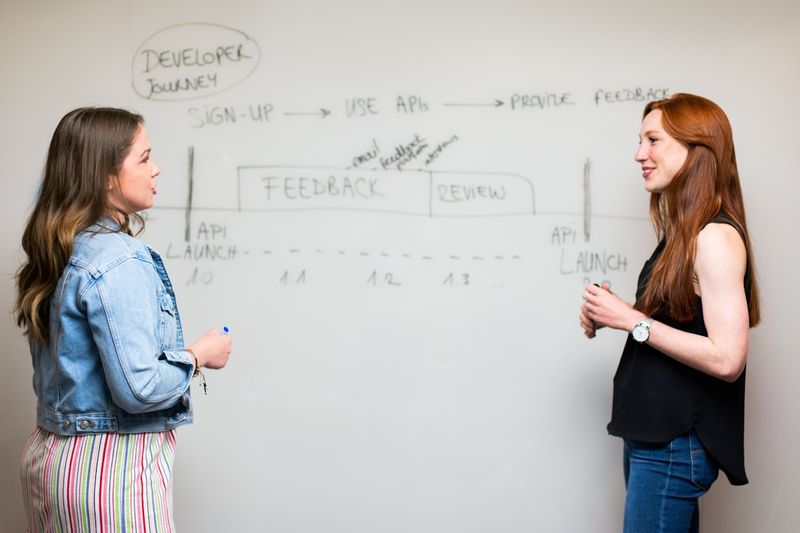
You cannot conference with 25 students every week. You can conference with 3 per class. That gives every student in a typical class one focused conference every two months, which is more than most students get in a year. Pair conferences with a clear written record — what we discussed, one target for next time — so the next conference can pick up where this one ended.
When NOT to Correct
Three situations call for letting the error pass.
Beginners building confidence. A new student who just produced their first complete sentence in English does not need a tense correction. They need someone to react to what they said. Correct once they are confidently producing utterances and starting to ask “is this right?” themselves.
Fluency activities mid-flow. Interrupting a student during a story to fix an article kills the story and teaches the student that English is a minefield. Save it for delayed correction.
Errors above the student’s current level. An A2 student using the wrong tense in a complex hypothetical does not need a lecture on third conditional. Note it and teach it when the syllabus gets there. The principle of level-appropriate correction applies to grammar exactly as it applies to pronunciation work.

Matching Technique to Activity Type
Here is the rough mapping that works across levels and class sizes.
- Controlled accuracy practice (drills, gap-fills, structured speaking) — immediate correction with prompts or finger correction. The whole point is the form.
- Semi-controlled practice (guided dialogues, information gaps) — light recasts plus delayed correction at the end.
- Fluency tasks (debates, role-plays, free conversation) — no on-the-spot correction. Notes only. Hot-board it after.
- Writing drafts — coded feedback on focused targets, student rewrites.
- Final assessments — record errors for the next teaching cycle, not for the student. Their work is done.
This matching is built into a well-designed lesson stage sequence. If you want a deeper breakdown of how stages connect to feedback type, our ESL lesson plan template lays out the five-stage flow most lessons benefit from.
Common Mistakes Teachers Make with Error Correction
Three patterns show up in almost every observation I have done.
The first is over-correcting beginners. A2 students who get every preposition flagged stop producing. The neural cost of monitoring is too high and they default to silence.
The second is under-correcting at higher levels. B2 students with fossilized errors — wrong third-person singular, missing past simple — do not get told because the meaning is clear and the teacher does not want to interrupt. Five years later the student has a great vocabulary and the grammar of a B1.
The third is reacting only to the form. When a student says something interesting in broken English, react to the content first. “Wait, your grandmother did that? Tell me more.” Then circle back to the form. Students are people first and learners second. Correction that ignores meaning teaches students that English class is about being wrong rather than about saying something true.
Building a Feedback Culture, Not Just a Correction Habit
A class where students happily say “wait, can you say that again?” to each other is a class where correction has been normalized as care, not judgment. That culture comes from the first week. Frame correction explicitly — “I will correct you because I want you to get better, not because you are wrong” — and ask students what kind of feedback they want. Some want every error flagged. Some want only the big ones. Knowing the preference shifts correction from a power move into a service.
Pair this with classroom routines that signal correction is coming and going. A hot-board signal — drawing a question mark on the board — tells students “I noticed something, we’ll fix it later.” A thumbs-up signal tells them “great, keep going.” These tiny rituals lower the social stakes of being corrected, which is where most resistance to error correction actually lives. For more on routines that build this kind of trust, see our breakdown of ESL教室管理.
Watch: Error Correction Demonstrated
BBC Learning English’s Teachers’ Room series walks through the on-the-fly decisions teachers make when an error appears mid-lesson — what to correct, when, and how. Worth the seven minutes.
The 24-Hour Test for Your Next Lesson
Pick one technique from this guide you do not currently use — finger correction, delayed correction, or focused coded feedback — and run it tomorrow. Watch what happens. If uptake jumps, keep it. If it falls flat, troubleshoot. Error correction is not a fixed system; it is a set of moves you select from based on what is actually happening in front of you. The teachers who get this right are the ones who stay flexible — different student, different error, different technique. Start with the one that fits the gap in your toolkit and add from there.
情報源
- British Council TeachingEnglish — Error Correction — overview of decisions teachers make about what, when, and how to correct.
- Lyster & Ranta (1997) — Corrective Feedback and Learner Uptake — landmark study quantifying uptake rates across feedback types.
- Lyster & Saito (2010) — Oral Feedback in Classroom SLA: A Meta-Analysis — synthesis of 15 studies on corrective feedback effectiveness.
- BBC Learning English — The Teachers’ Room: Correcting Errors — practical classroom demonstration of correction decisions.
- Truscott (1996) — The Case Against Grammar Correction in L2 Writing — the contrarian paper that reframed the writing correction debate.
Looking for free ESL worksheets? Browse our full collection — printable resources for every level and age group. Browse Free Worksheets →
Students can access free worksheets and reading materials at 18KEnglish.com.






 JA
JA  EN
EN  ZH
ZH  ZH_CN
ZH_CN  KO
KO  VI
VI  FR
FR  AR
AR  ES
ES  HI
HI  PT
PT  BN
BN  RU
RU  TR
TR  DE
DE  IT
IT  PL
PL  ID
ID  TH
TH  FA
FA  UK
UK  TL
TL  HE
HE  UR
UR  SW
SW  RO
RO  NL
NL  MS
MS  TA
TA  PS
PS  HU
HU  EL
EL  SV
SV  NB
NB  NN
NN  DA
DA  CS
CS  SR
SR  AM
AM