The Read-Watch-Compare Method: An ESL Approach to Pairing Books and Films
Most teachers reach for a film when their reading unit drags. The novel feels heavy, attention drifts, and a screen seems like a way to revive the room. The result is usually a forgettable Friday: students watch passively, the bell rings, and the connection to the book never quite forms. Films and books are powerful ESL tools, but only when they are sequenced — not stacked.
This article lays out a method I call Read-Watch-Compare for using books and movies to teach English at high-intermediate and advanced levels. It treats the novel and its film adaptation as two halves of one comprehension cycle rather than two separate resources. You will get the rationale, a phase-by-phase breakdown, a four-week sample unit, pitfalls to dodge, and assessment ideas that actually capture what students learned.
Why Pairing Books and Films Outperforms Either Alone
A novel asks ESL learners to do enormous work in a single channel: decode unfamiliar vocabulary, hold characters in working memory, and build mental images all at once. A film does the opposite — it delivers visuals and audio at native speed, letting comprehension feel easy in the moment but fade quickly afterward.
Paired correctly, each medium fixes the other’s weakness. The novel slows the language down so learners can study it. The film provides the visual scaffolding that makes the novel’s world stick. The comparison phase, where students examine what changed between the page and the screen, is where the deepest language and critical thinking happens.
Research on dual-channel learning (Mayer’s Cognitive Theory of Multimedia Learning) supports this: students retain more when verbal and visual channels reinforce the same content rather than compete for attention. The trick is sequencing the channels, not running them in parallel.
The Read-Watch-Compare Method
The method has three phases, each with a different cognitive goal. Phases must run in order — watching before reading collapses the entire structure into a passive viewing exercise.

Phase 1: Read First
Students read the novel (or a graded reader version) over two to three weeks before they ever see the film. The aim is not full comprehension — it is anchor formation. Students need a personal mental image of the characters, settings, and key scenes. Once they have that, the film cannot do their imagining for them.
Practical tactics for this phase:
- Assign chapter-bound vocabulary lists, not whole-novel lists. Pull eight to twelve words per chapter and pre-teach them before reading.
- Use prediction prompts at chapter breaks: “Based on this chapter, what do you think happens next? Why?”
- Build a class character map on the wall and add to it weekly. Students physically connect names, relationships, and conflicts.
- Hold short, low-stakes weekly discussions. Comprehension quizzes kill engagement; structured discussion builds it.
Choose a graded reader if your class is below B2. Penguin Readers, Cambridge English Readers, and Oxford Bookworms all publish movie-tied editions at multiple CEFR levels.
Phase 2: Watch Strategically
The film is not a reward at the end of the unit. It is the second piece of input, and it needs the same scaffolding the novel got.
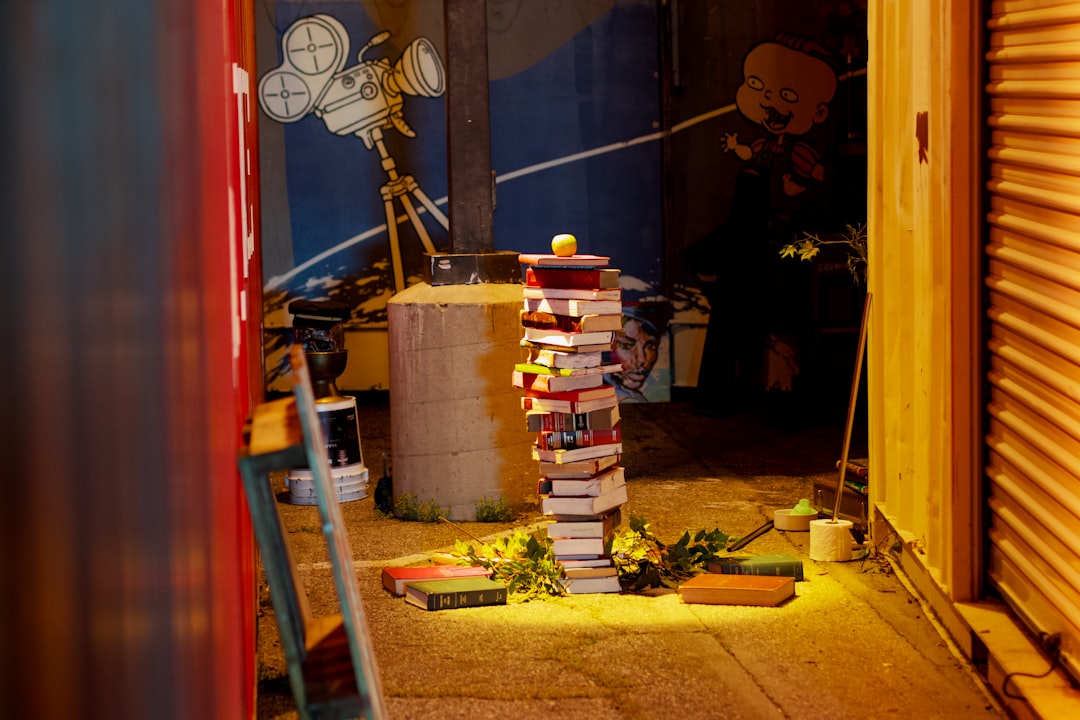
Watch the film in chunks of fifteen to twenty minutes, never in one sitting. Between chunks, hand students a short task that forces active comparison:
- “Find one scene that was in the book but the film changed.”
- “Write down a line of dialogue you didn’t catch — we’ll work it out together.”
- “Which character looked different from your imagination? Sketch the difference.”
Subtitles are a teaching choice, not a default. Use English subtitles for B2-and-up classes; turn them off for short scenes you have already prepared. Native-language subtitles short-circuit the listening work entirely and should be avoided in class.

Phase 3: Compare Critically
This is the phase most teachers skip, and it is where the language production happens. Students who have read and watched are now positioned to do something neither medium alone can produce: an argument about adaptation.
Compare-phase activities that work:
- Adaptation defense: pairs argue whether a specific change (cut character, altered ending, compressed timeline) made the story stronger or weaker.
- Director’s pitch: students propose a different casting choice and justify it using evidence from the novel.
- Scene rewrite: take a film scene and rewrite it to match the book version, then perform both.
- Voice-over swap: mute a film clip and write fresh dialogue that fits the book’s tone.
Each of these tasks demands vocabulary the students just acquired, plus comparative grammar (more X than, whereas, unlike the film…). The unit drives its own language outcomes.
How to Choose the Right Pairing
Not every novel-film pairing works in an ESL classroom. Use these four criteria when selecting:
- Comprehensibility: the novel must sit at or just above your students’ independent reading level. If you need to translate every page, pick a graded reader instead.
- Adaptation distance: the film should differ meaningfully from the book. A frame-by-frame adaptation gives students nothing to compare. Look for adaptations that cut subplots, change endings, or shift point of view.
- Cultural accessibility: avoid pairings that require deep cultural knowledge your students don’t share. To Kill a Mockingbird is brilliant but assumes American historical context that may overshadow the language work.
- Length: the film should run under two hours. A three-hour epic eats classroom time you need for production tasks.
Pairings that consistently work for international ESL classes:
- Wonder (R.J. Palacio) and the 2017 film
- The Curious Incident of the Dog in the Night-Time (graded reader edition) and stage-recorded productions
- Holes (Louis Sachar) and the 2003 film
- Coraline (Neil Gaiman) and the 2009 animation
- The Great Gatsby (graded reader) and the 2013 Baz Luhrmann film, for advanced classes
Sample Four-Week Unit Plan
Here is a compressed four-week unit using Wonder as the pairing. Adjust pacing to your class hours.
Week 1: Setup and First Half of Novel
- Pre-teach 30 core vocabulary items across two lessons.
- Read Part One together; assign Part Two for homework.
- Build the class character map.
- Discussion prompt: “What does Auggie’s first day at school tell us about how the school treats difference?”
Week 2: Finish the Novel
- Read Parts Three and Four; staggered group reading sessions.
- Add a theme tracker to the wall (kindness, belonging, courage).
- Mid-unit writing task: a 200-word letter from one character to another.
- Hold a full-class discussion before any film exposure.
Week 3: Film Phase
- Show the film in four chunks across the week.
- Between-chunk tasks listed in Phase 2 above.
- Daily exit ticket: one sentence comparing book and film.
Week 4: Compare and Produce
- Adaptation-defense debate on the film’s ending changes.
- Group project: rewrite the school cafeteria scene from the perspective of a character who is silent in both versions.
- Final presentation: each group performs their rewritten scene and explains their choices.

Common Pitfalls and How to Avoid Them
Teachers new to the method usually run into the same five problems. None are fatal if you spot them early.
Pitfall 1: Treating the film as a reward. If students sense the film is the “fun” part, they will switch off during reading. Frame the unit as a single assignment with two inputs from day one.
Pitfall 2: Watching too fast. Showing the whole film in one lesson erases active engagement. Chunk ruthlessly.
Pitfall 3: Native-language subtitles. Once they appear, listening practice ends. If a class needs them to follow the plot, the film is too hard — pick a different pairing.
Pitfall 4: Skipping Phase 3. The compare phase is the language-production engine. Without it, you have run a long reading unit with a movie at the end, which is exactly what we are trying to avoid.
Pitfall 5: Choosing too-faithful adaptations. If the film mirrors the book scene-for-scene, comparison work has nothing to bite into. Pick adaptations that took risks.
Assessment Ideas Beyond the Quiz
Multiple-choice quizzes test surface comprehension, which both the book and film already provide. Better assessment options for this unit:
- Adaptation analysis paper: 400 to 600 words arguing whether a specific change strengthened or weakened the story. Students cite both the novel and the film.
- Casting portfolio: students cast three roles, justify each choice, and write a short director’s note. Vocabulary and reasoning are scored separately.
- Scene comparison oral exam: in pairs, students perform a one-minute analysis of book-versus-film differences in one scene. Language fluency, accuracy, and content are graded.
- Trailer redesign: students storyboard a new trailer that better reflects the novel’s themes. Caption every shot in English.
These assessments capture three things a quiz cannot: extended written argument, oral fluency, and creative production using the unit’s vocabulary.
Embedding the Method in Your Curriculum
The Read-Watch-Compare method is not a one-off unit; it is a curriculum slot. Run two pairings per academic year and your students will leave with the comparative reading skills colleges and B2-level exams demand. Each repetition gets faster — students know the rhythm, the vocabulary load drops, and the production quality climbs.
Pair the right book with the right film, sequence them properly, and you turn a passive Friday movie day into the most language-dense unit on your syllabus. Books and films were never the problem in ESL — the order we use them in is.
情報源
- Cambridge Language Teaching Journal — research on multimodal input
- BBC Learning English — graded video resources
- TESOL International Association — methodology research
- Common European Framework of Reference (CEFR) — level guidelines
- British Council Teaching English — lesson plan archive
More Worksheets
 Confucian Values in Modern Taiwan | Elementary ESL Reading Worksheet PDF
 Here’s a concise title:
– 10 Easy Ways to Improve Your English
Alternate options:
– Boost Your English: 10 Simple Student Tips
– Learn English Faster: 10 Fun, Simple Tips
– Everyday English: Ten Tips for Students
– English Made Easier: 10 Student-Friendly Tips
Here’s a concise title:
– 10 Easy Ways to Improve Your English
Alternate options:
– Boost Your English: 10 Simple Student Tips
– Learn English Faster: 10 Fun, Simple Tips
– Everyday English: Ten Tips for Students
– English Made Easier: 10 Student-Friendly Tips ESL Lesson Stage Toolkit: 50 Activities for Warmers, Practice, Production, and Wrap-Ups


 JA
JA  EN
EN  ZH
ZH  ZH_CN
ZH_CN  KO
KO  VI
VI  FR
FR  AR
AR  ES
ES  HI
HI  PT
PT  BN
BN  RU
RU  TR
TR  DE
DE  IT
IT  PL
PL  ID
ID  TH
TH  FA
FA  UK
UK  TL
TL  HE
HE  UR
UR  SW
SW  RO
RO  NL
NL  MS
MS  TA
TA  PS
PS  HU
HU  EL
EL  SV
SV  NB
NB  NN
NN  DA
DA  CS
CS  SR
SR  AM
AM