
15 ESL Listening Activities That Hook Every Level
Ask any English teacher what their students dread most, and listening is somewhere near the top of the list. A 2023 British Council survey of 1,200 EFL learners found that 64% rated listening as their hardest skill — harder than speaking, reading, or writing. That gap doesn’t close on its own. It closes when teachers stop treating listening as “press play and answer the questions” and start treating it as a skill that needs structured practice.
ESL listening activities work when they target a specific sub-skill — gist, detail, inference, prediction — and give students a reason to listen beyond the worksheet. The 15 activities below are classroom-ready, mostly low-prep, and built around audio sources you already have access to. Each one names the level it fits, the time it takes, and the listening sub-skill it builds.
Why Most ESL Listening Activities Flop
Here’s the unpopular take: most ESL listening lessons fail because the teacher does the listening work for the students. We pre-teach every vocabulary word, paraphrase the audio in our own voice, and then play it twice before the students have processed it once. The result is passive consumption, not active listening.
Real listening practice means putting students in a position where they have to predict, infer, and tolerate ambiguity — the same things they do in actual English conversations outside class. The activities below are designed around that principle.
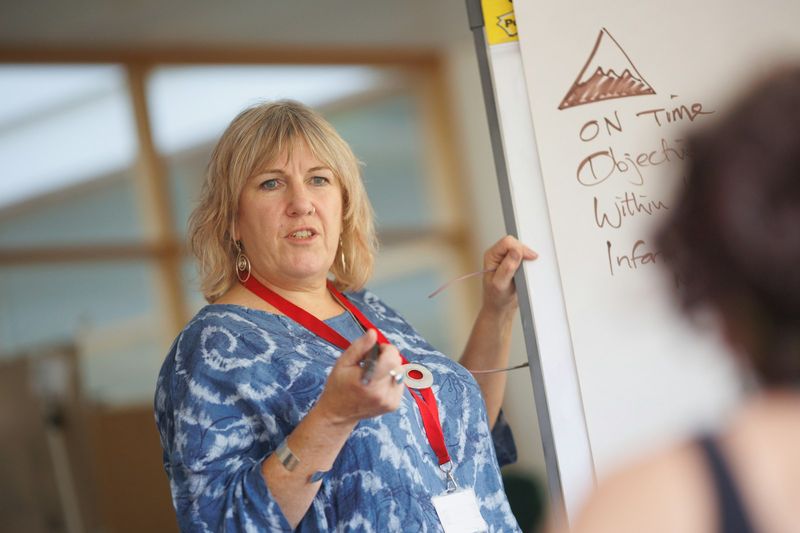
Plan listening activities around a specific sub-skill, not just an audio clip.
1. Predict-Then-Check (Pre-Listening Warmer)
Level: A2–C1 | Time: 5 minutes | Sub-skill: prediction
Write the title of the audio on the board — nothing else. Students get two minutes in pairs to predict five words they expect to hear and one question they expect answered. Play the audio once. Pairs check their predictions and tally how many they got right. The pair with the most accurate predictions wins.
The point isn’t the score. It’s that students enter the listening with a hypothesis to test, which forces active engagement instead of passive reception.
2. The Two-Pass Gist Race
Level: A2–B2 | Time: 10 minutes | Sub-skill: gist comprehension
Play a 90-second audio clip twice with a 30-second gap between plays. First pass: students write a one-sentence summary on a sticky note. Second pass: they revise it. Collect the sticky notes, read three or four aloud, and let the class vote on which best captures the gist.
This builds a skill students actually need in the real world — getting the main idea fast — without punishing them for missing a detail.
3. Running Dictation
Level: A1–B1 | Time: 20 minutes | Sub-skill: chunked listening + spelling
Tape a short text to the classroom wall. Pair students into “runners” and “writers.” The runner reads a chunk, runs back, dictates it to the writer, then runs back for the next chunk. Halfway through, they swap roles. The first pair to finish with an accurate transcript wins.
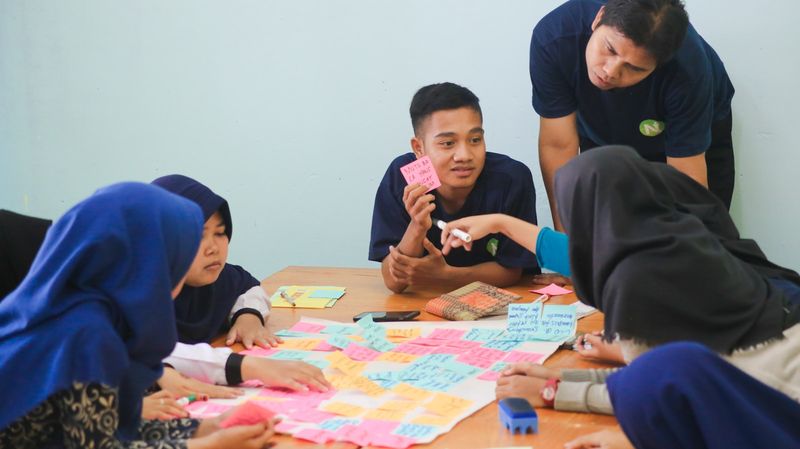
Running dictation gets students moving, listening, and writing in one activity.
Running dictation is the closest thing to a magic activity in ESL. It hits listening, speaking, reading, writing, and pronunciation in one chaotic, high-energy block. For more low-prep team activities like this, see our 50 no-prep activities for mixed-level classrooms.
4. Listening Bingo
Level: A1–B1 | Time: 15 minutes | Sub-skill: word recognition
Give each student a 4×4 grid pre-filled with vocabulary from the unit. Play any audio that contains those words — a TED clip, a song, a news segment. Students cross off words as they hear them. First to get a line shouts “bingo.” The catch: they have to recite the sentence the word appeared in to win, which forces them to actually listen, not just scan.
5. Disappearing Dialogue
Level: A2–B2 | Time: 15 minutes | Sub-skill: chunked memory + intonation
Write a short dialogue on the board. Drill it once with the class. Then erase a few words and have them say it again. Keep erasing chunks until the board is empty and the class is performing the whole dialogue from memory. It feels like a memory game, but it’s training their ear to hold language chunks — exactly what real-time listening requires.
6. Podcast Snippet + Three Questions
Level: B1–C1 | Time: 20 minutes | Sub-skill: detail listening
Pick a 3-minute clip from a podcast like BBC 6 Minute English 또는 ESL Pod. Before playing, write three questions on the board: one fact, one opinion, one inference. Students listen once and answer all three in their notebook. Then they compare answers in pairs before you reveal.
Short podcast snippets work better than full episodes for sustained attention.
Three questions is the sweet spot. Five questions and weaker students give up. One question and they coast. Three forces engagement without overload.
7. Shadowing
Level: A2–C1 | Time: 10 minutes | Sub-skill: pronunciation + connected speech
Play a short audio sentence by sentence. After each sentence, pause and have students repeat it out loud, mimicking the speaker’s rhythm, stress, and intonation as closely as possible. Then play the full clip again and have them shadow it in real time — speaking along with the audio, half a beat behind.
Shadowing feels weird at first. Students laugh, mumble, lose their place. By the third week of doing it twice a week, their pronunciation noticeably improves. It’s the single highest-leverage technique I’ve added to my adult conversation classes in 20 years of teaching.
8. Song Gap-Fill (Done Right)
Level: A1–B2 | Time: 15 minutes | Sub-skill: word recognition + rhythm
Song gap-fills get a bad rap because most teachers do them wrong. The fix: blank out function words students need to hear (auxiliaries, prepositions, articles) — not the content words they can guess from context. A gap-fill that blanks “love” and “heart” in a pop song teaches nothing. A gap-fill that blanks “have been,” “won’t,” and “for” trains them on the reduced forms native speakers actually use.
9. Spot-the-Difference Audio
Level: A2–B1 | Time: 15 minutes | Sub-skill: detail comparison
Record (or find) two versions of the same short paragraph with five small differences — a number changed, a name swapped, an adjective different. Students listen to both versions twice and list every difference they catch. Works beautifully for sharpening attention to detail.
10. The Three-Speaker Identification
Level: B1–C1 | Time: 15 minutes | Sub-skill: tone + inference
Play a three-way conversation (sitcom dialogues are gold for this). Students don’t need to write down what’s said. They just need to identify: who is angry, who is being sarcastic, who is lying? This activity builds the inferential listening skill that worksheets never reach.
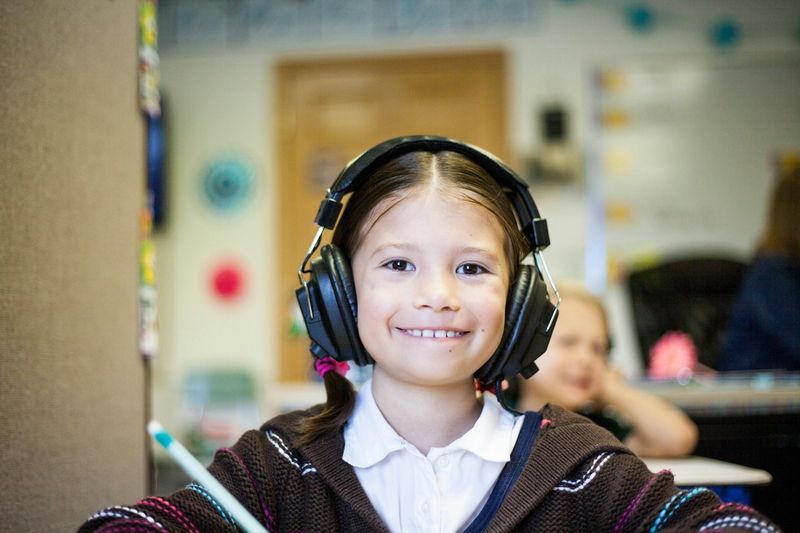
Younger learners especially benefit from games that build inferential listening.
11. Voice Message Translation
Level: A2–B1 | Time: 10 minutes | Sub-skill: real-world listening
Record a 30-second voice message on your phone — the kind you’d actually send a friend. “Hey, sorry I’m running late, traffic is crazy, can you order me a coffee, I’ll pay you back…” Students listen and write a text-message version. This bridges classroom listening and the real-world digital listening they do every day.
12. Stop-and-Predict
Level: B1–C1 | Time: 15 minutes | Sub-skill: prediction + context
Play a story or interview. Pause at strategic moments and ask: “What do you think happens next?” or “What’s the speaker about to say?” Take three predictions, then play the next 20 seconds. Did anyone get it right? This trains students to actively process what they’re hearing instead of waiting passively for the next chunk.
13. Audio Diary Comparison
Level: B1–C1 | Time: 25 minutes | Sub-skill: extended listening + speaking
Assign students a one-week “audio diary” homework — they record a 60-second voice note about their day, three times that week. In class, they swap phones with a partner, listen to each other’s diaries, and report back what they learned. Builds extended listening with the highest-stakes content possible: real classmates, real lives.
14. The Movie Scene Sound-Only Activity
Level: B1–C1 | Time: 20 minutes | Sub-skill: contextual inference
Pick a 2-minute movie scene with strong audio cues — footsteps, doors, music, dialogue. Cover the screen or turn off the projector. Students listen with audio only and write down what they think is happening. Then play it again with video. The gap between what they imagined and what’s on screen always sparks great discussion.
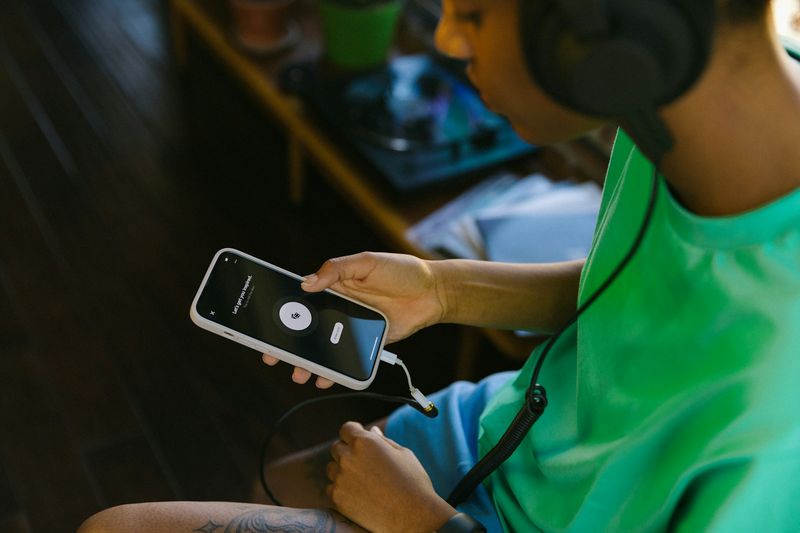
Phone-based listening tasks meet students where they already are.
This builds on the pre-while-post listening framework — for a deeper dive into structuring listening lessons around video content, see our guide to pre, while, and post listening activities.
15. Self-Recorded Mini-Quiz
Level: A2–B2 | Time: 30 minutes | Sub-skill: production + listening accountability
Have students record their own 60-second monologue at home on any topic. They bring it to class and play it for a partner, who must answer five comprehension questions the recorder has prepared. Forces students to listen critically to their own English too — which is where most pronunciation breakthroughs happen.
How to Sequence ESL Listening Activities in a Lesson
One activity is not a lesson. A solid listening lesson follows a pre-while-post sequence: a short pre-listening activity (like #1 Predict-Then-Check) to activate prior knowledge, a focused while-listening task (like #6 Podcast Snippet) for the main work, and a post-listening production task (discussion, writing, role-play) so they do something with what they heard.
Map your secondary activities to specific sub-skills. If your students struggle with detail, schedule #4 Bingo or #9 Spot-the-Difference. If they need inference work, run #10 Three-Speaker or #14 Sound-Only. Track which sub-skills you’ve hit each week — most teachers over-index on gist and never train inference, which is why students plateau at B1.
Watch: ESL Listening Lesson Planning in 5 Steps
Jackie Bolen breaks down the same sequencing approach in this 7-minute video — worth bookmarking if you’re new to listening-focused lesson planning:
Picking the Right Audio Source for Your Class
Coursebook audio is often the worst listening practice your students get — scripted, slow, and unnaturally clear. Mix in authentic sources weekly. British Council LearnEnglish has graded listening from A1 to C2 with transcripts. Randall’s ESL Cyber Listening Lab has decades of free audio with quizzes built in. YouTube clips, TED-Ed shorts, and movie scenes all work — just keep them under three minutes for sustained focus.
For mixed-level classes, layer the same audio with different tasks: A1 students fill in vocabulary blanks, B1 students answer comprehension questions, C1 students summarize the speaker’s tone. Same clip, different cognitive load. For more on stretching one resource across levels, see our ESL lesson stage toolkit.

Layer the same audio with different tasks for mixed-level classes.
Common Mistakes to Avoid
The biggest mistake is playing the audio more than three times. Once for gist, twice for detail — that’s the ceiling. Past three plays, students have stopped listening and started waiting for the transcript. The second mistake is comprehension questions that test memory instead of listening. If a student can answer the question by reading the worksheet first, the question is broken. Build questions that require them to track the audio in real time.

The biggest mistake teachers make is playing audio more than three times — students stop listening past that.
Skip the “Did everyone understand?” check at the end. Nobody admits they didn’t. Instead, give a 30-second pair check where students summarize what they heard to each other. The mismatches tell you exactly what they missed.
What to Try in Your Next Class
Pick three activities from this list — one prediction-based, one detail-based, one inference-based — and run them over the next two weeks. Track which one your students engage with most. That’s your anchor activity for the rest of the term. Build the listening half of your lesson around it, and rotate the other two in once a month.
The teachers whose students improve at listening aren’t the ones with the fanciest audio equipment. They’re the ones who stop pressing play twice and calling it a lesson.
출처
- British Council Research Reports — EFL learner skill perception data and listening sub-skill research
- British Council LearnEnglish — Listening — Graded listening practice A1–C2 with transcripts
- Randall’s ESL Cyber Listening Lab — Decades of free audio with quizzes for ESL learners
- BBC 6 Minute English — Short-form podcast ideal for podcast-snippet activities
- ESL Pod — Long-running ESL podcast with graded audio for B1–C1 learners
Looking for free ESL worksheets? Browse our full collection — printable resources for every level and age group. Browse Free Worksheets →
Students can access free worksheets and reading materials at 18KEnglish.com.




 KO
KO  EN
EN  ZH
ZH  ZH_CN
ZH_CN  VI
VI  FR
FR  AR
AR  ES
ES  HI
HI  PT
PT  BN
BN  RU
RU  JA
JA  TR
TR  DE
DE  IT
IT  PL
PL  ID
ID  TH
TH  FA
FA  UK
UK  TL
TL  HE
HE  UR
UR  SW
SW  RO
RO  NL
NL  MS
MS  TA
TA  PS
PS  HU
HU  EL
EL  SV
SV  NB
NB  NN
NN  DA
DA  CS
CS  SR
SR  AM
AM