

Group and Pair Activities: How to Maximize Student Talk Time
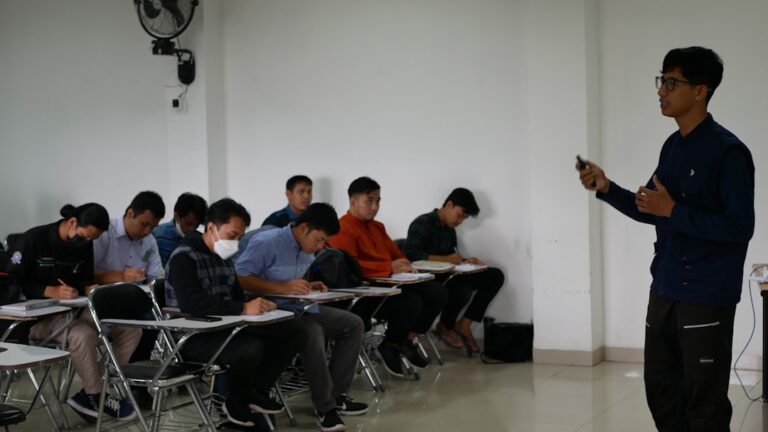
Walk past most language classrooms and you will hear one voice doing the heavy lifting: the teacher’s. Research on classroom discourse keeps surfacing the same uncomfortable number — in teacher-fronted lessons, individual learners may speak for only a few seconds across an entire hour. Group and pair activities exist to flip that ratio. They are the single most reliable way to multiply student talk time, lower the affective filter, and turn passive comprehension into active production. But they only work when they are designed, not improvised. This guide walks through how to plan, stage, and troubleshoot interaction so that “turn to your partner” produces real language instead of awkward silence.

Why Interaction Patterns Beat Activity Lists
It is tempting to collect a folder of speaking games and call it a methodology. The more useful frame is to think in terms of interaction patterns — the configuration of who is talking to whom. Every spoken task in your room is really one of a small set of arrangements: whole class, teacher-to-student, student-to-student in pairs, or student-to-students in groups. Once you see activities this way, you stop asking “what game should I play?” and start asking “which configuration gets the most learners producing the target language right now?”
The math is brutal and clarifying. In a class of twenty, a whole-class question-and-answer gives one student the floor while nineteen wait. Split the same class into pairs and ten students are speaking simultaneously — a tenfold jump in production. Move to groups of four and you trade some of that raw airtime for richer, multi-directional exchange where learners negotiate meaning, disagree, and build on each other. Neither pattern is universally “better.” Pairs maximize quantity; groups maximize complexity. Your job is to match the pattern to the learning objective.
When to reach for pairs
Pairs are your default for controlled and semi-controlled practice. A new grammar structure, a set of functional phrases, a pronunciation drill, an information-gap that needs two halves of a worksheet — all of these thrive in pairs because the cognitive load is shared between exactly two people and there is nowhere to hide. Nobody can free-ride in a pair. Pairs are also faster to organize: no furniture moving, no role assignment, just “talk to the person next to you.”
When to scale up to groups
Groups of three or four are the right tool when the task needs more ideas than two heads can generate, or when the language goal is discussion skills — turn-taking, agreeing and disagreeing, building consensus. Ranking tasks, problem-solving scenarios, board games, and project work all benefit from a group because the variety of opinions is the fuel. The trade-off is monitoring: four groups of five are harder to listen in on than ten pairs, and the risk of one dominant speaker rises. Plan for that before it happens rather than after.

Staging: The Part Most Teachers Skip
The difference between a pair activity that hums and one that dies in ten seconds is almost always staging — the sequence of steps that gets learners ready to speak. Throwing a question on the board and saying “discuss” assumes learners already have the language, the ideas, and the confidence to begin. Most do not. Effective staging front-loads all three before anyone is asked to open their mouth in front of a partner.
A reliable sequence runs like this. First, set the task clearly and check that the instructions landed — not with “do you understand?” (everyone nods) but with concept-checking questions like “Are you writing or speaking? How many ideas do you need?” Second, give thinking time: thirty seconds of silent planning, perhaps jotting a few notes, so learners enter the conversation with something to say. Third, model the exchange yourself with a strong student or with the whole class, so the shape of the task is visible. Only then do you launch the pairs or groups.
Clear instructions plus thirty seconds of thinking time will save you more pair-work failures than any clever activity ever will.
Demonstration deserves special emphasis. Telling learners how an information-gap works costs you a minute of confused starts; showing them with one volunteer costs you fifteen seconds and removes the ambiguity entirely. The rule of thumb: if an activity has any moving parts, model it rather than explain it.

How to Group People Without Killing Momentum
Grouping is a deceptively large lever. The same activity can soar or stall depending on who ends up talking to whom, and there is no single correct method — only trade-offs you should choose deliberately.
The fastest method is proximity: pair the people sitting together. It costs zero time and is perfect for short, frequent practice bursts. The downside is that friends drift into their first language, and the same cliques talk every lesson. To break that up, rotate pairs deliberately — a quick “stand up, find someone you haven’t worked with today” resets the social patterns and adds a hit of energy at the same time.
Ability grouping is the decision teachers agonize over. Mixed-ability pairs let stronger learners scaffold weaker ones, which benefits both — explaining something is one of the deepest ways to learn it. Similar-ability grouping lets you set differentiated challenges: the stronger group gets an open-ended version while a developing group gets more support. Neither is right all the time. For fluency tasks where confidence matters, similar-ability pairs reduce intimidation. For information-sharing where one learner genuinely knows something the other does not, mixing is the point.
Handling the odd number and the absent partner
Every class eventually gives you twenty-one students or a sudden absence. Plan for it. The cleanest fix is one group of three with a built-in third role — a note-taker, a timekeeper, or a reporter who feeds back to the class. Avoid the temptation to partner the leftover student with yourself; the moment you become someone’s partner, you stop monitoring everyone else.

What to Do While They Talk
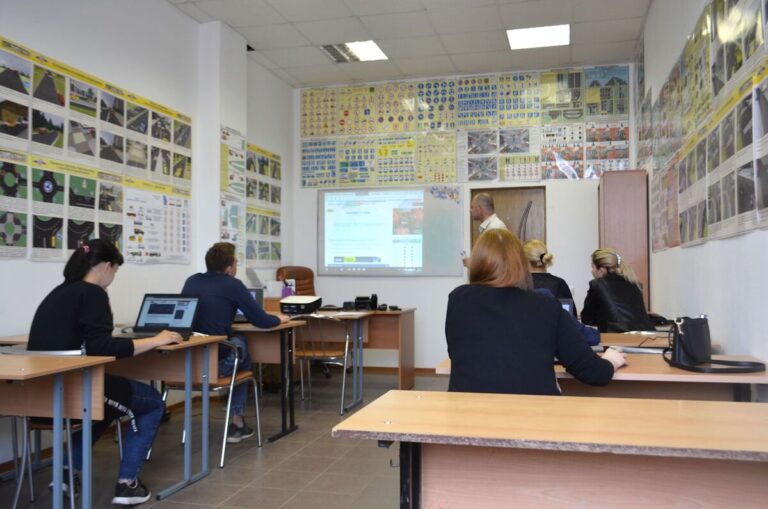
The launch is not the finish line. The minutes while learners are talking are where a skilled teacher earns their keep, and the temptation to sit down and check your phone or prep the next stage is exactly the wrong instinct. Monitoring is active. You circulate quietly, staying out of eye-line so pairs do not perform for you, and you listen for two things: breakdowns that need a discreet nudge, and good language you can spotlight later.
Resist the urge to correct on the spot during a fluency task. Interrupting a learner mid-sentence to fix a verb tense kills the very flow you were trying to build. Instead, carry a notebook or a corner of the board and collect errors anonymously. After the activity, run a short feedback round: write three or four sentences you heard — some with errors, some impressively good — and have the class react to them. This is called delayed correction, and it preserves the conversation while still closing the learning loop.
Monitoring also tells you when to stop. The biggest timing error is letting an activity run until it dies. Watch the energy: when the strongest pairs begin to wind down and switch to their first language, you are roughly thirty seconds from the natural end. Call time then, while most learners still wish they had a little longer. Ending on a high keeps the next activity’s buy-in intact.

Troubleshooting the Silence
When pair work falls flat, it is rarely because students are lazy. It is almost always a design problem you can diagnose and fix. Three causes account for the overwhelming majority of dead conversations.
The first is a question with no gap. “Talk about your weekend” gives both partners the same information, so there is no reason to communicate — the exchange is a performance, not a need. Build in a genuine information gap, an opinion difference, or a problem to solve, and the conversation creates its own momentum because each person actually wants something from the other.
The second is a language ceiling. Learners go quiet when they want to express an idea but lack the words for it. The fix lives in your staging: pre-teach the four or five phrases the task will demand, and leave them visible on the board as a scaffold. A small bank of sentence stems — “I think we should… because…”, “That’s a good point, but…” — turns a stalled group into a flowing one.
The third is overuse of the first language. Some L1 is natural and even useful, but a wholesale switch usually signals the task is too hard, too easy, or unclear. Rather than policing language with rules, raise the stakes: add a time limit, a competitive element, or a reporting-back stage where each group must share a result. When there is a reason to produce the target language, learners produce it.

A Few Reliable Configurations
Patterns become more concrete with a handful of go-to structures you can drop into almost any lesson. Think-pair-share stages production gently: learners think alone, rehearse with one partner, then share with the wider group — confidence built in three safe steps. Information gaps split content so each partner holds half and must talk to complete the picture, guaranteeing real communication. Find-someone-who turns the whole room into a mingle of brief pair conversations, perfect for review and energy. And the jigsaw sends learners to “expert” groups to master one piece, then reshuffles them into mixed groups where each member teaches the rest — a single design that delivers reading, speaking, and listening at once.
None of these are magic. They are simply containers that force the interaction pattern you want. The skill is not memorizing them but recognizing which one serves today’s objective — and then staging it so well that the talking takes care of itself.

Putting It Together
Group and pair activities are not a break from teaching — they are the moment teaching converts into learning. The teacher who plans the interaction pattern, stages the task with clear instructions and thinking time, groups learners deliberately, monitors actively, and troubleshoots the silence at its root will run a room where everyone speaks and the hour belongs to the students. Start with one well-staged pair activity in your next lesson, watch where it stalls, and fix that one thing. Do that a few times and the ratio you heard in the doorway — one voice doing all the work — quietly inverts.
출처
- British Council — TeachingEnglish — practical guidance on interaction patterns, pair and group work, and monitoring.
- 캠브리지 대학교 출판부 — reference texts on communicative language teaching and task-based learning.
- Communicative Language Teaching — Wikipedia — background on the methodology behind student-centred interaction.
- ESL speaking activity resource books — collections of pair and group tasks for the classroom.
Looking for free ESL worksheets? Browse our full collection — printable resources for every level and age group. Browse Free Worksheets →
Students can access free worksheets and reading materials at 18KEnglish.com.







 KO
KO  EN
EN  ZH
ZH  ZH_CN
ZH_CN  VI
VI  FR
FR  AR
AR  ES
ES  HI
HI  PT
PT  BN
BN  RU
RU  JA
JA  TR
TR  DE
DE  IT
IT  PL
PL  ID
ID  TH
TH  FA
FA  UK
UK  TL
TL  HE
HE  UR
UR  SW
SW  RO
RO  NL
NL  MS
MS  TA
TA  PS
PS  HU
HU  EL
EL  SV
SV  NB
NB  NN
NN  DA
DA  CS
CS  SR
SR  AM
AM